


















⏱️ 5 min read
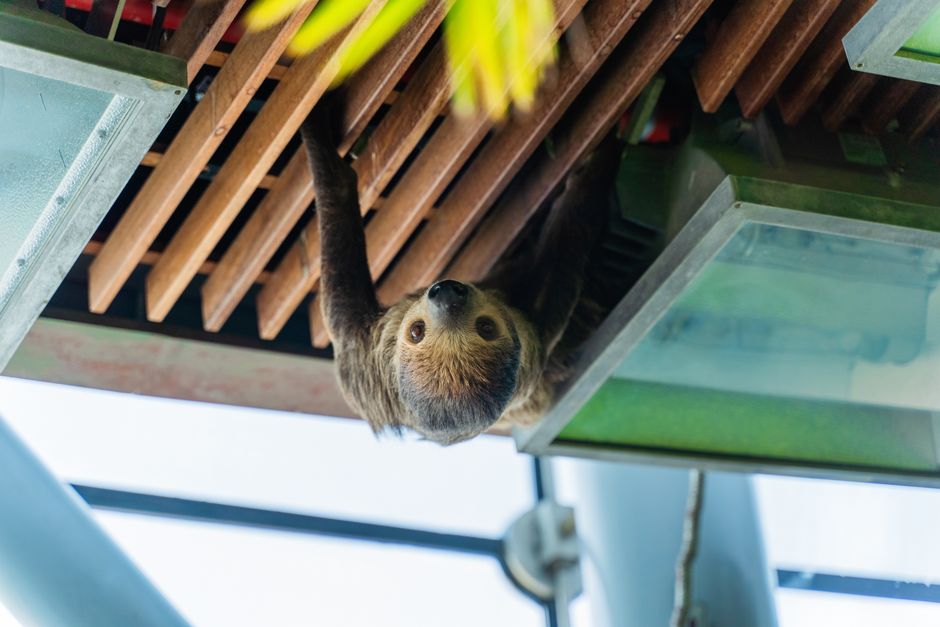
Sloths have long been synonymous with extreme slowness, spending most of their lives moving at a leisurely pace through the rainforest canopy. However, these remarkable creatures harbor a surprising secret that challenges their reputation as nature's slowest mammals. When sloths enter water, they transform into surprisingly capable swimmers, moving up to three times faster than they do on land or in trees. This unexpected aquatic ability reveals a fascinating dimension of sloth biology and behavior that often surprises even seasoned wildlife enthusiasts.
The Remarkable Swimming Abilities of Sloths
While sloths typically move at speeds of approximately 0.15 miles per hour through the trees, they can reach speeds of up to 0.5 miles per hour when swimming. This threefold increase in velocity represents a dramatic shift in their locomotion capabilities. Both two-toed and three-toed sloths are proficient swimmers, using their long arms to propel themselves through water with a breaststroke-like motion that appears surprisingly graceful compared to their awkward terrestrial movements.
The swimming prowess of sloths stems from several anatomical advantages. Their long, muscular arms that seem cumbersome on land become powerful paddles in water. Additionally, their light body weight relative to their size provides natural buoyancy, allowing them to stay afloat with minimal effort. Their thick fur, which typically harbors algae and provides camouflage, also traps air bubbles that enhance flotation.
Why Sloths Enter Water in Their Natural Habitat
In the tropical rainforests of Central and South America, sloths regularly encounter water bodies and have evolved to navigate these aquatic environments effectively. Several important reasons drive sloths to take to the water:
- Crossing rivers and streams to access new feeding territories with fresh foliage
- Reaching isolated trees or forest patches separated by waterways
- Fleeing from predators, as water can provide a temporary escape route
- Navigating flooded forests during seasonal high-water periods
- Occasionally seeking mates in different territories across water barriers
During the rainy season, when rivers swell and portions of the rainforest become temporarily flooded, swimming becomes an essential skill for sloth survival. Sloths have been observed swimming considerable distances, sometimes crossing rivers that are several hundred meters wide.
Anatomical Adaptations That Enable Aquatic Locomotion
Limb Structure and Muscle Distribution
The same anatomical features that make sloths appear ungainly on the ground serve them well in water. Their elongated limbs provide an extended reach, allowing for powerful strokes that propel them efficiently through water. Unlike their slow, energy-conserving movements in trees, sloths can maintain sustained swimming efforts for extended periods. The muscle distribution in their arms, designed primarily for hanging and climbing, translates effectively to swimming motions.
Respiratory Adaptations
Sloths possess an unusually slow metabolism, which extends to their respiratory system. They can hold their breath for up to 40 minutes by slowing their heart rate, an ability that proves advantageous when swimming or diving to avoid predators. This remarkable breath-holding capacity far exceeds that of most terrestrial mammals and rivals some semi-aquatic species.
The Contrast Between Terrestrial and Aquatic Movement
The stark difference between a sloth's land speed and swimming speed highlights the challenges these animals face in different environments. On the ground, sloths must drag themselves forward using their claws, a laborious process that leaves them vulnerable to predators. Their low muscle mass—approximately half that of similarly sized mammals—means terrestrial locomotion requires enormous effort relative to their physical capabilities.
In contrast, water provides several advantages. The buoyancy eliminates the need to support their body weight against gravity, while the resistance of water actually works in their favor, giving their arm strokes something substantial to push against. The swimming motion more closely resembles their natural tree-climbing movements than walking does, making it a more natural form of locomotion for their body structure.
Predator Avoidance and Swimming Behavior
While jaguars, ocelots, and harpy eagles prey on sloths in their arboreal habitat, the water presents both opportunities and dangers. Sloths can use swimming as an escape mechanism, as some predators may be reluctant to pursue them into water. However, aquatic predators such as caimans and anacondas pose significant threats to swimming sloths, making water crossings a calculated risk.
Interestingly, sloths typically swim with their heads held well above water, maintaining visual awareness of their surroundings. This behavior suggests an acute awareness of potential threats and demonstrates that their swimming ability is not merely accidental but rather an evolved survival strategy.
Conservation Implications and Human Impact
Understanding sloth swimming behavior has important implications for conservation efforts. As deforestation fragments rainforest habitats, waterways increasingly serve as barriers between isolated forest patches. The ability of sloths to swim means that maintaining water quality and ensuring safe river crossings becomes crucial for population connectivity.
Climate change and altered rainfall patterns that affect river levels and flooding frequencies may also impact sloth populations. Conservation strategies must account for the aquatic corridors that sloths use to move between habitat fragments, protecting not just the forests but also the waterways that connect them.
Scientific Research and Ongoing Discoveries
Despite decades of study, sloth behavior continues to reveal surprises. Researchers using camera traps and GPS tracking have documented swimming behavior more extensively in recent years, providing quantitative data on swimming speeds, distances, and frequencies. These studies confirm that swimming is a regular, not exceptional, behavior for wild sloths in their natural habitat.
The discovery that sloths move faster in water than on land or in trees challenges simplistic characterizations of these animals as merely "slow." Instead, it reveals them as creatures specifically adapted to an arboreal lifestyle, with swimming representing an important secondary locomotion mode that expands their ecological niche and enhances their survival capabilities in the complex rainforest environment.