












1 / 20 Questions
0 Points

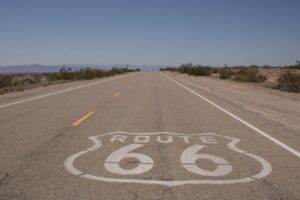
What is the famous nickname of U.S. Route 66?

The Mother Road

The Golden Path

The Freedom Trail

The King's Highway

Points won
0
Correct score
0%

More Quizzes

More Articles

Sports Records That Shocked the World

Sports Records That Shocked the World

⏱️ 5 min read

Throughout history, athletes have pushed beyond what seemed humanly possible, shattering expectations and rewriting record books in ways that left spectators and experts alike in disbelief. These extraordinary achievements represent more than just numbers—they embody the pinnacle of human determination, skill, and athletic prowess. From track and field to team sports, certain records have stood as monuments to what happens when talent meets opportunity at precisely the right moment.

Usain Bolt's Lightning Strike in Berlin

When Usain Bolt stepped onto the track at the 2009 World Championships in Berlin, the sprinting world had already witnessed his dominance. However, what unfolded during the 100-meter final defied all logic and scientific expectations. Bolt clocked 9.58 seconds, obliterating his own world record by 0.11 seconds—an eternity in elite sprinting. What made this achievement even more remarkable was the margin of improvement; most sprinting records are broken by hundredths of a second, not multiple tenths.

Sports scientists had long debated the theoretical limits of human speed, with many suggesting that 9.60 seconds represented an almost insurmountable barrier. Bolt didn't just break through this barrier; he demolished it. His subsequent 200-meter world record of 19.19 seconds at the same championship cemented his status as potentially the greatest sprinter in history. More than a decade later, these records remain untouched, with no athlete coming within striking distance of matching his performances.

Wilt Chamberlain's Unfathomable 100-Point Game

On March 2, 1962, Wilt Chamberlain accomplished what remains one of the most staggering individual achievements in professional sports history. Playing for the Philadelphia Warriors against the New York Knicks, Chamberlain scored 100 points in a single NBA game. This record has stood for over six decades, and the closest anyone has come was Kobe Bryant's 81-point performance in 2006—still 19 points short.

What makes Chamberlain's record even more astonishing is the context. He shot 36 of 63 from the field and 28 of 32 from the free-throw line, despite being a notoriously poor free-throw shooter throughout his career. The Warriors won the game 169-147, and Chamberlain's teammates actively worked to feed him the ball once they realized history was within reach. No footage exists of the complete game, adding to its legendary mystique. Modern basketball analysts suggest that changes in defensive strategies, game pace, and shot distribution make this record virtually unbreakable in today's NBA.

Bob Beamon's Gravity-Defying Leap

The 1968 Mexico City Olympics provided the stage for what many consider the single greatest athletic achievement ever recorded. Bob Beamon, an American long jumper, launched himself an incomprehensible 8.90 meters (29 feet, 2.5 inches) on his first attempt. The previous world record stood at 8.35 meters—Beamon had improved upon it by 55 centimeters, or nearly two feet, in one jump.

The measurement was so far beyond expectations that officials had difficulty measuring it with their optical equipment, which wasn't calibrated for such distances. When Beamon learned of his achievement, he suffered a "cataplectic seizure," literally collapsing from the emotional shock. His record stood for 23 years until Mike Powell broke it in 1991 with a jump of 8.95 meters—a record that still stands today. Beamon's leap represented such a quantum improvement that the term "Beamonesque" entered the sporting lexicon to describe performances that transcend normal expectations.

Cal Ripken Jr.'s Iron Man Streak

Durability in professional sports often goes underappreciated compared to flashy offensive statistics, but Cal Ripken Jr.'s consecutive games played streak stands as a testament to remarkable consistency and physical resilience. From May 30, 1982, to September 19, 1998, Ripken played in 2,632 consecutive Major League Baseball games, surpassing Lou Gehrig's seemingly untouchable record of 2,130 games.

This achievement becomes even more impressive when considering the physical demands of playing shortstop, one of baseball's most demanding defensive positions. Ripken played through injuries, illnesses, and personal challenges that would sideline most players. The modern era of sports science, with its emphasis on rest and injury prevention, makes this record nearly impossible to replicate. Teams now routinely rest healthy players, and the baseball season's grueling 162-game schedule makes consecutive play increasingly unlikely.

Florence Griffith-Joyner's Enduring Sprint Records

Florence Griffith-Joyner, known as "Flo-Jo," set women's sprint records that have defied generations of subsequent athletes. Her 100-meter record of 10.49 seconds, set in 1988, and her 200-meter record of 21.34 seconds from the same year remain untouched more than three decades later. These marks are particularly remarkable given the advances in training methods, nutrition, technology, and track surfaces since the late 1980s.

The gap between Griffith-Joyner's records and current world-class times remains substantial—her 100-meter record would still win most international competitions today. The longevity of these records has sparked ongoing discussions about the limits of human performance and what future generations might achieve. Her combination of speed, power, and technique created performances that continue to serve as the gold standard in women's sprinting.

The Lasting Impact of Unbreakable Records

These extraordinary records share common threads: they represent quantum leaps in performance rather than incremental improvements, and they occurred at moments when exceptional talent met optimal conditions. Whether through genetic gifts, perfect preparation, or serendipitous circumstances, these athletes achieved what seemed impossible. Their records don't just represent statistical milestones; they embody the outer limits of human potential and continue to inspire athletes worldwide to push beyond perceived boundaries. As sports science advances and new generations of athletes emerge, these records stand as challenges, daring someone to prove that the impossible might one day become possible once again.

10 Fun Facts About the American Revolution

10 Fun Facts About the American Revolution

⏱️ 6 min read

The American Revolution stands as one of the most pivotal moments in world history, transforming thirteen British colonies into an independent nation. While most people know the basic narrative of the war for independence, the conflict was filled with surprising details, unusual characters, and remarkable moments that often go untold in standard history books. These lesser-known facts reveal the human side of the Revolution and demonstrate just how extraordinary this period truly was.

Fascinating Details from America's Fight for Independence

1. The Youngest Soldier Was Only Six Years Old

John Quincy Adams may have become the sixth President of the United States, but few realize that his involvement in the Revolution began at an incredibly young age. However, the youngest documented combatant was actually a boy named John Lincoln, who served as a fifer at age six. Young boys often served as drummers and fifers in military units, providing crucial communication during battle when verbal orders couldn't be heard over the chaos. These young musicians weren't just mascots—they risked their lives alongside adult soldiers, and their rhythms directed troop movements during combat.

2. George Washington's Spy Network Used Invisible Ink

General George Washington oversaw one of history's most sophisticated espionage operations, known as the Culper Spy Ring. This network of intelligence agents operating in British-occupied New York used a secret chemical compound for invisible ink, referred to as "sympathetic stain." Developed by physician James Jay, the ink could only be revealed by applying a specific counteragent. Spies wrote seemingly innocent letters with regular ink while concealing crucial military intelligence between the lines using the invisible solution. This Revolutionary War espionage system was so effective that some of the spies' identities weren't discovered until the 20th century.

3. The Declaration of Independence Wasn't Signed on July 4th

While Americans celebrate Independence Day on July 4th—the date when the Continental Congress formally adopted the Declaration of Independence in 1776—most of the signatures weren't actually added until August 2nd. Some delegates didn't sign until even later, and one signature wasn't added until 1781. The document most Americans think of as the original Declaration is actually a formal parchment copy that was created after July 4th. The actual vote for independence occurred on July 2nd, which John Adams believed would be celebrated as America's independence day.

4. France Provided More Than Just Soldiers

French support was crucial to American victory, but their contribution went far beyond sending troops. France provided approximately 90 percent of the gunpowder used by Continental forces in the first two years of fighting. French financial support was equally vital—King Louis XVI's government loaned enormous sums to the revolutionary cause, ultimately contributing to France's own financial crisis and subsequent revolution. French engineers, particularly those who helped design fortifications, and French naval power, which proved decisive at Yorktown, were indispensable to American success.

5. Women Fought in Combat Disguised as Men

Deborah Sampson is the most famous example of a woman who disguised herself as a man to fight in the Continental Army, serving for over a year under the name Robert Shurtliff. She was wounded twice and managed to keep her identity secret even while receiving medical treatment. However, she wasn't alone—historians have documented several other women who fought in the Revolution while presenting as men. Beyond those in disguise, many women served openly in support roles, and some, like Margaret Corbin, took over artillery positions when their husbands fell in battle and received military pensions for their service.

6. The British Army Included Thousands of German Soldiers

Approximately thirty thousand troops fighting for the British cause were actually German soldiers, commonly called "Hessians" because many came from the German state of Hesse-Cassel. These weren't volunteers but professional soldiers whose services were contracted out by German princes to the British Crown. This practice of hiring foreign troops was common in 18th-century European warfare. Interestingly, many of these German soldiers decided to stay in America after the war ended, attracted by the availability of land and economic opportunities that were scarce in their homeland.

7. The Liberty Bell Never Rang on Independence Day

Despite popular legend, the Liberty Bell didn't ring on July 4, 1776, to announce the Declaration of Independence. This story was invented in the 1840s, decades after the actual events. The bell, originally cast in 1752 for the Pennsylvania State House, did ring for various public announcements during the Revolutionary period, but its iconic crack appeared sometime in the early 19th century. The bell didn't become known as the "Liberty Bell" until abolitionists adopted it as a symbol in their fight against slavery in the 1830s.

8. Smallpox Killed More Americans Than British Bullets

Disease proved to be a deadlier enemy than British forces during the Revolution. Smallpox epidemics ravaged Continental Army camps and colonial populations, killing more Americans than died in combat. George Washington made the controversial decision to inoculate the Continental Army in 1777, one of the first large-scale military inoculation programs in history. This decision required careful secrecy, as inoculation involved deliberately infecting soldiers with a mild form of the disease, temporarily weakening the army. Washington's bold public health initiative is now recognized as one of his most important strategic decisions of the war.

9. Native American Tribes Fought on Both Sides

The American Revolution was also a civil war that divided Native American nations. The Oneida and Tuscarora nations allied with the Americans, while the Mohawk, Seneca, Cayuga, and Onondaga generally supported the British. These choices were strategic, based on which side seemed most likely to protect Native lands and sovereignty. The Oneida, in particular, provided crucial support to Washington's army at Valley Forge. Tragically, regardless of which side they chose, most Native American nations lost territory and power as a result of the Revolution, as the new American government proved just as expansionist as the British had been.

10. The Last Battle Occurred After the Treaty Was Signed

The final military engagement of the American Revolution took place in India, not North America, and occurred in June 1783—months after the Treaty of Paris was signed in September 1782. British and French forces clashed at Cuddalore on the Indian coast, both unaware that peace had already been concluded across the Atlantic. This distant battle illustrates how the American Revolution was part of a larger global conflict, with Britain and France fighting in the Caribbean, Gibraltar, India, and across the world's oceans. News traveled slowly in the 18th century, and it took months for word of the peace treaty to reach combatants in distant theaters of war.

Conclusion

These remarkable facts demonstrate that the American Revolution was far more complex, surprising, and globally interconnected than simplified textbook narratives suggest. From child soldiers and invisible ink to the crucial role of diseases and the worldwide scope of the conflict, the war for American independence involved countless fascinating details that bring this historical period to life. Understanding these lesser-known aspects helps us appreciate the sacrifices, innovations, and sheer determination required to establish the United States as an independent nation, while also recognizing the diverse people and interests involved in this world-changing conflict.