







1 / 10 Questions
0 Points

What toxic heavy metal did ancient Egyptians use in their iconic black kohl eyeliner?

Mercury

Arsenic

Lead

Antimony

Points won
0
Correct score
0%

More Quizzes

More Articles

12 Fun Facts About the Renaissance Era

12 Fun Facts About the Renaissance Era

⏱️ 7 min read

The Renaissance, spanning roughly from the 14th to the 17th century, represents one of history's most transformative periods. This era of "rebirth" witnessed unprecedented achievements in art, science, literature, and human thought that fundamentally shaped Western civilization. Beyond the famous paintings and sculptures that define this period in popular imagination, the Renaissance was filled with fascinating details, quirky customs, and revolutionary ideas that reveal just how remarkably modern—and sometimes strange—this historical epoch truly was.

Fascinating Discoveries from the Renaissance Period

1. Leonardo da Vinci's Bizarre Sleep Schedule

Leonardo da Vinci, perhaps the Renaissance's most famous polymath, allegedly practiced polyphasic sleep—a method involving multiple short naps throughout the day rather than one long sleep period. According to historical accounts, he would sleep for just 20 minutes every four hours, totaling only two hours of sleep per day. This unconventional schedule, now sometimes called the "Uberman sleep cycle," supposedly gave him more waking hours to pursue his countless interests in painting, engineering, anatomy, and invention. Whether this contributed to his extraordinary productivity or was simply a peculiarity of genius remains a subject of debate among historians.

2. The Medicis Were Originally Wool Merchants

The legendary Medici family, who became the Renaissance's greatest patrons of the arts and produced multiple popes and queens, started their dynasty in the decidedly unglamorous wool trade. Before Giovanni di Bicci de' Medici established the family's banking empire in the late 14th century, the Medicis were modest traders in Florence. Their transformation from wool merchants to Europe's most influential banking dynasty illustrates the social mobility possible during this revolutionary period, when wealth and patronage could elevate families to unprecedented power and cultural influence.

3. Renaissance Dinner Parties Lasted Eight Hours

Wealthy Renaissance Italians took their dining extremely seriously, with elaborate banquets often lasting up to eight hours and featuring dozens of courses. These extravagant affairs weren't just about food; they were theatrical performances incorporating live music, poetry readings, dramatic presentations, and elaborate table decorations. Between courses, guests were entertained with performances, allowing their digestion to settle before the next culinary spectacle arrived. Some banquets featured edible sculptures, live animals released from pies, and dishes designed to surprise and delight guests with unexpected flavors and presentations.

4. Michelangelo Hated Painting the Sistine Chapel

Despite creating one of art history's most celebrated masterpieces, Michelangelo deeply resented painting the Sistine Chapel ceiling. He considered himself primarily a sculptor, not a painter, and felt that Pope Julius II had forced him into the four-year project against his will. Michelangelo even wrote poems complaining about the physical toll of painting overhead, describing how the work strained his neck, dripped paint onto his face, and caused his body to contort unnaturally. His letters reveal he was miserable throughout much of the commission, yet this reluctant masterpiece became his most famous achievement.

5. Renaissance Women Used Deadly Belladonna for Beauty

Renaissance beauty standards were so demanding that women regularly risked their health to achieve the desired appearance. To create the fashionable look of enlarged, luminous eyes, women would drop juice from the belladonna plant (also called "deadly nightshade") into their eyes, dilating their pupils. The practice was extremely dangerous, potentially causing blindness, confusion, and even death from poisoning. Women also used lead-based cosmetics to achieve pale, porcelain skin, unknowingly causing lead poisoning. These toxic beauty practices demonstrate the extreme lengths to which Renaissance individuals would go to conform to societal ideals of attractiveness.

6. The Renaissance Invented the Fork

While eating utensils had existed in various forms for millennia, the modern dining fork was a Renaissance Italian innovation that spread slowly across Europe. Before the 11th century, people primarily ate with their hands or used knife and spoon combinations. When the fork was introduced to Venice, many clergymen condemned it as an affront to God's design, arguing that fingers were the natural tools for eating. The utensil was considered effeminate and pretentious, and it took several centuries before forks became standard dining implements throughout Europe. Catherine de' Medici is often credited with popularizing forks in France when she married King Henry II in 1533.

7. Shakespeare Invented Over 1,700 Words

William Shakespeare, the Renaissance's literary giant, contributed more to the English language than perhaps any other individual. Scholars credit him with coining or first recording approximately 1,700 words that remain in use today, including "assassination," "bedroom," "lonely," "generous," "critic," and "eyeball." Beyond individual words, he created countless phrases that have become commonplace expressions: "break the ice," "wild goose chase," "heart of gold," and "in a pickle" all originated in Shakespeare's plays. His linguistic creativity fundamentally shaped how English speakers express themselves, demonstrating the Renaissance spirit of innovation applied to language itself.

8. Renaissance Children Were Dressed as Miniature Adults

During the Renaissance, the concept of childhood as a distinct life stage with its own needs and clothing didn't exist as it does today. Children from wealthy families were dressed in scaled-down versions of adult clothing, complete with elaborate ruffs, corsets, and formal accessories. Young boys wore dresses until approximately age seven, when they were "breeched" and transitioned to wearing doublets and hose like adult men. This ceremony marked an important milestone in a boy's life. The clothing was often restrictive and impractical for play, reflecting the period's view of children as small adults rather than individuals with unique developmental needs.

9. Tulip Bulbs Cost More Than Houses

In the later Renaissance period, during the 1630s, the Netherlands experienced "Tulip Mania"—history's first recorded speculative bubble. Tulips, recently introduced from the Ottoman Empire, became status symbols among wealthy Dutch merchants. Prices for rare tulip bulbs skyrocketed to absurd levels, with some single bulbs selling for more than the cost of a luxurious Amsterdam house. At the peak of the mania, a Semper Augustus bulb could fetch the equivalent of a skilled craftsman's annual income multiplied ten times over. When the bubble inevitably burst in 1637, many investors faced financial ruin, providing an early lesson in speculative excess.

10. Galileo Was a Musician Before Becoming a Scientist

Galileo Galilei, the brilliant astronomer and physicist who revolutionized scientific thinking, came from a musical family and was an accomplished lutenist before pursuing science. His father, Vincenzo Galilei, was a professional musician and music theorist who conducted experiments on string tension and pitch. This musical background significantly influenced Galileo's scientific approach; his father's empirical experiments with musical instruments taught young Galileo the value of hands-on experimentation over purely theoretical reasoning. The mathematical relationships in music theory also prepared Galileo to understand the mathematical principles governing physics and astronomy.

11. Renaissance Plague Doctors Wore Bizarre Beaked Masks

During plague outbreaks in Renaissance Europe, specialized physicians wore distinctive costumes featuring long, bird-like beaks filled with aromatic herbs, spices, and flowers. These plague doctors believed that diseases spread through "miasma" or bad air, and that the pleasant-smelling substances in their masks would protect them from infection. The full costume included a long waxed overcoat, gloves, boots, and a wide-brimmed hat—creating an eerie, unforgettable appearance. While their understanding of disease transmission was incorrect, the costume did provide some barrier protection. These unsettling figures became iconic symbols of Renaissance medical practice and the era's devastating plague epidemics.

12. Renaissance Artists Ground Their Own Paints from Precious Materials

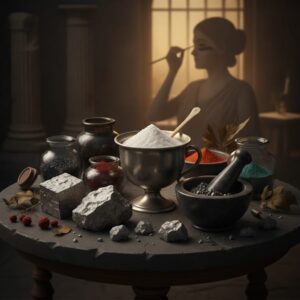
Unlike modern artists who purchase ready-made paints, Renaissance masters personally created their pigments through labor-intensive processes using exotic and expensive materials. The coveted ultramarine blue came from grinding lapis lazuli stones imported from Afghanistan, making it more expensive than gold—so costly that contracts often specified exactly how much ultramarine an artist could use. Red pigments came from crushed insects (cochineal), while some whites contained lead. Artists employed apprentices partly to handle the tedious work of grinding minerals, mixing binders, and preparing surfaces. This intimate knowledge of materials' chemical properties gave Renaissance artists deep technical expertise that contributed to their masterpieces' longevity and luminous quality.

The Renaissance Legacy

These twelve facts reveal that the Renaissance was far more complex, peculiar, and fascinating than simplified textbook accounts suggest. From toxic beauty treatments to revolutionary linguistic creativity, from bizarre sleep experiments to devastating economic bubbles, this period embodied humanity's capacity for both brilliance and folly. The Renaissance spirit—characterized by curiosity, experimentation, artistic ambition, and the willingness to challenge established norms—created the foundation for modern Western culture. Understanding these lesser-known details helps us appreciate not just the era's masterpieces and achievements, but the fully human experience of the individuals who created them, complete with their eccentric habits, questionable choices, and extraordinary innovations that continue influencing our world today.

Top 10 Darkest Moments in Human History

Top 10 Darkest Moments in Human History

⏱️ 5 min read

Throughout the centuries, humanity has witnessed events of unimaginable suffering and tragedy that have left indelible marks on our collective consciousness. These periods of darkness serve as sobering reminders of the consequences of hatred, greed, and indifference. Understanding these moments is essential not only to honor those who suffered but also to ensure that future generations learn from the past and work toward preventing such atrocities from occurring again.

Ten Devastating Chapters in Human History

1. The Holocaust and Nazi Genocide

Between 1941 and 1945, Nazi Germany orchestrated the systematic murder of six million Jews, along with millions of others including Romani people, disabled individuals, political prisoners, and LGBTQ+ individuals. The Holocaust represents one of history's most organized attempts at genocide, utilizing concentration camps, gas chambers, and death squads to execute their horrific plan. The industrial scale of the killing, combined with the bureaucratic efficiency with which it was carried out, shocked the world and led to the establishment of international laws against genocide.

2. The Transatlantic Slave Trade

Spanning over 400 years from the 16th to the 19th century, the transatlantic slave trade forcibly transported an estimated 12 to 15 million Africans to the Americas. Millions more died during the brutal Middle Passage across the Atlantic Ocean, chained in horrific conditions below deck. This systematic dehumanization and exploitation destroyed countless lives, families, and communities, while its legacy of racial inequality and injustice continues to impact societies worldwide today.

3. The Rwandan Genocide

In just 100 days during 1994, approximately 800,000 to 1 million Tutsi and moderate Hutu people were systematically murdered in Rwanda. Fueled by ethnic tensions and political manipulation, neighbors turned against neighbors in one of the fastest genocides in history. The international community's failure to intervene despite clear warnings represents a profound moral failure that continues to haunt global institutions.

4. The Cambodian Killing Fields

Between 1975 and 1979, the Khmer Rouge regime under Pol Pot killed an estimated 1.5 to 2 million Cambodians—nearly a quarter of the country's population. In their attempt to create an agrarian communist utopia, they targeted intellectuals, professionals, ethnic minorities, and anyone perceived as opposed to their ideology. Victims were tortured in detention centers and executed in mass graves that became known as the killing fields.

5. The Armenian Genocide

During World War I, the Ottoman Empire systematically murdered approximately 1.5 million Armenians between 1915 and 1923. Victims were subjected to death marches through the Syrian desert without food or water, mass executions, and forced deportations. This tragedy is considered one of the first modern genocides, yet official recognition remains politically contentious in some nations to this day.

6. The Holodomor Famine in Ukraine

In 1932-1933, Soviet policies under Joseph Stalin deliberately created a man-made famine in Ukraine that killed an estimated 3 to 7 million people. By confiscating grain and food supplies while preventing people from leaving affected areas, the Soviet government used starvation as a weapon to suppress Ukrainian nationalism and force collectivization. Families resorted to eating grass, bark, and in extreme cases, evidence suggests instances of cannibalism occurred.

7. The Atomic Bombings of Hiroshima and Nagasaki

On August 6 and 9, 1945, the United States dropped atomic bombs on the Japanese cities of Hiroshima and Nagasaki, killing an estimated 200,000 people, most of them civilians. Many died instantly from the blast and heat, while countless others suffered from radiation sickness and burns in the following days, months, and years. These remain the only instances of nuclear weapons used in warfare, ushering humanity into the atomic age and demonstrating the terrifying destructive capacity of modern weaponry.

8. The Great Leap Forward Famine

From 1958 to 1962, China's Great Leap Forward resulted in the deadliest famine in human history, claiming between 15 to 55 million lives. Mao Zedong's disastrous agricultural and economic policies, combined with forced collectivization and unrealistic production quotas, led to widespread starvation. Local officials, under pressure to meet targets, often reported false harvest numbers while people starved, and those who spoke out faced severe punishment.

9. The Mongol Conquests

During the 13th and 14th centuries, the Mongol invasions under Genghis Khan and his successors resulted in the deaths of approximately 30 to 40 million people—roughly 11% of the world's population at the time. Entire cities were razed, populations were massacred, and agricultural lands were destroyed. While the Mongol Empire eventually facilitated trade and cultural exchange, the initial conquests represented unprecedented destruction and loss of life.

10. The Belgian Congo Atrocities

Between 1885 and 1908, King Leopold II of Belgium's brutal exploitation of the Congo Free State resulted in an estimated 10 million deaths—half of the region's population. The quest for rubber and ivory led to a reign of terror involving forced labor, mutilation, starvation, and mass killings. Workers who failed to meet quotas had their hands cut off, and entire villages were destroyed as punishment. This period represents one of the worst cases of colonial exploitation and crimes against humanity.

Learning from Darkness

These ten tragic periods in human history represent the depths to which humanity can descend when hatred, greed, and ideology override compassion and human dignity. Each event involved the systematic dehumanization of victims, the complicity or indifference of bystanders, and leadership that prioritized power over human life. While the specific circumstances differ, common threads of prejudice, totalitarianism, and the failure of international intervention connect these tragedies. Remembering these dark moments is not about dwelling on suffering, but about understanding the warning signs, honoring the victims, and committing ourselves to building a more just and humane world where such atrocities cannot happen again.