





1 / 10 Questions
0 Points

Which Method Preserved Food During Early Space Missions?

Vacuum-sealed tubes

Freeze-drying

Canning

Irradiation

Points won
0
Correct score
0%

More Quizzes

More Articles

Songs That Almost Never Got Released

Songs That Almost Never Got Released

⏱️ 5 min read

The music industry is filled with stories of near-misses and last-minute decisions that changed the course of popular culture. Some of the most iconic songs in history were almost shelved, rejected, or hidden away, never to reach the ears of millions. These tracks faced resistance from record labels, skepticism from band members, or simply bad timing. Yet they persevered to become cultural landmarks that defined generations.

Record Label Rejections and Executive Hesitation

Record executives have historically played gatekeepers to what music reaches the public, and their judgment hasn't always been sound. Many legendary tracks faced significant opposition from the very people tasked with promoting them.

Queen's "Bohemian Rhapsody" stands as perhaps the most famous example of a song that nearly remained in the vault. When Freddie Mercury presented the six-minute epic to EMI executives in 1975, they were adamant that the song was too long and too complex for radio play. The standard radio single at the time ran around three minutes, and the unconventional structure—complete with operatic sections and multiple tempo changes—defied all commercial conventions. The band's manager had to personally deliver the track to DJ Kenny Everett, who played it repeatedly despite being asked only to preview it. The overwhelming listener response forced the label's hand, and the song went on to become one of the best-selling singles of all time.

Similarly, "Smells Like Teen Spirit" by Nirvana almost didn't make it to the public. The band's label, DGC Records, had minimal expectations for the album "Nevermind" and allocated a modest budget for promotion. They considered the song too abrasive for mainstream radio and planned only a limited release. Only after college radio stations began playing the track obsessively did the label recognize its potential, eventually propelling it to become the anthem of Generation X.

Internal Band Conflicts and Creative Disputes

Sometimes the greatest obstacles to a song's release come from within the band itself. Creative differences and personal conflicts have nearly buried numerous hits before they could reach audiences.

The Beatles' "Strawberry Fields Forever" underwent such extensive reworking that John Lennon nearly abandoned it entirely. He recorded multiple versions in different keys and tempos, expressing frustration with his inability to capture the sound in his head. Producer George Martin ultimately spliced together two completely different takes—one in a higher key and faster tempo, the other lower and slower—to create the final version. The technical achievement was remarkable for 1967, and Lennon's perfectionism almost prevented one of the band's most beloved songs from existing.

The Doors faced internal resistance with "Light My Fire." Elektra Records wanted to release it as a single, but the seven-minute album version was far too long for radio. Jim Morrison initially refused to create a shortened edit, viewing it as artistic compromise. Only after significant persuasion from the label and his bandmates did he reluctantly agree to a radio edit that cut the extended instrumental sections, allowing the song to reach number one on the Billboard Hot 100.

Last-Minute Album Additions

Some of the most successful songs in history were afterthoughts, added to albums at the final hour or nearly left off entirely due to time constraints or budget limitations.

"Wonderwall" by Oasis was almost excluded from the album "(What's the Story) Morning Glory?" Noel Gallagher considered it too soft for the band's image and worried it didn't fit with the harder rock tracks dominating the record. The song was recorded quickly at the end of the sessions, and only after producer Owen Morris insisted on its inclusion did it make the final cut. It became the band's biggest hit in the United States and one of the defining songs of the 1990s Britpop movement.

Prince's "When Doves Cry" was written and recorded in a single day after Prince decided his album "Purple Rain" needed another strong single. Most remarkably, after completing the track, he made the unconventional decision to remove the bass line entirely—a move that could have killed the song's commercial prospects. Instead, the sparse, unusual production helped make it one of the best-selling singles of 1984 and cemented Prince's reputation as a fearless innovator.

Technical Limitations and Budget Constraints

Financial pressures and technological restrictions have historically threatened many recordings, with some artists fighting to complete their visions against resource limitations.

"Good Vibrations" by The Beach Boys nearly bankrupted Brian Wilson's creative ambitions. The song required over 90 hours of studio time across multiple studios, costing approximately $50,000 in 1966—an astronomical sum equivalent to hundreds of thousands today. Capitol Records executives grew increasingly nervous about the expenditure, and Wilson faced enormous pressure to abandon the project. His persistence resulted in what many critics consider one of the greatest singles ever recorded, though the financial strain contributed to his stepping back from future Beach Boys productions.

The Role of Chance and Timing

Sometimes fate and fortunate timing play crucial roles in a song's release. "Sittin' On The Dock Of The Bay" by Otis Redding was recorded just three days before his tragic death in a plane crash. He had considered the track unfinished and planned to record additional vocals. The raw, incomplete version—complete with his whistling because he hadn't yet written final lyrics for that section—was released posthumously and became his biggest hit, though Redding never knew the impact his final recording would have on music history.

These stories remind us that the path from creation to cultural phenomenon is rarely straightforward. The songs that define eras and generations often survive against significant odds, requiring advocacy, persistence, and sometimes just fortunate timing to reach the audiences they ultimately move and inspire.
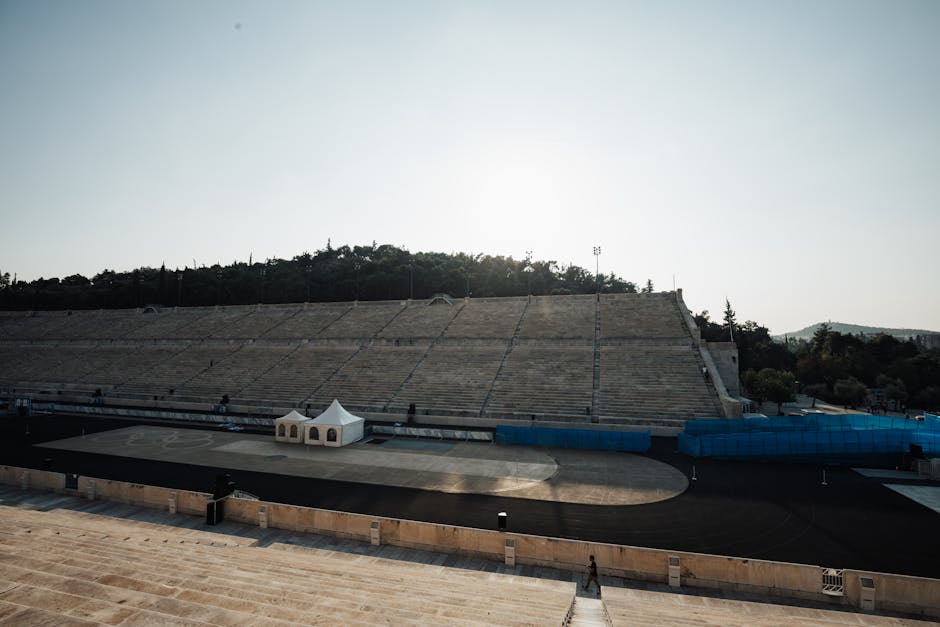
Did You Know The First Olympics Were Held in 776 BC?

Did You Know The First Olympics Were Held in 776 BC?

⏱️ 5 min read

The ancient Olympic Games stand as one of the most enduring legacies of classical civilization, with their origins tracing back to 776 BC in the sanctuary of Olympia, Greece. This date marks the first recorded Olympic champion, a cook named Coroebus from the nearby city of Elis, who won the stadion race—a sprint of approximately 192 meters. While athletic competitions likely occurred at Olympia before this date, 776 BC represents the beginning of the systematic recording of Olympic victors, establishing a chronological framework that ancient Greeks used to measure time itself.

The Sacred Origins of the Ancient Games

The ancient Olympics were far more than athletic competitions; they were fundamentally religious festivals held in honor of Zeus, the king of the Greek gods. The sanctuary at Olympia, located in the western Peloponnese region, served as one of the most important religious centers in the ancient Greek world. According to Greek mythology, the Games were founded by Heracles (Hercules) after he completed his twelve labors, though other legends attribute their creation to Pelops, a mythical king who won a chariot race against King Oenomaus.

The religious significance of the Games meant that a sacred truce, known as the "ekecheiria," was declared before and during the Olympic festival. This truce allowed athletes, spectators, and official delegations to travel safely to and from Olympia, even if their home cities were at war. Violations of this sacred truce were considered serious offenses against the gods and were met with heavy fines and exclusion from the Games.

The Evolution of Olympic Competition

For the first thirteen Olympiads (a four-year period between Games), the stadion race remained the only event. However, the program gradually expanded to include a diverse range of competitions that tested various aspects of physical prowess and skill:

  • The diaulos: a two-stade race (approximately 384 meters) added in 724 BC
  • The dolichos: a long-distance race ranging from 7 to 24 stades, introduced in 720 BC
  • Wrestling: added in 708 BC
  • Pentathlon: consisting of discus, javelin, jumping, running, and wrestling, also introduced in 708 BC
  • Boxing: added in 688 BC
  • Chariot racing: introduced in 680 BC
  • Pankration: a brutal combination of boxing and wrestling with minimal rules, added in 648 BC

By the fifth century BC, the Olympic program had evolved into a five-day festival featuring numerous events for men and boys in different age categories. The competitions attracted athletes from all Greek city-states and colonies, from Spain to the Black Sea, making the Olympics a truly pan-Hellenic celebration.

The Olympic Athlete and Training Regimen

Ancient Olympic athletes were exclusively male and competed entirely nude, a practice that distinguished Greek athletic culture from other ancient civilizations. The Greek word "gymnasium" derives from "gymnos," meaning naked. Athletes trained year-round under the guidance of professional trainers, following strict dietary and exercise regimens designed to maximize physical performance.

Participation in the Olympics was limited to free-born Greek men who had not committed any crimes or sacrilege. Women were generally prohibited from competing or even attending the Games as spectators, with the exception of the priestess of Demeter. However, separate games called the Heraia were held at Olympia for unmarried women to honor the goddess Hera.

The Rewards of Victory

Unlike modern Olympics with gold, silver, and bronze medals, ancient Olympic victors received an olive wreath cut from the sacred olive tree near the Temple of Zeus. While this prize might seem modest, Olympic champions returned to their home cities as heroes. They often received substantial rewards including monetary prizes, free meals for life, exemption from taxes, and front-row seats at public events. Poets composed victory odes in their honor, and sculptors created statues commemorating their achievements.

The fame associated with Olympic victory was so great that some city-states offered enormous financial incentives to their athletes. An Olympic champion brought tremendous prestige to his home city, demonstrating its superiority and earning favor from the gods.

The Site of Ancient Olympia

The sanctuary at Olympia evolved over centuries into an impressive complex of religious and athletic facilities. The site featured the magnificent Temple of Zeus, which housed one of the Seven Wonders of the Ancient World—a massive chryselephantine (gold and ivory) statue of Zeus created by the sculptor Phidias. The athletic facilities included the stadium, which could accommodate approximately 45,000 spectators, the hippodrome for chariot and horse races, and various gymnasiums and training areas.

Excavations at Olympia, which began in the nineteenth century and continue today, have revealed the extensive remains of these structures, along with thousands of artifacts including athletic equipment, victory monuments, and valuable offerings dedicated to the gods.

The End of an Ancient Tradition

The ancient Olympic Games continued for nearly twelve centuries, surviving political changes, wars, and the Roman conquest of Greece. Under Roman rule, the Games initially maintained their importance, though some traditions were modified. However, as Christianity spread throughout the Roman Empire, pagan religious festivals came under increasing scrutiny.

In 393 AD, the Roman Emperor Theodosius I, a devout Christian, issued a decree banning all pagan festivals and practices throughout the empire. The Olympic Games, with their deep connections to Greek polytheistic religion, were prohibited after 293 consecutive Olympiads. The sanctuary at Olympia was subsequently abandoned, and later destroyed by earthquakes and floods, remaining buried until modern archaeological excavations brought it back to light.

The revival of the Olympic Games in 1896, initiated by French educator Baron Pierre de Coubertin, sought to recapture the spirit of ancient athletic competition while adapting it to modern international contexts. Today's Olympics, while vastly different in scope and organization, still honor the legacy established in 776 BC at Olympia, demonstrating the enduring power of athletic competition to unite people across cultural and national boundaries.