











1 / 10 Questions
0 Points

Which Planet Is The Largest In Our Solar System?

Earth

Jupiter

Saturn

Mars

Points won
0
Correct score
0%

More Quizzes

More Articles

Did You Know? The Shortest War in History Lasted 38 Minutes

Did You Know? The Shortest War in History Lasted 38 Minutes

⏱️ 6 min read

The Anglo-Zanzibar War of 1896 holds the remarkable distinction of being the shortest war in recorded history, lasting a mere 38 to 45 minutes. This brief but significant conflict between the British Empire and the Sultanate of Zanzibar occurred on August 27, 1896, and provides a fascinating glimpse into colonial power dynamics at the end of the 19th century. The following facts illuminate the extraordinary circumstances, key players, and lasting impact of this brief military engagement.

The Conflict's Origins and Key Facts

1. The Death of a Pro-British Sultan

Sultan Hamad bin Thuwaini, who had been cooperative with British interests, died suddenly on August 25, 1896. His death created a power vacuum that would trigger the crisis. British officials suspected poisoning, though this was never proven.

2. The Unauthorized Succession

Sultan Khalid bin Barghash seized power immediately after Hamad's death without British approval, directly violating an 1886 treaty that required British consent for any new sultan.

3. The British Ultimatum

British authorities issued an ultimatum to Khalid, demanding he vacate the palace by 9:00 AM on August 27, 1896, or face military action.

4. The Defiant Sultan's Army

Khalid assembled a defensive force of approximately 2,800 men, including palace guards, servants, and loyal civilians who gathered to defend the palace.

5. The Royal Yacht HHS Glasgow

Among Khalid's military assets was the royal yacht HHS Glasgow, a wooden vessel armed with antique cannons that would prove no match for British firepower.

6. The British Naval Squadron

The British assembled five warships in Zanzibar harbor: HMS St. George, HMS Philomel, HMS Thrush, HMS Racoon, and HMS Sparrow, representing overwhelming naval superiority.

7. The Exact Start Time

The war officially began at precisely 9:02 AM when the ultimatum expired and British ships opened fire on the palace.

8. The Bombardment Duration

Most historical accounts agree the bombardment lasted between 38 and 45 minutes, with 38 minutes being the most commonly cited duration.

9. The Palace Architecture

The Sultan's Palace was a wooden structure that proved extremely vulnerable to naval artillery, contributing to the war's brief duration.

10. British Shell Count

British warships fired approximately 500 shells and 4,100 machine gun rounds during the engagement, demonstrating the intensity of the brief conflict.

11. The Zanzibar Casualties

Approximately 500 Zanzibari defenders were killed or wounded during the bombardment, representing a casualty rate of nearly 20 percent.

12. British Casualties

Only one British sailor was injured during the entire conflict, highlighting the one-sided nature of the engagement.

13. The Destroyed Royal Yacht

The HHS Glasgow was sunk within minutes of the bombardment's start, eliminating any potential naval resistance.

14. The Palace Fire

British shells started fires throughout the wooden palace structure, forcing defenders to evacuate and effectively ending organized resistance.

15. Sultan Khalid's Escape

Khalid fled the palace during the bombardment and took refuge in the German consulate, avoiding capture by British forces.

16. German Diplomatic Protection

Germany's decision to harbor Khalid created a brief diplomatic tension, though the Germans eventually negotiated his departure.

17. Khalid's Exile Route

After hiding in the German consulate, Khalid was eventually smuggled to German East Africa (modern-day Tanzania) where he lived in exile.

18. The British-Approved Sultan

Hamoud bin Mohammed was installed as Sultan immediately after the war, fully compliant with British colonial interests.

19. The Treaty Enforcement

The war effectively enforced the 1886 treaty provisions giving Britain control over Zanzibar's succession and foreign policy.

20. The Colonial Context

The conflict occurred during the height of the "Scramble for Africa," when European powers were aggressively expanding their colonial holdings.

21. Zanzibar's Strategic Importance

The island served as a crucial trading hub for spices, ivory, and unfortunately, slaves, making it valuable to British commercial interests.

22. The Slavery Factor

Britain used the war to further enforce anti-slavery policies in Zanzibar, though economic control was equally important to their interests.

23. Modern Weaponry Versus Outdated Arms

The technological disparity was stark, with British modern naval guns facing palace defenders armed with rifles and antique cannons.

24. No Formal Declaration

Technically, no formal declaration of war was issued; the conflict began immediately after the ultimatum expired.

25. The Guinness World Record

The conflict is officially recognized by Guinness World Records as the shortest war in history.

26. Contemporary News Coverage

International newspapers widely reported the conflict, with many emphasizing the brevity and one-sided nature of the engagement.

27. The War Indemnity

Following the conflict, Britain imposed a war indemnity on Zanzibar, requiring the sultanate to pay for the ammunition used in the bombardment.

28. Khalid's Later Capture

Khalid was eventually captured by British forces in 1916 during World War I and exiled to Saint Helena and later the Seychelles.

29. Palace Reconstruction

A new palace was constructed on the site, though the original structure was completely destroyed during the bombardment.

30. The American Presence

An American citizen was present in the palace during the bombardment serving as Khalid's advisor, though he survived the attack.

31. Photographic Documentation

The war was photographed, providing rare visual documentation of late 19th-century colonial military action.

32. British Marine Deployment

British Royal Marines were prepared for a ground assault but never needed to deploy due to the effective naval bombardment.

33. Zanzibari National Memory

The war remains a significant event in Tanzanian and Zanzibari historical memory, symbolizing colonial subjugation.

34. The Treaty of Protection

Following the war, Zanzibar became a British protectorate in all but name, lasting until 1963.

35. Economic Consequences

British control solidified after the war led to significant changes in Zanzibar's trade patterns and economic structure.

36. Architectural Legacy

The destroyed palace site became a reminder of the conflict, with later structures built with the war's history in mind.

37. Military Lessons Learned

The war demonstrated the futility of resisting modern naval power without comparable technology, influencing future colonial resistance strategies.

38. Historical Commemoration

Today, the Anglo-Zanzibar War is remembered in museums and historical sites in Zanzibar, serving as an educational example of colonial-era conflicts.

Conclusion

The Anglo-Zanzibar War's 38-minute duration belies its historical significance as a demonstration of colonial power dynamics in late 19th-century Africa. These 38 facts reveal not just a brief military engagement, but a complex story of succession disputes, imperial control, technological superiority, and lasting political consequences. The conflict serves as a stark reminder of how overwhelming force and modern weaponry could quickly resolve colonial disputes in Britain's favor, while simultaneously highlighting the human cost of imperial ambitions. Though brief, this war permanently altered Zanzibar's political trajectory and remains a powerful symbol of the colonial era's profound impact on African sovereignty and self-determination.
Why Electric Guitars Needed Amplification Before 1931

Why Electric Guitars Needed Amplification Before 1931

Why Electric Guitars Needed Amplification Before 1931

By Trivia Daily, Staff Writer — Published August 12, 2026

Table of Contents

Here's a curious fact that surprises many music lovers: electric guitars needed amplification before they were even invented. That sounds impossible, right? The truth is, what we now call the electric guitar didn't exist in 1931—but the acoustic guitars of that era desperately needed a solution to a volume problem that was holding back an entire generation of musicians. Discover the fascinating story of why guitarists were searching for amplification long before anyone had built a true electric guitar, and explore the amazing technological journey that changed music forever.

Before 1931, guitars faced a fundamental acoustic limitation. In jazz bands and orchestras of the 1920s, guitars simply couldn't compete with the volume of horns, drums, and pianos. No matter how hard a guitarist strummed, the instrument's natural sound got lost in the mix. This wasn't just an inconvenience—it was a career-limiting problem for professional musicians who wanted their instrument to be heard.

Key Takeaways

  • Acoustic guitars before 1931 couldn't produce enough volume to compete with brass instruments and drums in large ensembles
  • Early attempts at guitar amplification used mechanical resonators and horn attachments, similar to phonograph technology
  • The electromagnetic pickup, developed in the early 1930s, finally solved the volume problem by converting string vibrations into electrical signals
  • What we call "electric guitars" today didn't exist before the pickup was invented—musicians were trying to amplify traditional acoustic instruments
  • The quest for guitar amplification drove innovation across multiple fields, from physics to electrical engineering
  • Early amplified guitars were often hollow-bodied instruments fitted with experimental pickup devices

The Volume Problem That Electric Guitars Needed to Solve

Acoustic guitars produce sound through a beautifully simple mechanism: vibrating strings transfer energy to the instrument's hollow body, which acts as a resonating chamber. The soundhole projects these vibrations into the air as audible sound waves. But this natural amplification has strict physical limits.

A guitar's body can only move so much air. The size of the soundbox, the tension of the strings, and the materials used all constrain how loud the instrument can get. In a small room or intimate setting, an acoustic guitar sounds wonderful. Put that same guitar on a stage with a full jazz band, and it becomes nearly inaudible.

Professional guitarists in the 1920s faced this challenge daily. While violinists could dig into their strings with aggressive bowing and pianists could pound the keys, guitarists had no way to increase their volume beyond a certain threshold. Strumming harder only created a harsher tone, not meaningful projection. The guitar risked becoming a parlor instrument—pleasant for solo performances but impractical for ensemble work.

Early Mechanical Amplification Attempts

Long before electrical solutions emerged, inventors tried mechanical approaches. Some attached metal resonator cones to guitar bodies, similar to the technology used in phonographs. These "resonator guitars" did produce more volume, and they found a niche in blues and folk music. The National String Instrument Corporation pioneered these designs in the late 1920s.

Other experiments included attaching horn-shaped amplifiers to guitars, again borrowing from phonograph design. Some luthiers built guitars with larger bodies or unusual shapes to maximize acoustic projection. Each approach helped marginally, but none solved the fundamental problem: acoustic amplification alone couldn't make guitars loud enough for modern performance demands.

These mechanical solutions also changed the guitar's tone in ways many musicians found undesirable. The resonator guitars had a distinctive metallic quality that worked for certain genres but didn't suit everyone's needs. Musicians wanted volume without sacrificing the warm, traditional guitar sound they loved.

The Electromagnetic Breakthrough

The real solution required thinking about sound in an entirely new way. Instead of making the guitar's body vibrate more air, what if you could convert string vibrations into electrical signals? Those signals could then be amplified electronically and projected through a loudspeaker at any volume desired.

This concept relied on electromagnetic induction, a principle of physics discovered in the nineteenth century. A vibrating steel string moving through a magnetic field generates a tiny electrical current. That current, though weak, contains all the information about the string's vibration—its frequency, amplitude, and timbre. Amplify that signal electrically, and you can make it as loud as needed without changing the original tone.

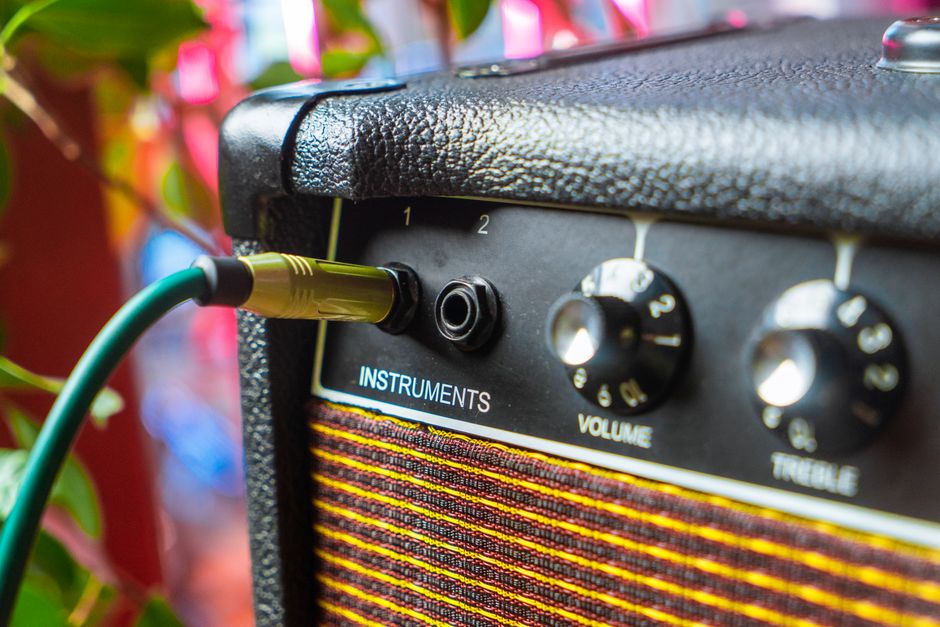
The electromagnetic pickup made this possible. Typically consisting of magnets wrapped with fine wire coils, the pickup sits beneath the guitar strings. As the strings vibrate, they disturb the magnetic field, inducing electrical currents in the coils. These currents travel through a cable to an amplifier, which boosts the signal and sends it to a speaker.

Why 1931 Marks a Turning Point

The early 1930s saw the first commercially viable electromagnetic pickups for guitars. Several inventors and companies were working on similar solutions simultaneously, driven by the clear market demand from frustrated guitarists. The Electro String Instrument Corporation, founded by George Beauchamp and Adolph Rickenbacker, developed one of the first successful pickup designs around this time.

These early pickups were often installed on modified acoustic guitars or on new instruments designed specifically for electromagnetic amplification. The famous "Frying Pan" guitar—a lap steel instrument with a circular body—became one of the first commercially produced electric guitars in 1932. Its pickup design proved that the concept worked reliably.

The technology spread quickly once musicians heard the results. Suddenly, guitarists could match the volume of any other instrument. They could perform solos that cut through the loudest bands. The guitar transformed from a rhythm instrument struggling to be heard into a lead voice capable of dominating a performance.

Comparing Acoustic and Early Electric Amplification

Feature Acoustic Amplification Electromagnetic Amplification
Volume Control Limited by body size and string tension Adjustable from whisper to stadium-level
Tone Modification Fixed by instrument construction Adjustable via amplifier settings
Ensemble Balance Easily overpowered by horns and drums Can compete with any instrument
Technology Required None—purely mechanical Pickup, amplifier, speaker, electricity

The Ripple Effects on Music

Amplification didn't just make guitars louder—it fundamentally changed what the instrument could do. Electric amplification enabled new playing techniques. Guitarists could play softer passages that the pickup would still capture and amplify. They could sustain notes longer. They could explore tonal variations that would have been inaudible on acoustic instruments.

The technology also paved the way for effects and processing. Once the guitar signal existed as electricity, it could be manipulated electronically. This eventually led to distortion, reverb, delay, and the countless effects that define modern guitar music. None of this would have been possible without that first step: converting string vibrations into electrical signals.

Different music genres embraced electric amplification at different rates. Jazz guitarists adopted it quickly, grateful for the ability to solo effectively. Country and western swing musicians followed soon after. Blues guitarists discovered that overdriving early amplifiers created appealing distortion. Rock and roll, still decades away, would be unthinkable without amplified guitars.

Frequently Asked Questions

Did electric guitars exist before 1931?

No, true electric guitars with electromagnetic pickups didn't exist before the early 1930s. What existed were acoustic guitars that musicians desperately wanted to amplify, driving the invention of pickup technology around 1931-1932.

How did guitarists perform in loud bands before amplification?

Guitarists primarily played rhythm parts and were often relegated to barely audible roles in large ensembles. Some used resonator guitars or other mechanical amplification methods, but these had limited effectiveness and altered the instrument's tone significantly.

What was the first commercially successful electric guitar?

The Rickenbacker "Frying Pan" lap steel guitar, introduced in 1932, was among the first commercially produced electric guitars. It featured an electromagnetic pickup and proved the viability of electric amplification for guitars.

Can you play an electric guitar without an amplifier?

Yes, but it produces very little volume because solid-body electric guitars lack the resonating chamber of acoustic guitars. The strings vibrate, but without amplification, the sound is faint and thin—demonstrating why amplification was so essential to the instrument's design.

The story of why electric guitars needed amplification before they existed reveals how necessity drives innovation. Musicians facing a practical problem—being heard—sparked a technological revolution that transformed not just the guitar, but the entire landscape of popular music. Every time you hear an electric guitar today, you're hearing the solution to a volume problem that frustrated jazz guitarists nearly a century ago.