








1 / 10 Questions
0 Points

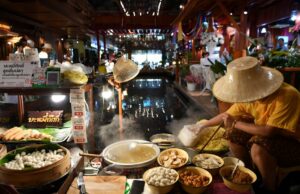
Which Ingredient Is Used To Make Miso?

Rice vinegar

Fermented fish

Seaweed

Fermented soybeans

Points won
0
Correct score
0%

More Quizzes

More Articles

Did You Know Game of Thrones Took 10 Years to Film?

Did You Know Game of Thrones Took 10 Years to Film?

⏱️ 7 min read

When HBO's epic fantasy series Game of Thrones premiered in April 2011, few could have predicted the cultural phenomenon it would become. The adaptation of George R.R. Martin's "A Song of Ice and Fire" novels captivated audiences worldwide for nearly a decade, concluding in May 2019. The ambitious production spanned an extraordinary period of time, involving unprecedented challenges, innovations, and achievements in television history. Here are ten fascinating facts about the decade-long journey of bringing Westeros to life.

Behind the Scenes of a Television Epic

1. The Unprecedented Production Timeline

Game of Thrones officially began filming in July 2010 and wrapped its final scenes in July 2018, representing eight years of active production. However, pre-production planning started as early as 2007, and post-production for the final season extended into early 2019. This meant that from initial concept to final broadcast, the series consumed nearly twelve years of creators David Benioff and D.B. Weiss's lives. Each season typically required five to six months of shooting, followed by extensive post-production work involving visual effects, editing, and sound design. The show's complex narrative and multiple filming locations made it one of the longest-running continuous television productions in history.

2. Filming Across Four Continents and Ten Countries

The production team transformed real-world locations into the Seven Kingdoms and beyond, filming in Northern Ireland, Scotland, Croatia, Iceland, Spain, Malta, Morocco, Canada, and the United States. Northern Ireland served as the production's home base, where the series built permanent sets at the Paint Hall Studios in Belfast. Croatia's Dubrovnik became synonymous with King's Landing, while Iceland's dramatic landscapes represented the lands beyond the Wall. This global filming schedule required moving hundreds of crew members, tons of equipment, and elaborate costumes across continents, making logistics an enormous undertaking that spanned the entire decade.

3. The Evolution of Visual Effects Technology

When Game of Thrones began, the visual effects team could render about three minutes of dragon footage per season. By the final season, entire battle sequences featured multiple dragons engaging in complex aerial combat. The series employed cutting-edge motion capture technology, with the VFX team growing from approximately 50 artists in season one to over 1,000 professionals working on the final season. The evolution of rendering technology over the decade allowed the show to become increasingly ambitious, with the later seasons featuring visual effects shots that would have been impossible or prohibitively expensive when production first began.

4. Cast Members Growing Up On Screen

Several actors were children or teenagers when filming commenced, literally growing up during the production. Maisie Williams was just twelve years old when cast as Arya Stark, while Sophie Turner was fourteen when she became Sansa Stark. Isaac Hempstead Wright, who played Bran Stark, went through puberty during filming, presenting unique challenges for maintaining character continuity. The decade-long production meant these young actors transitioned from childhood to adulthood while portraying their characters, creating a unique authenticity as their characters also matured throughout the story. Their physical transformations became part of the show's visual narrative.

5. Record-Breaking Battle Sequences

The production scale escalated dramatically over the years, culminating in "The Long Night" episode from season eight, which required 55 consecutive night shoots and involved over 750 crew members and actors. This single episode took eleven weeks to film, longer than many feature films. The Battle of the Bastards in season six took 25 days to shoot and involved 500 extras, 160 tons of gravel, and 70 horses. These extended filming periods were only possible because of the decade-long commitment to the series, allowing the production team to plan and execute increasingly ambitious set pieces.

6. The Costume Department's Monumental Achievement

Over ten years, the costume department created more than 10,000 individual costumes, many featuring intricate embroidery, leatherwork, and metalwork that took weeks or months to complete. Costume designer Michele Clapton and her team developed distinct visual identities for each of the Seven Kingdoms, with designs evolving as characters traveled and their circumstances changed. Cersei Lannister alone had over 60 different costume changes throughout the series. The armor pieces required particularly intensive labor, with some suits taking a single artisan several months to complete. This sustained creative effort across a decade resulted in some of television's most iconic and detailed costuming.

7. Weather and Climate Challenges Across Seasons

Filming across ten years meant contending with changing weather patterns, climate variations, and seasonal challenges. The production famously struggled to find snow in Northern Ireland for winter scenes, sometimes having to manufacture it. Conversely, summer filming in Spain and Morocco presented extreme heat challenges for actors wearing heavy costumes and armor. The decade-long timeline also meant that some locations changed dramatically due to natural causes, tourism impact, or development, requiring the production to adapt or find alternative filming sites. Climate considerations became increasingly important as the story progressed toward winter.

8. Building and Maintaining Permanent Sets

The Paint Hall Studios in Belfast housed massive permanent sets that remained standing for the entire production run, including Castle Black, Winterfell's interiors, and the Red Keep's throne room. These sets required constant maintenance, occasional rebuilding, and seasonal storage. Winterfell's outdoor set in Northern Ireland became one of the largest outdoor television sets ever constructed, with real stone walls and practical buildings that had to weather actual storms and seasons over the years. The investment in permanent infrastructure was only feasible because of the guaranteed multi-year production schedule.

9. The Massive Script Evolution Process

Showrunners Benioff and Weiss worked closely with George R.R. Martin throughout the decade, especially as the television series eventually overtook the published books. The writing process evolved from adapting existing material to creating original storylines in collaboration with Martin, who shared his intended ending and major plot points. This transition occurred gradually over the middle seasons, representing a unique challenge in television history. The decade-long timeline allowed for careful planning of character arcs and plot developments, with writers having the luxury of knowing the series' endpoint while crafting the journey.

10. The Economic Impact on Filming Locations

Over ten years, Game of Thrones transformed local economies in its filming locations, particularly Northern Ireland, which saw tourism increase by over 250% during the show's run. The production employed thousands of local crew members, extras, and service providers across multiple countries, pumping millions into regional economies annually. Dubrovnik, Croatia, experienced such significant tourism growth that the city eventually had to implement visitor caps. The sustained presence of production over a decade created lasting infrastructure improvements and training opportunities in film production across multiple countries, leaving a legacy beyond the series itself.

A Decade That Changed Television

The ten-year journey of Game of Thrones represented more than just a long production schedule—it demonstrated that television could sustain cinematic ambition, narrative complexity, and production quality over an extended period. The series proved that audiences would commit to long-form storytelling with patient character development and intricate plotlines. From technological innovations to the careers it launched, from the locations it immortalized to the industry standards it set, Game of Thrones' decade-long production created ripple effects throughout the entertainment industry. The commitment required from cast, crew, and creators to dedicate ten years to a single project was unprecedented in television and may never be replicated. This extraordinary investment of time and resources resulted in a cultural touchstone that defined a generation of television and demonstrated the medium's potential for epic storytelling on a scale previously reserved for cinema.

Entertainment Projects That Almost Failed

Entertainment Projects That Almost Failed

⏱️ 5 min read

The entertainment industry is filled with success stories that seem inevitable in hindsight, but many beloved projects came dangerously close to never seeing the light of day. Behind the glitz and glamour of box office hits, award-winning shows, and chart-topping albums lie tales of near-cancellations, budget disasters, and creative conflicts that almost derailed some of the most iconic entertainment properties of all time.

Star Wars: A New Hope - The Film Studios Rejected

George Lucas's space opera faced numerous obstacles before becoming a cultural phenomenon. After the success of "American Graffiti," Lucas pitched his ambitious science fiction project to multiple studios, only to face repeated rejections. Universal Studios and United Artists passed on the project, viewing it as too risky and expensive. 20th Century Fox eventually agreed to fund the film, but with significant reservations.

Production difficulties plagued the project from the start. The shoot in Tunisia faced equipment failures, with robots breaking down in the desert heat. The British crew was skeptical of Lucas's vision, and tensions ran high on set. Studio executives who viewed early footage were unimpressed, believing they had financed a disaster. The special effects company Industrial Light & Magic struggled to create the revolutionary visual effects Lucas demanded, working down to the wire to complete shots. Even Lucas himself doubted the film during editing, thinking it would be a modest success at best. The rest, as they know, is history, with Star Wars becoming one of the highest-grossing franchises of all time.

Jaws: The Mechanical Shark That Wouldn't Work

Steven Spielberg's thriller about a killer shark became synonymous with the summer blockbuster, but its production was a nightmare that nearly ended differently. The mechanical sharks built for the film, nicknamed "Bruce," constantly malfunctioned due to the corrosive effects of saltwater. The production went massively over budget, ballooning from $3.5 million to $9 million, and the shooting schedule extended from 55 days to 159 days.

The mechanical failures forced Spielberg to get creative, shooting around the shark and suggesting its presence rather than showing it directly. This limitation actually enhanced the film's suspense, though nobody knew it at the time. Universal Studios executives considered shutting down production multiple times, and Spielberg believed his career was over. The film's success proved that sometimes technical limitations can lead to better artistic choices.

Friends: The Sitcom Networks Didn't Want

Before becoming one of television's most successful sitcoms, "Friends" faced significant skepticism from network executives and focus groups. NBC was uncertain about a show focused on six twenty-somethings without established careers or families. Early focus group testing revealed lukewarm responses, with viewers particularly critical of the character of Chandler, finding him annoying and unfunny.

The network pushed for changes to the cast and concept, including suggestions to eliminate characters or change the show's focus. The creators, Marta Kauffman and David Crane, fought to maintain their vision. The show's pilot tested poorly compared to other new series, and NBC was on the fence about ordering a full season. The network ultimately gave it a chance, scheduling it in a favorable time slot following "Mad About You." The gamble paid off spectacularly, with Friends running for ten seasons and remaining profitable through syndication decades later.

The Beatles: The Band Every Label Rejected

Before becoming the most influential rock band in history, The Beatles faced rejection after rejection from record labels. Decca Records famously turned them down after an audition on New Year's Day 1962, with executive Dick Rowe stating that "guitar groups are on the way out" and that The Beatles "have no future in show business." Multiple other labels passed on signing the group, viewing them as just another Liverpool band without commercial potential.

Brian Epstein, their manager, faced months of rejection before George Martin at Parlophone, a subsidiary of EMI, agreed to give them a chance. Even then, Martin was unimpressed with their original songs and suggested they record standards instead. The band's persistence in performing their own material eventually won him over, but it was a close call that could have ended very differently.

Back to the Future: Rejected Over Forty Times

Robert Zemeckis and Bob Gale's time-travel comedy faced more than forty rejections from studios before getting made. Columbia Pictures passed on the project, with executives calling it "too nice" and suggesting it would perform better if the story involved incest between Marty and his mother. Disney rejected it for being too inappropriate, focusing on that same mother-son relationship. The script circulated Hollywood for years with no takers.

The project only gained traction after Zemeckis achieved success with "Romancing the Stone," which gave him enough clout to get "Back to the Future" greenlit at Universal. Even during production, the film faced a major crisis when Eric Stoltz was cast as Marty McFly but was replaced by Michael J. Fox several weeks into filming, requiring expensive reshoots. The film became one of the highest-grossing movies of 1985 and spawned a beloved franchise.

Lessons From Near-Failures

These examples demonstrate several important truths about the entertainment industry. Creative vision often clashes with conventional wisdom, and many groundbreaking projects succeed precisely because they challenge expectations. Technical limitations and production problems can force creative solutions that improve the final product. Persistence matters enormously, as creators who believe in their projects often need to weather multiple rejections before finding success.

The near-failures also reveal how subjective entertainment can be. Projects that seem obvious successes in retrospect were far from guaranteed hits, and industry experts frequently misjudge what audiences will embrace. These stories serve as reminders that behind every entertainment triumph lies a story of struggle, doubt, and perseverance that makes the eventual success even more remarkable.