









1 / 10 Questions
0 Points

Which Breakfast Cereal Started As Health Food For Sanitarium Patients?

Grape-Nuts

Shredded Wheat

Rice Krispies

Corn Flakes

Points won
0
Correct score
0%

More Quizzes

More Articles

Did You Know? The Synthesizer Was Invented in the 1960s?

Did You Know? The Synthesizer Was Invented in the 1960s?

⏱️ 5 min read

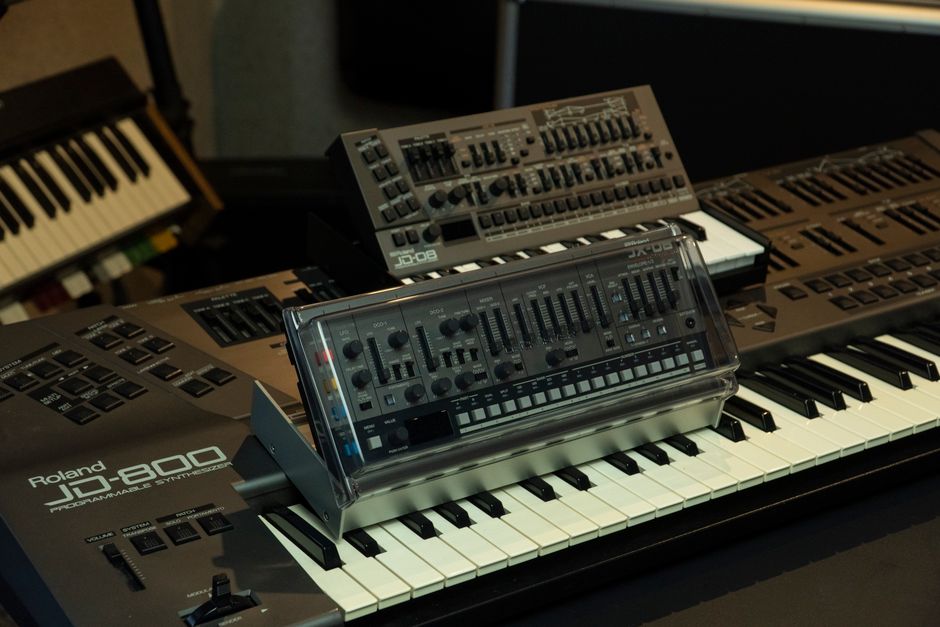
The synthesizer stands as one of the most revolutionary inventions in music history, fundamentally transforming how sounds are created, manipulated, and performed. While many associate synthesizers with the electronic music explosion of the 1970s and 1980s, the origins of this groundbreaking instrument trace back to the innovative developments of the 1960s, when pioneering engineers and musicians collaborated to create entirely new sonic possibilities.

The Birth of Modern Synthesis in the 1960s

The 1960s witnessed the emergence of the first commercially available synthesizers, marking a pivotal moment in musical instrument development. American engineer Robert Moog introduced his modular synthesizer in 1964, creating a system that could generate and shape sounds electronically through voltage-controlled oscillators, filters, and amplifiers. Around the same time, engineer Don Buchla developed his own modular synthesizer on the West Coast, approaching electronic sound generation from a different philosophical perspective.

These early synthesizers were massive, complex machines filled with patch cables, knobs, and switches. They required technical knowledge to operate and were primarily found in university studios and experimental music facilities. Despite their complexity, these instruments opened unprecedented creative possibilities, allowing musicians to craft sounds that had never been heard before in human history.

Pre-1960s Electronic Instruments: Setting the Stage

While the modern synthesizer emerged in the 1960s, the concept of electronic sound generation existed earlier. The Theremin, invented in 1920 by Russian physicist Léon Theremin, produced eerie, otherworldly tones controlled by hand movements. The Hammond organ, introduced in 1935, used tonewheels to generate sound electronically. The Ondes Martenot, created in 1928, offered expressive electronic capabilities used in classical compositions.

However, these earlier instruments differed fundamentally from synthesizers. They either imitated existing instruments or offered limited sound modification capabilities. The synthesizers of the 1960s represented a quantum leap forward, providing comprehensive control over every aspect of sound creation, from waveform generation to envelope shaping and filtering.

Key Innovations That Defined 1960s Synthesizers

Voltage Control Technology

The most significant breakthrough came through voltage-controlled circuits. Robert Moog's application of transistors and voltage control allowed musicians to manipulate sound parameters electrically. This meant that oscillators, filters, and amplifiers could be controlled by varying electrical voltages rather than mechanical means, enabling precise, repeatable, and programmable sound modifications.

Modular Design Philosophy

Early synthesizers featured modular construction, with separate components for different sound-generating and sound-shaping functions. Musicians connected these modules using patch cables, creating signal paths that determined the final sound. This flexibility allowed for infinite sonic possibilities, as each module could be combined with others in countless configurations.

Subtractive Synthesis

The Moog synthesizer popularized subtractive synthesis, a method where harmonically rich waveforms are generated by oscillators and then sculpted by removing frequencies using filters. This approach became the foundation for analog synthesis and remains fundamental to electronic music production today.

Pioneers Who Embraced the Technology

Several visionary musicians recognized the synthesizer's potential during the 1960s. Wendy Carlos, a composer and electronic musician, became one of the first to demonstrate the synthesizer's musical capabilities with the landmark 1968 album "Switched-On Bach," which featured Bach compositions performed entirely on a Moog synthesizer. The album's commercial success proved that synthesizers could produce serious music, not just experimental sounds.

The Beatles incorporated Moog synthesizer sounds on their 1969 album "Abbey Road," introducing millions of listeners to electronic textures. Progressive rock bands like Emerson, Lake & Palmer and Yes would soon make synthesizers central to their sound, while electronic pioneers like Kraftwerk would build entire musical philosophies around the technology.

From Laboratory to Performance Stage

Initially, synthesizers were studio-bound instruments. Their size, fragility, and need for careful tuning made them impractical for live performance. However, the late 1960s saw efforts to make synthesizers more portable and performance-friendly. The introduction of keyboard interfaces made synthesizers more accessible to traditionally trained musicians, though early models were monophonic, capable of producing only one note at a time.

Temperature fluctuations affected the analog circuitry, causing tuning instability that required constant adjustment. Musicians had to develop new performance techniques and accept certain limitations as part of the instrument's character. These challenges fostered a unique relationship between performer and instrument, contributing to the distinct sonic personality of early synthesizer music.

The Cultural and Musical Impact

The synthesizer's arrival coincided with a period of tremendous social and artistic experimentation. The 1960s counterculture embraced technology as a tool for exploring consciousness and expanding creative boundaries. Electronic sounds aligned perfectly with psychedelic aesthetics and space-age fascinations that dominated the era.

Film composers quickly adopted synthesizers for science fiction soundtracks, where their futuristic timbres enhanced otherworldly atmospheres. Experimental composers in academic settings used synthesizers to realize complex compositional ideas impossible with traditional instruments. Jazz musicians began incorporating synthesizers, adding new colors to their improvisational palettes.

Legacy and Continued Evolution

The synthesizers invented in the 1960s established principles that continue to influence music technology. Modern digital synthesizers, software instruments, and music production tools all trace their conceptual lineage to those pioneering machines. The voltage-control standards established by Moog became industry conventions, and the modular synthesis approach has experienced a significant resurgence in recent years.

Today's musicians benefit from decades of refinement, with polyphonic capabilities, digital stability, and preset memory that early synthesizer pioneers could only imagine. Yet many contemporary artists deliberately seek out vintage 1960s synthesizers or modern recreations, valuing the organic imperfections and distinctive character of those original instruments. The synthesizer's invention in the 1960s didn't just create a new instrument—it sparked a sonic revolution that continues to shape music across all genres.

Top 10 Facts About Space That Will Blow Your Mind

Top 10 Facts About Space That Will Blow Your Mind

⏱️ 7 min read

The universe beyond our atmosphere holds mysteries and wonders that challenge our understanding of reality itself. From phenomena that defy imagination to cosmic discoveries that reshape how we view our place in existence, space continues to reveal truths stranger than fiction. The following collection of astronomical facts demonstrates just how extraordinary, vast, and mind-bending our cosmos truly is.

Cosmic Phenomena That Challenge Our Understanding

1. A Day on Venus Is Longer Than Its Year

Venus presents one of the most peculiar rotational characteristics in our solar system. While it takes Venus only 225 Earth days to complete one orbit around the Sun, its incredibly slow rotation means a single Venusian day lasts 243 Earth days. Even more fascinating, Venus rotates backwards compared to most planets in our solar system, meaning the Sun rises in the west and sets in the east. This retrograde rotation makes Venus unique among the major planets and scientists theorize it may have been caused by a massive collision early in the planet's formation.

2. The Footprints on the Moon Will Last Millions of Years

When astronauts first walked on the lunar surface during the Apollo missions, they left behind more than just a legacy of human achievement. Their footprints, along with tire tracks from the lunar rovers, will remain virtually unchanged for millions of years. Unlike Earth, the Moon has no atmosphere, which means there's no wind or water erosion to wear away these marks of human exploration. Without geological activity or weathering processes, these impressions in the lunar dust serve as a permanent testament to humanity's first steps on another world, preserved in the vacuum of space indefinitely.

3. Neutron Stars Are Incredibly Dense Matter

Neutron stars represent some of the densest objects in the universe, with mind-boggling physical properties. These stellar remnants, formed when massive stars collapse during supernova explosions, pack roughly 1.4 times the mass of our Sun into a sphere only about 20 kilometers in diameter. The density is so extreme that a single teaspoon of neutron star material would weigh approximately 6 billion tons on Earth. To put this in perspective, that's equivalent to the weight of approximately 900 Great Pyramids of Giza compressed into something you could hold in your hand, if physics would allow it.

4. The Largest Known Star Could Engulf Our Solar System

Stephenson 2-18, one of the largest known stars in the universe, possesses a radius approximately 2,150 times that of our Sun. If this hypergiant star were placed at the center of our solar system, its surface would extend far beyond the orbit of Saturn, potentially reaching nearly to the orbit of Uranus. The sheer scale challenges comprehension: light traveling at 300,000 kilometers per second would take approximately nine hours to circumnavigate this stellar behemoth. Despite its enormous size, Stephenson 2-18 is only about 12 times as massive as the Sun, demonstrating how diffuse the outer layers of such supergiants can be.

The Scale and Composition of Our Universe

5. There Are More Stars Than Grains of Sand on Earth

The observable universe contains an estimated 200 billion trillion stars, a number so vast it exceeds the total number of grains of sand on all of Earth's beaches and deserts. This figure, expressed numerically as 2 followed by 23 zeros, represents only what we can potentially observe within the visible universe. The actual total universe likely contains far more stars beyond our observational horizon. Each of these stars represents a potential solar system with its own unique characteristics, planets, and possibly even life, making the cosmic landscape incomprehensibly rich and diverse.

6. Space Is Completely Silent

Sound requires a medium such as air or water to travel through, as it propagates via molecular vibrations. Space, being a near-perfect vacuum, contains insufficient matter for sound waves to travel. This means that all the explosive supernovas, colliding asteroids, and cosmic events that occur throughout the universe happen in absolute silence. Astronauts in space can only communicate through radio waves transmitted through their equipment, and the dramatic sound effects featured in science fiction films are pure Hollywood invention. The cosmos conducts its grand symphony in complete and utter silence.

7. A Year on Neptune Equals 165 Earth Years

Neptune, the most distant planet from the Sun in our solar system, takes approximately 165 Earth years to complete a single orbit around our star. This means that since its discovery in 1846, Neptune has completed only slightly more than one full orbit. The planet's vast distance from the Sun, nearly 4.5 billion kilometers at its farthest point, means it travels an enormous orbital path. Interestingly, Neptune hadn't even completed its first observed orbit until 2011, making astronomers' understanding of its complete orbital characteristics relatively recent in terms of actual observation.

Extreme Environments and Phenomena

8. The Temperature Extremes in Space Are Unfathomable

Space contains both the coldest and hottest temperatures in the known universe. The Boomerang Nebula holds the record for the coldest natural place ever discovered, with temperatures plummeting to one degree Kelvin, or minus 272 degrees Celsius. Conversely, when massive stars explode as supernovas, their cores can reach temperatures exceeding 100 billion degrees Celsius, multiple times hotter than the Sun's core. These extreme temperature ranges demonstrate the violent and diverse nature of cosmic environments, from regions where molecular motion nearly ceases to conditions where matter breaks down into fundamental particles.

9. Black Holes Can Distort Time Itself

Black holes possess gravitational fields so intense that they fundamentally warp the fabric of spacetime. According to Einstein's theory of general relativity, time passes more slowly in stronger gravitational fields, an effect called gravitational time dilation. Near the event horizon of a black hole, this effect becomes so extreme that time nearly stops relative to distant observers. If someone could somehow survive near a black hole's event horizon for what seemed like hours to them, centuries or even millennia might pass in the rest of the universe. This isn't science fiction but a consequence of our universe's fundamental physics.

10. The Universe's Age Can Be Calculated from Ancient Light

Scientists have determined that the universe is approximately 13.8 billion years old by studying the cosmic microwave background radiation, the afterglow of the Big Bang itself. This faint radiation, discovered accidentally in 1964, fills all of space and represents light that has been traveling through the universe since approximately 380,000 years after the Big Bang, when the universe cooled enough for light to travel freely. By analyzing the patterns and temperature variations in this ancient light using sophisticated instruments like the Planck satellite, cosmologists can calculate the universe's age, composition, and even predict its ultimate fate with remarkable precision.

The Endless Frontier of Discovery

These ten remarkable facts barely scratch the surface of space's countless mysteries and wonders. From the peculiar rotations of planets in our own solar system to the mind-bending physics of black holes and the incomprehensible scale of the cosmos, each discovery reminds us how much remains unknown. The universe continues to challenge our assumptions, expand our imagination, and inspire humanity to look upward with wonder. As technology advances and our observational capabilities improve, we can expect even more extraordinary revelations that will further transform our understanding of existence itself. The final frontier remains as fascinating and mysterious as ever, promising countless more discoveries that will continue to blow our minds for generations to come.