










1 / 10 Questions
0 Points

Which President Added A Private Movie Theater To The White House?

Dwight Eisenhower

Franklin D. Roosevelt

Harry Truman

John F. Kennedy

Points won
0
Correct score
0%

More Quizzes

More Articles

Top 10 Historical Dramas That Are Historically Accurate

Top 10 Historical Dramas That Are Historically Accurate

⏱️ 6 min read

While historical dramas often take creative liberties for the sake of entertainment, some television series stand out for their commitment to authenticity. These productions employ historians as consultants, meticulously research period details, and strive to present events as they actually unfolded. From costume accuracy to dialogue based on historical records, these shows demonstrate that compelling storytelling and historical fidelity need not be mutually exclusive.

Television Series That Bring History to Life with Accuracy

1. Band of Brothers: The Definitive World War II Combat Series

This HBO miniseries, produced by Steven Spielberg and Tom Hanks, follows Easy Company of the 506th Parachute Infantry Regiment from D-Day through the end of World War II. The production relied heavily on Stephen Ambrose's meticulously researched book and interviews with actual Easy Company veterans. Military historians praised the series for its accurate depiction of combat tactics, equipment, and the psychological toll of warfare. The filmmakers consulted with veterans throughout production, ensuring that even small details like how soldiers carried their weapons or communicated under fire matched historical reality. The series also accurately portrayed lesser-known events like the discovery of concentration camps by American forces.

2. John Adams: Presidential History Through Primary Sources

This HBO miniseries brought the American Founding Father's life to vivid detail, drawing extensively from David McCullough's Pulitzer Prize-winning biography and John Adams' own correspondence with his wife Abigail. The production team consulted with colonial historians to ensure accuracy in everything from 18th-century dental practices to the actual layout of Independence Hall. The series didn't shy away from depicting the smallpox inoculation process, the contentious nature of early American politics, or Adams' complex relationship with Thomas Jefferson. Costume designers studied period portraits and documents to recreate clothing with historically accurate fabrics and construction methods.

3. Rome: Ancient Empire Meets Archaeological Evidence

The BBC-HBO collaboration brought ancient Rome to life with unprecedented attention to historical and archaeological detail. The series depicted the transition from Roman Republic to Empire through the eyes of two soldiers, incorporating actual historical events and figures. Historians praised the show's portrayal of Roman daily life, religious practices, and political machinations, which were based on extensive research into primary sources and archaeological findings. The set design replicated Roman architecture using construction techniques from the period, and the series accurately depicted everything from voting procedures in the Senate to the brutal realities of gladiatorial combat and military discipline.

4. Chernobyl: Documenting Nuclear Disaster with Scientific Precision

This critically acclaimed miniseries recounted the 1986 nuclear disaster with remarkable accuracy, consulting with scientists, first responders, and survivors. The production team studied thousands of pages of testimony from the trial of plant operators and interviewed individuals who lived through the event. While the series compressed some timelines for dramatic purposes and created composite characters, the actual scientific details of the reactor failure, radiation effects, and cleanup efforts were meticulously researched. Medical consultants ensured that the depiction of acute radiation syndrome was accurate, and the show's portrayal of Soviet bureaucracy and the initial cover-up attempts matched historical records.

5. The Crown: Modern Monarchy Under Historical Scrutiny

Netflix's biographical drama about Queen Elizabeth II's reign combines extensive research with insider accounts to present recent British history. The production employs historical consultants and draws from biographies, news archives, and declassified government documents. While some conversations are necessarily dramatized, major events like the Aberfan disaster, the Great Smog of London, and various political crises are presented with careful attention to chronology and detail. Costume designers replicate actual outfits worn by the royal family, often matching them to photographs from specific events, and set designers recreate historical interiors based on archival images and access to actual palaces.

6. Deadwood: The American West Beyond Mythology

David Milch's HBO series depicted the real South Dakota gold rush town with far more historical accuracy than typical Westerns. The show featured actual historical figures like Wild Bill Hickok, Calamity Jane, and Al Swearengen, incorporating documented events and even dialogue from historical records when available. Historians praised the series for showing the West as it actually was: muddy, disease-ridden, and characterized by complex economic and political struggles rather than simple good-versus-evil gunfights. The series accurately portrayed the tensions between different factions, the exploitation of Chinese immigrants, and the systematic dispossession of Native American lands.

7. The Terror: Arctic Exploration's Fatal Reality

This AMC series dramatized the doomed Franklin Expedition of 1845, when two British ships sought the Northwest Passage and disappeared. The show drew from historical records, Inuit oral histories, and modern archaeological discoveries including the 2014 and 2016 findings of the expedition's ships. While the series added supernatural elements, the historical framework remained accurate: the ships did become trapped in ice, lead poisoning from tinned provisions likely occurred, and the crew faced starvation and harsh Arctic conditions. The production recreated the ships HMS Erebus and HMS Terror with period-accurate detail, and consulted with Arctic historians and Inuit advisors to ensure cultural accuracy.

8. The Pacific: Completing the World War II Story

Companion to Band of Brothers, this HBO series depicted the Pacific Theater of World War II through the experiences of three Marines. Based on memoirs by actual veterans Robert Leckie and Eugene Sledge, the series accurately portrayed the brutal island-hopping campaign, the psychological impact of jungle warfare, and the racial dimensions of the Pacific conflict. Military historians praised its depiction of battles like Peleliu and Okinawa, and the series didn't sanitize the violence or the dehumanization that occurred on both sides. The production consulted extensively with Pacific War veterans and historians to ensure authentic portrayal of Marine Corps tactics and equipment.

9. Wolf Hall: Tudor England Through Contemporary Eyes

Based on Hilary Mantel's meticulously researched novels, this BBC series presented the court of Henry VIII through Thomas Cromwell's perspective. The production drew from extensive Tudor-era documentation, including letters, legal records, and diplomatic correspondence. Historians praised the series for its nuanced portrayal of religious reformation politics and the complex motivations of historical figures often reduced to caricatures. The costume department studied Tudor portraits and tailoring techniques to create period-accurate clothing, and even minor details like table settings and food preparation methods reflected historical research into 16th-century aristocratic life.

10. Masters of the Air: The Eighth Air Force Story

This Apple TV+ series, the third installment in the World War II trilogy from Spielberg and Hanks, chronicles the American bomber crews who flew daylight missions over Nazi-occupied Europe. Based on Donald Miller's historical account, the series accurately depicts the staggering casualty rates among aircrews, the technical challenges of high-altitude bombing, and the moral complexities of strategic bombing campaigns. Aviation historians consulted on the series to ensure accurate representation of B-17 Flying Fortress operations, fighter tactics, and the experience of prisoners of war in German camps. The production combined practical effects with CGI to recreate aerial combat with historical precision.

Why Historical Accuracy Matters in Television

These ten series demonstrate that television can serve as both entertainment and education, introducing audiences to historical events with depth and nuance. By committing to accuracy in research, production design, and storytelling, these shows have created lasting works that honor the people who lived through these events while helping modern audiences understand the complexities of the past. They prove that respecting historical truth enhances rather than diminishes dramatic power, creating viewing experiences that are both emotionally compelling and intellectually enriching.
Why Basketball Hoops Are Exactly 10 Feet High

Why Basketball Hoops Are Exactly 10 Feet High

Why Basketball Hoops Are Exactly 10 Feet High

By Trivia Daily, Staff Writer — Published July 24, 2026

Table of Contents

Every basketball court in the world, from a packed NBA arena to a suburban driveway, shares one constant: the rim sits exactly 10 feet above the ground. This isn't a coincidence or a carefully calculated ergonomic decision. The height was set in 1891 by pure accident—and it has remained unchanged for more than 130 years. Discover the surprising story behind why basketball hoops exactly match the height they do, and explore the fascinating facts that make this seemingly arbitrary measurement one of sport's most enduring standards.

The 10-foot hoop has survived dramatic changes in player size, athletic ability, and game strategy. It's a measurement that connects modern superstars to the sport's humble beginnings in a Massachusetts gymnasium.

Key Takeaways

  • The 10-foot basketball hoop height was determined by the railing of a running track in 1891, not by deliberate design.
  • James Naismith invented basketball and hung the first peach baskets at whatever height the gym's architecture allowed.
  • The height has remained unchanged despite players growing an average of 4 inches taller since the sport's invention.
  • Youth basketball uses lower hoop heights, ranging from 6 to 9 feet depending on age group.
  • The NBA has never seriously considered changing the regulation height, despite ongoing debates.
  • A 10-foot rim requires players to jump roughly 30 inches to dunk, depending on their height and arm length.

Why Basketball Hoops Exactly Match Their Original Height

1. A Gymnasium Railing Determined Basketball History

When James Naismith invented basketball in December 1891 at the International YMCA Training School in Springfield, Massachusetts, he needed to hang peach baskets for his new indoor game. The gymnasium featured a running track that circled the floor at balcony level. The railing of this track stood exactly 10 feet above the ground. Naismith simply nailed the peach baskets to the railing, and that arbitrary architectural feature became the permanent standard for the sport. No calculations, no ergonomic studies—just convenience.

2. Peach Baskets Had Bottoms That Needed Poking

The original basketball "hoops" weren't hoops at all. They were actual peach baskets with their bottoms intact. Every time a player scored, someone had to climb a ladder or use a long pole to retrieve the ball. This tedious process slowed the game considerably. It wasn't until a year or two later that someone had the sense to remove the basket bottoms, allowing the ball to fall through. Even then, the baskets remained until metal hoops with nets eventually replaced them in the early 1900s.

3. Players Have Grown Significantly Taller

The average height of basketball players has increased dramatically since 1891. Early players averaged around 5 feet 10 inches tall. Today's NBA players average about 6 feet 6 inches. Some positions, particularly centers, routinely feature athletes standing 7 feet tall or more. Despite this substantial change in player physiology, the 10-foot rim has never been adjusted. The game has evolved around the fixed height rather than the other way around.

4. The NBA Has Debated But Never Changed It

Over the decades, basketball authorities have occasionally discussed raising the rim to 11 or 12 feet to make dunking more challenging and restore emphasis on shooting skill. These debates intensify whenever dominant big men seem to make the game too easy. However, every proposal has been rejected. The consensus holds that changing such a fundamental element would alienate fans, invalidate historical records, and require replacing equipment worldwide—a logistical and financial nightmare.

5. Youth Basketball Uses Graduated Heights

While competitive basketball maintains the 10-foot standard, youth leagues recognize that younger players need lower targets. Organizations like USA Basketball recommend 6-foot hoops for children under 7 years old, 8-foot hoops for ages 7-8, 9-foot hoops for ages 9-11, and the full 10-foot height starting around age 12. These graduated heights help young players develop proper shooting form without straining to reach an impossibly high target.

6. The Height Creates a Specific Athletic Challenge

A 10-foot rim sits at a height that requires genuine athleticism but remains achievable for skilled players of various sizes. For an average-height person to dunk, they need a vertical leap of approximately 30 to 36 inches, depending on their standing reach. This threshold creates an interesting balance: tall enough to be impressive and challenging, yet low enough that exceptional athletes of average height can still compete. Players like Spud Webb, standing just 5 feet 7 inches, have won NBA slam dunk contests at the regulation height.

7. International Standards Match American Measurements

When basketball spread globally, the 10-foot height went with it. FIBA, the International Basketball Federation that governs Olympic and international competition, adopted the same 10-foot (3.05 meters) rim height. This universal standard means a player can compete anywhere in the world without adjusting to different hoop heights. The measurement translates precisely to 3.048 meters, though FIBA officially lists it as 3.05 meters.

8. Women's Basketball Uses the Same Height

Unlike some sports that adjust equipment or field dimensions for women's competition, basketball keeps the rim at 10 feet for both men's and women's games. The WNBA, NCAA women's basketball, and international women's competitions all use identical hoop heights. While women's basketball uses a slightly smaller ball (28.5 inches in circumference versus 29.5 inches for men), the target height remains constant.

9. The Measurement Influences Court Design

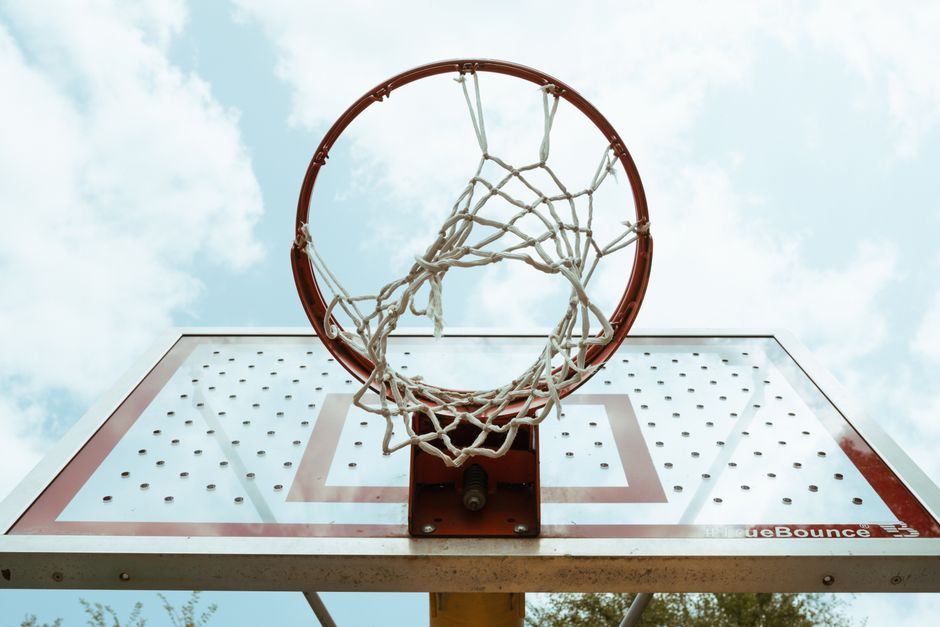
The 10-foot hoop height dictates other court dimensions and architectural requirements. Gymnasiums must have ceilings at least 16 feet high to accommodate the hoop and allow for high-arcing shots. The backboard measures 6 feet wide by 3.5 feet tall, positioned with its lower edge 9 feet above the floor—all proportions designed around that original 10-foot measurement. Even outdoor courts in parks and driveways maintain these standards.

10. No Scientific Reason Supports the Exact Height

Sports scientists and biomechanics experts have never identified any physiological or physical principle that makes 10 feet the optimal height for basketball. If Naismith's gymnasium railing had been 9 feet or 11 feet high, basketball would have evolved around that measurement instead. The 10-foot hoop represents one of sport's most enduring accidents—a random architectural feature that became sacred through tradition, not science. Yet this arbitrary beginning hasn't prevented basketball from becoming one of the world's most popular sports.

How the Height Affects Modern Gameplay

The 10-foot rim shapes every aspect of basketball strategy and skill development. Three-point shooting has become increasingly important partly because the rim height makes close-range shots contestable by tall defenders. Players spend thousands of hours perfecting their shooting arc to account for the specific distance and height. The fixed measurement also creates clear benchmarks for athletic ability—vertical leap measurements and dunking capability serve as universal standards for evaluating players.

Coaches design plays around the height, calculating angles for alley-oops, bank shots, and defensive positioning. The measurement influences player positions too. Centers and power forwards typically stand closer to the basket because their height gives them an advantage near the 10-foot rim, while guards develop long-range shooting skills to score from farther away.

Comparing Basketball Hoop Heights

Age Group/League Hoop Height Purpose
Ages 5-6 6 feet Introduce basic shooting mechanics
Ages 7-8 8 feet Develop proper form with achievable target
Ages 9-11 9 feet Transition toward regulation height
Ages 12+ / All Professional 10 feet Universal competitive standard

Frequently Asked Questions

Has the basketball hoop height ever been different?

No. Since James Naismith hung the first peach baskets in 1891, the height has remained 10 feet for competitive play. The measurement was never officially different, though early games sometimes used makeshift goals at varying heights in informal settings.

Why don't they raise the hoop for taller modern players?

Changing the height would invalidate more than a century of records, require replacing millions of hoops worldwide, and fundamentally alter the game's character. The sport has adapted to taller players through rule changes and strategy rather than adjusting the rim height.

What is the lowest basketball hoop used in organized play?

Youth leagues for children ages 5-6 use 6-foot hoops, exactly 4 feet lower than regulation height. These shorter hoops help young children develop proper shooting technique without straining to reach an impossibly high target.

Do wheelchair basketball hoops have a different height?

No. Wheelchair basketball uses the same 10-foot hoop height as standard basketball. Players compete on regulation courts with standard equipment, demonstrating remarkable shooting accuracy and ball-handling skills from their chairs.

The next time you watch a basketball game or shoot hoops in your driveway, remember that every player in history has aimed at the same height—not because it's perfect, but because a gymnasium railing happened to be there when the sport was born. Sometimes the most enduring standards come from the simplest accidents.