
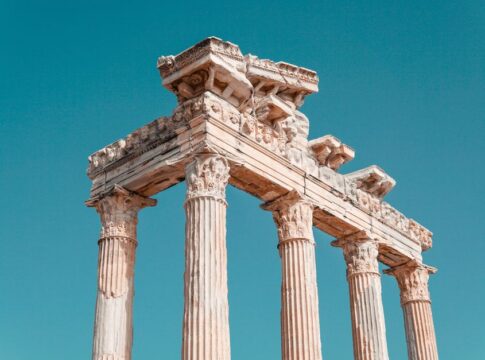
7 Ancient Roman Inventions We Still Use Every Day
By Trivia Daily, History Desk — Published August 6, 2026
Table of Contents
When you flush a toilet, check the time, or walk on a paved road, you’re using technology perfected—or outright invented—by ancient Romans. The Roman Empire didn’t just conquer territory; it engineered solutions to everyday problems that were so effective they’ve survived for two millennia. Many of the conveniences we take for granted trace their origins to Roman ingenuity, a testament to an empire that valued practical innovation as much as military might.
From concrete that still stands today to plumbing systems that would look familiar to modern engineers, these ancient Roman inventions shaped the infrastructure of civilization itself. The Romans weren’t always the first to conceive these ideas, but they excelled at refining and scaling them across their vast empire, spreading innovations from Britain to North Africa. Here are seven inventions from this remarkable historical era that continue to influence our daily lives.
Key Takeaways
- Roman concrete, used in structures like the Pantheon, remains more durable than many modern formulations and is still standing after nearly 2,000 years.
- The Julian calendar, introduced by Julius Caesar in 45 BCE, established the 365-day year with leap years that formed the basis for our modern Gregorian calendar.
- Roman aqueducts delivered fresh water across hundreds of miles using only gravity, with some still functioning in modern European cities.
- The bound book (codex) replaced scrolls during the Roman era, creating the familiar page-turning format we still use today.
- Roman road-building techniques, including cambered surfaces and layered construction, influenced highway engineering into the 20th century.
- Indoor plumbing and sewage systems pioneered by Romans established sanitation principles that underpin modern urban infrastructure.
Ancient Roman Inventions That Shaped Modern Infrastructure
The Romans approached engineering with a combination of mathematical precision and practical experimentation. Unlike earlier civilizations that built impressive monuments, the Romans focused on creating systems that could serve millions of people across a sprawling empire. Their innovations in construction, timekeeping, and sanitation weren’t just impressive for their century—they set standards that persisted through the medieval period and into the modern age.
What made Roman innovations particularly enduring was their emphasis on durability and scalability. They didn’t build for a single generation; they built for eternity. This long-term thinking, combined with engineering expertise, created technologies that outlasted the empire itself. Many Roman structures and systems continued functioning long after the fall of Rome in 476 CE, and some remain in use today.
1. Concrete That Outlasted the Empire
Roman concrete, known as opus caementicium, revolutionized construction and remains one of history’s most remarkable building materials. Unlike modern concrete that can crack and crumble within decades, Roman concrete has grown stronger over time, particularly in structures exposed to seawater. The secret lies in their mixture of volcanic ash, lime, and seawater, which creates a chemical reaction that actually reinforces the material as it ages. The Pantheon in Rome, built around 126 CE with a massive unreinforced concrete dome, still stands as the world’s largest of its kind. Engineers have discovered that Roman maritime concrete contains a rare mineral called aluminous tobermorite, which forms through long-term exposure to seawater and increases durability. Modern researchers are studying these ancient formulas to create more sustainable concrete that could reduce the environmental impact of contemporary construction.
2. The Calendar That Organized Our Year
The Julian calendar, implemented by Julius Caesar in 45 BCE with the help of Alexandrian astronomer Sosigenes, established the 365-day year with an extra day every four years. This system replaced the chaotic Roman lunar calendar, which had become so misaligned with the seasons that it required constant political manipulation to stay functional. Caesar’s calendar introduced the concept of January 1st as New Year’s Day and created the twelve-month structure we recognize today. While Pope Gregory XIII refined it in 1582 to create the Gregorian calendar (adjusting the leap year rules to improve accuracy), the fundamental framework remains Roman. The names of our months still honor Roman gods, emperors, and numbers—July for Julius Caesar, August for Augustus, and September through December literally meaning seventh through tenth month in Latin, despite now being the ninth through twelfth months.
3. Aqueducts That Defied Gravity
Roman aqueducts represent some of the most impressive feats of ancient engineering, transporting millions of gallons of fresh water daily across distances exceeding 50 miles in some cases. Using only gravity, Roman engineers calculated precise gradients—typically dropping just one foot for every 300 feet of length—to maintain steady water flow from mountain springs to urban centers. The aqueduct system serving Rome at its peak included eleven separate aqueducts delivering roughly 300 gallons per person per day, exceeding the water consumption of many modern cities. Some aqueducts featured spectacular bridges, like the Pont du Gard in France, which stands 160 feet tall and still impresses visitors today. Parts of Roman aqueduct systems remain functional in modern Spain, Italy, and France, still delivering water nearly two millennia after their construction. The engineering principles they established—understanding hydraulic gradients, using settling tanks, and maintaining consistent flow rates—inform modern water distribution systems.
4. Roads Built for Eternity
The phrase “all roads lead to Rome” reflects the empire’s extensive network of over 250,000 miles of paved roads, many built so well they remained Europe’s primary highways until the 19th century. Roman roads featured sophisticated multi-layer construction: a foundation of sand or mortar, followed by layers of crushed stone, gravel, and flat paving stones fitted so precisely that mortar wasn’t always necessary. They incorporated cambered surfaces that shed rainwater to ditches on either side, preventing the erosion that destroyed earlier roads. The Via Appia, begun in 312 BCE, still exists and carries traffic today. Roman road-building techniques influenced modern highway construction, particularly the concept of layered foundations and proper drainage. The Romans also established the principle of straight, direct routes that minimized distance, sometimes requiring impressive engineering through mountains and across marshes rather than following easier but longer natural paths.
5. The Bound Book Format
Romans transformed reading by popularizing the codex—pages bound together at one edge—which gradually replaced the scroll as the dominant format for written works. Early Christians particularly favored the codex because it allowed quick reference to specific passages, unlike scrolls that required tedious unrolling. By the 4th century CE, the codex had become the standard format for books throughout the Roman Empire. This innovation made texts more portable, protected pages from damage, and allowed writing on both sides of each sheet, effectively doubling the amount of content per amount of writing material. The codex format enabled the creation of larger reference works and made reading a more convenient, accessible activity. Every modern book, magazine, and notebook owes its basic structure to this Roman innovation, which proved so practical that it has remained essentially unchanged for over 1,500 years.
6. Plumbing and Sanitation Systems
Roman indoor plumbing brought running water and sewage systems to a scale not seen again until the 19th century. Wealthy Roman homes featured private bathrooms with flushing toilets connected to sewage systems, while public facilities served those who couldn’t afford private installations. The Cloaca Maxima, Rome’s main sewer, was built around 600 BCE and still functions as part of Rome’s modern sewer system. Romans understood the importance of separating fresh water supply from waste removal, a principle that remains fundamental to public health. They used lead and clay pipes (the word “plumbing” comes from plumbum, Latin for lead) to distribute water throughout buildings, and designed drainage systems that prevented waste accumulation. Public baths, which served social and hygienic functions, featured sophisticated heating systems called hypocausts that circulated hot air beneath floors. These innovations established sanitation standards that disappeared during the medieval period but were eventually rediscovered and expanded upon in modern cities.
7. Newspapers and Daily Updates
The Acta Diurna, meaning “daily acts” or “daily public records,” served as Rome’s official gazette beginning around 59 BCE. Posted in public spaces like the Forum, these notices carved on stone or metal included government announcements, military victories, notable deaths, and even society news. While not newspapers in the modern sense—they weren’t printed or sold—they established the concept of regular public information distribution. Wealthy citizens employed scribes to copy the Acta Diurna and send summaries to distant estates, creating an early news distribution network. This system recognized that an informed populace contributed to effective governance and social cohesion across a vast empire. The practice of daily news updates, public announcements, and government transparency that the Acta Diurna represented became a model that influenced later European news publications and eventually evolved into modern journalism.
Frequently Asked Questions
What was the most important Roman invention?
While opinions vary, Roman concrete stands out for its lasting impact and superior durability compared even to modern formulations. The Pantheon’s dome, nearly 2,000 years old, remains the world’s largest unreinforced concrete dome, demonstrating the material’s exceptional longevity.
Did Romans invent central heating?
Yes, Romans developed the hypocaust system, which circulated hot air from furnaces beneath floors and through wall cavities to heat buildings. This early central heating warmed public baths, wealthy homes, and some government buildings throughout the empire.
Are any Roman roads still used today?
Many Roman roads remain in use, either as modern roads built atop the original foundations or as intact ancient routes. The Via Appia in Italy still carries traffic, and numerous European highways follow routes established by Roman engineers over 2,000 years ago.
Why did Roman concrete last so long?
Roman concrete’s longevity stems from its unique mixture of volcanic ash, lime, and seawater, which creates chemical reactions that strengthen the material over time. The formation of rare minerals like aluminous tobermorite in seawater structures actually reinforces the concrete as it ages, unlike modern concrete that typically degrades.
The next time you walk on a sidewalk, check your calendar, or turn the pages of a book, consider the Roman engineers, administrators, and innovators who shaped these everyday experiences. Their practical genius didn’t just build an empire—it built the foundation for modern civilization, proving that truly great ideas can outlast even the mightiest empires by millennia.