
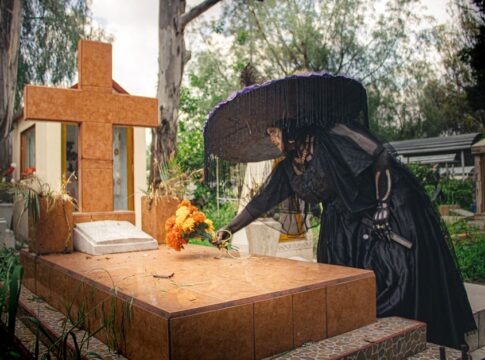
7 Bizarre Facts About Victorian Mourning Rituals
By Trivia Daily, History Desk — Published September 16, 2026
Table of Contents
- Key Takeaways
- The Bizarre Victorian Mourning Industry and Its Rules
- The Historical Context Behind Victorian Death Obsession
- Frequently Asked Questions
Death was everywhere in Victorian Britain, and the era’s response was to transform grief into an elaborate social performance. From wearing jewelry made of human hair to photographing corpses as if they were still alive, bizarre Victorian mourning practices turned the 19th century into a theater of loss. Queen Victoria herself set the tone after Prince Albert’s death in 1861, plunging the entire British Empire into decades of formalized grief that influenced customs across the Western world.
These rituals weren’t just about remembering the dead—they were intricate displays of social status, religious devotion, and Victorian obsessions with propriety. The mourning industry became a massive economic force during this historical era, dictating everything from fashion to photography to interior design.
Key Takeaways
- Mourning jewelry often contained locks of the deceased’s hair woven into intricate designs and worn as brooches or rings.
- Professional mourners could be hired to weep at funerals, adding emotional drama to services for families who could afford them.
- Post-mortem photography posed the dead to look alive, creating final family portraits with deceased children and relatives.
- Widows faced strict mourning periods lasting up to four years, with detailed rules about clothing colors and social activities.
- Mourning etiquette extended to household objects, with black-bordered stationery and covered mirrors becoming standard.
- The Victorians believed that spirits could communicate through séances, making spiritualism wildly popular during this period.
The Bizarre Victorian Mourning Industry and Its Rules
Victorian society didn’t just mourn—it monetized grief. An entire industry sprang up to serve the elaborate requirements of proper mourning, from specialized clothing shops to manufacturers of mourning jewelry. This wasn’t simply about remembering loved ones; it was about demonstrating your social standing and moral character through visible displays of sorrow.
The rules were exhaustingly specific. Women bore the brunt of these expectations, particularly widows who faced years of restricted social life and mandatory black clothing. Men’s mourning periods were considerably shorter, reflecting the era’s gender inequalities. Breaking these rules could result in social ostracism, making mourning compliance a matter of survival in polite society.
The Historical Context Behind Victorian Death Obsession
Why were the Victorians so obsessed with death rituals? Life expectancy hovered around 40 years during much of the 19th century. Infectious diseases like tuberculosis, cholera, and typhoid swept through cities with terrifying regularity. Child mortality rates were staggering—families expected to lose children, making death a constant household presence rather than a rare tragedy.
The Industrial Revolution had also disrupted ancient traditions. People moved from rural villages where death customs were communal and familiar to crowded cities where new rules needed to be established. The rising middle class sought ways to distinguish themselves from the working poor, and elaborate mourning provided that opportunity. Queen Victoria’s own extended mourning for Prince Albert—she wore black for the remaining 40 years of her life—elevated these practices to royal endorsement, cementing them across the empire and beyond.
1. Hair Jewelry Transformed Death Into Wearable Art
Victorians didn’t just keep locks of hair as mementos—they wore them. Mourning jewelry incorporated human hair into astonishingly intricate designs: braided bracelets, woven brooches, rings with coiled hair under glass, and lockets containing elaborately arranged curls. Specialized craftspeople called hair workers created these pieces, treating hair like thread to weave patterns and flowers. Some pieces combined hair from multiple family members, creating genealogical jewelry that represented entire family trees. The practice had roots in earlier centuries but reached its peak during the Victorian era, when the technology for working with hair became more sophisticated and the demand exploded.
2. Post-Mortem Photography Posed the Dead as Living
Perhaps no Victorian mourning practice strikes modern sensibilities as stranger than post-mortem photography. Photographers posed deceased family members—often children—to appear alive, propping them in chairs, painting open eyes onto their closed lids, or positioning them with living relatives. For many poor families, this was the only photograph they would ever afford, making it a precious final portrait. The daguerreotype and later photographic technologies emerged during this historical period, coinciding perfectly with high mortality rates. These weren’t gruesome or macabre to Victorian eyes; they were cherished family treasures, displayed prominently in parlors. Some photographs showed the deceased in coffins, while others created elaborate scenes suggesting the person had simply fallen asleep.
3. Professional Mourners Added Theatrical Grief to Funerals
Wealthy Victorian families could hire professional mourners to amplify the emotional display at funerals. These paid grievers—called “mutes”—would dress in black, stand solemnly at the service, and sometimes weep on cue. The practice had ancient roots stretching back to civilizations in Egypt and Rome, but Victorians commercialized it extensively. Men typically served as mutes, standing silently by doors or walking in processions, while some women were hired specifically to wail and cry. The number of mutes you employed signaled your wealth and the deceased’s importance. Charles Dickens criticized this practice in his novels, seeing it as a grotesque commercialization of genuine emotion, yet it remained popular throughout much of the century.
4. Widows Faced Years of Mandated Social Isolation
Victorian widows endured mourning periods divided into elaborate stages, each with specific clothing and behavior requirements. Full mourning lasted one to two years, during which widows wore only dull black fabrics with no ornamentation—no jewelry except jet (a black gemstone). Half mourning followed for another year or more, gradually introducing gray, lavender, and white accents. During full mourning, widows couldn’t attend social events, theaters, or parties. They were essentially removed from public life. These rules applied far less stringently to widowers, who might mourn for just three months. The double standard reflected Victorian assumptions about women’s emotional nature and their primary role as guardians of family morality and memory.
5. Mirrors Were Covered to Trap Wandering Spirits
When someone died in a Victorian home, families immediately covered all mirrors with black cloth. The superstition held that mirrors could trap the deceased’s soul, preventing it from moving on to the afterlife. Some believed that seeing your reflection in a mirror while a corpse was in the house meant you would be the next to die. This practice blended older folk beliefs with Victorian spiritualism, creating a hybrid of ancient superstition and contemporary religious anxiety. Clocks were also stopped at the time of death, freezing the household in that moment of loss. Windows might be opened to allow the soul to escape, while curtains were drawn to block out the cheerful intrusion of daylight during the mourning period.
6. Mourning Stationery Announced Death Through Every Letter
Victorians even mourned through their correspondence. Black-bordered stationery signaled that the writer was in mourning, with border width indicating how recently the death had occurred and the closeness of the relationship. Deep, wide borders meant recent loss of immediate family. As mourning progressed, borders narrowed. Receiving a letter with black edges immediately communicated tragedy before a single word was read. Stationery shops stocked elaborate selections of mourning papers, and etiquette guides specified exact border measurements for different mourning stages. This attention to detail extended to calling cards, invitations, and even newspaper death announcements, all of which followed strict formatting rules that everyone in polite society understood.
7. Séances Promised Communication Beyond the Grave
Victorian spiritualism exploded in popularity during this era, offering grieving families the tantalizing possibility of contacting their dead loved ones. Mediums held séances where tables allegedly moved, voices spoke from thin air, and spirits manifested through mysterious knocking sounds or ectoplasm. The movement began in America in the 1840s but swept through Victorian Britain with particular intensity. Even prominent scientists and intellectuals attended séances, attempting to apply rational investigation to supernatural claims. While many mediums were exposed as frauds using tricks and illusions, the desire to believe remained powerful. For Victorians surrounded by death and loss, spiritualism offered comfort that the past wasn’t truly gone—that communication across the boundary between life and death might be possible through the right rituals and intermediaries.
Frequently Asked Questions
How long did Victorian mourning periods last?
Full mourning for widows typically lasted one to two years, followed by half mourning for another year or more. In total, widows could be expected to mourn for up to four years, while widowers often mourned for only three to six months, reflecting the era’s gender disparities.
Why did Victorians take photographs of dead people?
Post-mortem photography was often the only chance for poor families to afford a photograph of their loved one, especially deceased children. Photography was expensive and new, coinciding with high mortality rates, making these death portraits precious family keepsakes rather than macabre curiosities.
What is mourning jewelry made from human hair?
Victorian mourning jewelry incorporated the deceased’s hair woven into intricate designs—braided into bracelets, arranged under glass in brooches, or coiled inside lockets. Specialized craftspeople created these pieces, treating hair as a material for artistic expression and permanent remembrance.
Did Queen Victoria really mourn for 40 years?
Yes, after Prince Albert died in 1861, Queen Victoria wore black mourning clothes for the remaining 40 years of her life until her own death in 1901. Her extended mourning influenced the entire British Empire and set the standard for elaborate Victorian grief rituals.
The Victorians transformed death from a private sorrow into a public performance art, complete with costumes, props, and strict choreography. While we might find their practices bizarre today, they reveal a society grappling with constant loss and searching for meaning in ritual. Perhaps our modern avoidance of death’s visibility is no less strange than their elaborate embrace of it.