











1 / 10 Questions
0 Points

What car company's logo is four interlocking rings?

Volkswagen

Audi

Mercedes-Benz

BMW

Points won
0
Correct score
0%

More Quizzes

More Articles

Did You Know There’s a Desert in Antarctica?

Did You Know There’s a Desert in Antarctica?

⏱️ 5 min read

When most people think of Antarctica, they envision endless ice sheets, howling blizzards, and sub-zero temperatures. The last thing that comes to mind is a desert. Yet, nestled within this frozen continent lies one of Earth's most extraordinary and counterintuitive landscapes: the McMurdo Dry Valleys, the largest ice-free region in Antarctica and one of the world's most extreme deserts.

Understanding What Makes a Desert

Before exploring Antarctica's surprising desert landscape, it's essential to understand what actually defines a desert. Contrary to popular belief, deserts are not characterized by heat or sand, but rather by precipitation—or the lack thereof. Technically, a desert is any region that receives less than 250 millimeters (10 inches) of precipitation annually. This definition encompasses hot sandy deserts like the Sahara, cold deserts like the Gobi, and even the polar deserts of Antarctica.

Antarctica holds the distinction of being the driest continent on Earth. While the coastal regions receive some snowfall, the interior of the continent is remarkably arid. The McMurdo Dry Valleys, in particular, receive almost no precipitation at all, with some areas having seen no rain or snow for nearly two million years.

The McMurdo Dry Valleys: Antarctica's Desert Landscape

The McMurdo Dry Valleys comprise approximately 4,800 square kilometers of ice-free terrain in the Transantarctic Mountains of Eastern Antarctica. These valleys—including Victoria Valley, Wright Valley, and Taylor Valley—present a stark, alien landscape that more closely resembles Mars than typical Antarctic scenery.

The valleys are characterized by exposed bedrock, gravel-strewn ground, and peculiar geological formations sculpted by wind erosion rather than ice. The soil here is so dry and sterile that it's considered one of the closest terrestrial analogs to the Martian surface, making it a valuable research site for scientists studying potential life on other planets.

Why Do These Valleys Remain Ice-Free?

The existence of ice-free valleys in Antarctica seems paradoxical, but several factors combine to create and maintain these unique conditions. The primary reason is the presence of katabatic winds—powerful gravity-driven winds that flow down from the polar plateau at speeds exceeding 320 kilometers per hour. These winds are among the fastest and driest on Earth.

As these katabatic winds descend from the high interior plateau, they warm slightly through compression and effectively sublimate any snow or ice in their path. The moisture is stripped away before it can accumulate, leaving bare rock and soil exposed. Additionally, the Transantarctic Mountains block glacial ice from flowing into the valleys from the polar ice sheet, further contributing to their ice-free status.

The combination of extremely low humidity, minimal precipitation, and these fierce desiccating winds creates what scientists call a "hyper-arid polar desert," making the McMurdo Dry Valleys drier than even the Atacama Desert in Chile, which is often cited as the driest place on Earth.

Extreme Environmental Conditions

The McMurdo Dry Valleys experience some of the most extreme environmental conditions on the planet. Average annual temperatures hover around -20°C (-4°F), though summer temperatures can occasionally rise above freezing. The relative humidity is often below 50%, and in some areas, it can drop to as low as 10%, comparable to the world's hottest deserts.

The valleys receive less than 100 millimeters of water equivalent precipitation per year, with some areas receiving virtually none. This extreme aridity, combined with the constant scouring by katabatic winds, creates an environment that is incredibly hostile to life. The soil contains almost no organic material, and traditional plant life cannot survive.

Surprising Signs of Life

Despite the harsh conditions, life finds a way to persist in the McMurdo Dry Valleys, albeit in microscopic forms. Scientists have discovered several remarkable examples of extremophile organisms:

  • Endolithic bacteria and fungi that live inside porous rocks, protected from the harsh external environment
  • Algae and cyanobacteria surviving in cryptoendolithic communities within sandstone
  • Simple organisms in hypersaline ponds that remain liquid even in freezing temperatures due to their high salt content
  • Bacterial mats in permanently ice-covered lakes where nutrients filter through the ice

These organisms have developed extraordinary adaptations to survive in this extreme environment, including the ability to remain dormant for extended periods and metabolize at extremely low temperatures.

Scientific Significance and Research

The McMurdo Dry Valleys serve as an invaluable natural laboratory for multiple scientific disciplines. Geologists study the valleys to understand climate change patterns, as the ice-free conditions preserve geological records spanning millions of years. The lack of vegetation and precipitation means that geological processes can be observed in their purest form.

Astrobiologists are particularly interested in the region because its extreme conditions closely mimic those found on Mars and other planets. Research conducted here helps scientists understand the limits of life and informs the search for extraterrestrial organisms. NASA has used the Dry Valleys as a testing ground for equipment destined for Mars missions.

Climate scientists also monitor the valleys closely, as they serve as sensitive indicators of global climate change. Any increase in temperature or precipitation could dramatically alter these ancient landscapes, providing early warnings of broader environmental shifts.

A Protected Wilderness

Recognizing their unique scientific value, the McMurdo Dry Valleys have been designated as an Antarctic Specially Managed Area under the Antarctic Treaty System. Access is strictly controlled, and researchers must follow rigorous protocols to minimize contamination and environmental impact. This protection ensures that these remarkable desert landscapes will remain available for future scientific study and continue to reveal their secrets about Earth's past and the potential for life beyond our planet.

The existence of a desert in Antarctica challenges our preconceptions about both deserts and the frozen continent, reminding us that Earth's geography is far more diverse and surprising than we might imagine.
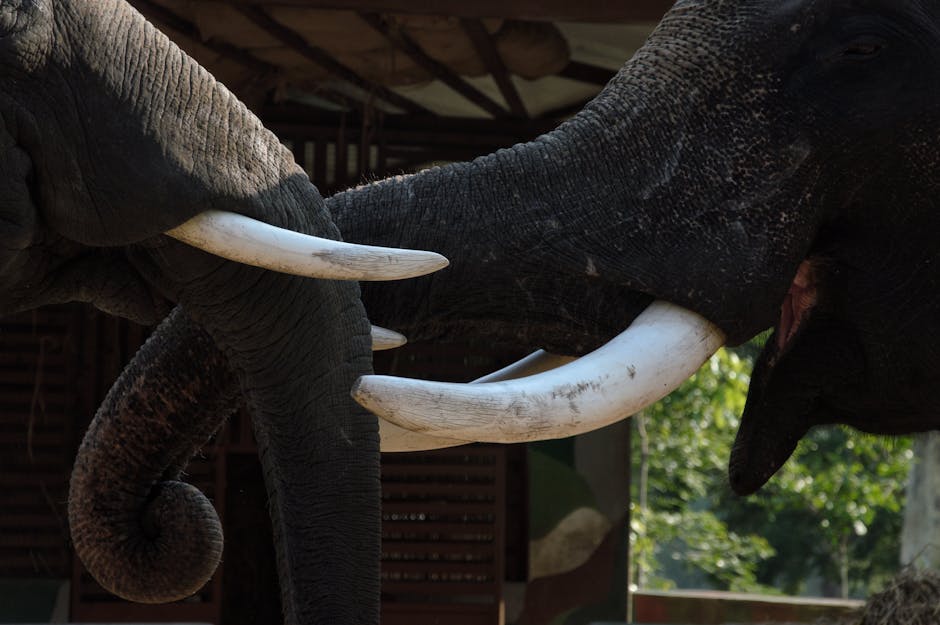
The Most Intelligent Behaviors Seen in Animals

The Most Intelligent Behaviors Seen in Animals

⏱️ 5 min read

The animal kingdom is filled with remarkable displays of intelligence that challenge our understanding of cognitive abilities beyond humans. From problem-solving and tool use to complex communication and self-awareness, animals across diverse species demonstrate sophisticated mental capabilities that continue to fascinate scientists and nature enthusiasts alike. These intelligent behaviors reveal that cognition exists on a broad spectrum throughout the natural world, with many creatures exhibiting skills once thought to be uniquely human.

Tool Creation and Manipulation

One of the most striking indicators of animal intelligence is the ability to create and use tools for specific purposes. New Caledonian crows have become famous for their sophisticated tool-making abilities, fashioning hooks from twigs and using them to extract insects from tree bark. These birds don't simply use found objects; they actually modify materials to create more effective tools, demonstrating foresight and understanding of cause and effect.

Chimpanzees and other great apes have long been observed using tools in various contexts. They use stones to crack nuts, fashion spears for hunting, and employ leaves as sponges to collect water. What makes this behavior particularly remarkable is that these skills are passed down through generations, creating distinct cultural traditions within different populations.

Sea otters provide an aquatic example of tool use, carrying favorite rocks in the pouches of skin under their forearms. They use these rocks as anvils to crack open shellfish while floating on their backs, demonstrating not only tool use but also the foresight to keep preferred tools for future use.

Complex Problem-Solving Abilities

Octopuses display extraordinary problem-solving skills that seem almost alien given their evolutionary distance from vertebrates. These cephalopods can navigate mazes, open jars with screw-top lids, and have been observed carrying coconut shell halves to use as portable shelters. Their ability to solve novel problems suggests a sophisticated understanding of their environment and the capacity for flexible thinking.

Elephants demonstrate remarkable problem-solving in both captive and wild settings. They've been observed dropping logs onto electric fences to break the circuit, cooperating to retrieve out-of-reach food, and even showing an understanding of weight and volume when choosing tools. Their problem-solving often involves social cooperation, highlighting the interconnection between intelligence and social behavior.

Dolphins regularly display innovative problem-solving techniques. They use marine sponges as protective gloves while foraging on the seafloor, demonstrating tool use in an aquatic environment. Additionally, they create mud rings to trap fish and work cooperatively to herd prey, showing both individual ingenuity and collective intelligence.

Self-Awareness and Mirror Recognition

The ability to recognize oneself in a mirror is considered a significant indicator of self-awareness and higher cognitive function. Great apes, including chimpanzees, orangutans, and gorillas, consistently pass the mirror self-recognition test, often using mirrors to inspect parts of their bodies they cannot normally see.

Surprisingly, dolphins and some whale species also demonstrate mirror self-recognition, using reflections to examine marks placed on their bodies. This ability in marine mammals suggests that self-awareness evolved independently in different lineages, indicating its importance as a cognitive trait.

Elephants have also passed mirror tests, and magpies are among the few non-mammal species to show this capability. The presence of self-recognition across such diverse species suggests that intelligence and self-awareness have multiple evolutionary origins.

Advanced Communication Systems

Prairie dogs possess one of the most sophisticated animal communication systems discovered to date. Research has shown that their alarm calls contain specific information about predator type, size, color, and even speed of approach. This linguistic complexity allows colony members to respond appropriately to different threats, demonstrating abstract thought and descriptive ability.

Honeybees perform elaborate waggle dances to communicate the distance, direction, and quality of food sources to hive mates. This symbolic communication system can convey information about locations several kilometers away, representing a remarkable form of abstract information transfer in insects.

Parrots, particularly African grey parrots, can learn human vocabulary and use words appropriately in context. The famous parrot Alex demonstrated the ability to identify colors, shapes, and quantities, and could combine concepts in novel ways, suggesting genuine understanding rather than mere mimicry.

Emotional Intelligence and Empathy

Elephants display profound emotional intelligence, mourning their dead and showing what appears to be genuine grief. They revisit bones of deceased family members and have been observed standing vigil over deceased companions. This emotional depth suggests complex inner lives and social awareness.

Rats demonstrate empathy by freeing trapped companions even when there's no benefit to themselves. In experiments, rats will forgo chocolate rewards to help a distressed cage mate, showing that empathetic behavior extends well beyond primates and may be more widespread than previously thought.

Dolphins have been documented supporting injured or ill pod members, holding them near the surface to help them breathe. This caregiving behavior requires recognition of another's distress and the motivation to provide assistance, fundamental components of empathy.

Memory and Future Planning

Clark's nutcrackers cache thousands of pine seeds across vast territories and can remember the locations of these stores for months. This spatial memory capability is extraordinary, requiring the birds to create detailed mental maps and recall specific locations among countless possible sites.

Chimpanzees and other great apes show clear evidence of planning for future needs. Captive chimpanzees have been observed collecting and hiding stones before zoo opening, later using them as projectiles toward visitors, demonstrating premeditation and delayed gratification.

Western scrub jays not only cache food but also adjust their caching behavior based on whether other birds were watching. If observed, they'll later move their caches to new locations, showing awareness of others' knowledge states and future-oriented deception.

These remarkable behaviors across diverse species demonstrate that intelligence is not a uniquely human trait but rather exists along a continuum throughout the animal kingdom. Understanding these capabilities not only deepens our appreciation for animal life but also raises important ethical questions about how we interact with and protect these cognitively sophisticated creatures.