











1 / 10 Questions
0 Points

What animal can sleep for three years straight?

Koala

Sloth

Bear

Snail

Points won
0
Correct score
0%

More Quizzes

More Articles

15 Hidden Facts About The Simpsons

15 Hidden Facts About The Simpsons

⏱️ 7 min read

Since its debut in 1989, "The Simpsons" has become the longest-running American sitcom and animated program in television history. While millions of fans have followed the adventures of Homer, Marge, Bart, Lisa, and Maggie over more than three decades, the show harbors countless secrets and surprising details that even devoted viewers might not know. From production challenges to celebrity cameos that never happened, these lesser-known facts reveal the fascinating history behind America's favorite animated family.

Behind-the-Scenes Secrets That Shaped Television History

1. The Show Was Born from Crude Sketches in a Lobby

Matt Groening created the Simpson family in just 15 minutes while waiting in producer James L. Brooks's lobby. He was originally supposed to pitch his comic strip "Life in Hell," but fearing he'd lose the rights to his characters, he quickly sketched out a new family. Groening named most of the characters after his own family members—his parents Homer and Margaret (Marge), and sisters Lisa and Maggie—though he substituted "Bart" as an anagram of "brat" instead of using his own name.

2. Homer's Signature "D'oh!" Was Scripted Differently

The now-iconic exclamation "D'oh!" was originally written in scripts as "annoyed grunt." Voice actor Dan Castellaneta drew inspiration from Jimmy Finlayson, a Scottish actor who appeared in Laurel and Hardy films and would say "Doooh!" when frustrated. Castellaneta shortened it to make it punchier, and it eventually became so culturally significant that the Oxford English Dictionary added "d'oh" as an official entry in 2001.

3. The Characters Only Have Four Fingers for an Economic Reason

The decision to draw characters with only four fingers instead of five wasn't arbitrary—it was a practical animation choice. Drawing four fingers saved time and money during production. This practice actually dates back to early Disney cartoons, and "The Simpsons" continued the tradition. The animators discovered that five fingers made hands look too crowded, while four fingers appeared more natural on the characters' proportions.

4. Bart's Voice Comes from a Surprising Source

Nancy Cartwright, the voice of Bart Simpson, originally auditioned for the role of Lisa. However, when she saw the character description for Bart, she felt she could bring more to the troublemaking son. At her audition, she performed Bart's lines and immediately won over the casting directors. Remarkably, Cartwright has never changed her voice over decades of recording—that's genuinely her natural vocal register when performing the character.

5. The Town of Springfield's Location Is Deliberately Mysterious

Despite countless clues dropped throughout the series, Matt Groening has confirmed that Springfield's state location is intentionally ambiguous. He chose the name "Springfield" specifically because it's one of the most common city names in America, appearing in 33 states. The show has included contradictory geographical references throughout its run to maintain the mystery, making Springfield a true "Everytime, USA."

Celebrity Connections and Rejected Guest Stars

6. Michael Jackson Appeared Under a Pseudonym

The King of Pop guest-starred in the season three episode "Stark Raving Dad" as a character who claimed to be Michael Jackson. Due to contractual obligations with his record label, Jackson was credited under the pseudonym "John Jay Smith." While Jackson voiced the speaking parts, he wasn't allowed to sing, so a soundalike named Kipp Lennon performed the musical numbers. This episode was later pulled from circulation following the controversial "Leaving Neverland" documentary.

7. The Show Has Been Rejected by Major Stars

Despite its cultural cachet, several A-list celebrities have turned down opportunities to appear on "The Simpsons." Notably, Prince refused multiple invitations, and Bruce Springsteen declined an offer. The show's producers have stated that securing guest stars became easier over time as the series' legendary status grew, but early seasons faced more rejections than fans might expect from what would become such a prestigious gig.

8. The Beatles Connection That Almost Happened

The producers spent years trying to get all the surviving Beatles members to appear together on the show. While George Harrison and Ringo Starr each made individual appearances, and Paul McCartney and Linda McCartney appeared in a memorable vegetarian-themed episode, the dream of having all the living Beatles in one episode never materialized before Harrison's death in 2001.

Animation Techniques and Creative Decisions

9. The Opening Sequence Changes Cost a Fortune

The show's opening credits cost approximately $50,000 to $75,000 per episode when they're modified or updated. Due to this expense, the production team uses the same opening for multiple episodes and only creates new couch gags or seasonal variations periodically. This is why keen-eyed viewers notice the opening sequence remains largely consistent throughout each season, with only minor variations for special occasions.

10. Characters' Yellow Skin Was a Strategic Decision

Matt Groening wanted his characters to be immediately recognizable and stand out when viewers flipped through channels. The bright yellow skin tone was chosen deliberately to grab attention—when someone channel-surfing passed by "The Simpsons," the unusual color would make them stop and look. This distinctive choice has become one of the show's most recognizable visual trademarks and has been maintained consistently across all merchandise and promotional materials.

11. Episodes Are Produced Nearly a Year in Advance

The production timeline for a typical "Simpsons" episode spans approximately nine months from initial concept to finished product. This lengthy process includes writing, table reads, multiple revisions, recording sessions, animation (often done overseas), and post-production. This extended timeline occasionally causes challenges when the show attempts to incorporate timely references or current events, as the cultural landscape may shift dramatically between production and air date.

Cultural Impact and Record-Breaking Achievements

12. The Show Has Predicted the Future with Eerie Accuracy

Over its decades-long run, "The Simpsons" has seemingly predicted numerous real-world events, including Donald Trump's presidency (mentioned in a 2000 episode), the Disney-Fox merger, smartwatches, autocorrect technology, and even the discovery of the Higgs boson particle. While some attribute this to coincidence given the show's massive episode count, the writers' ability to satirize contemporary trends has occasionally resulted in storylines that later became reality.

13. The Writers' Room Is Remarkably Educated

The writing staff of "The Simpsons" includes several Harvard graduates and individuals with advanced degrees in mathematics, computer science, and physics. This explains the show's frequent mathematical jokes, scientific references, and sophisticated wordplay that operates on multiple levels. The term "Simpsons paradox" in statistics has even been referenced in episodes, showcasing the writers' impressive academic backgrounds.

14. Bleeding Gums Murphy Was a Tribute That Became Something More

Lisa's jazz mentor, Bleeding Gums Murphy, was partially inspired by blues legend Blind Lemon Jefferson and jazz musician Sonny Rollins. However, after the character's death episode aired in season six, many viewers and critics noted similarities to blues musician Bleeding Gums Anderson. The character became a touching recurring element in Lisa's development and represented the show's ability to handle serious topics like death and loss within its comedic framework.

15. The Show Has Earned More Emmy Awards Than Any Other Animated Series

As of recent counts, "The Simpsons" has won 34 Emmy Awards and received over 90 nominations, making it the most Emmy-awarded animated series in television history. The show has won in categories ranging from Outstanding Animated Program to Outstanding Voice-Over Performance. This recognition from the Television Academy underscores the series' consistent quality and cultural significance across multiple decades of production.

A Legacy Built on Hidden Details

These fifteen facts merely scratch the surface of the rich history surrounding "The Simpsons." From its humble beginnings as a series of shorts on "The Tracey Ullman Show" to its status as a cultural institution, the program has maintained relevance through clever writing, memorable characters, and countless details that reward attentive viewers. The combination of intelligent humor, social satire, and genuine heart has allowed the show to remain on the air for over 750 episodes, influencing generations of viewers and creators alike. Whether it's the economic decisions behind the animation style, the celebrity stories that never made it to air, or the highly educated team crafting each script, these hidden facts demonstrate that "The Simpsons" success stems from far more than just good jokes—it represents decades of creative dedication, strategic choices, and an unwavering commitment to quality entertainment that continues to resonate with audiences worldwide.
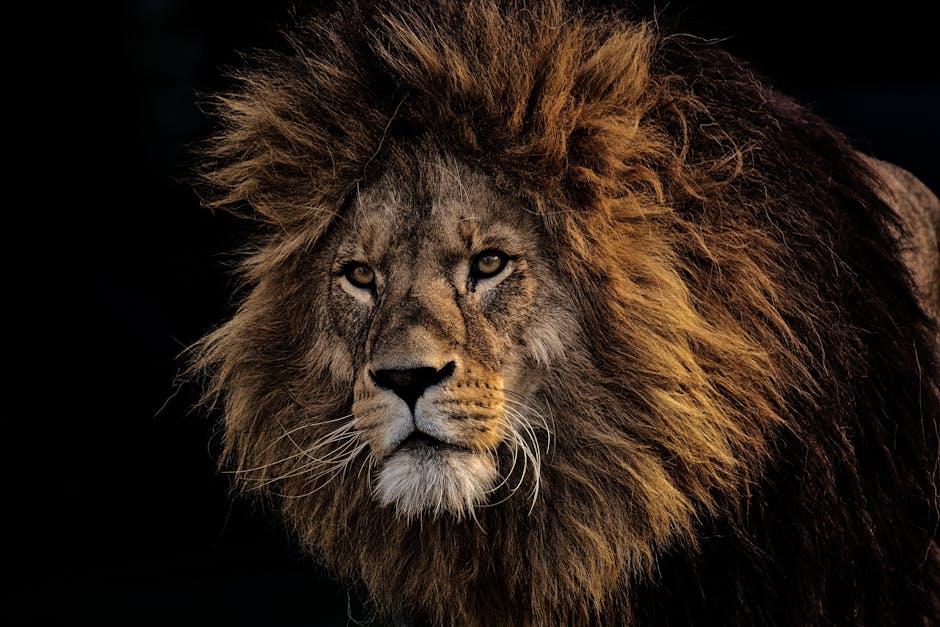
15 Amazing Facts About Lions You Didn’t Know

15 Amazing Facts About Lions You Didn’t Know

⏱️ 8 min read

Lions have captivated human imagination for millennia, symbolizing strength, courage, and royalty across cultures. While most people are familiar with basic lion facts, these majestic big cats harbor numerous surprising secrets that even wildlife enthusiasts may not know. From their unique social structures to remarkable hunting techniques and unexpected vulnerabilities, lions continue to reveal fascinating aspects of their behavior and biology that challenge common assumptions.

Extraordinary Lion Facts That Will Change Your Perspective

1. Male Lions Sleep Up to 20 Hours Per Day

Contrary to their reputation as tireless hunters, male lions are among the animal kingdom's champion sleepers. These powerful predators spend between 18 to 20 hours daily resting or sleeping, conserving energy for brief but intense periods of territorial defense and mating. Female lions, though more active in hunting duties, still sleep approximately 15 to 18 hours daily. This extensive rest period helps lions cope with the intense heat of African savannas and ensures they have sufficient energy reserves for their explosive hunting sprints.

2. A Lion's Roar Can Be Heard From Five Miles Away

The iconic roar of a lion is not just impressive—it's one of nature's most powerful acoustic signals. Reaching volumes of up to 114 decibels, comparable to a chainsaw or rock concert, a lion's roar can travel across the savanna for up to eight kilometers (five miles) under ideal conditions. Lions use this formidable vocalization to communicate with pride members, establish territory boundaries, and warn rival lions to stay away. Both males and females roar, though male roars are typically deeper and more resonant due to their larger body size.

3. Lionesses Do 90% of the Hunting

Despite the male's imposing appearance and symbolic status as the "king of the jungle," female lions shoulder the overwhelming majority of hunting responsibilities. Lionesses conduct approximately 85 to 90 percent of all hunts, working cooperatively in coordinated groups to bring down prey. Their lighter, more agile bodies make them better suited for the chase, while males' conspicuous manes would hinder stealth approaches. However, males do contribute by defending territories and occasionally participating in hunts for larger prey like buffalo or giraffes.

4. Lions Are the Only Truly Social Big Cats

Unlike tigers, leopards, and jaguars that lead predominantly solitary lives, lions have evolved a complex social structure centered around the pride. A typical pride consists of related females, their offspring, and a coalition of two to three males. This social organization provides numerous advantages, including cooperative hunting, communal cub-rearing, and enhanced territorial defense. The social bonds within prides are reinforced through grooming, playing, and rubbing heads together in affectionate greetings.

5. A Lion's Mane Indicates Health and Genetic Fitness

The magnificent mane adorning male lions serves purposes far beyond aesthetics. Research has demonstrated that mane color and fullness provide valuable information about a male's age, testosterone levels, and overall health status. Darker, fuller manes typically indicate higher testosterone levels and better nutrition, making these males more attractive to females and more intimidating to rivals. Environmental factors like temperature and injury also influence mane development, with lions in cooler climates generally developing more impressive manes.

6. Lions Once Roamed Across Three Continents

Today's lions are confined primarily to sub-Saharan Africa, with a single Asiatic lion population surviving in India's Gir Forest. However, historical evidence reveals that lions once commanded a vast range spanning Europe, Africa, the Middle East, and Asia. Cave paintings and fossil records indicate lions lived in southern Europe until approximately 10,000 years ago, while they persisted in the Middle East until the medieval period. Human expansion, habitat loss, and hunting gradually compressed their range to current fragmented populations.

7. White Lions Are Not Albinos

The striking white lions occasionally seen in wildlife reserves result from a rare recessive gene called leucism, not albinism. Unlike albino animals that lack all pigmentation and have pink eyes, white lions possess pale cream or white coats while retaining normal eye coloration, typically blue-gray or gold. This genetic variation occurs naturally but is extremely rare in wild populations due to the disadvantage it creates for camouflaged hunting. Most white lions today exist in captive breeding programs or reserves.

8. Lions Have Unique Whisker Spot Patterns

Each lion possesses a distinctive pattern of whisker spots—the small black dots at the base of their whiskers—that remains unchanged throughout their lifetime. This pattern functions like a fingerprint, allowing researchers to identify individual lions for population studies and behavioral research. Scientists photograph these whisker spot patterns alongside other identifying features such as ear notches, scars, and mane characteristics to track individuals across years and monitor pride dynamics.

9. Cubs Are Born With Spots That Fade With Age

Lion cubs enter the world covered in spotted coats reminiscent of their leopard cousins, providing camouflage in dappled grassland environments. These rosette-like markings gradually fade as cubs mature, typically disappearing by the time they reach two to three months of age. This spotted baby coat offers crucial protection during the vulnerable early weeks when cubs remain hidden while their mothers hunt. The evolutionary retention of this juvenile pattern suggests a shared ancestry among all big cats.

10. Lions Can Survive Without Drinking Water for Days

Lions demonstrate remarkable adaptations to arid environments, capable of surviving four to five days without drinking water directly. They obtain substantial moisture from the blood and body fluids of their prey, which can meet most of their hydration needs during dry periods. Additionally, lions adjust their activity patterns during drought, becoming more nocturnal to avoid heat stress and reduce water loss through panting. This physiological flexibility enables lions to inhabit semi-desert regions where surface water is scarce or seasonal.

11. Young Males Form Bachelor Coalitions After Leaving Their Pride

Upon reaching sexual maturity between two and three years old, young male lions are expelled from their birth pride by the resident dominant males. These displaced males typically form coalitions with brothers or unrelated males in similar circumstances. These bachelor groups roam nomadically for months or years, honing their hunting skills and building strength until they're powerful enough to challenge established males and claim their own territory and pride.

12. A Lion's Tongue Is Rough Enough to Remove Skin

The lion's tongue features backward-facing barbs called papillae, made from the same material as their claws—keratin. These sharp, hook-like projections create an extremely abrasive surface capable of literally licking meat off bones and, with sufficient pressure and repeated licking, removing skin from prey or even a human hand. Lions use these specialized tongues for thorough grooming, removing parasites, and efficiently consuming every scrap of meat from their kills, minimizing waste in an environment where meals are never guaranteed.

13. Lions Can Produce Hybrid Offspring With Tigers

When lions and tigers breed in captivity, they produce hybrid offspring called ligers (male lion and female tiger) or tigons (male tiger and female lioness). Ligers can become extraordinarily large, sometimes exceeding 900 pounds, making them the world's largest cats. However, these hybrids never occur naturally since lions and tigers occupy different geographic ranges and ecological niches. The creation of such hybrids raises ethical concerns within conservation communities regarding genetic integrity and animal welfare.

14. Female Lions Synchronize Birth Cycles

In a remarkable example of reproductive coordination, lionesses within a pride often synchronize their estrous cycles and give birth around the same time. This synchronization creates communal nurseries where females collectively nurse and protect all cubs regardless of maternity. Communal nursing increases survival rates by ensuring cubs receive adequate nutrition even if their biological mother is away hunting. This cooperative breeding system exemplifies the sophisticated social bonds underlying lion pride dynamics.

15. Lions Face Critical Conservation Challenges

Despite their iconic status, lion populations have plummeted by approximately 43 percent over the past two decades, with fewer than 25,000 individuals remaining in the wild. Habitat fragmentation, human-wildlife conflict, prey depletion, and poaching for body parts used in traditional medicine threaten their survival. Several lion subspecies have already been declared extinct in recent history. Conservation efforts focusing on habitat corridors, community-based protection programs, and anti-poaching initiatives are essential for ensuring these magnificent predators continue prowling African savannas for future generations.

Understanding Lions Beyond the Myths

These fifteen remarkable facts illuminate the complexity and wonder of lions beyond their popular cultural image. From their surprisingly lazy lifestyle and sophisticated social structures to their remarkable adaptations and conservation challenges, lions continue to surprise and inspire. Understanding these realities helps foster greater appreciation for these apex predators and underscores the urgent need for their protection. As ecosystems continue facing unprecedented pressure, preserving viable lion populations requires informed global commitment to habitat conservation, human-wildlife coexistence strategies, and sustainable tourism practices that benefit both lions and local communities sharing their landscapes.