










1 / 10 Questions
0 Points

Which card game uses terms like flush and straight?

Hearts

Poker

Rummy

Bridge

Points won
0
Correct score
0%

More Quizzes

More Articles

Top 10 Most Powerful Empires in History

Top 10 Most Powerful Empires in History

⏱️ 7 min read

Throughout human civilization, certain empires have risen to extraordinary heights of power, influencing vast territories, millions of people, and the course of world history. These colossal political entities shaped culture, technology, trade, and governance in ways that continue to resonate today. The measure of an empire's power encompasses military might, territorial expansion, economic prosperity, cultural influence, and administrative sophistication. Here are the most formidable empires that left indelible marks on human history.

The Greatest Empires That Shaped Civilization

1. The Mongol Empire: Largest Contiguous Land Empire

The Mongol Empire, established by Genghis Khan in the early 13th century, became the largest contiguous land empire in history, stretching from Eastern Europe to the Sea of Japan. At its peak, it controlled approximately 24 million square kilometers and governed over 100 million people—roughly a quarter of the world's population at the time. The Mongols revolutionized warfare with their superior cavalry tactics, composite bows, and psychological warfare strategies. Beyond military conquest, they facilitated the Silk Road trade routes, enabling unprecedented exchange of goods, ideas, and technologies between East and West. Their postal system, the Yam, was one of the most efficient communication networks of the medieval world, and their religious tolerance allowed diverse cultures to coexist within their vast territories.

2. The British Empire: The Empire Where the Sun Never Set

The British Empire reached its zenith in the early 20th century, controlling roughly a quarter of the world's land surface and population. Spanning across every continent, it encompassed approximately 35.5 million square kilometers and governed over 400 million people by 1920. British naval supremacy enabled this unprecedented global reach, while the Industrial Revolution provided technological and economic advantages. The empire's legacy includes the widespread adoption of the English language, parliamentary democracy models, common law systems, and global trade networks. British influence shaped modern nations across North America, Africa, Asia, and Oceania, establishing infrastructure, educational systems, and administrative frameworks that persist today.

3. The Roman Empire: Foundation of Western Civilization

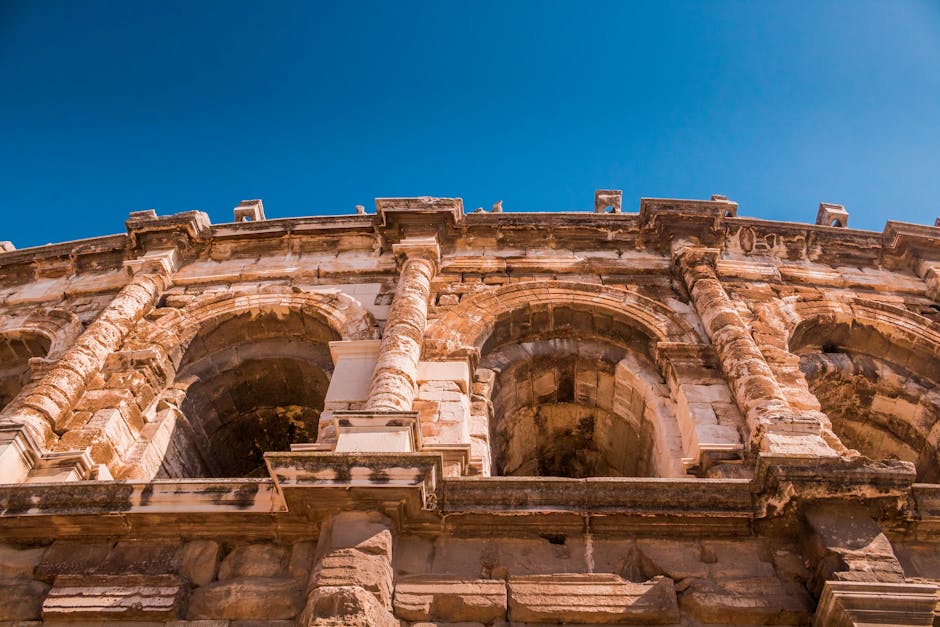
The Roman Empire dominated the Mediterranean world and beyond for over five centuries, from 27 BCE to 476 CE in the West, and continuing until 1453 CE in the East as the Byzantine Empire. At its greatest extent under Emperor Trajan in 117 CE, Rome controlled approximately 5 million square kilometers, encompassing the entire Mediterranean basin, much of Europe, and parts of the Middle East and North Africa. Roman innovations in engineering, law, military organization, and governance became foundational to Western civilization. Their construction of roads, aqueducts, and monumental architecture demonstrated unprecedented engineering prowess. Roman law influenced legal systems worldwide, while Latin became the foundation for Romance languages and remained the language of scholarship for centuries.

4. The Qing Dynasty: China's Final Imperial Dynasty

The Qing Dynasty (1644-1912) represented the territorial peak of Chinese imperial power, ruling over approximately 13.1 million square kilometers at its maximum extent in the late 18th century. Under the reign of the Kangxi, Yongzheng, and Qianlong emperors, the Qing achieved remarkable prosperity and territorial expansion, incorporating Mongolia, Tibet, Xinjiang, and Taiwan into the empire. The dynasty governed over 400 million people by the 19th century, making it the most populous empire of its time. The Qing maintained sophisticated bureaucracy through the civil service examination system, promoted arts and culture, and managed complex multi-ethnic populations. Despite eventual decline, the dynasty's territorial acquisitions largely define modern China's borders.

5. The Spanish Empire: First Global Superpower

The Spanish Empire became the first truly global empire, pioneering transoceanic colonization following Christopher Columbus's 1492 voyage. By the late 18th century, it controlled approximately 13.7 million square kilometers, spanning territories in the Americas, Asia, Africa, and Oceania. The phrase "the empire on which the sun never sets" originally described Spanish holdings. Spanish conquistadors toppled powerful civilizations like the Aztecs and Incas, extracting vast quantities of gold and silver that financed European development. The Spanish introduced European culture, language, and Catholicism across the Americas, creating a lasting legacy evident in the predominance of Spanish language and culture throughout Latin America. The Manila Galleons established the first global trade route, connecting Asia, the Americas, and Europe.

6. The Russian Empire: The Largest Empire by Land Area

The Russian Empire, lasting from 1721 to 1917, expanded to become the third-largest empire in history by land area, covering approximately 22.8 million square kilometers at its peak. Stretching from Poland in the west to Alaska in the east (until 1867), and from the Arctic Ocean to Central Asia, it governed over 125 million people by the early 20th century. Russian expansion combined military conquest with colonization, absorbing diverse ethnic groups and territories. The empire played crucial roles in European balance of power, defeating Napoleon's invasion and influencing continental politics. Russia's vast natural resources, including timber, minerals, and agricultural land, provided immense economic potential, while cultural achievements in literature, music, and arts gained worldwide recognition.

7. The Islamic Caliphate: Rapid Expansion and Golden Age

The early Islamic Caliphates, particularly the Umayyad Caliphate (661-750 CE) and Abbasid Caliphate (750-1258 CE), created one of history's most influential empires. Within a century of Prophet Muhammad's death in 632 CE, Islamic armies had conquered territories spanning from Spain and North Africa to Central Asia and the Indian subcontinent—approximately 11.1 million square kilometers under the Umayyads. The Islamic Golden Age brought remarkable advances in mathematics, astronomy, medicine, philosophy, and literature. Scholars preserved and expanded upon Greek and Roman knowledge, developing algebra, revolutionizing optics, and making astronomical observations. The caliphates established prosperous trade networks, promoted arts and architecture, and created administrative systems that managed diverse populations while spreading Arabic language and Islamic culture.

8. The Ottoman Empire: Bridge Between Continents

The Ottoman Empire (1299-1922) controlled strategic territories spanning three continents—Europe, Asia, and Africa—for over six centuries. At its zenith under Suleiman the Magnificent in the 16th century, it encompassed approximately 5.2 million square kilometers, controlling crucial trade routes between East and West. The Ottomans conquered Constantinople in 1453, ending the Byzantine Empire and establishing one of history's most magnificent capitals in Istanbul. Their military innovations, particularly the elite Janissary corps and effective use of gunpowder weapons, made them formidable opponents. The empire's millet system allowed religious minorities considerable autonomy, managing a multi-ethnic, multi-religious population effectively. Ottoman influence shaped Southeastern Europe, the Middle East, and North Africa, with architectural, cultural, and administrative legacies persisting today.

9. The Persian Empire: Ancient Superpower of the Near East

The Achaemenid Persian Empire (550-330 BCE), founded by Cyrus the Great, became antiquity's largest empire, controlling approximately 5.5 million square kilometers at its peak under Darius I. It stretched from the Balkans and Egypt in the west to the Indus Valley in the east, governing an estimated 44% of the world's population at the time. The Persians demonstrated remarkable administrative sophistication through the satrapy system, standardized coinage, and the Royal Road—an extensive network facilitating communication and trade. Cyrus's Cylinder, considered an early declaration of human rights, exemplified Persian tolerance toward conquered peoples' religions and customs. Persian cultural achievements influenced art, architecture, and governance throughout the ancient world, while Zoroastrianism shaped later religious developments.

10. The Macedonian Empire: Alexander's Legacy of Hellenization

Though relatively brief, Alexander the Great's Macedonian Empire (336-323 BCE) profoundly impacted world history. In just thirteen years, Alexander conquered territories stretching from Greece to Egypt and northwest India, encompassing approximately 5.2 million square kilometers. His military genius revolutionized warfare through combined-arms tactics and innovative siege techniques. More significantly, Alexander's conquests spread Hellenistic culture throughout the Near East and Central Asia, creating a cultural synthesis that influenced art, philosophy, science, and governance for centuries. The successor kingdoms established after his death—the Ptolemaic, Seleucid, and Antigonid dynasties—continued Hellenistic traditions, making Greek the lingua franca of the eastern Mediterranean and establishing Alexandria as a center of learning that preserved classical knowledge.

Enduring Influences on Modern Civilization

These ten empires represent the pinnacle of political, military, and cultural power throughout human history. Each dominated their era through combinations of military prowess, administrative innovation, economic strength, and cultural influence. Their legacies persist in modern languages, legal systems, architectural styles, religious practices, and political boundaries. The Roman legal tradition influences contemporary law; British colonialism shaped global English usage; Islamic scholarship preserved classical knowledge; Chinese bureaucratic systems inspired modern civil services; and Spanish conquest transformed entire continents culturally and demographically. Studying these empires reveals patterns of rise and decline, the costs and benefits of imperial expansion, and the complex relationships between conquerors and conquered peoples. Understanding their achievements and failures provides valuable perspectives on contemporary global dynamics and the nature of power itself.

Did You Know the Oscars Were Originally Called the “Academy Award of Merit”?

Did You Know the Oscars Were Originally Called the “Academy Award of Merit”?

⏱️ 9 min read

When the first Academy Awards ceremony took place on May 16, 1929, at the Hollywood Roosevelt Hotel, the 270 guests in attendance weren't celebrating "Oscars"—they were honoring recipients of the Academy Award of Merit. This formal designation represented the pinnacle of cinematic achievement, but the glamorous golden statuette would soon acquire a much catchier nickname that would define Hollywood's most prestigious honor for nearly a century.

Quick Facts

  • The official name "Academy Award of Merit" was established when the Academy of Motion Picture Arts and Sciences was founded in 1927.
  • The nickname "Oscar" wasn't officially adopted by the Academy until 1939, a full decade after the first ceremony.
  • The first Academy Awards ceremony lasted just 15 minutes and honored films released between August 1, 1927, and July 31, 1928.
  • Each Oscar statuette stands 13.5 inches tall, weighs 8.5 pounds, and is plated in 24-karat gold.
  • Winners were announced three months before the first ceremony, eliminating any element of surprise.

The Birth of the Academy Award of Merit

The Academy of Motion Picture Arts and Sciences convened its first organizational meeting on January 11, 1927, at the Ambassador Hotel in Los Angeles. Louis B. Mayer, head of Metro-Goldwyn-Mayer, had conceived the Academy as an organization to mediate labor disputes and improve the film industry's image. Among its objectives was establishing awards to recognize outstanding artistic and technical achievements. The founders deliberately chose "Academy Award of Merit" as the official designation to convey dignity and artistic legitimacy to an industry often dismissed as mere popular entertainment.

The statuette itself was designed by MGM art director Cedric Gibbons, who sketched a knight holding a crusader's sword standing on a reel of film with five spokes representing the Academy's original branches: actors, directors, producers, technicians, and writers. The sculptor George Stanley executed Gibbons' design, creating the Art Deco figure that would become cinema's most recognizable symbol. The first statuettes were manufactured by the Dodge Trophy Company of Crystal Lake, Illinois, and each cost approximately $50 to produce in 1929—equivalent to roughly $880 today.

Multiple Origin Stories Behind the "Oscar" Nickname

The etymology of "Oscar" remains one of Hollywood's most enduring mysteries, with at least three competing origin stories circulating through industry lore. The most widely accepted account credits Margaret Herrick, the Academy's librarian and later its executive director, who reportedly remarked upon seeing the statuette in 1931 that it resembled her Uncle Oscar. Columnist Sidney Skolsky, who was present, found the anecdote amusing and began referring to the awards as "Oscars" in his writing, helping popularize the nickname among the public.

A competing narrative attributes the name to actress Bette Davis, who claimed she named it after her first husband, Harmon Oscar Nelson. Davis insisted that the statuette's backside reminded her of her spouse's posterior, though this colorful explanation emerged only in her 1987 autobiography and lacks contemporary corroboration. The Academy itself has never definitively endorsed Davis's version, though it hasn't explicitly rejected it either.

The third theory credits Walt Disney, who thanked the Academy for his "Oscar" during his acceptance speech in 1932. However, transcripts from that ceremony don't support this claim, and Disney's documentation doesn't mention using the nickname at that early date. Regardless of its true origin, the Academy resisted the informal moniker for years, continuing to use "Academy Award of Merit" in all official communications throughout the 1930s.

When "Oscar" Became Official

The Academy didn't officially embrace "Oscar" until the twelfth ceremony in 1939. By that point, the nickname had achieved such widespread public usage that the organization's resistance seemed increasingly futile and out of touch. The 1939 ceremony program marked the first official Academy publication to include "Oscar" alongside "Academy Award of Merit," acknowledging what the press and public had already decided. From that point forward, both names were used interchangeably in official contexts, though legal documents and formal certificates still bear the original designation.

This shift reflected broader changes in Hollywood's relationship with formality and public relations. The film industry had matured significantly between 1929 and 1939, weathering the introduction of sound, the Great Depression, and the implementation of the Production Code. The Academy recognized that accessibility and public engagement mattered more than maintaining aristocratic distance. "Oscar" humanized the awards, making them feel less like institutional pronouncements and more like celebrations the public could embrace.

How the First Ceremony Differed from Modern Oscars

The inaugural Academy Awards ceremony bore little resemblance to today's marathon television spectacles. Held in the Blossom Room of the Hollywood Roosevelt Hotel, the event was a private dinner attended by 270 members of the film industry and their guests. Tickets cost $5, equivalent to approximately $88 today. Douglas Fairbanks, the Academy's first president, hosted the proceedings, which lasted approximately 15 minutes—the time it took to hand out the 15 statuettes awarded that evening.

Unlike contemporary ceremonies, winners had been announced three months earlier, on February 18, 1929, eliminating any suspense. The Academy had notified newspapers of the results in advance, considering the awards a fait accompli rather than an event requiring dramatic reveals. This approach changed the following year when the Academy discovered that newspapers had broken the embargo and published winners before the ceremony. Starting with the second ceremony, results were sealed in envelopes, establishing the tradition that continues today.

The categories themselves also differed substantially. The first ceremony featured only 12 categories, compared to the 23 awarded today. Some categories had unusual structures by modern standards: "Best Director" was split into "Dramatic" and "Comedy" divisions, while acting awards weren't divided by lead and supporting roles—a distinction that wouldn't be introduced until 1936. The Academy also presented two special awards that first year, including an Honorary Award to Charlie Chaplin "for versatility and genius in acting, writing, directing and producing The Circus."

The Evolution of Award Eligibility and Terminology

The original Academy Award of Merit established eligibility requirements that have evolved considerably over nine decades. The first ceremony honored films released during a specific 12-month period from August 1927 to July 1928, a window chosen because the Academy was founded midway through what would become the traditional awards season. This created the awkward situation where "Wings," which premiered in August 1927, competed against films released nearly a year later.

The Academy soon standardized the eligibility period to the calendar year, though the qualifying requirements have been refined repeatedly. Currently, a film must have a theatrical release in Los Angeles County lasting at least seven consecutive days, with at least three screenings per day, to qualify for most categories. The COVID-19 pandemic prompted temporary rule changes allowing streaming releases, demonstrating that even the most established traditions remain subject to industry evolution.

While "Academy Award of Merit" remains the official legal designation printed on certificates, "Oscar" has become the universally recognized term. The Academy vigorously protects both names as registered trademarks, sending cease-and-desist letters to unauthorized commercial users. Winners since 1950 must sign an agreement stating they won't sell their statuettes without first offering them back to the Academy for $1, protecting the awards from becoming mere commodities.

Why Names Matter in Award Prestige

The tension between "Academy Award of Merit" and "Oscar" illustrates broader questions about institutional authority versus popular culture. When the Academy founders chose a formal Latin-inspired designation, they were emulating European traditions and asserting cinema's legitimacy as an art form worthy of serious recognition. The film industry still struggled with respectability in 1927; movies were considered lowbrow entertainment compared to theater, opera, or literature.

The eventual triumph of "Oscar" represented a democratization of Hollywood glamour. A friendly, monosyllabic nickname made the awards feel accessible rather than elitist, reflecting American cultural preferences for informality over European formality. This linguistic shift paralleled broader changes in American entertainment, where radio and eventually television would bring Hollywood celebrities directly into homes, transforming them from distant aristocrats into familiar personalities.

Today, both names coexist symbiotically. "Academy Award" conveys gravitas and official recognition—nominees and winners invariably cite their "Academy Award nomination" in promotional materials, not their "Oscar nod." Meanwhile, "Oscar" dominates casual conversation and media coverage, providing a shorthand that everyone instantly recognizes. This duality has served the Academy well, allowing it to maintain institutional authority while remaining culturally relevant across nearly a century of dramatic technological and social change.

Frequently Asked Questions

Why did the Academy originally choose the name "Academy Award of Merit"?

The founders wanted a formal, dignified name that would legitimize cinema as a serious art form deserving institutional recognition, similar to European cultural honors. The term "merit" emphasized that awards would recognize genuine achievement rather than popularity or commercial success.

When did people start calling it the "Oscar" instead of the Academy Award of Merit?

The nickname "Oscar" began circulating informally in the early 1930s, with columnist Sidney Skolsky helping popularize it in print. The Academy officially adopted "Oscar" alongside the formal name in 1939, recognizing that public usage had already made the nickname inevitable.

Do Oscar winners receive certificates that say "Academy Award of Merit"?

Yes, the official certificates presented to winners still bear the formal designation "Academy Award of Merit," even though the statuette itself and most public communications now use "Oscar" as the primary name.

Can the Academy prevent people from using the word "Oscar" commercially?

Yes, the Academy holds registered trademarks for both "Oscar" and "Academy Award" and actively enforces these marks against unauthorized commercial use. The organization routinely sends legal notices to businesses attempting to profit from the Oscar name without permission.

Key Takeaways

  • The Academy Award of Merit was the official designation from the Academy's founding in 1927, chosen specifically to convey artistic legitimacy to the young film industry.
  • The "Oscar" nickname emerged organically in the early 1930s through multiple possible origins, but wasn't officially adopted until 1939 after becoming impossible to suppress through public usage alone.
  • The first Academy Awards ceremony in 1929 lasted just 15 minutes, featured only 12 categories, and announced winners three months in advance—practices that changed rapidly as the event evolved.
  • Both names remain in use today, with "Academy Award" maintaining formal prestige while "Oscar" provides the accessible, recognizable brand that has made the ceremony Hollywood's most enduring tradition.