











1 / 10 Questions
0 Points

How Many US States Does Historic Route 66 Cross?

Twelve

Ten

Six

Eight

Points won
0
Correct score
0%

More Quizzes

More Articles

Top 10 Films With Hidden Easter Eggs

Top 10 Films With Hidden Easter Eggs

⏱️ 8 min read

Movie enthusiasts and eagle-eyed viewers have long delighted in discovering hidden details, secret references, and clever Easter eggs that filmmakers plant throughout their work. These hidden gems often go unnoticed during a first viewing but reward dedicated fans who take the time to look closer. From subtle callbacks to previous films to cryptic messages that foreshadow future events, these cinematic treasures add layers of depth and enjoyment to the movie-watching experience. The following films stand out as masterclasses in hiding secrets that continue to fascinate audiences years after their release.

Cinema's Most Cleverly Hidden Surprises

1. Pixar's Universe-Connecting Pizza Truck in Multiple Films

The Pizza Planet truck from "Toy Story" has become one of cinema's most famous recurring Easter eggs, appearing in nearly every Pixar film since 1995. This yellow Toyota pickup with its distinctive rocket-shaped topper can be spotted in "A Bug's Life," "Monsters, Inc.," "Finding Nemo," "The Incredibles," "Ratatouille," and many others. The animators have grown increasingly creative with their placements, sometimes hiding it in plain sight and other times requiring frame-by-frame analysis to spot. In "Brave," the truck appears as a wood carving in the witch's cottage, while in "Finding Nemo," it's visible on a street outside the dentist's office. This Easter egg has sparked theories about a shared Pixar universe and demonstrates the studio's commitment to rewarding attentive viewers.

2. The Shining's Impossible Window and Spatial Paradoxes

Stanley Kubrick's horror masterpiece contains numerous intentional continuity errors and spatial impossibilities that serve as hidden messages about the Overlook Hotel's supernatural nature. The most famous is the window in the manager's office that shouldn't exist based on the building's exterior. Throughout the film, Kubrick deliberately placed furniture that moves between shots, doors that lead to impossible spaces, and changing carpet patterns. These weren't mistakes but carefully planned Easter eggs meant to create a subconscious sense of unease. The room number was changed from 217 to 237 at the hotel's request, but 237 became significant as the mean distance from Earth to the Moon in millions of miles, connecting to theories about Kubrick's alleged involvement in faking moon landing footage.

3. Fight Club's Subliminal Tyler Durden Appearances

David Fincher planted Tyler Durden throughout "Fight Club" before the character is officially introduced, appearing in four brief, single-frame flashes. These split-second appearances occur when the narrator is experiencing insomnia, showing Tyler at the doctor's office, during the narrator's photocopy montage, and twice more in other sequences. This brilliant technique mirrors Tyler's own anarchistic habit of splicing pornography into family films as a movie projectionist. The Easter egg serves multiple purposes: it creates a subliminal unease, foreshadows the twist ending, and demonstrates Fincher's meticulous attention to detail. Viewers who catch these frames on repeat viewings gain a deeper appreciation for how thoroughly the film's narrative structure reflects its themes of fractured identity.

4. Rapunzel and Flynn's Cameo in Frozen

Disney confirmed their animated films share a connected universe through a brief but significant Easter egg in "Frozen." During Elsa's coronation scene, as the palace gates open to visitors, Rapunzel and Flynn Rider from "Tangled" can be spotted among the crowd entering Arendelle. The appearance lasts only a few seconds, but it sparked extensive fan theories about how these films connect. Disney animators have stated that Rapunzel and Flynn were traveling to Elsa's coronation, suggesting the kingdoms exist in the same world. This Easter egg is part of Disney's larger tradition of cross-referencing their films, but it's particularly meaningful as it helps establish a timeline and geographical relationship between their recent animated features.

5. The Silence of the Lambs' Death's-Head Hawkmoth Message

While the death's-head hawkmoth featured prominently in "The Silence of the Lambs" promotional materials and plot, fewer viewers noticed that the skull pattern on the moth's back was actually a hidden image. Upon close inspection, the "skull" is revealed to be a recreation of Salvador Dalí's photograph "In Voluptas Mors," showing seven nude women arranged to create a skull shape. This Easter egg connects to the film's themes of transformation, death, and disturbing beauty. The reference to Dalí adds an artistic dimension to Buffalo Bill's twisted psychology and reflects his view of his crimes as artistic creations. It's a detail that rewards viewers who look more carefully at what first appears to be simply an insect's natural marking.

6. Star Wars' Hidden ET Aliens in The Phantom Menace

George Lucas and Steven Spielberg's friendship resulted in one of cinema's most delightful cross-franchise Easter eggs. During the Senate sequence in "Star Wars: Episode I - The Phantom Menace," members of E.T.'s alien species can be spotted among the attending delegations. The aliens appear in their pod during the wide shot of the Senate chamber, representing their home planet in the Galactic Senate. This Easter egg reciprocated Spielberg's earlier reference when a child dressed as Yoda appears during the Halloween scene in "E.T. the Extra-Terrestrial," and E.T. recognizes the costume. These mutual references suggest that both franchises exist in the same universe, with E.T.'s species somehow traveling from the Star Wars galaxy to Earth.

7. The Shawshank Redemption's Revealing Movie Posters

The three movie posters that Andy Dufresne hangs on his cell wall throughout "The Shawshank Redemption" serve as both period markers and thematic Easter eggs. The posters progress from Rita Hayworth to Marilyn Monroe to Raquel Welch, spanning from 1948 to 1966 and marking Andy's time in prison. However, these weren't random choices—each represents themes of freedom, beauty, and escape that mirror Andy's inner life and plans. Rita Hayworth appears in "Gilda," a film about entrapment and freedom; Marilyn Monroe represents the ultimate unattainable dream; and Raquel Welch's poster literally conceals Andy's tunnel to freedom. The poster positioning also follows the geographic direction of Andy's escape, with Raquel Welch pointing toward the hole in the wall and ultimately toward Zihuatanejo.

8. Back to the Future's Twin Pines Mall Transformation

One of cinema's most clever and subtle Easter eggs involves a shopping mall's name change in "Back to the Future." When Marty McFly first travels back to 1985, he departs from Twin Pines Mall. However, during his time-traveling adventure in 1955, he accidentally crashes the DeLorean into Old Man Peabody's farm and destroys one of two pine trees that Peabody had planted. When Marty returns to 1985 at the film's end, the mall has been renamed Lone Pine Mall—reflecting the consequence of his actions in the past. This Easter egg demonstrates the film's attention to cause and effect while rewarding viewers who pay attention to background details. It's a perfect example of how time travel alterations can be shown rather than explained.

9. Inception's Unreliable Ending Clues Throughout

Christopher Nolan planted numerous Easter eggs throughout "Inception" that suggest interpretations of the ambiguous ending. The most discussed is Cobb's wedding ring, which appears on his finger in dream sequences but not in reality—giving viewers a way to determine whether the final scene is real or imagined. Additionally, each character's name references their function: Ariadne, like her mythological namesake, guides others through a labyrinth; Arthur means "bear guard"; Eames is a designer (like designer Charles Eames); and Mal means "bad" in Latin. The film also contains references to Nolan's other works, and the children's clothing in the final scene has sparked endless debate about whether it differs from earlier scenes, providing subtle clues about the reality of Cobb's reunion with his family.

10. Guardians of the Galaxy's Howard the Duck Post-Credits Surprise

Marvel Studios' "Guardians of the Galaxy" concluded with an Easter egg that shocked comic book fans and introduced a new generation to an obscure Marvel character. In the post-credits scene, Howard the Duck appears in the Collector's destroyed museum, sipping a drink and engaging in conversation with Cosmo the Spacedog. This cameo was significant as Howard had been the subject of a notorious 1986 box office bomb produced by George Lucas. His appearance in the Marvel Cinematic Universe was both a playful acknowledgment of Marvel's history and a statement that no character was too obscure for potential inclusion. The Easter egg sparked speculation about Howard's future in the MCU and demonstrated Marvel's willingness to embrace their entire comic book catalogue, no matter how unconventional.

The Art of Hidden Details

These films demonstrate that Easter eggs serve purposes beyond simple fan service. They reward careful viewing, encourage repeat watches, add narrative depth, and create connections between films that enrich the viewing experience. Directors and studios have transformed hidden details into an art form that engages audiences on multiple levels. Whether subtle visual references, symbolic objects, or brief cameos, these Easter eggs prove that great filmmaking often lies in the details that not everyone notices the first time around. They remind us that movies can be interactive experiences where dedicated viewers uncover new layers of meaning with each viewing, turning passive watching into active discovery.
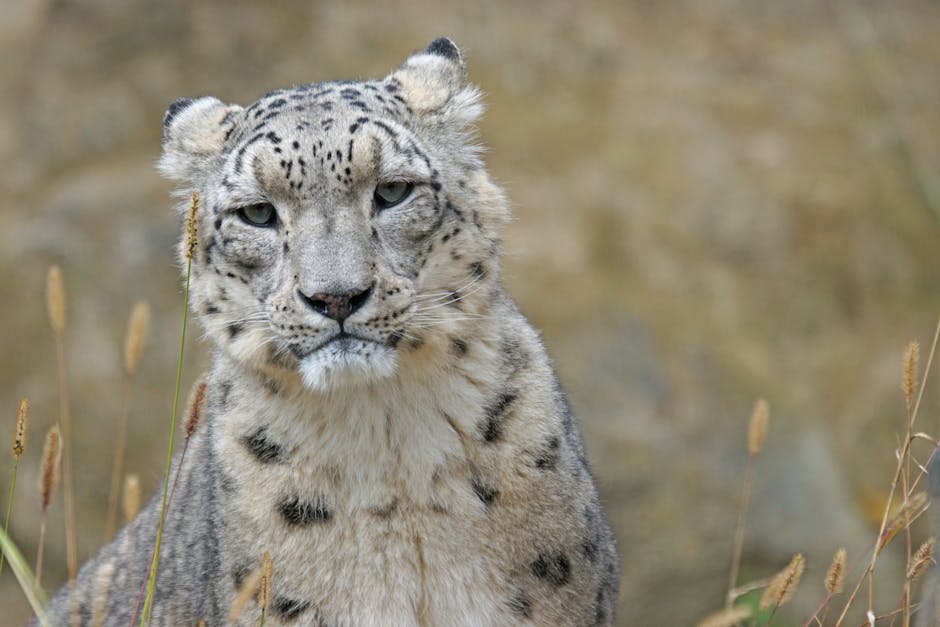
10 Rare Facts About Endangered Animals

10 Rare Facts About Endangered Animals

⏱️ 8 min read

The world's endangered species face unprecedented challenges, yet many aspects of their biology, behavior, and survival stories remain largely unknown to the general public. Beyond the familiar narratives of habitat loss and population decline lie remarkable adaptations, surprising ecological relationships, and inspiring conservation breakthroughs that deserve attention. These lesser-known facts reveal the complexity and wonder of species on the brink, offering fresh perspectives on why their preservation matters and how interconnected life on Earth truly is.

Remarkable Discoveries About Species on the Brink

1. The Vaquita's Extraordinary Genetic Resilience

The vaquita, the world's smallest and most endangered marine mammal, has fewer than 10 individuals remaining in Mexico's Gulf of California. Remarkably, genetic studies reveal that this porpoise has maintained low genetic diversity for thousands of years without showing typical signs of inbreeding depression. Scientists discovered that vaquitas naturally evolved with a small population size, developing genetic mechanisms that purge harmful mutations more efficiently than other species. This extraordinary resilience suggests that if threats like illegal gillnet fishing are eliminated, the remaining vaquitas could potentially rebuild their population despite their critically low numbers—a finding that has revolutionized conservation strategies for species with minimal genetic diversity.

2. Saola: The Asian Unicorn That Science Barely Knows

Discovered only in 1992 in the Annamite Mountains of Vietnam and Laos, the saola remains one of the world's most enigmatic large mammals. No biologist has ever observed a saola in the wild, and all knowledge comes from camera trap photos, local reports, and a few individuals that died shortly after capture. This critically endangered bovine, with its striking white facial markings and long, straight horns, is so rarely seen that scientists cannot accurately estimate its population size. The saola's extreme elusiveness demonstrates how even large mammals can remain nearly invisible in remote habitats, highlighting the possibility that other unknown species may exist undiscovered in threatened ecosystems.

3. Kakapo Parrots Smell Like Flowers and Honey

New Zealand's critically endangered kakapo, the world's only flightless parrot, emits a distinctive sweet, musty fragrance often described as resembling flowers and honey. This unusual trait, while endearing to conservationists working to save the species, actually represents a significant vulnerability. The kakapo evolved without mammalian predators, so this strong scent posed no threat until humans introduced rats, cats, and stoats to New Zealand. These predators can easily locate kakapos by smell, contributing to the species' decline. Today, intensive management has increased the population from just 51 birds in 1995 to over 200, with every individual named, tracked, and genetically managed—making it one of the most closely monitored species on Earth.

4. Pangolins Possess Unique Stomach Structures Without True Stomachs

Pangolins, the world's most trafficked mammals, have evolved a remarkable digestive adaptation: their stomach-like organ is lined with keratinous spines and uses ingested pebbles to grind food, similar to a bird's gizzard. These nocturnal, scale-covered mammals lack teeth entirely and have poorly developed stomach glands, relying instead on this muscular grinding chamber to process the ants and termites they consume—up to 70 million insects annually per individual. This specialized anatomy makes pangolins impossible to sustain in captivity on artificial diets, as they require specific insect species and conditions. The eight pangolin species face severe endangerment due to demand for their scales in traditional medicine and their meat as a luxury food item, with their unique biology making rehabilitation and captive breeding extremely challenging.

5. The Javan Rhino's Single Population Vulnerability

The Javan rhinoceros, with only 76 individuals remaining, exists entirely within a single location: Ujung Kulon National Park in Indonesia. This represents one of the most precarious situations in conservation—any single catastrophic event, such as a tsunami, volcanic eruption, or disease outbreak, could eliminate the entire species instantly. What makes this even more remarkable is that until 2010, a second population existed in Vietnam, but the last individual was killed by poachers. Scientists have debated establishing a second population elsewhere to reduce extinction risk, but the species' extreme rarity makes capturing individuals for translocation extraordinarily risky. This concentration of an entire species in one vulnerable location exemplifies the razor's edge many endangered animals occupy.

6. Axolotls Possess Extraordinary Regenerative Superpowers

The critically endangered axolotl, a salamander native to Mexico's Lake Xochimilco, can regenerate not just limbs but also parts of its heart, brain, and spinal cord without scarring. While many amphibians can regrow limbs, axolotls take this ability to unprecedented levels, capable of rebuilding complex organs and even accepting transplanted organs from other axolotls without rejection. Scientists study these remarkable creatures intensively for insights into human regenerative medicine, creating an ironic situation where millions exist in laboratories worldwide while wild populations have collapsed to perhaps fewer than 1,000 individuals. The axolotl's ability to remain in its larval form throughout life (neoteny) while still reaching sexual maturity adds another layer to its biological uniqueness.

7. The Spoon-Billed Sandpiper's Epic Migration Despite Tiny Size

The critically endangered spoon-billed sandpiper, weighing less than an ounce and fitting comfortably in a human palm, undertakes an annual migration of over 5,000 miles from Arctic Russia to Southeast Asia. What makes this journey extraordinary is that this tiny bird, with fewer than 500 individuals remaining, must time its stops perfectly at specific coastal mudflats to refuel. The loss of even a single stopover site due to coastal development can doom entire populations, as these birds lack the energy reserves to reach alternative locations. Conservation efforts now involve an international network protecting critical sites across eight countries, demonstrating how a single small species can unite diverse nations in collaborative conservation efforts spanning thousands of miles.

8. Mountain Gorillas Have Individual Nose Prints

Mountain gorillas, whose populations have remarkably increased from 620 individuals in 1989 to over 1,000 today, possess unique nose prints—similar to human fingerprints—that conservationists use for identification. The pattern of wrinkles and creases on each gorilla's nose remains constant throughout life, allowing researchers to track individuals without invasive tagging. This non-intrusive monitoring method has proven crucial in the species' recovery, enabling precise population counts and individual health tracking. The mountain gorilla's conservation success story stands as one of the few examples of a great ape species recovering from the brink, achieved through intensive anti-poaching efforts, veterinary interventions, and carefully managed ecotourism that gives local communities economic incentives to protect these gentle giants.

9. The Gharial's Bizarrely Specialized Snout Evolution

The critically endangered gharial, a crocodilian native to Indian river systems, possesses an extraordinarily long, narrow snout lined with over 100 interlocking teeth—an adaptation found in no other living crocodilian. This specialized anatomy evolved exclusively for catching fish in river currents, making the gharial so specialized that it cannot perform the death roll typical of other crocodilians and is largely helpless on land. Males develop a bulbous growth on their snout tip called a ghara (meaning "pot" in Hindi), used to create buzzing vocalizations and blow bubbles during mating displays. With fewer than 650 adults remaining, the gharial's decline stems partly from its extreme specialization—it requires deep, fast-flowing rivers with high fish populations and sandy riverbanks for nesting, habitat conditions increasingly rare in heavily developed South Asian waterways.

10. The Hirola Antelope's Mysterious Preorbital Gland Functions

The hirola, known as the world's most endangered antelope with fewer than 500 individuals in Kenya and Somalia, possesses remarkably large preorbital glands in front of each eye. While many antelope species have these glands, the hirola's are disproportionately developed and produce copious secretions used in complex social communication. Recent research suggests these secretions contain chemical compounds that may communicate individual identity, reproductive status, and even stress levels to other herd members. The hirola's decline, unprecedented among African antelopes, remains partially mysterious to scientists—while habitat loss and poaching play roles, the species has failed to recover even in protected areas, suggesting unknown ecological factors may be involved. Their social communication through preorbital gland secretions may be disrupted when populations fall below certain thresholds, potentially creating a feedback loop that accelerates decline.

Understanding Endangerment Through Hidden Details

These remarkable facts illuminate how endangered species represent not just numbers in decline but repositories of unique evolutionary solutions, biological mysteries, and ecological relationships developed over millions of years. From the vaquita's genetic resilience to the gharial's extreme specialization, each species faces extinction while harboring knowledge that science has only begun to understand. The axolotl's regenerative abilities could unlock medical breakthroughs, while the saola reminds us how much remains unknown even about large mammals. Conservation efforts increasingly recognize that saving endangered species requires understanding these intricate details—the kakapo's scent vulnerability, the spoon-billed sandpiper's migration dependencies, and the hirola's social communication needs all inform targeted protection strategies. As these ten facts demonstrate, every endangered species has stories yet untold, adaptations yet unstudied, and potential contributions to ecosystems and human knowledge that disappear forever when extinction occurs. The race to understand and protect these remarkable animals continues, with each discovery reinforcing why their survival matters beyond mere numbers.