









1 / 10 Questions
0 Points

What Vegetable Is The Main Ingredient In Guacamole?

Pepper

Avocado

Cucumber

Tomato

Points won
0
Correct score
0%

More Quizzes

More Articles

The Evolution of Special Effects in Cinema

The Evolution of Special Effects in Cinema

⏱️ 5 min read

From the earliest days of motion pictures to today's cutting-edge blockbusters, special effects have transformed cinema from simple recorded performances into breathtaking visual spectacles that transport audiences to impossible worlds. The journey of special effects technology represents one of the most fascinating aspects of filmmaking history, marking pivotal moments where imagination met innovation to redefine what could be achieved on screen.

The Birth of Movie Magic: Practical Effects Era

Special effects in cinema began with the pioneering work of Georges Méliès in the late 1890s. A former stage magician, Méliès discovered that film offered unprecedented opportunities for illusion. His 1902 masterpiece "A Trip to the Moon" introduced techniques like stop-motion substitution, multiple exposures, and hand-painted color that would influence filmmakers for decades. These early practical effects relied entirely on in-camera tricks, physical props, and clever staging.

Throughout the silent era and into the golden age of Hollywood, practical effects became increasingly sophisticated. Miniatures allowed filmmakers to destroy cities and sink ships without astronomical budgets. Matte paintings extended sets beyond their physical boundaries, creating vast landscapes and towering architecture. The 1933 film "King Kong" showcased stop-motion animation combined with rear projection and miniatures, creating a template for fantasy filmmaking that persisted for generations.

Mechanical Marvels and Animatronics

The mid-20th century saw special effects teams developing increasingly complex mechanical solutions for bringing creatures and impossible scenarios to life. Animatronics emerged as a powerful tool, combining puppetry with electronics and hydraulics to create believable non-human characters. The shark in "Jaws" (1975), despite its notorious technical problems, demonstrated both the potential and limitations of mechanical effects.

The late 1970s and 1980s represented a golden age for practical creature effects. Artists like Rick Baker, Rob Bottin, and Stan Winston created iconic characters through foam latex, mechanical armatures, and innovative makeup techniques. Films like "An American Werewolf in London" (1981) and "The Thing" (1982) pushed practical transformation effects to new heights, creating visceral, tangible horrors that still impress audiences decades later.

Motion Control and Optical Compositing

Parallel to advances in practical effects, optical printing technology evolved to allow multiple filmed elements to be combined seamlessly. Motion control photography, pioneered by John Dykstra for "Star Wars" (1977), enabled repeatable camera movements that could be synchronized with multiple model passes. This technology transformed space battles from simple model shots into dynamic, complex sequences with dozens of vessels moving through three-dimensional space.

The Digital Revolution Begins

The introduction of computer-generated imagery fundamentally altered the special effects landscape. While digital effects appeared in films as early as 1973's "Westworld," the technology remained primitive and prohibitively expensive for years. The breakthrough came with "Tron" (1982), which featured approximately 15 minutes of computer-generated sequences, and "The Last Starfighter" (1984), which replaced traditional model work with digital spacecraft.

However, the true watershed moment arrived with "Jurassic Park" in 1993. Director Steven Spielberg and visual effects supervisor Dennis Muren combined traditional animatronics with groundbreaking CGI to create photorealistic dinosaurs. The film proved that computer graphics could seamlessly integrate with live-action footage to depict organic, living creatures in broad daylight. This achievement fundamentally changed Hollywood's approach to visual effects.

The CGI Explosion and Digital Characters

Following "Jurassic Park," CGI rapidly became the dominant force in special effects. The late 1990s and early 2000s saw exponential growth in computing power and software sophistication. Films like "The Matrix" (1999) introduced revolutionary techniques like bullet-time photography, blending practical rigs with digital manipulation to create entirely new visual languages.

Digital character creation reached new milestones with Gollum in "The Lord of the Rings" trilogy (2001-2003). Actor Andy Serkis provided the performance through motion capture technology, while artists at Weta Digital created the digital character that could convey subtle emotions and interact convincingly with live actors. This advancement opened possibilities for characters that would be impossible to achieve through traditional means.

Performance Capture Technology

Motion capture evolved into performance capture, capturing not just body movements but facial expressions and subtle nuances. James Cameron's "Avatar" (2009) represented the culmination of this technology, with an entire alien world and its inhabitants created digitally while maintaining emotional authenticity through the actors' performances. The film demonstrated that digital characters could carry dramatic weight equal to their flesh-and-blood counterparts.

Modern Hybrid Approaches

Contemporary filmmaking increasingly embraces hybrid approaches that combine practical and digital effects. Directors like Christopher Nolan advocate for practical effects whenever possible, using CGI primarily for enhancement and cleanup. "Inception" (2010) employed massive rotating sets for zero-gravity sequences, with digital effects augmenting rather than replacing practical work.

The Marvel Cinematic Universe exemplifies modern effects-heavy filmmaking, with some films featuring thousands of visual effects shots. Advanced techniques include:

  • Digital environments replacing traditional location shooting and set construction
  • Virtual production using LED volume stages, as seen in "The Mandalorian"
  • De-aging technology that allows actors to portray younger versions of themselves
  • Photoreal digital doubles enabling dangerous stunts and impossible camera angles
  • Real-time rendering engines allowing directors to see final-quality effects during filming

The Future of Visual Effects

Emerging technologies promise to continue revolutionizing special effects. Artificial intelligence and machine learning are beginning to automate time-consuming tasks like rotoscoping and object removal. Real-time ray tracing brings cinematic lighting quality to interactive environments. Virtual production techniques blur the lines between pre-production, principal photography, and post-production.

Despite technological advances, the fundamental purpose of special effects remains unchanged: serving the story and transporting audiences beyond the limitations of physical reality. Whether achieved through painted glass, mechanical puppets, or neural networks, effective special effects maintain the illusion that allows viewers to suspend disbelief and engage emotionally with impossible scenarios. The evolution continues, driven by the timeless desire to bring imagination to life on screen.
Top 10 Movies Filmed in Complete Darkness

Top 10 Movies Filmed in Complete Darkness

⏱️ 6 min read

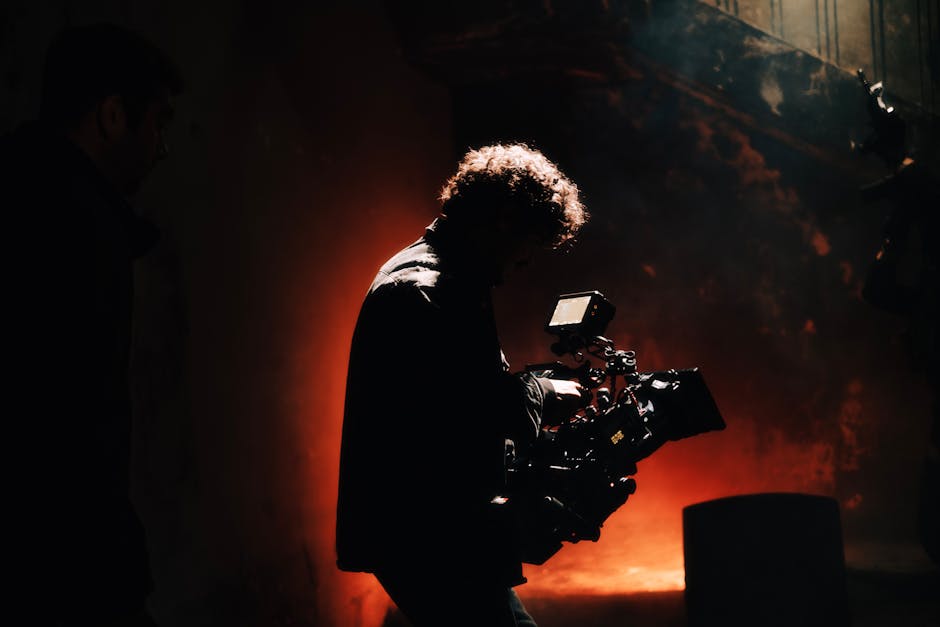
Cinematography has always pushed the boundaries of visual storytelling, but some filmmakers have taken the bold step of removing light almost entirely from their narrative toolkit. These films challenge audiences to experience cinema in ways that prioritize sound, minimal lighting, and atmosphere over traditional visual clarity. The use of near-complete darkness creates tension, realism, and immersive experiences that leave lasting impressions on viewers. Here are ten remarkable films that embraced darkness as a central element of their visual language.

Films That Embraced the Shadows

1. The Descent (2005) - Cave Horror in Near-Total Blackness

Neil Marshall's claustrophobic horror masterpiece placed its characters in an unmapped cave system where natural light disappears entirely. The film's most terrifying sequences occur in complete darkness, with only flares, helmet lights, and infrared night-vision providing glimpses of the horror surrounding the characters. The production team filmed in actual cave sets with minimal lighting, forcing both actors and audience to experience genuine disorientation. This approach transformed darkness into a character itself, representing the unknown terrors lurking just beyond human perception.

2. Buried (2010) - 95 Minutes in a Coffin

Rodrigo Cortés' psychological thriller confined Ryan Reynolds to a buried coffin for the entire runtime, creating one of cinema's most claustrophobic experiences. The film utilized only a lighter, cell phone screen, and occasional chemical light sticks to illuminate scenes. When these light sources extinguished, audiences shared the protagonist's complete darkness and panic. The production required extensive planning to film in an actual box measuring just seven feet long, with cinematographer Eduard Grau developing special lighting techniques to maintain visual storytelling while honoring the premise's darkness.

3. The Blair Witch Project (1999) - Found Footage in the Woods at Night

This groundbreaking found-footage film featured extended sequences where the handheld cameras captured nothing but darkness and the sounds of unseen threats. The nighttime forest scenes relied entirely on the characters' small camera lights, which often malfunctioned or pointed in wrong directions, leaving audiences staring at black screens while terror built through audio alone. The filmmakers' decision to embrace authentic darkness rather than Hollywood's traditional "day-for-night" shooting created unprecedented realism and influenced horror filmmaking for decades.

4. Zero Dark Thirty (2012) - The Bin Laden Raid Sequence

Kathryn Bigelow's recreation of the raid on Osama bin Laden's compound featured nearly thirty minutes of action filmed with night-vision aesthetics and minimal practical lighting. Cinematographer Greig Fraser worked with military advisors to replicate the actual lighting conditions Navy SEALs experienced during the nighttime operation. The production used infrared cameras and specialized lenses that could capture images in near-darkness, resulting in a visceral, documentary-style sequence that prioritized authenticity over visual clarity. This technical achievement earned widespread acclaim for its innovative approach to filming action in darkness.

5. Monsters (2010) - Low-Light Alien Encounters

Gareth Edwards' independent science fiction film utilized available darkness and natural low-light conditions throughout its production. With a minimal crew and budget, Edwards filmed nighttime sequences without traditional lighting equipment, using only practical sources like campfires, flashlights, and moonlight. The alien creatures remained mostly obscured by darkness, appearing in brief, shadowy glimpses that heightened their otherworldly menace. This necessity-driven approach to filming in darkness created an atmospheric tension that studio productions with elaborate lighting rarely achieve.

6. [REC] (2007) - Spanish Horror in the Dark

This Spanish found-footage horror film featured its most memorable sequences in the pitch-black attic of an apartment building, where the camera's night-vision mode became the only source of visual information. Directors Jaume Balagueró and Paco Plaza insisted on practical darkness, refusing to add artificial lighting that would break the found-footage conceit. The night-vision sequences, shot with actors performing in nearly complete darkness while wearing infrared-sensitive makeup, created genuinely terrifying moments that relied on limited visibility and sudden revelations.

7. The Revenant (2015) - Natural Light Filmmaking

While not filmed in complete darkness, Alejandro González Iñárritu and cinematographer Emmanuel Lubezki's commitment to using only natural light meant that dusk and nighttime scenes embraced genuine darkness rather than artificial illumination. Campfire scenes used only firelight, and twilight sequences captured the actual fading light of day. This approach required precise scheduling and waiting for specific lighting conditions, but resulted in authentic darkness that enhanced the film's brutal realism. The production's refusal to compromise with artificial lighting set new standards for naturalistic cinematography.

8. Don't Breathe (2016) - Darkness as Tactical Advantage

Fede Álvarez's thriller featured extended sequences where a blind antagonist turned off all lights, creating complete darkness where he held the advantage over sighted intruders. The production designed elaborate lighting schemes that could plunge sets into total blackness while still allowing cameras to capture the action using specialized low-light equipment. These sequences reversed traditional horror conventions, making darkness a weapon rather than just an atmosphere. The film's innovative use of darkness as a tactical element created unique suspense mechanics.

9. The Shallows (2016) - Nightfall Survival Sequences

While primarily a daytime survival thriller, Blake Lively's shark attack film featured crucial nighttime sequences where darkness obscured the ocean's threats. Director Jaume Collet-Serra chose to honor natural darkness rather than overlighting the nighttime water scenes, using only moonlight and a solar-powered light source as practical illumination. The production filmed during actual twilight hours to capture authentic darkness falling over the ocean, creating genuine uncertainty about what lurked beneath the dark water's surface.

10. A Quiet Place (2018) - Silent Darkness and Minimal Lighting

John Krasinski's horror film combined extended silent sequences with nighttime scenes filmed using minimal lighting sources. The production embraced darkness to obscure the alien creatures and heighten tension, using only lanterns, firelight, and moonlight for illumination. Cinematographer Charlotte Bruus Christensen developed techniques to shoot in extremely low light while maintaining visual storytelling, allowing darkness to serve both practical and atmospheric purposes. The film's commitment to authentic darkness complemented its revolutionary use of silence, creating a multisensory experience that challenged conventional filmmaking.

The Impact of Darkness in Cinema

These ten films demonstrate that darkness serves purposes beyond simple horror atmospherics or budget limitations. When wielded intentionally, darkness becomes a powerful storytelling tool that engages audiences differently than traditional cinematography. It forces viewers to lean forward, listen carefully, and fill gaps with imagination. The technical challenges of filming in minimal light have driven innovations in camera technology, lighting techniques, and sound design that continue influencing filmmaking across all genres. As technology advances, filmmakers gain more tools to capture images in darkness while maintaining artistic control, ensuring this bold approach to visual storytelling will continue evolving and challenging audiences for years to come.