
⏱️ 5 min read
From the earliest days of motion pictures to today’s cutting-edge blockbusters, special effects have transformed cinema from simple recorded performances into breathtaking visual spectacles that transport audiences to impossible worlds. The journey of special effects technology represents one of the most fascinating aspects of filmmaking history, marking pivotal moments where imagination met innovation to redefine what could be achieved on screen.
The Birth of Movie Magic: Practical Effects Era
Special effects in cinema began with the pioneering work of Georges Méliès in the late 1890s. A former stage magician, Méliès discovered that film offered unprecedented opportunities for illusion. His 1902 masterpiece “A Trip to the Moon” introduced techniques like stop-motion substitution, multiple exposures, and hand-painted color that would influence filmmakers for decades. These early practical effects relied entirely on in-camera tricks, physical props, and clever staging.
Throughout the silent era and into the golden age of Hollywood, practical effects became increasingly sophisticated. Miniatures allowed filmmakers to destroy cities and sink ships without astronomical budgets. Matte paintings extended sets beyond their physical boundaries, creating vast landscapes and towering architecture. The 1933 film “King Kong” showcased stop-motion animation combined with rear projection and miniatures, creating a template for fantasy filmmaking that persisted for generations.
Mechanical Marvels and Animatronics
The mid-20th century saw special effects teams developing increasingly complex mechanical solutions for bringing creatures and impossible scenarios to life. Animatronics emerged as a powerful tool, combining puppetry with electronics and hydraulics to create believable non-human characters. The shark in “Jaws” (1975), despite its notorious technical problems, demonstrated both the potential and limitations of mechanical effects.
The late 1970s and 1980s represented a golden age for practical creature effects. Artists like Rick Baker, Rob Bottin, and Stan Winston created iconic characters through foam latex, mechanical armatures, and innovative makeup techniques. Films like “An American Werewolf in London” (1981) and “The Thing” (1982) pushed practical transformation effects to new heights, creating visceral, tangible horrors that still impress audiences decades later.
Motion Control and Optical Compositing
Parallel to advances in practical effects, optical printing technology evolved to allow multiple filmed elements to be combined seamlessly. Motion control photography, pioneered by John Dykstra for “Star Wars” (1977), enabled repeatable camera movements that could be synchronized with multiple model passes. This technology transformed space battles from simple model shots into dynamic, complex sequences with dozens of vessels moving through three-dimensional space.
The Digital Revolution Begins
The introduction of computer-generated imagery fundamentally altered the special effects landscape. While digital effects appeared in films as early as 1973’s “Westworld,” the technology remained primitive and prohibitively expensive for years. The breakthrough came with “Tron” (1982), which featured approximately 15 minutes of computer-generated sequences, and “The Last Starfighter” (1984), which replaced traditional model work with digital spacecraft.
However, the true watershed moment arrived with “Jurassic Park” in 1993. Director Steven Spielberg and visual effects supervisor Dennis Muren combined traditional animatronics with groundbreaking CGI to create photorealistic dinosaurs. The film proved that computer graphics could seamlessly integrate with live-action footage to depict organic, living creatures in broad daylight. This achievement fundamentally changed Hollywood’s approach to visual effects.
The CGI Explosion and Digital Characters
Following “Jurassic Park,” CGI rapidly became the dominant force in special effects. The late 1990s and early 2000s saw exponential growth in computing power and software sophistication. Films like “The Matrix” (1999) introduced revolutionary techniques like bullet-time photography, blending practical rigs with digital manipulation to create entirely new visual languages.
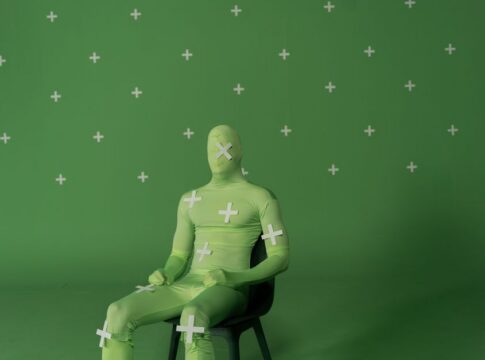
Digital character creation reached new milestones with Gollum in “The Lord of the Rings” trilogy (2001-2003). Actor Andy Serkis provided the performance through motion capture technology, while artists at Weta Digital created the digital character that could convey subtle emotions and interact convincingly with live actors. This advancement opened possibilities for characters that would be impossible to achieve through traditional means.
Performance Capture Technology
Motion capture evolved into performance capture, capturing not just body movements but facial expressions and subtle nuances. James Cameron’s “Avatar” (2009) represented the culmination of this technology, with an entire alien world and its inhabitants created digitally while maintaining emotional authenticity through the actors’ performances. The film demonstrated that digital characters could carry dramatic weight equal to their flesh-and-blood counterparts.
Modern Hybrid Approaches
Contemporary filmmaking increasingly embraces hybrid approaches that combine practical and digital effects. Directors like Christopher Nolan advocate for practical effects whenever possible, using CGI primarily for enhancement and cleanup. “Inception” (2010) employed massive rotating sets for zero-gravity sequences, with digital effects augmenting rather than replacing practical work.
The Marvel Cinematic Universe exemplifies modern effects-heavy filmmaking, with some films featuring thousands of visual effects shots. Advanced techniques include:
- Digital environments replacing traditional location shooting and set construction
- Virtual production using LED volume stages, as seen in “The Mandalorian”
- De-aging technology that allows actors to portray younger versions of themselves
- Photoreal digital doubles enabling dangerous stunts and impossible camera angles
- Real-time rendering engines allowing directors to see final-quality effects during filming
The Future of Visual Effects
Emerging technologies promise to continue revolutionizing special effects. Artificial intelligence and machine learning are beginning to automate time-consuming tasks like rotoscoping and object removal. Real-time ray tracing brings cinematic lighting quality to interactive environments. Virtual production techniques blur the lines between pre-production, principal photography, and post-production.
Despite technological advances, the fundamental purpose of special effects remains unchanged: serving the story and transporting audiences beyond the limitations of physical reality. Whether achieved through painted glass, mechanical puppets, or neural networks, effective special effects maintain the illusion that allows viewers to suspend disbelief and engage emotionally with impossible scenarios. The evolution continues, driven by the timeless desire to bring imagination to life on screen.