

















1 / 20 Questions
0 Points

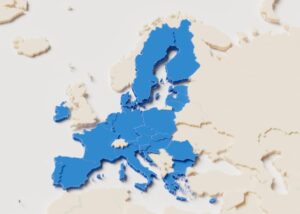
What year did Euro currency first circulate physically?

1999

2000

2002

2004

Points won
0
Correct score
0%

More Quizzes

More Articles

The Real King Arthur: Myth or Reality?

The Real King Arthur: Myth or Reality?

⏱️ 5 min read

The legend of King Arthur has captivated imaginations for over 1,500 years, weaving tales of chivalry, magic, and heroism into the fabric of Western culture. From the Knights of the Round Table to the mystical sword Excalibur, these stories have become deeply embedded in literature, film, and popular culture. Yet beneath the layers of medieval romance and fantastical embellishment lies a persistent question that has puzzled historians for centuries: was there a real King Arthur, or is he purely a product of myth and legend?

The Historical Context of Post-Roman Britain

To understand the potential reality behind the Arthurian legend, one must first examine the tumultuous period in which he allegedly lived. Following the collapse of Roman rule in Britain around 410 CE, the island entered a period often called the Dark Ages—a time of political fragmentation, economic decline, and invasion. The Romano-British population faced increasing pressure from Anglo-Saxon settlers arriving from continental Europe, leading to centuries of conflict and cultural transformation.

Historical records from this period are frustratingly sparse. The withdrawal of Roman administration meant the end of systematic record-keeping, leaving historians with limited contemporary sources. This documentary vacuum creates an environment where legend and history become difficult to separate, and where a figure like Arthur could emerge from the shadows of uncertainty.

Early Written References to Arthur

The earliest potential reference to a historical Arthur appears in the "Historia Brittonum," compiled around 830 CE by a Welsh monk named Nennius. This text describes a warrior named Arthur who led the Britons in twelve battles against Saxon invaders, culminating in a decisive victory at Mount Badon. Significantly, Nennius does not call Arthur a king but rather a "dux bellorum"—a war leader or commander.

Another early source, the "Annales Cambriae" (Welsh Annals) from the 10th century, mentions Arthur twice: once at the Battle of Badon in 516 CE and again at the Battle of Camlann in 537 CE, where "Arthur and Medraut fell." These brief entries suggest that by the 10th century, Arthur was remembered as a significant military figure, though the accuracy of these chronicles remains debated.

The writings of Gildas, a 6th-century British monk, present a curious omission. His work "De Excidio et Conquestu Britanniae" (On the Ruin and Conquest of Britain) discusses the Battle of Badon but mentions no leader by name. Some scholars argue this silence undermines Arthur's historicity, while others suggest Gildas may have had political or personal reasons to exclude him.

The Transformation into Legend

The Arthur we recognize today emerged primarily through the work of Geoffrey of Monmouth, whose "Historia Regum Britanniae" (History of the Kings of Britain), written around 1136, transformed Arthur from a possible war leader into a magnificent king. Geoffrey's work introduced many elements now considered central to Arthurian legend:

  • Arthur's conception at Tintagel through Merlin's magic
  • The sword Excalibur and the Lady of the Lake
  • The establishment of a royal court at Caerleon
  • Conquest of a vast empire stretching across Europe
  • Betrayal by Mordred and the final battle

While Geoffrey claimed to have translated an ancient British source, most historians believe he largely invented his narrative, drawing upon Welsh traditions, classical histories, and his own imagination. His work proved enormously influential, inspiring French romances by Chrétien de Troyes, which added the Round Table, Lancelot, and the quest for the Holy Grail.

Archaeological and Geographical Evidence

Archaeological investigations have attempted to identify locations associated with Arthur, with mixed results. Cadbury Castle in Somerset has been proposed as the site of Camelot, and excavations have revealed it was indeed refortified during the late 5th or early 6th century—consistent with the supposed Arthurian period. However, no definitive evidence links this site specifically to Arthur.

Tintagel Castle in Cornwall, traditionally associated with Arthur's birth, has yielded archaeological evidence of a high-status settlement from the relevant period, including Mediterranean pottery suggesting international trade connections. Yet again, nothing directly connects these findings to Arthur himself.

The problem facing archaeologists is fundamental: even if a historical Arthur existed, identifying his physical remains or possessions after 1,500 years, without contemporary inscriptions naming him, is virtually impossible.

Theories About Arthur's Historical Basis

Scholars who believe Arthur has some historical basis propose various theories. Some suggest he was a Romano-British military commander who achieved temporary success against Saxon expansion. Others propose he represents a composite figure—multiple successful war leaders whose deeds were consolidated into a single legendary hero. This pattern of mythmaking is well-documented in other cultures.

Alternative theories identify Arthur with known historical figures. Candidates have included Ambrosius Aurelianus, a Romano-British leader mentioned by Gildas; Riothamus, a British king who campaigned in Gaul during the 5th century; or various Welsh princes and warriors whose names might have evolved into "Arthur."

The Verdict: Separating Fact from Fiction

The current scholarly consensus suggests that while a definitive answer remains elusive, some historical figure or figures likely inspired the Arthurian legends. The consistent association with the Battle of Badon—a real historical event that temporarily halted Saxon expansion—suggests a kernel of truth beneath the mythological layers.

However, the King Arthur of popular imagination—ruling from Camelot with his Knights of the Round Table, wielding Excalibur, and guided by Merlin's wisdom—is certainly mythological. These elements were added centuries after any historical Arthur would have lived, reflecting the values and concerns of medieval society rather than 5th-century Britain.

Ultimately, Arthur's enduring power lies not in historical verification but in his symbolic significance. Whether myth or reality, he represents the hope for heroic leadership during times of chaos, the appeal of noble ideals, and the timeless human desire for stories that inspire and unite us. In this sense, the question of Arthur's historical existence may be less important than understanding why his legend has survived and flourished for over a millennium.

How TikTok Created New Music Stars

How TikTok Created New Music Stars

⏱️ 5 min read

The music industry has undergone a radical transformation in recent years, with TikTok emerging as one of the most powerful platforms for launching musical careers. What was once a journey requiring record label support, radio play, and expensive marketing campaigns can now begin with a 15-second video clip that captures the attention of millions. This social media phenomenon has fundamentally altered how artists achieve fame and how music reaches audiences worldwide.

The Algorithm That Changes Everything

TikTok's unique algorithm has democratized music discovery in unprecedented ways. Unlike traditional social media platforms where follower count determines reach, TikTok's "For You Page" can catapult complete unknowns into viral sensations overnight. The algorithm prioritizes content engagement over existing popularity, meaning a user with zero followers can potentially reach millions if their content resonates with viewers.

This algorithmic approach has created opportunities for independent artists who previously struggled to break through traditional industry gatekeepers. The platform's music-centric design, where audio clips can be easily shared and remixed across countless videos, creates a viral feedback loop that can turn obscure songs into chart-topping hits within days.

Success Stories That Defined a Generation

Several artists have leveraged TikTok to transform from bedroom musicians to household names. Lil Nas X's "Old Town Road" became the blueprint for TikTok-driven success in 2019, demonstrating how a catchy song paired with viral video challenges could dominate both the platform and mainstream charts. The song spent a record-breaking 19 weeks at number one on the Billboard Hot 100, largely propelled by its TikTok popularity.

Olivia Rodrigo's "drivers license" benefited from massive TikTok exposure, with users creating emotional content around the heartbreak anthem. The song broke numerous streaming records and established Rodrigo as a major force in pop music. Similarly, Doja Cat revitalized her career through TikTok, with songs like "Say So" becoming viral dance challenges that translated into commercial success.

Independent artists like Gayle found breakthrough success with "abcdefu," which accumulated over 400 million streams after going viral on TikTok. The song's relatable lyrics and catchy melody made it perfect for the platform's short-form video format, proving that major label backing isn't always necessary for mainstream success.

The Mechanics of Viral Music Trends

TikTok's influence on music stems from several key mechanisms that make songs spread rapidly across the platform. Dance challenges have become one of the most effective methods for promoting music, with choreographed routines inspiring millions of users to create their own versions. When a dance trend catches on, the associated song receives exponential exposure as users repeatedly listen while learning and performing the moves.

Lip-sync videos allow users to connect with song lyrics in personal ways, often adding comedic or emotional interpretations that resonate with audiences. Sound bites and audio memes transform specific song segments into cultural touchstones, with users applying them to countless scenarios and contexts. This creative reuse extends a song's reach far beyond its original meaning or intent.

User-Generated Content as Marketing

The power of TikTok lies in turning every user into a potential promoter. When someone creates content using a particular song, they're essentially providing free marketing to their own followers and beyond. This organic promotion carries more authenticity than traditional advertising, as recommendations come from peers rather than corporations. The cumulative effect of thousands or millions of users creating content with the same audio clip can generate more exposure than any traditional marketing campaign could afford.

Changing Industry Dynamics and Artist Development

Record labels now actively scout TikTok for emerging talent, monitoring viral trends to identify promising artists before competitors do. This shift has compressed the traditional artist development timeline, with labels signing artists based on a single viral moment rather than years of building a local following. However, this rapid rise can present challenges, as artists must quickly scale from creating bedroom recordings to producing professional albums and performing live shows.

The platform has also changed how established artists release and promote music. Many musicians now create TikTok accounts specifically to connect with younger audiences and promote new releases. Artists strategically release snippets of upcoming songs on TikTok, using the platform as a testing ground to gauge audience reaction before official releases.

The Double-Edged Sword of Viral Fame

While TikTok offers unprecedented opportunities, it also presents unique challenges for emerging artists. The pressure to maintain viral momentum can be intense, with algorithms and audiences constantly seeking fresh content. Some artists struggle with being pigeonholed by their viral hit, finding it difficult to establish long-term careers beyond a single song that captured TikTok's attention.

Additionally, the shortened attention spans cultivated by TikTok's format may affect how music is consumed and created. Songs increasingly feature hook-heavy openings designed to capture attention within seconds, potentially influencing artistic choices and song structure across the industry.

The Future of Music Discovery

TikTok's impact on the music industry shows no signs of diminishing. The platform has become an essential component of music marketing strategies, with artists and labels investing significant resources into TikTok campaigns. As the platform evolves, it continues to shape not just how music is discovered, but how it's created, with artists increasingly considering TikTok potential during the songwriting process.

This new paradigm has permanently altered the relationship between artists, audiences, and the music industry. While traditional pathways to success still exist, TikTok has proven that talent combined with the right viral moment can circumvent conventional barriers, creating opportunities for diverse voices to reach global audiences and establish lasting musical careers.