

















1 / 20 Questions
0 Points

What temperature can lava reach at its hottest?

1292°F

2192°F

3812°F

5432°F

Points won
0
Correct score
0%

More Quizzes

More Articles

Scientific Breakthroughs That Started as Failures

Scientific Breakthroughs That Started as Failures

⏱️ 5 min read

The path to scientific discovery is rarely linear. Throughout history, some of the most significant breakthroughs emerged from experiments gone wrong, accidental observations, and results that initially seemed like complete failures. These serendipitous moments remind us that persistence, curiosity, and the willingness to look beyond expected outcomes often lead to revolutionary advances that transform our understanding of the world.

Penicillin: From Contaminated Petri Dishes to Life-Saving Medicine

In 1928, bacteriologist Alexander Fleming returned from vacation to find his laboratory in disarray. One of his petri dishes containing Staphylococcus bacteria had been accidentally contaminated by mold. Rather than simply discarding the ruined experiment, Fleming noticed something remarkable: the bacteria surrounding the mold had been destroyed. This contamination, which would have been considered a failure by most standards, led to the discovery of penicillin, the world's first widely used antibiotic.

Fleming's observation revolutionized medicine and has saved countless millions of lives since its development. The discovery earned him the Nobel Prize in Physiology or Medicine in 1945, shared with Howard Florey and Ernst Boris Chain, who developed methods for mass-producing the antibiotic. What began as laboratory negligence became one of the most important medical breakthroughs of the 20th century.

The Microwave Oven: A Melted Chocolate Bar Changes Kitchen Technology

Percy Spencer, an engineer working for Raytheon in 1945, was conducting routine tests on a magnetron, a vacuum tube that generates microwave radiation for radar systems. During his work, he noticed that a chocolate bar in his pocket had melted. Rather than attributing this to body heat alone, Spencer's curiosity led him to investigate further.

He began experimenting with other foods, placing popcorn kernels and an egg near the magnetron. The popcorn popped, and the egg exploded. Spencer realized that microwave radiation could rapidly heat food, leading to the development of the microwave oven. This accidental discovery transformed food preparation worldwide and demonstrated how military technology could be repurposed for civilian applications.

Viagra: From Heart Medication to Blockbuster Drug

Pharmaceutical researchers at Pfizer in the early 1990s were developing a compound called sildenafil citrate, intended to treat angina and high blood pressure by improving blood flow to the heart. Clinical trials showed disappointing results for its intended purpose, and the drug appeared to be a failure. However, researchers noticed an unusual side effect reported by male participants.

The drug was causing increased blood flow in other areas of the body, leading to its eventual approval in 1998 as Viagra, the first oral treatment for erectile dysfunction. This "failed" heart medication became one of the most commercially successful drugs in pharmaceutical history, generating billions in revenue and helping millions of people worldwide.

Post-It Notes: When Weak Adhesive Becomes a Strength

In 1968, Dr. Spencer Silver, a scientist at 3M, was attempting to develop a super-strong adhesive. Instead, he created a weak, pressure-sensitive adhesive that could stick to surfaces but be easily removed without leaving residue. For years, this seemed like a useless failure with no practical application.

The breakthrough came in 1974 when Silver's colleague, Art Fry, was frustrated with bookmarks falling out of his hymnal during choir practice. He remembered Silver's weak adhesive and realized it could create repositionable bookmarks. This connection between a failed experiment and a practical problem led to the creation of Post-It Notes, which launched nationally in 1980 and became an indispensable office supply worldwide.

Saccharin: The Sweet Taste of Accidental Discovery

In 1879, chemist Constantin Fahlberg was researching coal tar derivatives at Johns Hopkins University. After a long day in the laboratory, he went home for dinner without thoroughly washing his hands—a dangerous practice by today's standards. He noticed that his bread tasted unusually sweet and traced the sweetness back to a chemical compound on his unwashed hands.

Fahlberg had accidentally discovered saccharin, the first artificial sweetener. This laboratory mistake led to a product that would benefit millions of people, particularly diabetics seeking sugar alternatives. Saccharin became especially important during World Wars I and II when sugar was rationed.

Pacemakers: An Oscillator Mistake Saves Hearts

In 1956, Wilson Greatbatch was building an oscillator to record heart rhythms when he pulled the wrong resistor from a box and installed it in the circuit. Instead of recording rhythms, the device produced electrical pulses that mimicked the human heartbeat. Greatbatch immediately recognized the potential medical application of his mistake.

He spent the next two years developing the first implantable cardiac pacemaker. His accidental discovery has extended and improved the lives of millions of people with heart rhythm disorders. The modern pacemaker industry exists because an engineer grabbed the wrong component from his parts box.

Lessons from Failure: The Importance of Observation and Flexibility

These examples illustrate several crucial principles in scientific research:

  • Unexpected results deserve investigation rather than immediate dismissal
  • Maintaining curiosity about anomalies can lead to breakthrough discoveries
  • Failure in one context may represent success in another
  • Preparation and knowledge enable scientists to recognize opportunities when accidents occur
  • Persistence and willingness to explore tangential paths often yield unexpected rewards

The history of science demonstrates that rigid adherence to original hypotheses and planned outcomes can blind researchers to potentially revolutionary discoveries. The most successful scientists maintain intellectual flexibility, allowing them to recognize significance in unexpected places. These accidental breakthroughs continue to inspire researchers to remain open-minded, document unusual observations, and understand that today's failure might be tomorrow's world-changing discovery.
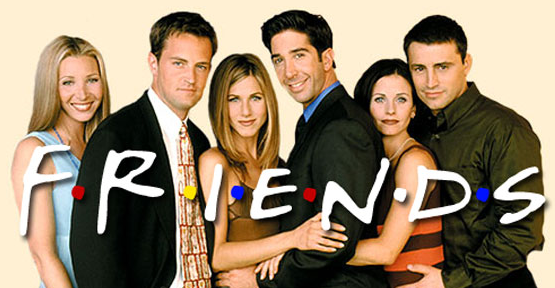
Did You Know Friends Was Originally Called “Insomnia Café”?

Did You Know Friends Was Originally Called “Insomnia Café”?

⏱️ 5 min read

When "Friends" premiered on NBC in 1994, it became an instant cultural phenomenon that would go on to define a generation of television comedy. However, few fans realize that the beloved sitcom nearly had a completely different identity. The show that would eventually become one of the most successful series in television history was originally conceived under the title "Insomnia Café," a name that would have given the series an entirely different flavor and marketing approach.

The Original Vision Behind Insomnia Café

Creators David Crane and Marta Kauffman initially developed their concept for a show about six twenty-something friends navigating life in New York City under the working title "Insomnia Café." The name was inspired by the late-night coffeehouse culture that was thriving in the early 1990s, particularly in urban centers like New York City and Seattle. This was the era when coffee culture was experiencing a renaissance in America, with independent cafés becoming important social gathering spaces for young adults.

The original concept heavily emphasized the coffeehouse setting as a central meeting point for the characters, much like how Central Perk eventually functioned in the final version of the show. Crane and Kauffman envisioned a space where their characters could gather, share their struggles, celebrate their victories, and simply exist in each other's company during those restless, formative years of early adulthood.

The Evolution From Insomnia Café to Six of One

As the project developed and moved closer to production, the title underwent several transformations. After "Insomnia Café," the show was briefly renamed "Six of One," a play on the phrase "six of one, half a dozen of the other." This title attempted to emphasize the ensemble nature of the cast, highlighting that all six characters would share equal importance in the narrative structure. The creators wanted to make it clear that this wasn't a show with one or two stars and supporting players, but rather a true ensemble piece where each character's storyline mattered equally.

However, network executives felt that "Six of One" was too obscure and didn't immediately convey what the show was about. The title required too much explanation and lacked the immediate accessibility that networks desired for a prime-time sitcom hoping to attract a broad audience.

How Friends Became the Final Title

The final title, "Friends," was ultimately chosen for its simplicity and universal appeal. It directly communicated the show's central theme without any ambiguity. The word resonated with audiences on a fundamental level because everyone understands the concept of friendship and its importance in their lives. The title also avoided being too clever or too niche, making it accessible to viewers across different demographics and age groups.

Interestingly, the show did carry a subtitle during its first season. It was officially called "Friends" with the tagline appearing in promotional materials, though the subtitle was quietly dropped as the show gained popularity. The streamlined single-word title proved perfect for the show's brand identity and merchandise.

Why the Name Change Mattered

The decision to move away from "Insomnia Café" reflected several important strategic considerations:

  • The original title was too specific and potentially limiting, tying the show too closely to one location and concept
  • "Friends" had broader appeal and could attract viewers who might not identify with coffeehouse culture
  • The simpler title was more memorable and easier to promote across various media platforms
  • It allowed the show to expand beyond the coffeehouse setting and explore other locations without seeming inconsistent with its title
  • The universal concept of friendship had international appeal, which became crucial as the show was sold to markets worldwide

Central Perk: The Legacy of the Original Concept

While the "Insomnia Café" title was abandoned, the coffeehouse concept remained integral to the show's DNA. Central Perk became one of the most iconic television locations of all time, serving as the primary gathering place for the six friends throughout the series' ten-season run. The orange couch became as recognizable as any of the characters themselves, and the coffeehouse setting provided a neutral, comfortable space where storylines could naturally converge.

Central Perk embodied the spirit of the original "Insomnia Café" concept, representing a third space between home and work where young adults could build community and forge meaningful connections. The setting captured the zeitgeist of 1990s coffee culture while providing the show with a consistent, recognizable location that audiences associated with comfort and camaraderie.

The Impact of the Title on the Show's Success

In retrospect, the decision to change the title from "Insomnia Café" to "Friends" was undoubtedly the right choice. The simplicity and universality of "Friends" contributed significantly to the show's global appeal and longevity. The title aged well, never feeling dated or tied to a specific cultural moment, unlike "Insomnia Café," which might have seemed increasingly quaint or irrelevant as coffee culture evolved over the years.

The show's title became a brand unto itself, spawning countless merchandise items, reunion specials, and even a highly successful streaming launch decades after the series finale. It's difficult to imagine "Insomnia Café" having the same cultural staying power or becoming the shorthand for a generation's experience that "Friends" achieved.

The journey from "Insomnia Café" to "Friends" represents an important lesson in television development: sometimes the simplest solution is the most effective. While the original title had charm and specificity, the final choice proved that clarity and universality often win in the competitive landscape of television programming.