
⏱️ 6 min read
When facing extreme conditions in hostile territories, special forces operators rely on proven survival techniques that have been refined through decades of real-world experience. These elite military units undergo rigorous training to master skills that enable them to survive and operate effectively in the most challenging environments on Earth. Understanding these techniques provides valuable insights into advanced survival methodology that can be adapted for civilian emergency preparedness and outdoor adventures.
The Special Forces Survival Mindset
Before any physical skill comes into play, special forces operators cultivate a specific psychological approach to survival situations. This mindset prioritizes remaining calm under pressure, making rational decisions despite fear or discomfort, and maintaining the will to survive regardless of circumstances. Military survival training emphasizes the “Rule of Threes” as a foundational principle: humans can survive approximately three minutes without air, three hours without shelter in harsh conditions, three days without water, and three weeks without food. This hierarchy helps operators prioritize their actions when resources and time are limited.
Special forces personnel are trained to conduct immediate threat assessments, evaluate available resources, and develop action plans even while under extreme stress. This structured approach to problem-solving prevents panic and enables clear thinking when facing life-threatening situations.
Advanced Shelter Construction Techniques
Creating effective shelter ranks among the highest priorities in survival situations, particularly in extreme climates. Special forces operators learn to construct shelters using minimal equipment and natural materials available in their environment.
Debris Huts and Natural Shelters
In temperate and cold environments, operators construct debris huts by creating a frame from branches and covering it with layers of leaves, pine needles, bark, and other insulating materials. These shelters can maintain body temperature even in freezing conditions by trapping heat and blocking wind. Special forces training emphasizes making shelters just large enough for the occupant, as smaller spaces retain heat more efficiently.
Desert and Arid Climate Adaptations
In desert environments, shelter construction focuses on protection from sun exposure and heat. Operators dig below the surface when possible, as underground temperatures remain significantly cooler than surface temperatures. They create shade structures using parachute material, ponchos, or natural features like rock overhangs, ensuring adequate ventilation to prevent heat buildup.
Water Procurement and Purification Methods
Securing safe drinking water represents a critical survival skill that special forces operators must master for operations in any environment. These professionals employ multiple techniques for locating and purifying water sources.
Water Source Identification
Special forces training includes reading terrain features to locate water sources. Operators look for indicators such as converging animal tracks, increased vegetation density, insect activity at dawn and dusk, and topographical features like valleys and depressions where water naturally collects. In mountainous regions, they follow drainage patterns downhill to find streams and springs.
Field Purification Techniques
When water sources are located, operators employ several purification methods. Boiling remains the most reliable technique, requiring water to reach a rolling boil for at least one minute at lower elevations, and three minutes above 6,500 feet. Chemical purification using iodine tablets or chlorine dioxide provides a lightweight alternative when fuel for boiling is unavailable. Special forces personnel also utilize improvised filtration systems using layers of cloth, sand, charcoal, and gravel to remove larger contaminants before applying chemical treatment or boiling.
Fire Craft Under Adverse Conditions
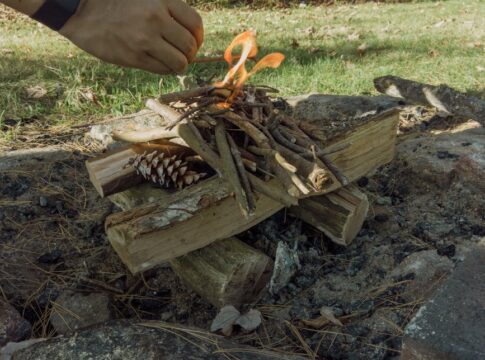
The ability to create fire without conventional tools separates trained survival experts from novices. Special forces operators practice multiple fire-starting techniques to ensure redundancy when equipment fails or becomes unavailable.
The bow drill method represents one of the most reliable primitive fire-starting techniques taught in military survival schools. This friction-based method requires creating a bow from a flexible branch and cordage, a spindle, a fireboard, and a handhold. Through proper technique and material selection, operators can generate an ember even in damp conditions by using the driest materials available and protecting tinder from moisture.
Military personnel also learn to identify and prepare natural tinder sources that ignite easily, including birch bark, dried grass, cattail fluff, and pine resin. They carry fire-starting materials in waterproof containers as part of their survival kits, understanding that redundancy in critical tools can mean the difference between life and death.
Field-Expedient Food Acquisition
While food represents a lower immediate priority than shelter and water, special forces operators train extensively in various methods of procuring nutrition during extended operations or survival scenarios.
Trapping and Snaring Techniques
Passive food procurement through traps and snares allows operators to conserve energy while securing protein. Special forces personnel master constructing deadfall traps, spring snares, and figure-four triggers using natural materials. These devices work continuously without human presence, making them energy-efficient food sources. Trap placement along game trails, near water sources, and in areas showing signs of animal activity significantly increases success rates.
Edible Plant Identification
Military survival training includes extensive instruction in identifying edible plants native to various operational environments. Operators learn the universal edibility test, a systematic approach to determining whether unknown plants are safe to consume. This multi-step process involves testing plant parts for adverse reactions before consuming larger quantities. Special forces personnel memorize common edible plants for their operational areas, including cattails, dandelions, acorns, and various wild berries.
Navigation Without Modern Technology
Special forces operators develop expert-level navigation skills using natural indicators and improvised tools. These techniques enable movement toward safety even when GPS devices fail or are unavailable.
Celestial navigation using the sun and stars provides reliable directional information. In the Northern Hemisphere, operators locate Polaris by using the Big Dipper constellation, which always points toward true north. The sun rises in the east and sets in the west, and its position at midday indicates south in the Northern Hemisphere. Shadow stick methods allow operators to determine cardinal directions by tracking shadow movement over time.
Natural navigation indicators include prevailing wind patterns, moss growth on trees, and terrain features. While individual indicators may be unreliable, special forces training emphasizes using multiple methods simultaneously to confirm direction and reduce navigation errors.
Signaling and Rescue Techniques
Effective signaling increases the likelihood of rescue and represents a critical component of special forces survival training. Operators learn to create visual and audible signals that can be detected from great distances.
Ground-to-air signals follow international standards, with operators creating large geometric shapes using rocks, logs, or contrasting materials. The letter “X” indicates need for medical assistance, “V” requests assistance, and a triangle indicates a safe landing area. Signal fires using green vegetation to create smoke during daylight hours and dry wood for bright flames at night can attract attention from aircraft and ground searchers. Mirror signaling using polished metal or specialized signal mirrors can be visible for dozens of miles under optimal conditions.