
⏱️ 5 min read
From the earliest cave paintings to contemporary digital installations, artistic expression has served as a fundamental means of human communication, cultural preservation, and creative innovation. Throughout millennia, art has continuously transformed in response to technological advances, societal changes, and shifting philosophical perspectives. Understanding this evolution provides crucial insights into not only the development of aesthetic practices but also the broader trajectory of human civilization itself.
Prehistoric and Ancient Foundations
The origins of artistic expression date back approximately 40,000 years to the Upper Paleolithic period, when early humans created the first known cave paintings in locations such as Lascaux, France, and Altamira, Spain. These primitive works featured depictions of animals, hunting scenes, and abstract symbols, suggesting that art served both ritualistic and communicative purposes. The materials available—natural pigments from ochre, charcoal, and minerals—determined the color palette and techniques of these early artists.
As civilizations developed in Mesopotamia, Egypt, and the Indus Valley, artistic expression became increasingly sophisticated and institutionalized. Ancient Egyptian art, characterized by its rigid conventions and symbolic representations, served religious and political functions, reinforcing the divine authority of pharaohs and documenting beliefs about the afterlife. Similarly, Greek and Roman art evolved from stylized forms to embrace naturalism and idealized human proportions, establishing aesthetic principles that would influence Western art for centuries.
Medieval Artistic Traditions and Religious Influence
The medieval period witnessed art’s deep integration with religious institutions, particularly Christianity in Europe. Byzantine art introduced elaborate iconography and mosaic techniques that emphasized spiritual rather than physical reality. The flat, golden backgrounds and frontal poses of religious figures reflected theological concerns about divine transcendence rather than earthly appearances.
Gothic art marked a significant shift with its emphasis on verticality, light, and architectural integration. Cathedral construction became the primary canvas for artistic expression, incorporating stained glass windows, sculptural programs, and illuminated manuscripts. This period demonstrated how artistic evolution responds to both technological innovation—such as improved engineering techniques—and changing spiritual sensibilities.
Renaissance and the Rebirth of Humanism
The Renaissance represented perhaps the most dramatic transformation in artistic expression, as artists rediscovered classical principles while pioneering revolutionary techniques. The development of linear perspective by Filippo Brunelleschi fundamentally altered how artists represented three-dimensional space on two-dimensional surfaces. Masters like Leonardo da Vinci, Michelangelo, and Raphael combined scientific observation with technical skill to achieve unprecedented realism and emotional depth.
Key innovations during this period included:
- Oil painting techniques allowing for greater color range and subtlety
- Anatomical studies enabling accurate human figure representation
- Chiaroscuro and sfumato methods creating dramatic lighting effects
- Elevation of artists from craftsmen to intellectual creators
Baroque Through Romanticism: Emotion and Drama
The Baroque period embraced theatrical drama, dynamic movement, and emotional intensity. Artists like Caravaggio and Rembrandt exploited dramatic contrasts between light and shadow, while architects and sculptors created immersive environments designed to overwhelm the senses. This style reflected the Catholic Church’s Counter-Reformation efforts and the absolutist ambitions of European monarchies.
The subsequent Rococo style lightened these heavy themes with playful ornamentation and pastoral scenes before Neoclassicism reasserted rational order and classical restraint. Romanticism then swung the pendulum back toward emotional expression, individualism, and nature’s sublime power, with artists like Caspar David Friedrich and J.M.W. Turner prioritizing feeling over formal rules.
Modern Art and the Break with Tradition
The late nineteenth and early twentieth centuries witnessed explosive innovation as artists systematically challenged traditional assumptions about representation, beauty, and art’s purpose. Impressionism broke with academic standards by emphasizing light, color, and immediate perception over detailed finish. Post-Impressionists like Van Gogh and Cézanne pushed further toward personal vision and structural analysis.
The twentieth century fragmented into numerous movements, each proposing radical alternatives:
- Cubism deconstructed perspective and showed multiple viewpoints simultaneously
- Expressionism prioritized emotional authenticity over visual accuracy
- Surrealism explored the unconscious mind and dream imagery
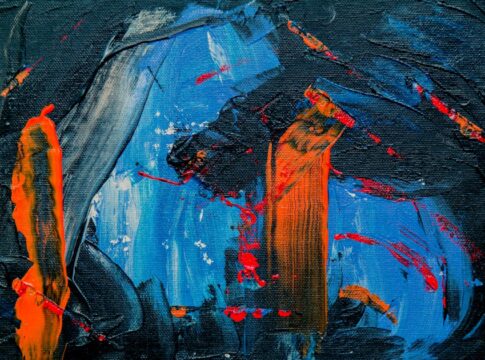
- Abstract Expressionism eliminated recognizable subjects entirely
- Pop Art challenged distinctions between high and low culture
Contemporary Digital Age Transformations
The digital revolution has fundamentally transformed artistic creation, distribution, and consumption. Computer graphics, digital photography, and video art have expanded the definition of artistic media, while the internet enables unprecedented global access to artworks and instant artist-audience communication. Contemporary artists work across traditional boundaries, incorporating performance, installation, interactive elements, and social practice.
New Media and Virtual Spaces
Virtual reality, augmented reality, and artificial intelligence now serve as artistic tools and subjects. NFTs and blockchain technology have created novel ownership and distribution models, though their long-term significance remains debated. Social media platforms function simultaneously as exhibition spaces, promotional tools, and creative constraints that shape artistic production.
Cultural Globalization and Diverse Perspectives
Contemporary artistic discourse increasingly acknowledges non-Western traditions and challenges Eurocentric historical narratives. Artists from previously marginalized communities contribute diverse perspectives on identity, colonialism, and social justice. This globalized art world recognizes that artistic evolution has never followed a single linear path but rather comprises multiple parallel traditions constantly influencing one another.
The evolution of artistic expression ultimately reflects humanity’s ongoing quest to make meaning, communicate across differences, and imagine alternative possibilities. Each era’s artistic innovations respond to available technologies, prevailing ideologies, and emerging questions about human existence, ensuring that art remains a dynamic, contested, and vital aspect of culture.