









1 / 10 Questions
0 Points

Which ancient civilization was among the first to cultivate cacao beans?

The Aztecs

The Incas

The Mayans

The Mokaya

Points won
0
Correct score
0%

More Quizzes

More Articles

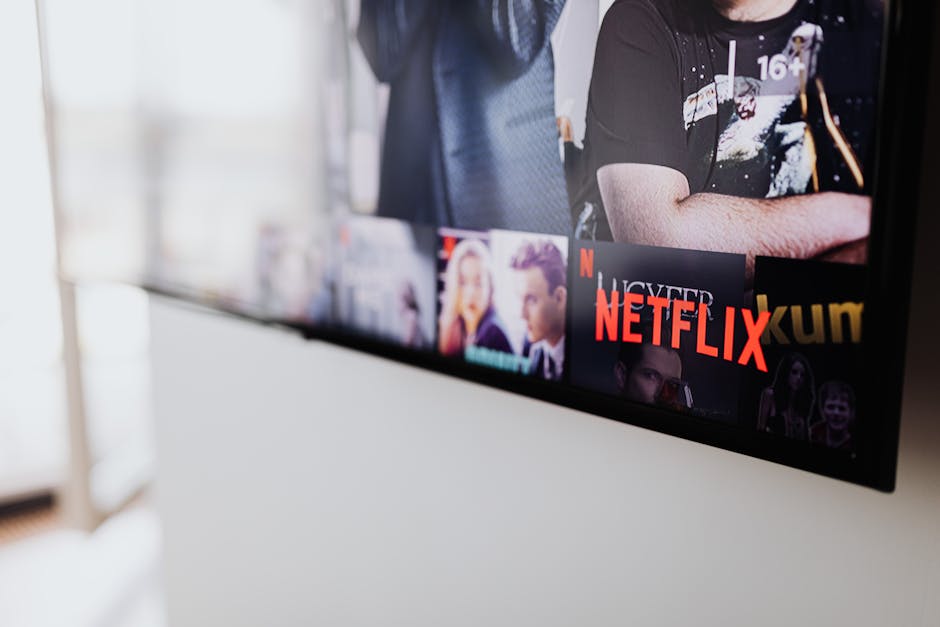
Top 10 Most Binge-Worthy Shows on Netflix

Top 10 Most Binge-Worthy Shows on Netflix

⏱️ 7 min read

Netflix has revolutionized the way audiences consume television, offering an extensive library of content that keeps viewers glued to their screens for hours on end. The platform has become synonymous with binge-watching culture, providing everything from gripping dramas to mind-bending thrillers that make it nearly impossible to stop after just one episode. With thousands of titles available, certain shows have risen above the rest, capturing audiences worldwide with their compelling narratives, complex characters, and addictive storytelling. These series have become cultural phenomena, dominating conversations and social media feeds while keeping subscribers up well past their bedtimes.

The Most Addictive Series Currently Streaming

1. Stranger Things: Nostalgic Horror That Captivates All Ages

This supernatural thriller set in 1980s Indiana has become one of Netflix's most successful original series. Following a group of kids as they encounter otherworldly forces and government conspiracies, Stranger Things masterfully blends nostalgia, horror, and heartfelt coming-of-age storytelling. Each season builds upon mysteries that leave viewers desperate for answers, with cliffhangers strategically placed throughout episodes. The show's perfect pacing, combined with its homage to classic 80s cinema and pop culture, creates an irresistible viewing experience. The Duffer Brothers' creation has spawned a massive fanbase and demonstrates how Netflix can create appointment television in the streaming era.

2. Breaking Bad: The Transformation of Walter White

While originally airing on AMC, Breaking Bad found new life on Netflix and introduced countless viewers to Vince Gilligan's masterpiece. The story of a high school chemistry teacher turned methamphetamine kingpin remains one of the most perfectly crafted television dramas ever made. Each episode escalates tension while developing deeply flawed yet compelling characters. The show's meticulous attention to detail, combined with stellar performances from Bryan Cranston and Aaron Paul, creates a narrative so gripping that viewers often consume multiple episodes in single sittings. The moral descent of Walter White serves as a cautionary tale that keeps audiences both horrified and fascinated.

3. Ozark: Dark Financial Crimes in the Heartland

This crime drama follows financial planner Marty Byrde and his family as they relocate to Missouri's Lake of the Ozarks to launder money for a Mexican drug cartel. Ozark excels at maintaining constant tension, with each episode presenting new dangers and impossible choices. Jason Bateman and Laura Linney deliver career-defining performances as parents desperately trying to protect their family while descending deeper into criminal enterprise. The show's blue-tinted cinematography creates an oppressive atmosphere that mirrors the characters' increasingly dire circumstances. Complex plotting and shocking twists ensure viewers can't help but continue to the next episode.

4. The Crown: Royal Drama Spanning Decades

This lavish historical drama chronicles the reign of Queen Elizabeth II from her wedding in 1947 through modern times. The Crown combines impeccable production design with intimate character studies of one of the world's most famous families. Each season covers a different era, with new actors taking on roles as characters age, keeping the series fresh while maintaining narrative continuity. The show explores political intrigue, personal sacrifices, and the tension between duty and desire. Peter Morgan's writing transforms well-known historical events into compelling drama, making even familiar stories feel urgent and new. The series proves that prestige television can be both educational and utterly addictive.

5. Squid Game: International Phenomenon of Survival

This Korean survival thriller took the world by storm, becoming Netflix's most-watched series. Desperate contestants compete in deadly versions of children's games for a massive cash prize, creating a brutal commentary on capitalism and inequality. Squid Game's unique premise, combined with stunning visual design and emotional depth, transcends language barriers to captivate global audiences. The show balances extreme violence with genuine human drama, making viewers care deeply about characters facing impossible odds. Its cultural impact demonstrates Netflix's ability to launch international content into mainstream consciousness, proving that compelling storytelling needs no translation.

6. Money Heist: Elaborate Heists and Complex Characters

Originally a Spanish series titled La Casa de Papel, Money Heist follows a criminal mastermind known as "The Professor" and his team executing elaborate heists on Spain's Royal Mint and Bank of Spain. The show's non-linear storytelling, combined with high-stakes tension and unexpected plot twists, creates an addictive viewing experience. Character development remains central, with each team member receiving rich backstories that explain their motivations. The series balances action, romance, and intellectual planning, appealing to diverse audience preferences. Its international success helped establish Netflix as a platform for non-English content to reach worldwide audiences.

7. Bridgerton: Regency Romance Reimagined

Producer Shonda Rhimes brings her signature style to this period drama set in Regency-era London's high society. Bridgerton combines historical romance with modern sensibilities, featuring diverse casting and a contemporary soundtrack that includes classical covers of pop songs. The show follows the Bridgerton family through London's competitive marriage market, complete with scandal, intrigue, and passionate romance. Gorgeous costumes and sets create a sumptuous visual feast, while sharp writing and steamy romance scenes keep viewers engaged. Each season focuses on different family members, allowing the series to maintain freshness while expanding its romantic universe.

8. Narcos: The Rise and Fall of Drug Empires

This crime drama chronicles the real-life stories of drug kingpins and the law enforcement agents pursuing them. Beginning with Pablo Escobar's rise to power in Colombia, the series expanded to cover other cartels and operations throughout Latin America. Narcos blends documentary-style narration with dramatic storytelling, creating an educational yet thrilling viewing experience. The show doesn't glorify its subjects but instead presents complex portraits of criminals, cops, and everyone caught between them. Strong performances, particularly Wagner Moura as Escobar, ground the series in humanity despite its larger-than-life subject matter. Historical context combined with action-packed sequences makes for compulsive viewing.

9. The Witcher: Epic Fantasy Adventure

Based on Andrzej Sapkowski's book series, The Witcher follows Geralt of Rivia, a monster hunter navigating a morally complex fantasy world. Henry Cavill's passionate performance as the titular character anchors this sprawling narrative featuring multiple timelines, political intrigue, and magical creatures. The show appeals to fantasy fans seeking Game of Thrones-style epicness while establishing its own identity through Slavic mythology and folklore. Complex world-building rewards attentive viewers, while spectacular action sequences and mysterious prophecies keep momentum high. The series demonstrates how fantasy television can balance accessibility with depth, creating a binge-worthy experience for newcomers and longtime fans alike.

10. Wednesday: Tim Burton's Gothic Coming-of-Age Tale

This series reimagines the Addams Family's iconic daughter as a teenager attending Nevermore Academy. Jenna Ortega delivers a star-making performance as Wednesday Addams, navigating murder mysteries, supernatural threats, and teenage relationships with deadpan wit. Tim Burton's directorial influence creates a visually distinctive world that balances darkness with humor. The show succeeds as both a mystery thriller and a coming-of-age story, appealing to multiple demographics simultaneously. Each episode advances overarching mysteries while delivering self-contained storylines, perfect for extended viewing sessions. Wednesday proves that reimagining classic characters for modern audiences can yield fresh, addictive television.

Conclusion

These ten series represent the pinnacle of binge-worthy content on Netflix, each offering unique qualities that keep viewers returning episode after episode. From supernatural thrillers to historical dramas, from international sensations to fantasy epics, these shows demonstrate the diverse range of compelling storytelling available on the platform. What unites them is their ability to create narratives so engaging that viewers lose track of time, staying up late or canceling plans to discover what happens next. Whether through shocking plot twists, complex character development, or simply excellent craftsmanship, these series have earned their place as must-watch television. They represent not just entertainment but cultural touchstones that have shaped conversations about television's possibilities in the streaming age.

The Science Behind Black Holes Explained Simply

The Science Behind Black Holes Explained Simply

⏱️ 5 min read

Black holes represent some of the most fascinating and extreme objects in our universe. These cosmic phenomena have captivated scientists and the public alike for decades, yet they remain shrouded in mystery and complexity. Understanding the fundamental science behind black holes doesn't require an advanced degree in astrophysics—the basic concepts can be grasped through simplified explanations of gravity, space-time, and stellar evolution.

What Exactly Is a Black Hole?

A black hole is a region in space where gravity is so incredibly strong that nothing can escape from it—not even light, the fastest thing in the universe. This occurs when a massive amount of matter gets compressed into an extraordinarily small space. Imagine squeezing an object with the mass of our Sun into a sphere just a few kilometers across. The resulting gravitational pull becomes so intense that it warps the fabric of space and time itself.

The boundary surrounding a black hole is called the event horizon. This invisible spherical boundary marks the point of no return. Once anything crosses this threshold, it cannot escape the black hole's gravitational grip. The event horizon isn't a physical surface but rather a mathematical boundary that separates the observable universe from the black hole's interior.

How Black Holes Form

Black holes form through several different mechanisms, with stellar collapse being the most common. When a massive star—at least 20 to 25 times the mass of our Sun—runs out of nuclear fuel, it can no longer support itself against its own gravity. The star's core collapses in a fraction of a second, and the outer layers explode outward in a spectacular supernova. If enough mass remains in the core after this explosion, gravity compresses it into an infinitesimally small point called a singularity, creating a black hole.

Not all black holes form from dying stars. Supermassive black holes, which contain millions or billions of times the mass of our Sun, exist at the centers of most galaxies, including our own Milky Way. Scientists aren't entirely certain how these giants formed, but they likely grew over billions of years by consuming nearby matter and merging with other black holes.

The Role of Einstein's Theory of General Relativity

Albert Einstein's theory of general relativity, published in 1915, provides the mathematical framework for understanding black holes. According to this theory, gravity isn't simply a force pulling objects together. Instead, massive objects actually bend and curve the fabric of space-time—the four-dimensional combination of space and time that makes up our universe.

Think of space-time as a stretched rubber sheet. When you place a heavy ball on it, the sheet curves downward. Smaller objects placed nearby will roll toward the depression. Black holes create such an extreme curvature that space-time essentially folds in on itself, creating a gravitational trap from which nothing can escape.

Key Characteristics of Black Holes

Despite their complexity, black holes can be described using just three properties:

  • Mass: The amount of matter the black hole contains, which determines the strength of its gravitational pull
  • Spin: The rate at which the black hole rotates, which can approach the speed of light
  • Electric charge: Though most black holes are thought to be electrically neutral, they can theoretically possess charge

This principle, known as the "no-hair theorem," suggests that black holes are remarkably simple objects despite forming from complex stellar material. All other information about the matter that formed the black hole appears to be lost forever.

Time Dilation and Gravitational Effects

One of the most mind-bending aspects of black holes involves their effect on time. According to general relativity, gravity affects the passage of time. The stronger the gravitational field, the slower time moves relative to an outside observer. Near a black hole's event horizon, this effect becomes extreme.

If an astronaut were falling toward a black hole while a colleague watched from a safe distance, the distant observer would see the falling astronaut slow down and appear to freeze at the event horizon. Meanwhile, from the falling astronaut's perspective, they would cross the event horizon in finite time, though they wouldn't survive the experience due to extreme tidal forces that would stretch them apart—a process scientists grimly call "spaghettification."

Detecting the Invisible

Since black holes don't emit light, detecting them presents unique challenges. Scientists have developed several ingenious methods to identify these invisible objects:

  • Accretion disks: Matter falling into a black hole often forms a swirling disk that heats up to millions of degrees, emitting powerful X-rays
  • Gravitational lensing: Black holes bend light from background stars, creating distinctive distortion patterns
  • Stellar motion: Astronomers observe stars orbiting seemingly empty space, indicating an invisible massive object
  • Gravitational waves: When black holes merge, they create ripples in space-time that can be detected by specialized instruments

Recent Breakthroughs in Black Hole Research

The past decade has witnessed remarkable advances in black hole science. In 2019, the Event Horizon Telescope collaboration released the first-ever image of a black hole's shadow, showing the supermassive black hole at the center of the galaxy M87. This achievement required coordinating radio telescopes across the entire planet to create an Earth-sized virtual telescope.

Additionally, the detection of gravitational waves by LIGO and Virgo observatories has opened a new window into studying black hole mergers. These observations have confirmed predictions made by general relativity and provided insights into black hole populations throughout the universe.

Unanswered Questions and Future Research

Despite significant progress, many mysteries remain. Scientists continue investigating what happens at the singularity, whether information is truly lost in black holes, and how supermassive black holes grew so large. Future space-based telescopes and more sensitive gravitational wave detectors promise to reveal even more about these extraordinary cosmic objects, bringing us closer to understanding some of the universe's most profound secrets.