
⏱️ 5 min read
Bees represent one of nature’s most industrious and essential creatures, serving as the backbone of agricultural systems worldwide. These remarkable insects facilitate the reproduction of countless plant species through pollination, directly influencing food security, biodiversity, and economic stability across every continent. Understanding their multifaceted contributions to agriculture reveals why their declining populations have become a critical concern for scientists, farmers, and policymakers alike.
The Pollination Process and Agricultural Productivity
Pollination occurs when bees transfer pollen grains from the male parts of flowers to the female parts, enabling fertilization and seed production. This seemingly simple act creates profound impacts on crop yields and quality. Approximately 75% of the world’s food crops depend at least partially on animal pollination, with bees performing the majority of this work. Unlike wind or other pollinators, bees actively collect pollen and nectar, making them highly efficient pollinators that visit numerous flowers during single foraging trips.
The economic value of bee pollination reaches staggering proportions. Global estimates place the annual worth of pollination services between $235 billion and $577 billion, accounting for 9.5% of total agricultural production value. This contribution extends beyond mere numbers, as bee-pollinated crops typically exhibit improved fruit set, enhanced nutritional content, and better uniformity in size and shape—qualities that command premium prices in international markets.
Diversity of Bee Species in Agriculture
While honeybees often dominate discussions about agricultural pollination, the reality encompasses far greater diversity. Over 20,000 bee species exist globally, with wild bees frequently outperforming their domesticated counterparts in pollinating specific crops. Bumblebees excel at “buzz pollination,” a technique essential for tomatoes, blueberries, and cranberries, where they vibrate their flight muscles to release pollen from flowers with specific anatomical structures.
Solitary bees, including mason bees and leafcutter bees, demonstrate remarkable efficiency despite their lesser-known status. A single female mason bee can pollinate as effectively as 100 honeybees in apple orchards. These diverse species exhibit different foraging patterns, weather tolerances, and flower preferences, creating redundancy in pollination services that strengthens agricultural resilience against environmental fluctuations.
Crops Most Dependent on Bee Pollination
Certain agricultural sectors rely almost exclusively on bee activity for commercial viability. Almond production represents the most striking example, requiring approximately 2.8 million honeybee colonies annually in California alone—nearly 70% of all managed colonies in the United States. Without adequate bee populations, almond yields would plummet, disrupting a $6 billion industry.
Additional crops demonstrating heavy reliance on bee pollination include:
- Fruits: apples, cherries, blueberries, strawberries, melons, and kiwis
- Vegetables: cucumbers, pumpkins, squash, and tomatoes
- Nuts: almonds, cashews, and Brazil nuts
- Oilseeds: sunflowers, canola, and some varieties of cotton
- Stimulants: coffee and cocoa
These crops constitute essential components of human nutrition, providing vitamins, minerals, healthy fats, and dietary diversity that prevent malnutrition and support public health initiatives worldwide.
Economic Impacts on Farming Communities
Bee populations directly influence the livelihoods of millions of farmers, particularly smallholders in developing nations. In regions where industrial agriculture remains limited, wild bee populations provide free ecosystem services that enable crop production without significant capital investment. Studies from tropical regions demonstrate that proximity to natural habitats supporting diverse bee populations correlates with increased coffee yields, sometimes improving productivity by 20% or more.
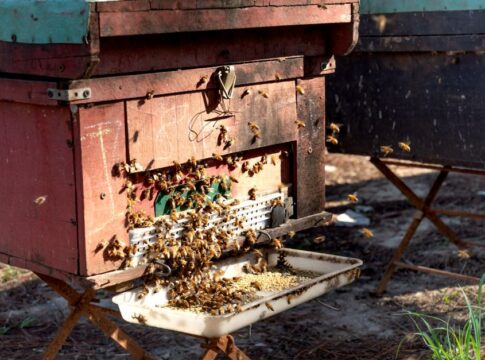
Commercial beekeeping operations also generate substantial income through pollination services. Farmers increasingly rent honeybee hives during blooming periods, creating a specialized industry worth billions annually. This practice has become so integral to modern agriculture that hive rental prices have increased dramatically, particularly for high-value crops, transforming beekeeping from primarily a honey-production endeavor into a pollination-focused business.
Threats to Bee Populations and Agricultural Stability
Multiple stressors converge to threaten bee populations globally, creating cascading risks for agricultural systems. Habitat loss through agricultural intensification paradoxically eliminates the wild spaces bees require for nesting and foraging on diverse floral resources. Monoculture farming creates nutritional deficiencies for bees, forcing them to subsist on limited pollen sources that lack essential amino acids and micronutrients.
Pesticide Exposure
Neonicotinoid insecticides and other agricultural chemicals present significant hazards to bee health. These substances impair navigation abilities, reduce reproductive success, and compromise immune function, making bees vulnerable to diseases and parasites. Sub-lethal exposure effects prove particularly insidious, weakening colonies gradually rather than causing immediate mortality that might prompt regulatory intervention.
Climate Change Considerations
Shifting temperature patterns and precipitation regimes disrupt the synchronization between flower blooming and bee emergence. These phenological mismatches reduce food availability during critical periods, while extreme weather events destroy nests and eliminate forage resources. Range shifts force bee species toward cooler regions, potentially leaving agricultural areas without adequate pollinator populations.
Conservation Strategies for Agricultural Sustainability
Protecting bee populations requires integrated approaches combining habitat restoration, pesticide reduction, and farming practice modifications. Establishing wildflower margins around agricultural fields provides continuous floral resources and nesting sites for diverse bee species. Reducing tillage preserves underground nesting habitats for the majority of bee species that nest in soil rather than hives.
Implementing integrated pest management reduces reliance on broad-spectrum insecticides, while timing applications to avoid blooming periods minimizes direct exposure. Supporting diverse agricultural landscapes through crop rotation and polyculture systems creates heterogeneous environments that sustain larger, more stable bee populations capable of providing consistent pollination services.
The future of global food security remains inextricably linked to bee conservation. Recognizing these insects as agricultural infrastructure rather than mere wildlife transforms conservation from an environmental concern into an economic imperative, ensuring continued productivity for generations ahead.