
⏱️ 7 min read
The animal kingdom is filled with creatures that have evolved remarkable adaptations for survival, and among the most impressive of these is bite force. Measured in pounds per square inch (PSI), bite force reveals the incredible power some animals possess for hunting, defense, and feeding. From ancient reptiles to massive marine mammals, these apex predators and powerful herbivores demonstrate nature’s engineering at its finest. Understanding which animals possess the strongest bites provides insight into their evolutionary success and ecological dominance.
The Most Powerful Biters in the Animal Kingdom
1. The Saltwater Crocodile’s Record-Breaking Jaw Power
The saltwater crocodile holds the undisputed title for the strongest bite force ever measured in a living animal, with a staggering 3,700 PSI. These massive reptiles, which can grow up to 23 feet in length and weigh over 2,000 pounds, use their incredible jaw strength to capture and drown large prey including water buffalo, sharks, and even other crocodiles. Their bite force is generated by enormous jaw muscles that occupy most of their skull cavity. What makes this even more remarkable is that while their closing bite is extraordinarily powerful, the muscles that open their jaws are relatively weak, which is why a person can hold a crocodile’s mouth shut with their hands.
2. The Nile Crocodile’s Deadly Precision
Not far behind its saltwater cousin, the Nile crocodile delivers a crushing bite force of approximately 5,000 PSI according to some estimates, though most scientific measurements place it around 2,500 PSI. These African predators are responsible for hundreds of human fatalities each year and are considered one of the most dangerous animals on the continent. Their powerful jaws evolved to take down large mammals that come to drink at the water’s edge, including wildebeest, zebras, and occasionally young hippopotamuses. The Nile crocodile’s hunting strategy combines stealth, explosive speed, and overwhelming bite force to secure prey that can weigh several hundred pounds.
3. The American Alligator’s Impressive Force
The American alligator possesses a bite force of approximately 2,125 PSI, making it one of the most powerful biters in North America. Despite being smaller than their crocodilian relatives, with males typically reaching 11-15 feet in length, alligators can crush turtle shells and deer bones with ease. Their broad, rounded snouts differ from the narrower crocodile jaw shape, and this anatomy contributes to their crushing power. American alligators play a crucial role in their ecosystem, creating “gator holes” that provide water sources for other animals during dry seasons, and their powerful jaws help them maintain these habitats by clearing vegetation.
4. The Hippopotamus’s Bone-Crushing Teeth
The hippopotamus may seem like a docile herbivore, but it possesses one of the strongest bite forces among mammals at approximately 1,800 PSI. Their massive canine teeth can grow up to 20 inches long, and their jaw gape can open to nearly 180 degrees. Hippos use this formidable bite force primarily for defense and territorial disputes rather than feeding, as they graze on grass at night. Despite their plant-based diet, hippos are considered one of the most dangerous animals in Africa, responsible for more human deaths than most predators. Their bite can easily snap a canoe in half or crush a crocodile that ventures too close.
5. The Jaguar’s Skull-Piercing Bite
Among big cats, the jaguar possesses the strongest bite force relative to its size, measuring around 1,500 PSI. This powerful bite allows jaguars to employ a unique killing method: piercing directly through the skull or thick carapace of their prey. Unlike other big cats that typically suffocate prey by clamping the throat, jaguars have evolved to deliver a fatal bite directly to the brain. This adaptation makes them particularly effective at hunting caimans, turtles, and armored prey in their South American rainforest habitat. The jaguar’s jaw muscles and robust skull structure are specifically designed to deliver this penetrating bite force.
6. The Gorilla’s Herbivorous Power
The gorilla, despite being primarily vegetarian, possesses an estimated bite force of 1,300 PSI. This impressive strength is necessary for processing tough vegetation, bark, and stems that make up their diet. Male silverback gorillas can weigh up to 400 pounds and have large sagittal crests on their skulls that anchor powerful jaw muscles. While gorillas rarely use their bite force aggressively, they are capable of inflicting serious damage when defending their troop. Their large canine teeth, which can exceed two inches in length, combined with their massive jaw muscles, make them formidable even though they primarily consume plants.
7. The Polar Bear’s Marine Adaptation
The polar bear, Earth’s largest land carnivore, generates a bite force of approximately 1,200 PSI. This power is essential for their survival in the Arctic, where they hunt seals by crushing through thick skulls and blubber. Polar bears have evolved longer, sharper teeth compared to other bear species, and their jaw structure is optimized for gripping slippery prey. Their bite force also helps them break through ice when hunting and accessing seal breathing holes. With adult males weighing up to 1,500 pounds, polar bears combine their substantial body weight with powerful jaws to dominate their harsh environment.
8. The Grizzly Bear’s Versatile Strength
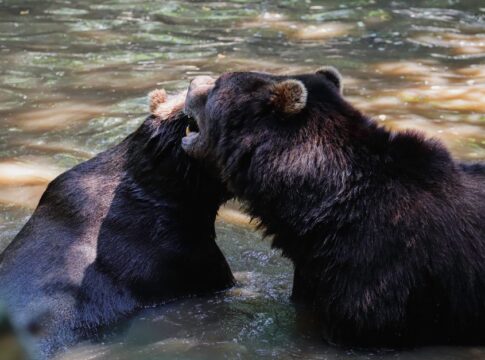
The grizzly bear possesses a bite force of around 1,160 PSI, which serves their omnivorous lifestyle perfectly. These bears need sufficient jaw strength to crush bones and access nutritious marrow, tear through tough animal hides, and also process plant materials like roots and pine cones. Grizzly bears have a concave facial profile and a pronounced muscle mass around their jaw and neck region, contributing to their crushing power. Their bite force, combined with their razor-sharp claws and substantial size of up to 800 pounds, makes them one of North America’s most formidable predators.
9. The Spotted Hyena’s Bone-Crushing Specialization
The spotted hyena possesses a bite force of approximately 1,100 PSI, which is exceptionally strong for their body size of around 140 pounds. Hyenas have evolved specialized teeth and incredibly strong jaw muscles that allow them to crush and consume bones that other predators leave behind. This ability to extract nutrients from bones gives hyenas access to food sources unavailable to other carnivores, reducing competition. Their powerful bite also makes them effective hunters capable of taking down prey much larger than themselves, including wildebeest and zebras. Contrary to popular belief, spotted hyenas are skilled hunters, not just scavengers.
10. The Bull Shark’s Aggressive Bite
The bull shark delivers a bite force of approximately 1,350 PSI, making it one of the most powerful biters among shark species relative to its size. These stocky sharks typically reach 7-11 feet in length but are equipped with broad, flat teeth designed for crushing and tearing. Bull sharks are known for their aggressive nature and their unusual ability to thrive in both saltwater and freshwater environments, which brings them into frequent contact with humans. Their powerful bite, combined with their unpredictable behavior and tendency to inhabit shallow coastal waters and rivers, makes them one of the species most likely to be involved in shark attacks on humans.
Understanding Bite Force in Context
These remarkable animals demonstrate that bite force has evolved in response to specific ecological niches and survival needs. Whether crushing bones, piercing armor, or processing tough vegetation, each of these species has developed jaw strength perfectly suited to their lifestyle. From the prehistoric power of crocodilians to the surprising strength of herbivores like hippos and gorillas, the diversity of powerful biters across the animal kingdom reflects millions of years of evolutionary refinement. These measurements remind us of the incredible physical capabilities that nature has produced and the respect these animals command in their respective ecosystems.