
⏱️ 7 min read
Throughout human history, civilizations have left behind architectural marvels that continue to baffle archaeologists, historians, and scientists. These ancient structures challenge our understanding of early human capabilities, engineering knowledge, and cultural practices. From massive stone monuments to underground cities, these enigmatic constructions raise questions about the technologies, motivations, and beliefs of our ancestors. The following remarkable sites represent some of the most perplexing ancient achievements that still guard their secrets millennia after their creation.
Ancient Wonders That Defy Explanation
1. The Great Pyramid of Giza’s Precise Construction
Built around 2560 BCE, the Great Pyramid of Giza stands as the oldest of the Seven Wonders of the Ancient World and the only one still largely intact. What makes this structure particularly mysterious is its extraordinary precision. The base of the pyramid is level to within just 2.1 centimeters, and its sides are aligned almost perfectly with the cardinal directions. Comprising approximately 2.3 million stone blocks, each weighing between 2.5 and 15 tons, the pyramid’s construction methods remain hotly debated. How ancient Egyptians moved, lifted, and positioned these massive blocks with such accuracy—without modern machinery, wheels, or iron tools—continues to puzzle researchers. The internal chambers and shafts also demonstrate sophisticated astronomical alignments that suggest advanced knowledge of mathematics and celestial movements.
2. Stonehenge’s Astronomical Observatory
Located on England’s Salisbury Plain, Stonehenge dates back approximately 5,000 years and consists of massive sarsen stones weighing up to 25 tons, topped by connecting lintels. The mystery deepens when considering that some of the smaller bluestones were transported from the Preseli Hills in Wales, over 150 miles away. The purpose of Stonehenge remains uncertain, though its alignment with the summer solstice sunrise and winter solstice sunset suggests it served as an astronomical calendar or ceremonial site. The precision required to position these enormous stones, combined with the question of how Neolithic people accomplished such a feat without advanced tools or transportation, makes Stonehenge one of archaeology’s greatest puzzles.
3. The Underwater City of Yonaguni
Discovered off the coast of Japan in 1986, the Yonaguni Monument features massive stone formations with flat surfaces, right angles, and apparent staircases descending into the ocean depths. While some researchers believe these structures are entirely natural geological formations, others argue that the precise angles, apparent tool marks, and symmetrical features indicate human construction. If proven to be man-made, the structures would date back over 10,000 years, predating the oldest known civilizations and forcing historians to reconsider the timeline of human architectural achievement. The debate continues to divide the scientific community, with the truth remaining submerged beneath Pacific waters.
4. Göbekli Tepe’s Ancient Temple Complex
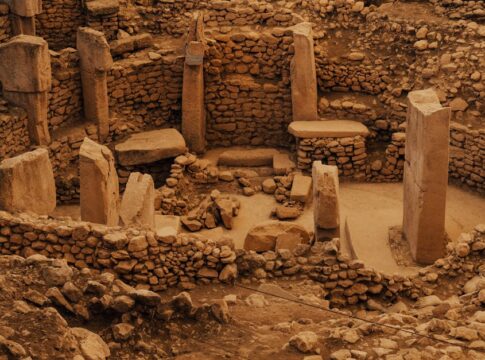
Göbekli Tepe in southeastern Turkey has revolutionized understanding of prehistoric societies since its excavation began in the 1990s. Dating to approximately 9600 BCE, this temple complex predates agriculture, writing, and pottery—supposedly necessities for organized religious structures. The site features massive T-shaped limestone pillars weighing up to 16 tons, intricately carved with animals and abstract symbols. The existence of such sophisticated architecture challenges the conventional narrative that hunter-gatherer societies lacked the organization and resources for monumental construction. Even more mysteriously, the complex was deliberately buried around 8000 BCE for unknown reasons, preserving it for millennia.
5. The Nazca Lines’ Enormous Geoglyphs
Etched into the Peruvian desert between 500 BCE and 500 CE, the Nazca Lines comprise hundreds of geometric patterns and enormous figures depicting animals, plants, and humanoid shapes. Some of these geoglyphs stretch over 1,200 feet across the landscape and are only fully visible from the air, raising questions about why the Nazca people created images they could never properly see themselves. Theories range from astronomical calendars and religious pathways to water location rituals. The lines were created by removing reddish pebbles to reveal lighter ground beneath, but the purpose behind such massive undertakings remains one of archaeology’s enduring mysteries.
6. Puma Punku’s Precision-Cut Megaliths
Located near Tiwanaku in Bolivia, Puma Punku features some of the largest and most precisely cut stone blocks in the ancient world. Dating to around 536-600 CE, the site contains andesite and diorite blocks weighing over 100 tons, quarried from locations miles away. What astounds researchers is the incredible precision of cuts and drill holes in these extremely hard stones, creating perfectly flat surfaces and intricate interlocking designs. The level of accuracy suggests advanced stone-working techniques that seem anachronistic for the time period. How ancient Andean people achieved such precision without metal tools or modern equipment remains unexplained, as does the method of transporting such massive stones to the construction site.
7. The Subterranean Network of Derinkuyu
Carved into soft volcanic rock in Turkey’s Cappadocia region, Derinkuyu is an ancient underground city extending approximately 280 feet deep and capable of sheltering up to 20,000 people. Dating back at least to the 7th-8th centuries BCE, though possibly much older, this multi-level complex includes living quarters, stables, churches, wine cellars, and ventilation shafts. The sophisticated engineering required to maintain air circulation throughout such depths while creating comfortable living spaces demonstrates remarkable understanding of architecture and geology. The city’s original purpose—whether for refuge during invasions, religious isolation, or other reasons—remains unclear, as does the identity of its original builders.
8. Baalbek’s Massive Foundation Stones
The ancient Roman temple complex at Baalbek in Lebanon sits atop enormous foundation stones that predate Roman construction. Three of these megalithic blocks, known as the Trilithon, weigh approximately 800 tons each, while a fourth stone weighs an estimated 1,000 tons. These massive stones were quarried half a mile away and positioned with such precision that a razor blade cannot fit between them. No ancient lifting technology known to historians could move stones of this magnitude, leading to speculation about lost construction techniques. The Romans built their temples on these foundations but left no records explaining how earlier civilizations created this base, shrouding the original builders in mystery.
9. Easter Island’s Moai Statues
The isolated Easter Island, located over 2,000 miles from the nearest continent, is home to nearly 900 enormous stone statues called moai. Carved by the Rapa Nui people between 1400 and 1650 CE, these monolithic figures average 13 feet tall and weigh around 14 tons, though some reach 33 feet and weigh over 80 tons. The mystery involves not only how the Rapa Nui moved these massive statues across the island but also why such a small, resource-limited population devoted enormous effort to their creation. The island’s eventual ecological collapse and population decline may be connected to the statue-building endeavor, but many aspects of the moai’s purpose, construction, and transportation methods remain subjects of debate.
10. The Unfinished Obelisk of Aswan
Lying in its original quarry in Aswan, Egypt, the Unfinished Obelisk represents the largest known ancient obelisk, measuring approximately 138 feet long and weighing an estimated 1,200 tons. Abandoned after cracks appeared in the granite, this massive monument provides insight into ancient Egyptian stone-working techniques while simultaneously raising questions about their ambitions and capabilities. Had it been completed, transporting such an enormous monolith would have required engineering solutions that challenge modern understanding of ancient capabilities. The precision tools marks visible on the stone also puzzle researchers, as they suggest cutting techniques more advanced than the copper and bronze tools supposedly available to ancient Egyptian workers.
The Enduring Legacy of Ancient Mysteries
These ten remarkable structures represent humanity’s earliest architectural achievements while simultaneously demonstrating how much remains unknown about our ancestors’ capabilities and knowledge. From the precision engineering of the Great Pyramid to the massive stone blocks of Baalbek, from the underwater formations at Yonaguni to the underground city of Derinkuyu, each site challenges conventional understanding of ancient civilizations. Whether these mysteries arise from lost technologies, underestimated ancient knowledge, or simply gaps in historical records, they continue to inspire research, debate, and wonder. As archaeological techniques advance and new discoveries emerge, some answers may finally surface, yet these ancient structures will likely continue guarding at least some of their secrets, reminding us that human history contains depths we have yet to fully comprehend.