









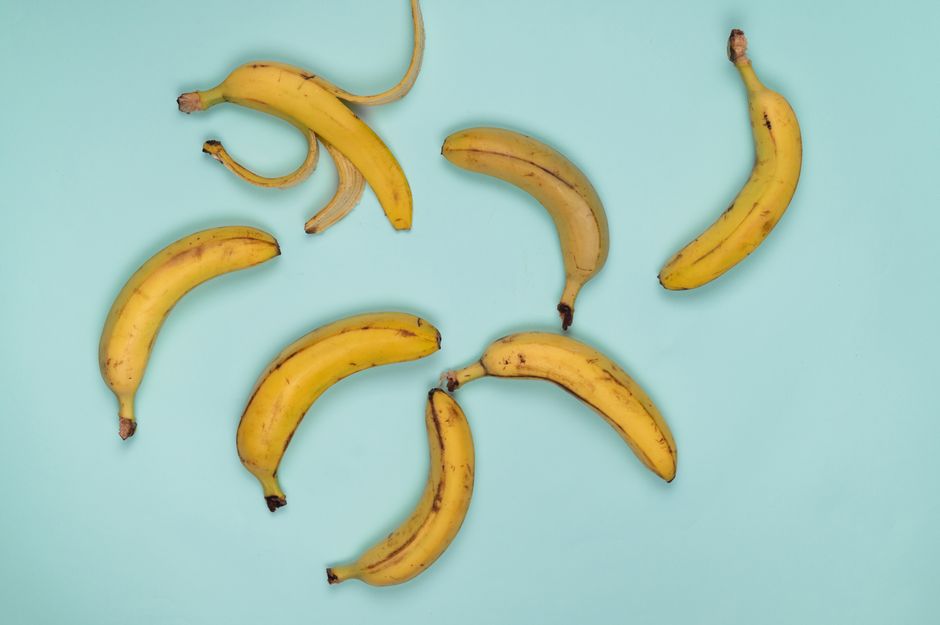
Why Bananas Are Curved: The Surprising Science Explained
By Trivia Daily, Staff Writer — Published July 27, 2026
Table of Contents
- Key Takeaways
- The Bananas Curved Science: How Negative Geotropism Works
- From Wild to Wonderful: How Cultivation Changed Banana Shape
- Banana Anatomy: Understanding the Structure
- Comparing Banana Varieties and Their Curves
- Common Myths About Banana Curvature
- Frequently Asked Questions
Every banana you've ever peeled shares a distinctive feature: that gentle, upward curve. It's such a familiar sight that most people never stop to wonder why. But the bananas curved science behind this everyday fruit reveals a fascinating story of plant biology, gravity, and survival strategy. Unlike most fruits that simply hang downward, bananas grow in a way that defies your expectations—turning toward the light in a process that transforms straight green fingers into the crescents we recognize instantly.
This curious trivia about banana curvature isn't just a fun fact for your next dinner party. It's a window into how plants respond to their environment, and why the bananas you buy today look nothing like their wild ancestors. Discover the amazing mechanisms that shape these fruits from flower to grocery store.
Key Takeaways
- Bananas curve upward toward the sun through a process called negative geotropism, the opposite of how roots grow downward.
- The banana "tree" is actually the world's largest herb, and what looks like a trunk is really tightly packed leaf stalks.
- Wild bananas are small, straight, and packed with hard seeds—modern curved bananas are the result of thousands of years of cultivation.
- Each banana bunch can contain 50 to 150 individual fruits, all curving upward in defiance of gravity.
- The curvature begins within days of the flower appearing, as the fruit responds to light exposure and hormonal signals.
- Bananas are technically berries in botanical classification, while strawberries are not.
The Bananas Curved Science: How Negative Geotropism Works
The secret to banana curvature lies in a phenomenon botanists call negative geotropism—a plant's tendency to grow away from gravitational pull and toward light. When banana flowers first emerge, they point downward due to their weight. The flowers develop into hands of bananas (yes, that's the technical term for a cluster), which initially hang below the main stalk.
Here's where it gets interesting. As the tiny bananas begin to develop, they don't passively accept their downward fate. Instead, each individual fruit responds to sunlight by growing upward, fighting against gravity. This happens because of differential growth rates on different sides of the fruit. The side facing away from the sun grows faster than the side facing toward it, creating that characteristic curve.
The process is driven by plant hormones called auxins, which accumulate on the shaded side of the developing banana. These auxins stimulate cell elongation, causing the darker side to grow more rapidly. Over the course of several days, what started as a straight, downward-pointing fruit transforms into an upward-curving crescent. It's the same basic mechanism that makes houseplants lean toward windows, but in bananas, the effect is dramatic and consistent.
The Role of Light and Gravity
Phototropism—growth toward light—combines with negative geotropism to create the banana's shape. In the tropical environments where bananas evolved, maximizing sun exposure meant better photosynthesis and faster ripening. Fruits that curved upward toward the canopy gaps received more light than those that simply hung straight down. Over countless generations, this trait became standard.
The banana plant itself displays remarkable directional growth. The pseudostem (that trunk-like structure) grows vertically upward, while the roots spread downward. The flower stalk emerges from the top, arches over, and hangs down under its own weight. Then the individual fruits stage their rebellion, curving back up toward the sky.
From Wild to Wonderful: How Cultivation Changed Banana Shape
Wild bananas tell a different story. These ancestral fruits, still found in parts of Southeast Asia, are small, stubby, and relatively straight. They're also nearly inedible by modern standards, packed with hard, pea-sized seeds that make up most of the fruit's interior. The tiny amount of flesh is often bitter and astringent.
The bananas you know today—specifically the Cavendish variety that dominates global commerce—are the product of thousands of years of selective cultivation. Ancient farmers in Papua New Guinea and Southeast Asia began choosing plants with mutations that produced seedless fruits. These sterile bananas couldn't reproduce sexually, so farmers propagated them through cuttings, creating genetic clones.
As humans selected for larger, sweeter, seedless fruits, the curvature became more pronounced. Bigger bananas had more mass to pull downward, which meant more dramatic upward growth in response. The trait that helped wild bananas catch a bit more sunlight became exaggerated in cultivated varieties, giving us those perfect crescents.
Banana Anatomy: Understanding the Structure
To truly appreciate why bananas curve, you need to understand their unusual anatomy. What most people call a banana tree isn't a tree at all. It's an herbaceous plant—the world's largest herb, in fact. The apparent trunk is a pseudostem made of tightly wrapped leaf bases, with no woody tissue inside.
The actual stem is underground. It sends up this false trunk, which grows rapidly—sometimes adding several inches per day. After about nine months, the plant produces a single enormous flower spike that emerges from the top of the pseudostem. This spike contains hundreds of flowers arranged in clusters called hands, with each individual flower developing into a single banana (technically called a finger).
A complete banana bunch might include 10 to 20 hands, each containing 10 to 20 fingers. That's potentially hundreds of bananas from one flowering. As these fruits develop simultaneously, they all respond to the same environmental cues, creating that uniform upward sweep that makes a banana bunch so visually distinctive.
Comparing Banana Varieties and Their Curves
| Banana Type | Curve Intensity | Size | Common Use |
|---|---|---|---|
| Cavendish | Pronounced curve | 7-8 inches | Fresh eating, global export |
| Plantain | Moderate curve | 10-12 inches | Cooking, staple food |
| Lady Finger | Gentle curve | 4-5 inches | Fresh eating, sweeter flavor |
| Wild banana | Minimal to no curve | 2-3 inches | Inedible (too many seeds) |
| Red banana | Pronounced curve | 5-6 inches | Fresh eating, specialty markets |
Common Myths About Banana Curvature
Several misconceptions persist about why bananas curve. Some people believe the curve is purely mechanical—that bananas hang down and then curl up as they ripen and become heavier. This gets the timeline backward. The curvature develops during growth, not after the fruit is fully formed.
Another myth suggests that bananas are deliberately curved by farmers using molds or guides. Commercial banana production involves no such manipulation. The curve happens naturally and uniformly across millions of plants growing in plantations worldwide. Trying to force bananas into a different shape would be economically impractical and agriculturally unnecessary.
Some sources claim bananas curve to fit better in shipping boxes or to make them easier to peel. These are backwards explanations. Shipping boxes are designed to accommodate the natural curve, not the other way around. The peeling convenience is a happy accident, not an evolutionary driver.
Frequently Asked Questions
Do all bananas curve in the same direction?
Yes, virtually all cultivated bananas curve upward toward what was the top of the plant when they were growing. This consistent direction results from their uniform response to light and gravity during development.
Can you grow straight bananas?
Growing straight bananas would require preventing the natural phototropic and geotropic responses, perhaps by rotating the plant constantly or growing it in complete darkness. Neither approach is practical, and the resulting fruit would likely be underdeveloped and poor quality.
Why don't other fruits curve like bananas?
Most fruits either grow upright on branches (like apples) or hang downward without the hormonal response that creates curvature (like grapes). Bananas' unique combination of hanging growth position and strong negative geotropism makes their curvature distinctive.
Are banana curves different in different countries?
Banana curvature is remarkably consistent worldwide because the dominant commercial variety—Cavendish—is genetically identical across all growing regions. Environmental factors have minimal impact on the degree of curvature, which is primarily determined by genetics.
The next time you reach for a banana, take a moment to appreciate that curve. It's not just a convenient shape for fitting in lunch boxes or hanging on display hooks. It's evidence of a plant's sophisticated response to its environment, a trait refined over millions of years of evolution and thousands of years of human cultivation. That simple crescent connects you to the fundamental ways that life on Earth responds to light, gravity, and the endless drive to grow.