











1 / 10 Questions
0 Points

What Grain Is Sake Made From?

Rice

Barley

Wheat

Corn

Points won
0
Correct score
0%

More Quizzes

More Articles

Top 10 Collaborations That Shocked the Industry

Top 10 Collaborations That Shocked the Industry

⏱️ 6 min read

Throughout music history, certain collaborations have defied expectations, crossed seemingly insurmountable genre boundaries, and left both fans and critics stunned. These partnerships brought together artists from opposite ends of the musical spectrum, creating moments that redefined what was possible in popular music. The following collaborations represent some of the most unexpected and industry-shaking partnerships that changed the landscape of modern music.

Groundbreaking Musical Partnerships That Changed Everything

1. Run-DMC and Aerosmith's Rock-Rap Revolution

When hip-hop pioneers Run-DMC joined forces with rock legends Aerosmith in 1986 to reimagine "Walk This Way," the music industry was caught completely off guard. At a time when rock and rap existed in entirely separate worlds, this collaboration shattered barriers and created a blueprint for future genre-blending partnerships. The fusion brought hip-hop to rock radio for the first time and revitalized Aerosmith's career while establishing rap as a mainstream force. This wasn't just a successful single—it was a cultural moment that proved different musical communities could unite and create something revolutionary.

2. David Bowie and Queen's Impromptu Studio Magic

The 1981 collaboration between David Bowie and Queen resulted in "Under Pressure," a track that neither party had planned to create. What began as Bowie simply visiting the studio turned into one of rock's most iconic collaborations. The spontaneous nature of the recording session, combined with the legendary status of all artists involved, made this partnership particularly shocking. The song's innovative structure, featuring dueling vocals between Bowie and Freddie Mercury, created a template for collaborative vocals that influenced generations of musicians.

3. Jay-Z and Linkin Park's Genre-Defying Mashup Album

The 2004 "Collision Course" EP brought together rap mogul Jay-Z with nu-metal giants Linkin Park, creating a collaboration that seemed impossible on paper. This wasn't simply sampling or featuring—it was a complete reimagining of both artists' catalogs into cohesive hybrid tracks. The project demonstrated that hip-hop and rock could coexist in a way that respected both genres while creating something entirely new. The commercial and critical success of this venture opened doors for countless cross-genre experiments and proved that audiences were hungry for innovative musical fusion.

4. Elton John and Eminem's Statement Performance

When Eminem performed "Stan" with Elton John at the 2001 Grammy Awards, the music world was stunned. Eminem had faced significant criticism from LGBTQ+ advocacy groups, and John, an openly gay icon, seemed an unlikely ally. This collaboration transcended simple performance—it was a powerful statement about understanding, dialogue, and the complexity of art versus artist. The partnership challenged preconceptions on both sides and demonstrated music's power to bridge seemingly unbridgeable divides.

5. Lou Reed and Metallica's Polarizing Avant-Garde Project

The 2011 album "Lulu" paired punk poet Lou Reed with thrash metal legends Metallica in what became one of music's most controversial collaborations. While the project received harsh criticism from many quarters, the sheer audacity of combining Reed's spoken-word artistry with Metallica's heavy metal assault shocked the industry. This collaboration represented artistic risk-taking at its highest level, with established legends willing to alienate their fan bases in pursuit of experimental vision.

6. Gorillaz and the Revolving Door of Unexpected Features

Damon Albarn's virtual band Gorillaz has consistently shocked audiences by bringing together incompatible artists, but the self-titled debut album in 2001 set the standard. Featuring collaborations with hip-hop producer Dan the Automator, rapper Del the Funky Homosapien, and various other unexpected contributors, Gorillaz proved that a cartoon band could facilitate genuine artistic partnerships. The project's approach to collaboration—treating featured artists as integral components rather than guest stars—revolutionized how collaborative projects were conceptualized.

7. Santana's Supernatural Comeback with Modern Stars

Carlos Santana's 1999 "Supernatural" album shocked the industry by pairing the aging guitar legend with contemporary artists like Rob Thomas of Matchbox Twenty, Lauryn Hill, and Dave Matthews. The resulting album became one of the biggest-selling records of all time and won nine Grammy Awards. This collaboration model—establishing veteran artists by connecting them with current stars—created a new template for career revitalization and intergenerational musical dialogue.

8. Kanye West and Paul McCartney's Unlikely Studio Sessions

When Kanye West and Paul McCartney began collaborating in 2014, resulting in tracks like "Only One" and "FourFiveSeconds" (with Rihanna), the pairing seemed absurd to many observers. A Beatle working with one of hip-hop's most controversial figures appeared to be little more than a publicity stunt. However, the genuine artistic chemistry between the two, with McCartney contributing keyboards and vocals while embracing West's production aesthetic, proved that mutual respect and creativity transcend generational and genre divisions.

9. Johnny Cash's American Recordings with Rick Rubin

When hip-hop and metal producer Rick Rubin approached country legend Johnny Cash in the early 1990s, few could have predicted the result. The "American Recordings" series, beginning in 1994, stripped Cash's music to its bare essentials and introduced him to an entirely new generation. Rubin's production approach, combined with Cash's willingness to cover contemporary alternative rock songs, created a collaboration that reinvented both artists' legacies and demonstrated that great music transcends genre boundaries and production trends.

10. Lady Gaga and Tony Bennett's Cross-Generational Jazz Partnership

The 2014 album "Cheek to Cheek" paired pop provocateur Lady Gaga with 88-year-old jazz legend Tony Bennett, creating one of the most unexpected collaborations in recent memory. Critics expected a gimmick, but what emerged was a genuine artistic partnership showcasing Gaga's legitimate vocal abilities and Bennett's enduring relevance. The project challenged assumptions about both artists—proving Gaga was more than manufactured pop and demonstrating Bennett's ability to connect with younger audiences. Their subsequent performances and second album further cemented this as a legitimate artistic partnership rather than a one-off novelty.

The Lasting Impact of Musical Risk-Taking

These ten collaborations represent more than just successful musical partnerships—they embody the spirit of artistic risk-taking that drives the industry forward. Each pairing challenged conventional wisdom about genre boundaries, target audiences, and commercial viability. Whether bringing together different generations, opposing genres, or seemingly incompatible artistic visions, these collaborations proved that music's greatest moments often emerge from the most unexpected places. They've inspired countless artists to seek out unlikely partnerships and reminded the industry that audiences consistently reward genuine artistic innovation over safe, predictable choices. The shock value of these collaborations ultimately mattered less than the artistic integrity and creative courage they represented.
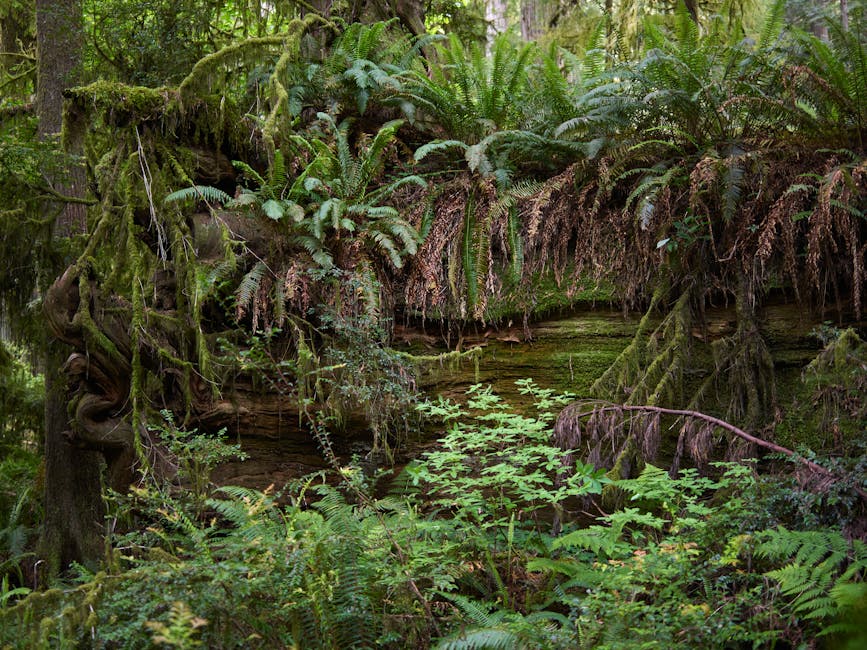
Did You Know The Amazon Rainforest Produces 20% of Our Oxygen?

Did You Know The Amazon Rainforest Produces 20% of Our Oxygen?

⏱️ 5 min read

The Amazon rainforest has long been celebrated as the "lungs of the Earth," with many believing it produces a significant portion of our planet's oxygen. However, recent scientific research has revealed surprising truths about this massive ecosystem and its actual role in global oxygen production. Let's explore twenty fascinating facts about the Amazon rainforest, its oxygen cycle, and its true environmental significance.

Understanding the Amazon's Role in Our Atmosphere

The 20% Oxygen Myth Debunked

Contrary to popular belief, the Amazon rainforest does not produce 20% of Earth's oxygen. Scientists have determined that the Amazon actually consumes nearly all the oxygen it produces through decomposition and respiration processes. The vast majority of Earth's oxygen—approximately 70%—comes from ocean phytoplankton, not terrestrial forests.

The Ocean's Dominant Oxygen Production

Marine phytoplankton, microscopic plant-like organisms floating in the ocean, are responsible for producing most of Earth's breathable oxygen. These tiny organisms perform photosynthesis on a massive scale, making the oceans our planet's true lungs rather than the Amazon rainforest.

The Amazon's Net Zero Oxygen Contribution

While the Amazon produces enormous amounts of oxygen through photosynthesis during daylight hours, it consumes nearly equivalent amounts through cellular respiration at night and decomposition of organic matter. This makes the forest essentially oxygen-neutral in terms of net atmospheric contribution.

Covering 2.1 Million Square Miles

The Amazon rainforest spans approximately 2.1 million square miles across nine South American countries, making it the world's largest tropical rainforest. This massive area represents about 40% of South America's total landmass and contains extraordinary biodiversity.

Home to 390 Billion Individual Trees

Scientists estimate that the Amazon contains approximately 390 billion individual trees representing about 16,000 different species. This staggering number highlights the forest's incredible biological diversity and complexity.

The True Carbon Storage Champion

While the oxygen production claim may be exaggerated, the Amazon's role in carbon storage is genuinely critical. The forest stores between 150-200 billion tons of carbon in its vegetation and soil, helping to regulate global climate patterns and mitigate climate change.

Producing 20% of Earth's Freshwater Flow

The Amazon River system, fed by the rainforest, discharges approximately 20% of all freshwater that flows into the world's oceans. This massive water cycle is perhaps more accurately representative of the "20%" figure than oxygen production.

Releasing 20 Billion Tons of Water Daily

Through transpiration, the Amazon rainforest releases approximately 20 billion tons of water into the atmosphere every day. This process creates "flying rivers" of moisture that influence weather patterns across South America and beyond.

Housing One in Ten Known Species

The Amazon rainforest contains approximately 10% of all known species on Earth, including countless plants, animals, insects, and microorganisms. Many of these species exist nowhere else on the planet, making the Amazon irreplaceable for biodiversity conservation.

Generating Its Own Rainfall

The Amazon creates approximately 50% of its own rainfall through the water cycle of evaporation and transpiration. This self-sustaining system means that deforestation can trigger cascading effects that reduce rainfall and potentially transform forest into savanna.

Environmental and Scientific Significance

Regulating Regional and Global Climate

The Amazon plays a crucial role in regulating both regional and global climate patterns. Its influence on atmospheric circulation, rainfall distribution, and temperature regulation extends far beyond South America, affecting weather patterns worldwide.

Losing Football-Field-Sized Areas Every Minute

Deforestation in the Amazon has accelerated alarmingly, with some estimates suggesting that forest areas equivalent to a football field disappear every minute. This rapid loss threatens the forest's ecological functions and carbon storage capacity.

Containing 80,000 Plant Species

Botanists have identified approximately 80,000 plant species in the Amazon rainforest, with new species continually being discovered. This botanical diversity provides invaluable genetic resources for medicine, agriculture, and scientific research.

Supporting 2.5 Million Insect Species

The Amazon hosts an estimated 2.5 million insect species, representing an enormous portion of Earth's arthropod diversity. These insects play critical roles in pollination, decomposition, and food web dynamics throughout the ecosystem.

Approaching a Dangerous Tipping Point

Scientists warn that if deforestation reaches 20-25% of the Amazon's original area, the forest may reach a tipping point where it can no longer sustain its rainfall cycle, potentially transforming large areas into degraded savanna ecosystems.

Providing 25% of Modern Pharmaceuticals

Approximately 25% of modern pharmaceutical compounds are derived from rainforest plants, yet less than 1% of tropical forest species have been thoroughly examined for medicinal properties. The Amazon represents a vast, largely untapped pharmacy for future medical discoveries.

Influencing Agricultural Productivity Continentally

The moisture transported by the Amazon's atmospheric rivers supports agricultural production across South America, particularly in Brazil's agricultural heartland. Loss of forest cover threatens food security for millions of people who depend on these rainfall patterns.

Storing More Carbon Than a Decade of Global Emissions

The carbon stored in Amazon vegetation and soils exceeds the total amount released by human activities over more than a decade. Protecting this carbon reservoir is crucial for maintaining atmospheric stability and preventing accelerated climate change.

Housing 400-500 Indigenous Tribes

The Amazon is home to approximately 400-500 indigenous tribes, including some 50 groups that have never contacted the outside world. These communities possess invaluable traditional knowledge about sustainable forest management and medicinal plants.

Experiencing Increased Fire Frequency

Climate change and deforestation have increased fire frequency in the Amazon, with devastating fires in recent years releasing massive amounts of stored carbon into the atmosphere. These fires threaten to accelerate the forest's transformation and reduce its climate-regulating capacity.

Conclusion

While the Amazon rainforest may not produce 20% of Earth's oxygen as commonly believed, its environmental importance cannot be overstated. From storing massive amounts of carbon and generating continental rainfall patterns to harboring extraordinary biodiversity and supporting indigenous cultures, the Amazon performs irreplaceable ecological functions. Understanding the truth about the Amazon—including correcting misconceptions about oxygen production—helps us appreciate its actual critical roles in Earth's climate system, water cycle, and biological heritage. Protecting this magnificent ecosystem requires both accurate scientific understanding and urgent conservation action to prevent the loss of one of our planet's most vital natural treasures.