





















1 / 20 Questions
0 Points

Which capital city's name means 'Peace'?

Jerusalem

Damascus

Baghdad

Amman

Points won
0
Correct score
0%

More Quizzes

More Articles

Why Trends Rise and Fall So Fast

Why Trends Rise and Fall So Fast

⏱️ 5 min read

The entertainment landscape has transformed dramatically over the past two decades, with viral sensations emerging overnight and disappearing just as quickly. What once took months or years to gain mainstream attention now captures global consciousness in mere hours, only to fade into obscurity by the following week. This acceleration of trend cycles has fundamentally altered how content is created, consumed, and remembered in the digital age.

The Digital Infrastructure Behind Rapid Trend Cycles

Social media platforms have engineered an ecosystem where content spreads at unprecedented velocities. Algorithmic recommendation systems prioritize engagement metrics, pushing trending content to millions of users simultaneously. When a song, dance challenge, or meme begins gaining traction, these algorithms amplify its reach exponentially, creating the appearance of overnight success. However, this same mechanism that propels content to viral status also contributes to its rapid decline.

The infrastructure of modern entertainment consumption relies on constant novelty. Streaming services, social media feeds, and content aggregators continuously refresh their offerings, creating an environment where users expect new material every time they open an app. This expectation has compressed attention spans and reduced the cultural shelf life of entertainment products significantly compared to pre-digital eras.

The Psychology of Oversaturation

Human psychology plays a crucial role in the fleeting nature of entertainment trends. The phenomenon known as "mere exposure effect" suggests that people develop preferences for things they encounter repeatedly, but only up to a certain threshold. Beyond that point, overexposure leads to satiation and eventual aversion. In today's hyper-connected world, this threshold is reached much faster than ever before.

When a trend goes viral, it becomes inescapable across multiple platforms simultaneously. Users encounter the same content on TikTok, Instagram, Twitter, YouTube, and traditional media outlets within the same day. This multi-platform saturation accelerates the fatigue cycle, causing audiences to tire of trends before they would have in a slower-paced media environment.

The Fear of Missing Out and Bandwagon Effects

The rapid adoption of entertainment trends is partly driven by social pressures and the fear of being left out of cultural conversations. When everyone appears to be watching the same show, listening to the same artist, or participating in the same challenge, individuals feel compelled to join quickly or risk social irrelevance. This creates intense but shallow engagement, where participation is motivated more by social currency than genuine interest.

Content Creation in the Age of Speed

The production side of entertainment has adapted to accommodate rapid trend cycles, fundamentally changing how content is developed and distributed. Studios, record labels, and content creators now operate with dramatically shortened timelines, producing material designed for immediate impact rather than lasting influence.

Several factors characterize this new production paradigm:

  • Reduced production timelines to capitalize on current cultural moments
  • Emphasis on shareability and memetic potential over artistic depth
  • Data-driven decision making based on real-time engagement metrics
  • Iterative content strategies that quickly pivot based on audience response
  • Lower barriers to entry allowing amateur creators to compete with established entities

The Economic Incentives Driving Rapid Turnover

Entertainment platforms profit from user engagement, not from the longevity of individual trends. The business model of most social media and streaming services depends on keeping users active on their platforms for extended periods. Fresh, trending content serves this purpose more effectively than sustained engagement with older material.

Advertisers and marketers also benefit from rapid trend cycles. Short-lived trends create more opportunities for timely, relevant advertising campaigns. Brands can associate themselves with what's current, generate buzz, and move on to the next trend before audience sentiment sours. This economic structure incentivizes the creation and promotion of disposable content over enduring cultural artifacts.

The Fragmentation of Shared Cultural Experiences

Unlike the monoculture of previous decades, where a limited number of television channels and radio stations created unified cultural moments, contemporary entertainment exists in a fragmented landscape. Audiences are divided across countless niches, platforms, and subcultures. What appears to be a massive trend may only be popular within specific demographic segments or platform ecosystems.

This fragmentation means that trends can rise to prominence within their target audiences very quickly, but their overall cultural footprint remains shallow. The lack of depth and broad cultural penetration contributes to their rapid disappearance, as they never establish the foundation necessary for lasting relevance.

The Role of Novelty-Seeking Behavior

The human brain is wired to respond to novelty, releasing dopamine when encountering new and unexpected stimuli. Entertainment platforms have optimized their content delivery to exploit this neurological response, creating feedback loops that reinforce constant novelty-seeking behavior. Users develop habits of perpetually searching for the next viral sensation, quickly discarding what was popular just days earlier.

This neurological hijacking creates a culture of permanent impermanence, where nothing is designed to last and everything is designed to generate immediate reactions. The entertainment value of content increasingly derives from its newness rather than its quality, creativity, or cultural significance.

Long-Term Implications for Cultural Memory

The acceleration of trend cycles raises important questions about cultural memory and artistic legacy. When entertainment products are designed for immediate consumption and rapid obsolescence, fewer works achieve the staying power necessary to become true cultural touchstones. The archives of internet culture are vast but shallow, containing countless forgotten viral moments that once dominated attention but left no lasting impact.

This environment challenges traditional notions of artistic success and cultural influence, creating a landscape where visibility is abundant but significance is rare. Understanding these dynamics helps explain not only why trends rise and fall so quickly but also what this means for the future of entertainment as a cultural force.
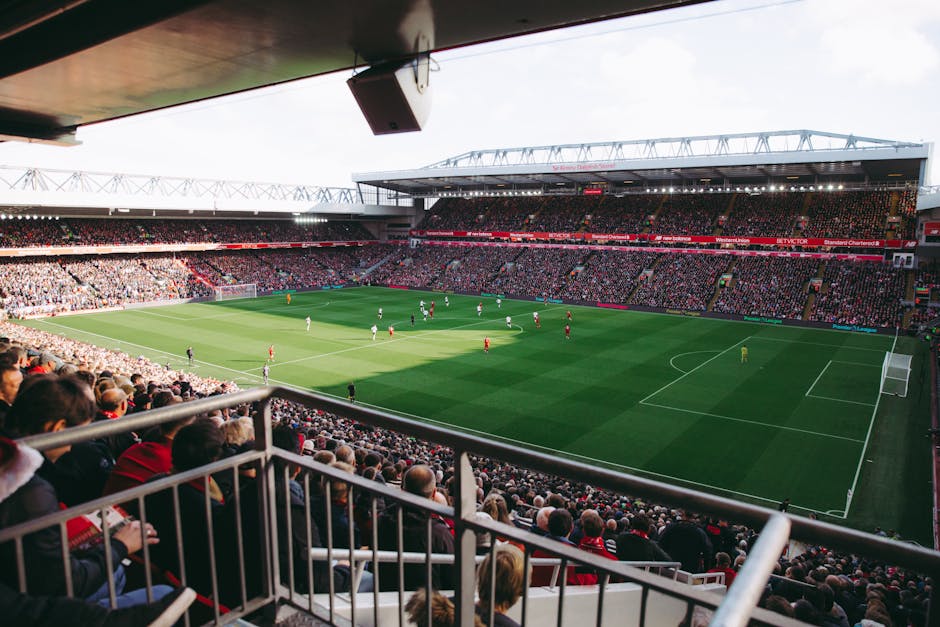
20 Amazing Facts About the Olympic Games

20 Amazing Facts About the Olympic Games

⏱️ 7 min read

The Olympic Games stand as one of humanity's most enduring traditions, bringing together athletes from around the world in a celebration of sporting excellence, cultural exchange, and international unity. Since their ancient origins in Greece to the modern global spectacle we know today, the Olympics have accumulated a rich history filled with remarkable stories, surprising developments, and fascinating traditions. These lesser-known facts reveal the depth and complexity of this extraordinary sporting institution.

Ancient Origins and Modern Revival

1. The Ancient Games Lasted Over a Millennium

The ancient Olympic Games were held continuously for nearly 12 centuries, from 776 BCE until 393 CE when Roman Emperor Theodosius I banned them. These games were held in Olympia, Greece, as a religious festival honoring Zeus, combining athletic competition with spiritual devotion in ways that shaped Greek culture for generations.

2. Winners Received Olive Wreaths, Not Gold Medals

Ancient Olympic champions didn't compete for medals but for kotinos—crowns made from olive branches cut from a sacred tree near the Temple of Zeus. While seemingly simple, this prize brought immense honor, and victors often received substantial rewards from their home cities, including monetary prizes, free meals for life, and front-row seats at public events.

3. The Modern Olympics Were Inspired by English Athletics

Baron Pierre de Coubertin, the founder of the modern Olympics, was heavily influenced by the "Much Wenlock Games" held in England since 1850. After visiting these games organized by Dr. William Penny Brookes, Coubertin was inspired to revive the Olympic tradition on an international scale, leading to the first modern Olympics in Athens in 1896.

Unusual Sports and Competitions

4. Tug-of-War Was Once an Olympic Sport

From 1900 to 1920, tug-of-war was a legitimate Olympic competition. Teams of eight athletes would compete in this test of raw strength and teamwork. Great Britain dominated the event, winning the most medals before it was discontinued along with several other sports deemed no longer suitable for the Olympic program.

5. Art Competitions Were Olympic Events

Between 1912 and 1948, the Olympics included competitions in architecture, literature, music, painting, and sculpture. All works had to be inspired by sport, and medals were awarded just like athletic events. The practice ended when it became difficult to distinguish between amateur and professional artists.

6. Live Pigeon Shooting Was an Olympic Event

At the 1900 Paris Olympics, live pigeon shooting was featured as an official event, making it the only time in Olympic history that animals were deliberately killed during competition. Nearly 300 birds were killed during the event, which was subsequently replaced with clay target shooting following public outcry.

Records and Remarkable Achievements

7. One Athlete Won Medals 28 Years Apart

Danish sailor Paul Elvstrøm competed in eight Olympic Games from 1948 to 1988, winning his first gold medal in 1948 and his last medal in 1960, then continuing to compete into his sixties. His 40-year Olympic career remains one of the longest in the Games' history, demonstrating extraordinary dedication and longevity.

8. The Youngest Olympic Champion Was Only 10 Years Old

In 1900, a young French boy whose name remains unknown became the youngest Olympic champion ever. He served as coxswain for the Dutch rowing pair after their original coxswain was deemed too heavy. His age was estimated between 7 and 10 years old, and he disappeared after the victory before anyone recorded his identity.

9. A Runner Competed Despite Appendix Surgery Two Weeks Earlier

At the 1952 Helsinki Olympics, Czech athlete Emil Zátopek won gold medals in the 5,000 meters, 10,000 meters, and marathon—all in the same Games. Remarkably, the marathon was his first-ever attempt at that distance, and he won by over two minutes, cementing his status as one of history's greatest distance runners.

Political and Cultural Significance

10. Hitler Refused to Present a Medal to Jesse Owens

While commonly believed, Adolf Hitler didn't specifically snub Jesse Owens at the 1936 Berlin Olympics. However, Owens, an African American athlete, did win four gold medals, directly contradicting Nazi propaganda about racial superiority. The German leader had already been told by Olympic officials to congratulate all athletes or none at all.

11. The Olympic Flag Has Been Stolen Multiple Times

The original 1920 Olympic flag disappeared for 77 years before diver Hal Haig Prieste confessed on his deathbed that he had stolen it as a souvenir. Another flag was stolen from the 1984 Los Angeles Olympics and remained missing for decades, highlighting the symbolic value these emblems hold for collectors.

12. Three Countries Have Hosted the Summer Olympics Three Times

Only the United States, United Kingdom, and France have hosted the Summer Olympics three or more times. London has hosted three times (1908, 1948, 2012), Paris three times (1900, 1924, 2024), and Los Angeles is preparing for its third hosting in 2028, having previously hosted in 1932 and 1984.

Fascinating Traditions and Symbols

13. The Olympic Torch Relay Started as Nazi Propaganda

The now-beloved tradition of the Olympic torch relay was introduced at the 1936 Berlin Olympics as part of Nazi Germany's propaganda efforts. Despite its controversial origins, the relay survived and evolved into a powerful symbol of international unity, with the flame continuing to be lit in Olympia, Greece, before each Games.

14. The Five Olympic Rings Represent Continental Unity

The five interlocking rings on the Olympic flag represent the five inhabited continents (Africa, Americas, Asia, Europe, and Oceania) coming together in sporting competition. Designed by Baron de Coubertin in 1913, at least one of the ring colors—blue, yellow, black, green, and red—appears on every national flag in the world.

15. Gold Medals Haven't Been Pure Gold Since 1912

Modern Olympic gold medals are actually made of silver coated with approximately six grams of gold. The last time solid gold medals were awarded was at the 1912 Stockholm Olympics. Today's medals must contain at least 92.5 percent silver and be plated with a minimum of six grams of pure gold.

Unusual Rules and Controversies

16. Marathon Runners Once Took Performance-Enhancing Rats

In the 1904 St. Louis Olympics marathon, American runner Thomas Hicks was given strychnine sulfate mixed with raw egg whites and brandy during the race—substances believed to enhance performance at the time. Despite nearly dying from this toxic mixture, he won the gold medal in what remains one of the strangest Olympic events ever held.

17. Weather Has Caused Only Three Complete Cancellations

Throughout history, only three Olympic Games have been completely cancelled: the 1916 Berlin Games (World War I), the 1940 Tokyo Games, and the 1944 London Games (both World War II). The 2020 Tokyo Olympics were postponed but not cancelled, making it the first postponed Olympics in modern history due to the COVID-19 pandemic.

18. Some Countries Have Won Medals Without Sending Athletes

In the early modern Olympics, athletes sometimes competed as individuals rather than national representatives. Additionally, some nations have earned medals in team events while contributing athletes to mixed-nationality teams, resulting in the unusual circumstance of countries earning Olympic medals without officially sending a delegation.

Modern Olympic Innovations

19. The Olympics Have Their Own Anthem and Hymn

The Olympic Hymn, composed by Spyridon Samaras with lyrics by Kostis Palamas, was first performed at the 1896 Athens Olympics. After being used sporadically, it was officially adopted as the permanent Olympic anthem in 1958. The hymn is now played during all Olympic opening and closing ceremonies worldwide.

20. The Olympics Generate Billions in Economic Impact

Hosting the Olympics requires massive investment, with recent Summer Olympics costing host cities between $10-15 billion. While controversial due to cost overruns and sometimes limited long-term benefits, the Games generate significant short-term economic activity, create infrastructure improvements, and provide intangible benefits through global exposure and national pride that continue to attract host city candidates.

Conclusion

The Olympic Games represent far more than athletic competition—they embody human aspiration, international cooperation, and the constant pursuit of excellence. From ancient olive wreaths to modern gold-plated medals, from pigeon shooting to cutting-edge sports technology, the Olympics have continuously evolved while maintaining their core mission of bringing the world together through sport. These twenty fascinating facts demonstrate the rich tapestry of history, tradition, controversy, and triumph that makes the Olympic Games an enduring global phenomenon. As the Olympics continue to adapt to modern challenges and include new sports and participants, they remain a testament to humanity's ability to celebrate achievement and unity on the world's greatest sporting stage.