











1 / 10 Questions
0 Points

Which Chocolate Candy Did Spanish Civil War Soldiers Inspire?

Tootsie Rolls

Hershey's Kisses

M&M's

Life Savers

Points won
0
Correct score
0%

More Quizzes

More Articles

Why Humans Are Drawn to Extremes

Why Humans Are Drawn to Extremes

⏱️ 5 min read

Throughout history, humans have demonstrated a remarkable tendency to gravitate toward extremes in behavior, beliefs, and experiences. From extreme sports enthusiasts seeking adrenaline rushes to political polarization dividing societies, this pattern of attraction to the edges of human experience manifests across cultures and generations. Understanding this fundamental aspect of human psychology reveals important insights about decision-making, social behavior, and the biological mechanisms that drive our choices.

The Neurological Basis of Extreme Behavior

The human brain is wired in ways that make extreme experiences particularly compelling. The reward system, centered in the nucleus accumbens and involving dopamine pathways, responds more dramatically to intense stimuli than to moderate ones. This neurological architecture evolved as a survival mechanism, ensuring that our ancestors paid attention to potentially life-threatening situations or extraordinary opportunities.

Research in neuroscience has shown that extreme experiences trigger a cascade of neurochemical responses that create lasting memories and powerful emotional associations. When individuals engage in high-risk activities or encounter intense situations, their brains release a cocktail of chemicals including dopamine, adrenaline, and endorphins. These substances create feelings of euphoria and heightened awareness that can become psychologically addictive, driving individuals to seek increasingly extreme experiences to achieve similar effects.

The Psychology of All-or-Nothing Thinking

Cognitive psychologists have identified several mental patterns that predispose humans toward extreme positions. Binary thinking, also known as black-and-white thinking, represents a cognitive shortcut that simplifies complex realities into more manageable categories. While this mental framework can facilitate quick decision-making, it often leads individuals to embrace extreme positions rather than nuanced middle grounds.

This tendency toward polarized thinking becomes particularly evident in moral reasoning and value judgments. People naturally categorize actions, ideas, and individuals as either good or bad, right or wrong, with relatively little consideration for the vast gray area between these extremes. This cognitive bias serves an important psychological function by reducing ambiguity and providing clear frameworks for understanding the world, even when such frameworks oversimplify reality.

Social Identity and Group Polarization

Human social nature plays a significant role in the attraction to extremes. Group dynamics often amplify individual tendencies toward extreme positions through a phenomenon known as group polarization. When like-minded individuals gather and discuss shared views, their positions tend to shift toward more extreme versions of their initial inclinations.

This effect occurs through several mechanisms:

  • Social comparison drives individuals to position themselves as exemplary group members by adopting more extreme versions of group-approved attitudes
  • Exposure to persuasive arguments from fellow group members reinforces and intensifies existing beliefs
  • The desire for distinctiveness motivates groups to differentiate themselves from others through increasingly extreme positions
  • Confirmation bias leads individuals to seek and value information that supports extreme views while dismissing contradictory evidence

The Role of Boredom and Stimulation

Modern society presents a paradox that contributes to the appeal of extremes. Despite unprecedented access to entertainment, information, and comfort, many individuals experience chronic understimulation and boredom. The human nervous system evolved in environments that presented regular physical challenges, social conflicts, and survival pressures. Contemporary life, particularly in developed nations, often lacks the intensity of stimulation that characterized most of human evolutionary history.

This mismatch between evolutionary adaptation and modern circumstances creates a hunger for intense experiences. Extreme activities, whether physical, emotional, or ideological, provide the stimulation that routine daily life fails to deliver. From extreme sports to provocative political movements, these pursuits offer an antidote to the perceived blandness of ordinary existence.

Media Amplification and the Attention Economy

The structure of modern media ecosystems significantly reinforces human tendencies toward extremes. Traditional and social media platforms operate on attention-based business models that prioritize engagement over accuracy or nuance. Content that provokes strong emotional reactions—particularly outrage, fear, or excitement—generates more clicks, shares, and comments than moderate or balanced perspectives.

This dynamic creates a feedback loop where extreme content receives disproportionate visibility, making extreme positions appear more common and acceptable than they actually are. Algorithms designed to maximize user engagement often create echo chambers that expose individuals primarily to content reinforcing their existing views, gradually shifting their perspectives toward more extreme positions.

The Illusion of Certainty in Uncertain Times

Psychological research demonstrates that humans have a fundamental need for certainty and control. Ambiguity and uncertainty create cognitive discomfort that motivates individuals to seek resolution. Extreme positions offer the appeal of absolute certainty in an increasingly complex and ambiguous world.

When faced with complicated social, political, or personal challenges, extreme ideologies and frameworks provide clear answers and simple solutions. The definitiveness of extreme positions feels psychologically satisfying compared to the discomfort of acknowledging complexity, uncertainty, and the limitations of human knowledge.

Evolutionary Advantages and Modern Consequences

The attraction to extremes likely provided evolutionary advantages in ancestral environments. Quick, decisive action in response to threats or opportunities enhanced survival prospects. Strong group cohesion around shared beliefs improved collective defense and resource acquisition. The ability to commit fully to courses of action, rather than remaining perpetually undecided, enabled humans to accomplish difficult goals.

However, these once-adaptive tendencies can produce problematic outcomes in contemporary contexts. Political polarization undermines democratic governance and social cohesion. Extreme risk-taking can result in serious injury or death. Absolutist thinking prevents productive compromise and problem-solving in situations requiring nuanced approaches.

Understanding the psychological, neurological, and social factors that draw humans toward extremes represents an essential step toward mitigating the negative consequences of this tendency while preserving its potential benefits. This knowledge enables individuals and societies to develop strategies for maintaining balanced perspectives and making decisions that account for complexity rather than reflexively embracing the most extreme available options.
Top 10 Signs of an Approaching Storm

Top 10 Signs of an Approaching Storm

⏱️ 6 min read

When venturing into the wilderness or spending time outdoors, the ability to recognize impending severe weather can mean the difference between safety and disaster. Nature provides numerous warning signals before a storm arrives, and understanding these indicators allows for adequate preparation and potentially life-saving decisions. By learning to read the sky, observe animal behavior, and detect atmospheric changes, anyone can develop the skills necessary to anticipate dangerous weather conditions before they strike.

Understanding Nature's Warning System

The atmosphere telegraphs its intentions through various observable phenomena. These signals often appear hours before the first raindrop falls, giving observant individuals crucial time to seek shelter, secure equipment, or alter travel plans. The following indicators have been recognized by meteorologists, sailors, and outdoor experts for generations as reliable predictors of incoming storms.

1. Rapidly Falling Barometric Pressure

One of the most reliable indicators of approaching severe weather is a sudden drop in barometric pressure. While most people don't carry barometers, the effects of falling pressure manifest in noticeable ways. Many individuals experience joint pain or headaches as pressure decreases. If a barometer or weather instrument is available, a drop of more than 0.02 inches of mercury per hour strongly suggests that a storm system is approaching within the next 12 to 24 hours. The faster the pressure falls, the more intense the approaching weather system is likely to be.

2. Distinctive Cloud Formations and Transformations

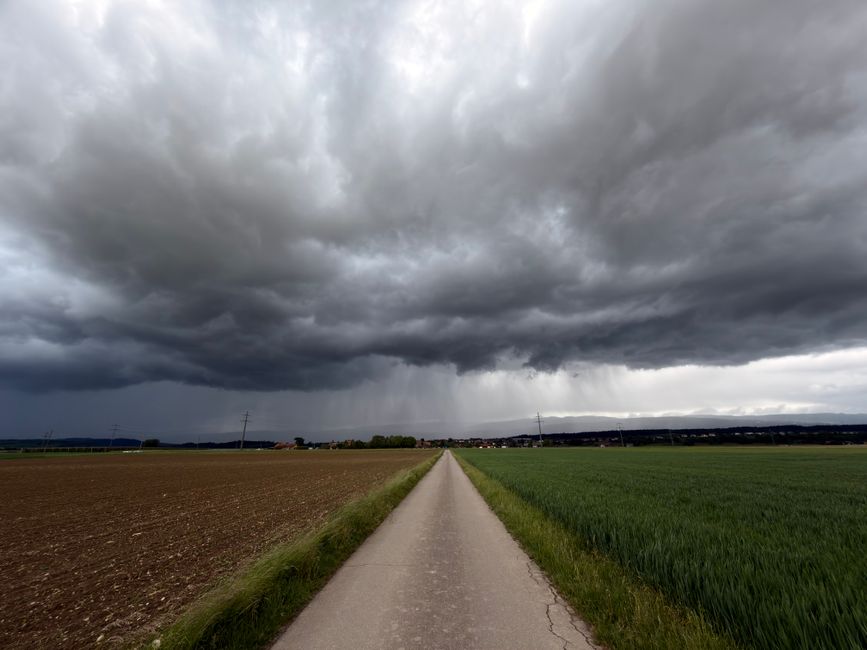
Cloud patterns serve as one of nature's most visible warning systems. The appearance of towering cumulonimbus clouds with anvil-shaped tops indicates powerful updrafts and the potential for severe thunderstorms. A progression from high, wispy cirrus clouds to lower, thicker cirrostratus, followed by dark nimbostratus clouds, typically signals an approaching frontal system. Additionally, mammatus clouds—pouches that hang beneath the base of a cloud—often appear after the worst of a storm has passed but can indicate extremely turbulent conditions. A mackerel sky, featuring rows of altocumulus clouds resembling fish scales, traditionally warns that rain will arrive within 24 hours.

3. Sudden Wind Direction Changes

Shifts in wind direction frequently precede storm systems as different air masses collide. In the Northern Hemisphere, winds that veer (shift clockwise) often indicate an approaching warm front, while winds that back (shift counterclockwise) can signal a cold front. A sudden calm after steady winds, known as the "calm before the storm," occurs when an approaching low-pressure system temporarily neutralizes prevailing winds. Pay particular attention to gusty, erratic winds that change direction frequently, as these suggest atmospheric instability and possible severe weather.

4. Unusual Animal and Insect Activity

Animals possess remarkable sensitivity to atmospheric changes and often alter their behavior before storms arrive. Birds typically fly lower than normal as falling air pressure affects their ears, and they may cease singing and seek shelter. Cows frequently lie down in fields before rain arrives, and livestock generally becomes restless. Insects, particularly flies and mosquitoes, become more aggressive and tend to swarm. Ants have been observed working frantically to reinforce their colonies, while bees return to their hives earlier than usual. Observing these behavioral changes in multiple species simultaneously provides strong evidence of approaching weather systems.

5. The Distinctive Smell of Approaching Rain

The human nose can detect an approaching storm through petrichor, the earthy scent produced when rain falls on dry soil. This aroma results from oils released by plants during dry periods and compounds produced by soil-dwelling bacteria. Additionally, ozone carried downward by storm downdrafts creates a sharp, clean smell often described as similar to chlorine. When these scents become noticeable, particularly in combination with other signs, precipitation is often less than an hour away.

6. Increasing Humidity and Temperature Changes

Rising humidity levels indicate that moisture-laden air is moving into the area, a prerequisite for storm formation. This manifests as a sticky, oppressive feeling, increased sweating, and the formation of dew or condensation on surfaces. Before cold fronts, a noticeable temperature drop may occur within minutes, sometimes accompanied by a visible wall of cooler air. Conversely, unusual warmth and humidity ahead of a front create the instability necessary for severe thunderstorms and tornadoes.

7. Distant Thunder and Lightning Activity

Thunder can be heard from approximately 10 miles away under ideal conditions, providing significant advance warning. When thunder becomes audible, the storm is close enough to warrant immediate preparation for taking shelter. Lightning visible on the horizon, even without audible thunder, indicates storm activity within 20 miles. The "30-30 rule" provides crucial guidance: if the time between seeing lightning and hearing thunder is 30 seconds or less (indicating the storm is within 6 miles), seek shelter immediately and remain there for 30 minutes after the last thunder is heard.

8. Morning Red Sky Phenomenon

The ancient saying "red sky at night, sailor's delight; red sky in morning, sailor's warning" holds meteorological validity. A red sky at sunrise indicates that a high-pressure system with dry air has already passed to the east, while moisture-bearing clouds approach from the west, illuminated by the rising sun. This optical phenomenon reliably predicts deteriorating weather conditions within 12 to 24 hours in mid-latitude regions where weather systems typically move from west to east.

9. Halo Around the Sun or Moon

A luminous ring or halo encircling the sun or moon occurs when light refracts through ice crystals in high cirrostratus clouds. These ice-crystal clouds typically precede warm fronts by 24 to 48 hours, making halos valuable long-range weather indicators. The larger and more distinct the halo appears, the more moisture is present in the upper atmosphere. When combined with lowering cloud ceilings and increasing winds, this phenomenon strongly suggests that a significant weather system approaches.

10. Static Electricity and Hair Standing on End

Perhaps the most dangerous sign, static electricity buildup indicates an extremely hazardous situation. When hair stands on end, skin tingles, or metal objects begin humming or buzzing, the electrical charge differential between the ground and atmosphere has reached critical levels. This phenomenon signals that a lightning strike is imminent—potentially within seconds. Anyone experiencing these sensations should immediately assume the lightning safety position: crouch low with feet together, minimizing contact with the ground, and move to safe shelter as quickly as possible once the immediate danger passes.

Putting Knowledge Into Action

Recognizing these ten warning signs provides outdoor enthusiasts, survivalists, and anyone who works or plays in nature with powerful tools for weather prediction and safety planning. While modern weather forecasting offers sophisticated predictions, circumstances frequently arise where technology is unavailable or conditions change rapidly. By observing falling barometric pressure, distinctive cloud formations, shifting winds, animal behavior, atmospheric scents, humidity changes, distant lightning, morning red skies, solar or lunar halos, and electrical phenomena, individuals can make informed decisions about seeking shelter or altering plans. Developing proficiency in reading these natural indicators requires practice and attention, but these skills remain invaluable for anyone who ventures beyond the immediate reach of shelter. When multiple signs appear simultaneously, the likelihood of severe weather increases substantially, warranting immediate action to ensure personal safety.