









1 / 10 Questions
0 Points

Which Classic Toy Was Invented After A Naval Engineer Dropped A Spring?

Slinky

Jack-in-the-Box

Yo-Yo

Pogo Stick

Points won
0
Correct score
0%

More Quizzes

More Articles

Questions That Challenge Common Sense

Questions That Challenge Common Sense

⏱️ 5 min read

Throughout history, certain questions have emerged that directly contradict what most people accept as obvious truths. These thought-provoking inquiries force us to reconsider assumptions we've held since childhood and challenge the very foundation of what we believe to be common sense. By examining these paradoxes and counterintuitive scenarios, we gain deeper insights into logic, perception, and the limitations of intuitive thinking.

The Monty Hall Problem: When Switching Makes Sense

One of the most famous examples that defies common sense is the Monty Hall Problem, named after the host of the game show "Let's Make a Deal." In this scenario, a contestant faces three doors: behind one is a car, and behind the other two are goats. After the contestant selects a door, the host—who knows what's behind each door—opens one of the remaining doors to reveal a goat. The contestant is then offered a choice: stick with their original selection or switch to the other unopened door.

Common sense suggests the odds are now 50-50, making switching pointless. However, mathematical analysis proves that switching doubles your chances of winning from 1/3 to 2/3. This counterintuitive result has sparked countless debates, with many people refusing to accept the mathematical proof even when demonstrated repeatedly. The problem illustrates how our intuition about probability can be fundamentally flawed.

The Birthday Paradox: Unlikely Coincidences That Aren't

Another question that challenges intuitive thinking involves birthdays. In a room of just 23 randomly selected people, what are the odds that at least two share the same birthday? Most people estimate the probability to be quite low, perhaps around 10-20 percent. The actual answer is approximately 50 percent, and with just 70 people in the room, the probability exceeds 99.9 percent.

This result seems impossible to many because we instinctively compare ourselves to the group rather than considering all possible pairs of people. The mathematics behind this paradox reveals how poorly equipped our common sense is for understanding combinatorial probability, even in situations that seem straightforward.

The Ship of Theseus: Identity Through Constant Change

Philosophy presents its own challenges to common sense, particularly regarding identity and persistence. The Ship of Theseus paradox asks: if a ship has all its wooden parts gradually replaced over time until not a single original component remains, is it still the same ship? Common sense might say yes, as it's been continuously maintained. But then if someone collected all the original parts and reassembled them, which vessel would be the "true" Ship of Theseus?

This ancient question has modern applications in discussions about personal identity, consciousness, and even legal ownership. It challenges our assumption that objects maintain fixed identities and forces us to consider what truly defines something as being itself rather than something else.

Zeno's Paradoxes: Why Motion Should Be Impossible

The ancient Greek philosopher Zeno proposed several paradoxes that suggest motion is logically impossible. The most famous, Achilles and the Tortoise, describes a race where Achilles gives the tortoise a head start. Zeno argues that Achilles can never overtake the tortoise because he must first reach where the tortoise was, and during that time, the tortoise moves forward. This process repeats infinitely, suggesting Achilles can never catch up.

Of course, common sense and everyday experience tell us that faster objects overtake slower ones. The paradox wasn't resolved satisfactorily until the development of calculus and the mathematical understanding of infinite series. Zeno's questions demonstrate how logical reasoning, when applied incorrectly, can lead to conclusions that contradict observable reality.

The Trolley Problem: Morality and Active Choices

Ethical dilemmas often challenge common-sense moral intuitions. The Trolley Problem presents a scenario where a runaway trolley is headed toward five people tied to the tracks. You stand next to a lever that can redirect the trolley to another track, where only one person is tied. Common sense might suggest saving five lives at the cost of one is obvious. However, when the scenario changes—perhaps requiring you to push a large person onto the tracks to stop the trolley and save the five—most people's moral intuitions completely reverse, even though the mathematical outcome is identical.

This inconsistency reveals that our moral common sense isn't based purely on utilitarian calculations but involves complex considerations about action versus inaction, intention, and the means we employ to achieve outcomes.

Quantum Mechanics: Reality Beyond Intuition

Modern physics presents numerous questions that obliterate common-sense understanding of reality. Quantum mechanics demonstrates that particles can exist in multiple states simultaneously, that observation affects reality, and that particles can be "entangled" across vast distances with instantaneous correlation. Einstein himself rejected aspects of quantum theory, calling it "spooky action at a distance," because it violated his common-sense understanding of how the universe should work.

These phenomena have been experimentally verified countless times, proving that at the quantum scale, reality operates according to principles that have no correspondence with everyday experience or intuitive reasoning.

The Value of Counterintuitive Thinking

Questions that challenge common sense serve crucial functions in human knowledge. They reveal the limitations of intuitive thinking, expose hidden assumptions in our reasoning, and push us to develop more sophisticated analytical tools. While common sense serves us well in everyday situations that closely resemble the environments in which human cognition evolved, it often fails when confronting abstract probability, extreme scales, unusual scenarios, or complex systems.

Understanding where common sense fails helps us develop humility about our intuitive judgments and appreciation for rigorous analytical methods. These challenging questions remind us that reality doesn't always conform to what feels obvious, and that the pursuit of truth sometimes requires us to accept conclusions that seem fundamentally wrong at first glance.
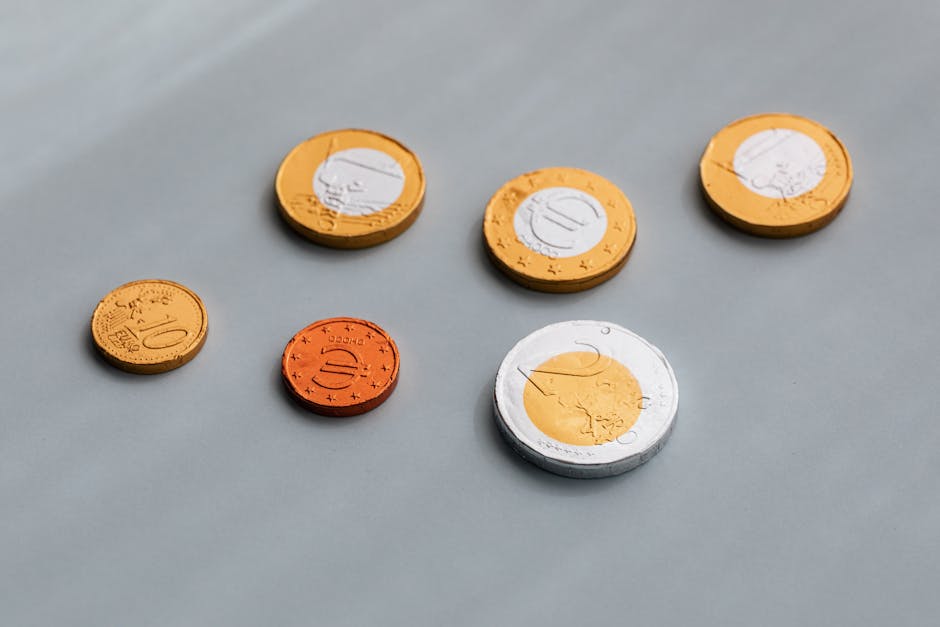
Why Chocolate Was Once Used as Currency

Why Chocolate Was Once Used as Currency

⏱️ 5 min read

Long before chocolate became the sweet treat enjoyed worldwide today, cacao beans held a position of immense value in Mesoamerican civilizations. These precious seeds served not only as the foundation for a revered beverage but also functioned as a legitimate form of currency that shaped economic systems for centuries. The story of chocolate as money reveals fascinating insights into ancient commerce, cultural values, and the intrinsic worth societies placed on this remarkable crop.

The Sacred Origins of Cacao in Mesoamerica

Cacao's journey as currency began with the Maya and Aztec civilizations, where the beans were considered gifts from the gods. The Mayans, dating back to at least 250 CE, cultivated cacao trees in the tropical regions of present-day Mexico, Guatemala, and Honduras. These civilizations didn't consume chocolate as the solid confection known today; instead, they prepared it as a bitter, frothy beverage often mixed with spices, cornmeal, or chili peppers.

The reverence for cacao extended beyond its consumption. The beans were difficult to cultivate, requiring specific climate conditions and careful tending. This agricultural challenge, combined with the belief in cacao's divine origins, established the beans as items of exceptional value. The Aztec emperor Montezuma reportedly consumed up to 50 cups of chocolate daily, demonstrating both the beverage's importance and the considerable wealth required to afford such luxury.

How Cacao Beans Functioned as Money

The monetary system based on cacao beans operated with surprising sophistication. Aztec merchants and traders used standardized counts of beans for transactions, with specific values assigned to different quantities. Historical records indicate that 100 cacao beans could purchase a slave, while 10 beans might buy a rabbit. A single bean could be exchanged for a tamale, making cacao divisible enough for everyday purchases yet valuable enough for major transactions.

The beans possessed several characteristics that made them ideal currency:

  • They were portable and relatively durable when properly stored
  • Their value was widely recognized across different Mesoamerican societies
  • They could be counted easily, allowing for precise transactions
  • They had intrinsic value beyond their monetary function as they could be consumed
  • They were difficult to counterfeit due to their distinctive appearance and origin

The Economic Structure Supporting Cacao Currency

The widespread acceptance of cacao as money created complex economic networks throughout Mesoamerica. Tribute systems required conquered territories to pay taxes to Aztec rulers in cacao beans, among other goods. The Aztec capital of Tenochtitlan received an estimated 980 loads of cacao annually from subject provinces, with each load containing approximately 24,000 beans.

Markets throughout the empire buzzed with activity as traders exchanged cacao for goods ranging from cloth and food to precious metals and stones. Professional merchants called pochteca traveled extensive trade routes, carrying cacao beans as their primary medium of exchange. These merchant classes accumulated considerable wealth and influence, demonstrating the sophisticated commercial system that cacao currency supported.

Counterfeit Cacao and Quality Control

As with any valuable currency, the cacao system faced challenges with counterfeiting. Enterprising fraudsters would hollow out cacao beans and fill the shells with dirt or avocado skin, attempting to pass them off as genuine in crowded marketplaces. This practice became common enough that traders developed expertise in identifying authentic beans, examining them carefully before accepting them as payment.

Quality variations among cacao beans also affected their value. Beans from certain regions commanded premium prices due to superior flavor or size. The finest beans came from the Soconusco region along the Pacific coast of present-day Chiapas, Mexico, and these could be worth significantly more than common varieties. This regional differentiation created a nuanced economic system where not all cacao currency held equal value.

The Spanish Arrival and Transformation

When Spanish conquistadors arrived in the early 16th century, they quickly recognized the monetary value of cacao beans. Hernán Cortés himself noted in his writings to King Charles V that cacao beans were used as currency and that a person could buy anything in the market with them. The Spanish initially adopted the existing system, using cacao beans for transactions while establishing their colonial presence.

However, Spanish colonization gradually transformed chocolate from currency to commodity. The colonizers introduced sugar to the bitter beverage, creating a sweeter version that would eventually spread throughout Europe. As Spanish silver coins became the dominant currency and cacao plantations expanded under colonial management, the beans transitioned from money to a cash crop exported to Europe.

Legacy of Cacao Currency

The use of cacao as currency persisted in some remote areas of Latin America well into the 19th century, long after the Spanish conquest. This longevity testifies to the deep-rooted economic systems built around cacao and the bean's enduring value in traditional communities. Even today, the historical significance of cacao as money influences how chocolate is perceived culturally in regions where the ancient civilizations once thrived.

Understanding chocolate's monetary past provides valuable perspective on how currencies develop and what gives them value. The cacao bean system demonstrates that money need not be metal or paper to function effectively in complex societies. The intrinsic value of cacao, combined with cultural significance and practical characteristics, created a currency system that sustained empires and facilitated trade across vast territories for hundreds of years, leaving an indelible mark on human economic history.