







1 / 10 Questions
0 Points

Which vegetable was once considered poisonous by Europeans?

Potatoes

Tomatoes

Carrots

Onions

Points won
0
Correct score
0%

More Quizzes

More Articles

14 Fascinating Facts About the Middle Ages

14 Fascinating Facts About the Middle Ages

⏱️ 6 min read

The Middle Ages, spanning roughly from the 5th to the 15th century, remains one of history's most misunderstood periods. Often dismissed as the "Dark Ages," this era was actually a time of remarkable innovation, cultural development, and social complexity. From groundbreaking inventions to surprising hygiene practices, the medieval period shaped the modern world in ways that continue to influence us today. Let's explore fourteen remarkable aspects of medieval life that challenge common misconceptions and reveal the true character of this transformative epoch.

Medieval Innovation and Daily Life

1. Medieval People Bathed Regularly

Contrary to popular belief, medieval Europeans maintained relatively good hygiene practices. Public bathhouses were common in many towns and cities, with people bathing several times per week. These establishments served as social gathering places where people could relax, conduct business, and maintain cleanliness. The stereotype of filthy medieval peasants is largely a myth perpetuated by later periods. It wasn't until the Renaissance, when physicians mistakenly believed that water opened pores to disease, that bathing frequency actually declined significantly.

2. The Invention of Eyeglasses Revolutionized Learning

Around 1286, Italian craftsmen invented the first wearable eyeglasses, marking a revolutionary advancement in medieval technology. This innovation extended the productive years of scholars, scribes, and craftsmen who previously had to cease detailed work as their vision deteriorated with age. The development of corrective lenses represented sophisticated understanding of optics and transformed intellectual life, enabling the preservation and transmission of knowledge across generations.

3. Medieval Universities Established Modern Education

The first universities emerged during the Middle Ages, with the University of Bologna founded in 1088, followed by Oxford, Cambridge, and the Sorbonne. These institutions created the academic structure still used today, including lectures, examinations, degrees, and academic regalia. Students studied the liberal arts—grammar, rhetoric, logic, arithmetic, geometry, music, and astronomy—establishing educational foundations that persist in contemporary curricula.

4. Cats Were Both Revered and Persecuted

Medieval attitudes toward cats were paradoxically complex. While valued for controlling rodent populations that threatened grain stores, cats were also associated with witchcraft and pagan practices, leading to periodic persecution. Some historians suggest that the mass killing of cats in certain regions may have inadvertently allowed rat populations to flourish, contributing to the rapid spread of the Black Death. Despite persecution, cats remained essential to daily life, especially in monasteries where they protected precious manuscripts from mice.

Social Structure and Surprising Rights

5. Women Could Own Property and Run Businesses

Medieval women enjoyed more economic rights than commonly believed. Widows frequently inherited and managed their deceased husbands' businesses, from breweries to textile operations. Women worked as merchants, innkeepers, and artisans, with some guilds specifically for female workers. While certainly not equal to men by modern standards, medieval women's economic participation was often greater than in subsequent centuries, particularly during the Victorian era.

6. Peasants Had More Free Time Than Modern Workers

Medieval peasants observed numerous religious holidays and feast days, resulting in approximately 150 to 180 days off per year. While their work was physically demanding during planting and harvest seasons, they enjoyed significantly more leisure time than contemporary workers typically receive. These breaks allowed for festivals, celebrations, and community gatherings that strengthened social bonds and provided essential rest.

7. Medieval Cuisine Was Surprisingly Sophisticated

Medieval cooking was far more refined than often portrayed. Wealthy households employed skilled cooks who created elaborate dishes using exotic spices like saffron, cinnamon, and ginger imported via extensive trade routes. Cookbooks from the period reveal complex recipes involving multiple cooking methods and artistic presentation. Even common people enjoyed flavorful meals seasoned with herbs, featuring vegetables, grains, legumes, and occasional meat, challenging the notion of bland, monotonous medieval diets.

Technological and Agricultural Advances

8. The Heavy Plow Transformed European Agriculture

The introduction of the heavy plow during the Middle Ages revolutionized farming in Northern Europe. Unlike earlier scratch plows, the heavy plow could turn the dense, wet soils of the region, dramatically increasing agricultural productivity. This innovation supported population growth and urbanization, fundamentally altering European society's structure and enabling the rise of medieval civilization.

9. Windmills and Watermills Powered Medieval Industry

By the 11th century, thousands of mills dotted the European landscape, harnessing natural power for grinding grain, sawing wood, fulling cloth, and pumping water. The Domesday Book of 1086 recorded over 6,000 watermills in England alone. This mechanical revolution reduced human labor requirements and increased production efficiency, representing a significant step toward industrialization centuries before the Industrial Revolution.

10. Medieval Surgeons Performed Complex Operations

Medieval surgery was surprisingly advanced, with practitioners performing cataract removal, hernia repairs, and even rudimentary brain surgery. Surgeons understood the importance of cleanliness, often using wine as an antiseptic. They developed specialized instruments and techniques, with medical texts documenting procedures and treatments. While lacking modern anesthesia and antibiotics, medieval medicine was far more sophisticated than stereotypes suggest.

Cultural and Religious Life

11. Gothic Cathedrals Showcased Engineering Mastery

The construction of Gothic cathedrals represented medieval engineering at its finest. These massive structures, featuring soaring vaults, flying buttresses, and intricate stained glass windows, required advanced mathematical knowledge and construction techniques. Buildings like Notre-Dame de Paris and Chartres Cathedral demonstrated medieval architects' sophisticated understanding of physics, geometry, and materials science, creating structures that have endured for centuries.

12. Monks Preserved Classical Knowledge

Medieval monasteries served as repositories of learning, with monks painstakingly copying ancient texts from Greek and Roman civilizations. Without their dedicated work, countless classical works would have been lost forever. Monastic scriptoria preserved not only religious texts but also scientific, philosophical, and literary works, creating beautiful illuminated manuscripts that remain artistic treasures today.

13. Trial by Ordeal Had Practical Purposes

While trial by ordeal seems barbaric today, recent research suggests these practices may have functioned as effective lie detectors in societies lacking forensic science. The psychological pressure of undergoing ordeal by fire or water likely prompted guilty parties to confess or settle disputes beforehand. Additionally, priests administering these ordeals sometimes manipulated outcomes to ensure justice, suggesting a more nuanced system than pure superstition.

14. The Magna Carta Established Rule of Law

Signed in 1215, the Magna Carta established the revolutionary principle that even monarchs must obey the law. While initially protecting only noble rights, this document laid the groundwork for constitutional governance and individual liberties. Its concepts influenced democratic development worldwide, including the United States Constitution, making it one of the Middle Ages' most enduring contributions to modern civilization.

The Medieval Legacy

The Middle Ages were far from the backward, superstitious period often portrayed in popular imagination. This era witnessed remarkable technological innovations, from eyeglasses to mechanical mills; established educational institutions that persist today; developed sophisticated legal and social systems; and preserved the knowledge that would fuel the Renaissance. Medieval people bathed regularly, ate well-seasoned food, enjoyed considerable leisure time, and created architectural and artistic masterpieces that continue to inspire awe. Understanding these fourteen facts reveals the Middle Ages as a dynamic period of human achievement, challenging us to reconsider historical stereotypes and appreciate the medieval world's profound influence on contemporary society. The legacy of medieval innovation, law, education, and culture continues shaping our lives in countless ways, demonstrating that this "middle" period was anything but a dark age.
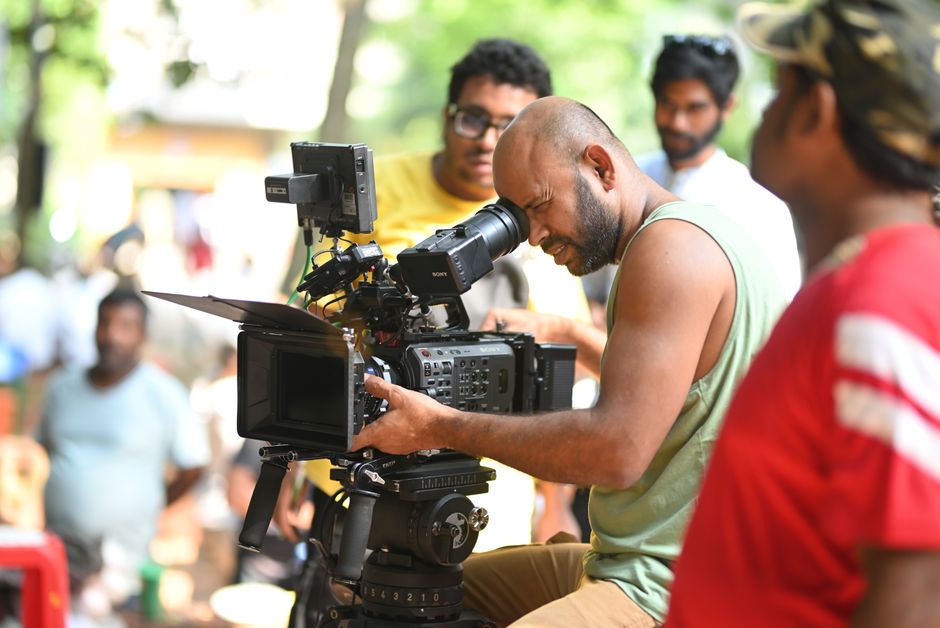
Top 10 Films That Broke the Fourth Wall

Top 10 Films That Broke the Fourth Wall

⏱️ 6 min read

Breaking the fourth wall—when characters acknowledge the audience or the fact that they're in a film—represents one of cinema's most daring narrative techniques. This theatrical device, borrowed from stage productions, creates an immediate connection between viewer and character, transforming passive watching into active participation. Throughout film history, certain movies have masterfully employed this technique to enhance comedy, deepen drama, or provide unique storytelling perspectives. These groundbreaking films have redefined audience engagement and influenced countless filmmakers.

Iconic Films That Shattered Cinematic Conventions

1. Ferris Bueller's Day Off (1986) - The Teenage Confidant

John Hughes' classic comedy perfected the art of fourth wall breaking for an entire generation. Matthew Broderick's Ferris Bueller regularly turns to the camera to share his schemes, philosophies, and commentary with the audience. These direct addresses transform viewers into co-conspirators in Ferris's elaborate plan to skip school. The film's most memorable fourth wall break occurs at the very end, when Ferris appears after the credits to tell lingering audience members to go home. This technique made the character feel like a trusted friend rather than a distant protagonist, contributing significantly to the film's enduring popularity and cultural impact.

2. Deadpool (2016) - The Meta-Superhero Revolution

Ryan Reynolds' portrayal of the "Merc with a Mouth" brought fourth wall breaking to the superhero genre with unprecedented frequency and self-awareness. Deadpool doesn't just acknowledge the audience; he comments on the film's production, references other movies, and even mocks superhero genre conventions. The character openly discusses the film's budget limitations, acknowledges actors by their real names, and makes jokes about the Marvel Cinematic Universe. This constant meta-commentary became the film's defining characteristic, proving that comic book adaptations could succeed by subverting their own conventions and directly engaging audiences in entirely new ways.

3. Annie Hall (1977) - Woody Allen's Neurotic Narrator

Woody Allen's Oscar-winning romantic comedy employs fourth wall breaking as a window into the protagonist's anxious, overanalytical mind. Alvy Singer frequently addresses the camera to share his observations about relationships, life in New York, and his neuroses. The film features one particularly innovative scene where Alvy pulls media theorist Marshall McLuhan into frame to settle an argument, blending reality and fiction. These direct addresses serve a deeper purpose than mere comedy—they illustrate the character's inability to simply experience life without constantly analyzing and narrating it, making the technique integral to the film's psychological exploration.

4. Fight Club (1999) - The Unreliable Narrator's Confession

David Fincher's adaptation of Chuck Palahniuk's novel uses fourth wall breaking to establish an intimate, if deeply unreliable, narrator-audience relationship. Edward Norton's unnamed protagonist guides viewers through his descent into chaos, speaking directly to the camera throughout the film. This technique becomes particularly significant as the story's major twist reveals the narrator's fractured psyche, retroactively recontextualizing every moment of direct address. The fourth wall breaking serves as both a narrative device and a crucial element of the film's exploration of identity, consumerism, and mental instability.

5. Goodfellas (1990) - The Gangster's Intimate Testimony

Martin Scorsese's crime epic employs direct address to immerse viewers in the seductive world of organized crime. Ray Liotta's Henry Hill narrates his story directly to the camera, creating the feeling of a confessional testimony. The technique transforms the audience into confidants hearing firsthand accounts of mob life's glamour and brutality. One pivotal scene features Henry introducing various characters by freezing the frame and providing commentary, treating viewers as insiders being initiated into his world. This approach makes the moral descent more impactful because the audience has been personally guided through it by someone who treats them as trusted listeners.

6. The Wolf of Wall Street (2013) - Excess and Direct Confession

Scorsese returned to fourth wall breaking with Leonardo DiCaprio's Jordan Belfort, a charismatic fraudster who regularly addresses the audience. Belfort interrupts his own story to explain financial schemes, comment on events, and share his unrepentant philosophy. Unlike traditional narration, these direct addresses feel like a sales pitch—Belfort is selling viewers on his lifestyle as much as he sold worthless stocks to his victims. The technique brilliantly reinforces the character's manipulative nature while simultaneously making viewers complicit in their fascination with his excess and criminal behavior.

7. Alfie (1966) - The Charming Cad's Monologues

Michael Caine's star-making performance as the womanizing Alfie features constant direct address, with the protagonist sharing his philosophies on relationships and life directly with viewers. These intimate monologues create a paradoxical effect—the audience becomes privy to Alfie's thoughts and justifications, yet this intimacy ultimately exposes his emotional emptiness and moral failings. The fourth wall breaking transforms what could have been a simple character study into a complex examination of charm, consequence, and eventual self-awareness. The 2004 remake starring Jude Law retained this crucial device, recognizing its centrality to the story's impact.

8. High Fidelity (2000) - The Music Snob's Inner Monologue

John Cusack's Rob Gordon uses direct address to share his obsessive thoughts about relationships, music, and his "top five" lists with the audience. These fourth wall breaks function as externalized internal monologues, revealing Rob's tendency to organize and analyze his life rather than actively living it. The technique perfectly captures the novel's first-person narrative style while adding cinematic immediacy. Rob's direct addresses become increasingly self-aware as the film progresses, mirroring his character development from self-absorbed record store owner to someone capable of genuine introspection and growth.

9. Funny Games (1997) - The Disturbing Audience Challenge

Michael Haneke's psychological thriller uses fourth wall breaking in its most unsettling form. The antagonists occasionally glance at or directly address the camera, implicating the audience in the violence they're witnessing. In one shocking moment, a character literally rewinds the film to change an outcome, forcing viewers to confront their role as consumers of violent entertainment. Unlike the playful or intimate fourth wall breaks in comedies and dramas, Haneke weaponizes the technique to create discomfort and provoke questions about spectatorship, voyeurism, and media violence. The American remake in 2007 preserved these controversial moments.

10. Wayne's World (1992) - The Comedic Meta-Commentary

Mike Myers and Dana Carvey's transition from "Saturday Night Live" sketch to feature film retained the characters' self-aware humor and expanded it into sustained meta-commentary. Wayne and Garth acknowledge they're in a movie, discuss product placement while simultaneously engaging in it, and even present multiple ending options for the audience. The film playfully deconstructs Hollywood conventions, with characters commenting on dream sequences, flashbacks, and romantic montages as they happen. This combination of fourth wall breaking and meta-humor influenced countless comedies that followed, proving that audiences enjoyed being let in on the joke of filmmaking itself.

The Lasting Impact of Breaking Convention

These ten films demonstrate that breaking the fourth wall serves purposes far beyond mere gimmickry. Whether creating intimacy, generating comedy, establishing unreliability, or challenging viewer complicity, this technique fundamentally alters the relationship between story and spectator. From Woody Allen's neurotic confessions to Deadpool's irreverent commentary, each film on this list used direct audience address to enhance its unique vision. The technique continues to evolve, with contemporary films and streaming series employing fourth wall breaks in increasingly sophisticated ways. These groundbreaking works proved that acknowledging the audience doesn't shatter cinematic illusion—instead, it can create new forms of engagement that make stories more memorable, impactful, and entertaining.