









⏱️ 9 min read
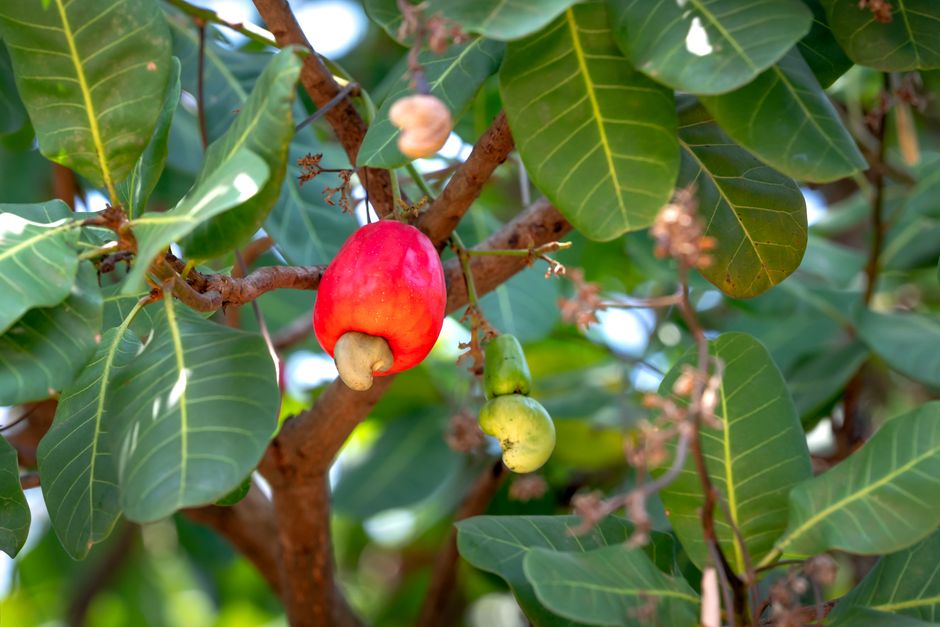
When you crack open a cashew nut, you're eating just one small part of a remarkable tropical fruit that most people outside growing regions will never taste. The cashew tree produces a fleshy, pear-shaped structure called the cashew apple, which remains virtually unknown in global markets despite being juicy, nutritious, and surprisingly flavorful. This obscurity stems from a fragile biology that makes commercial distribution nearly impossible.
Quick Facts
- The cashew apple bruises within hours of harvest and begins fermenting within 24 hours at room temperature.
- Brazil produces over 2 million tons of cashew apples annually, with approximately 90% discarded or left to rot.
- Cashew apples contain five times more vitamin C than oranges, averaging 200-260 mg per 100 grams.
- The cashew nut grows externally at the bottom of the cashew apple, making it a false fruit botanically classified as an accessory fruit.
- In Goa, India, cashew apples are fermented into feni, a spirit with protected geographical indication status.
The Biological Reality Behind the Bruising Problem
The cashew apple's extreme perishability stems from its cellular structure and chemical composition. Unlike apples or pears with firm cell walls reinforced by pectin, the cashew apple contains exceptionally thin-walled cells with high water content—approximately 85-90% of the fruit is water. When pressure is applied, these delicate cells rupture immediately, releasing enzymes that trigger rapid oxidation and browning. The fruit lacks the protective waxy cuticle found on most commercial fruits, making moisture loss occur at an accelerated rate.
Research conducted by the Brazilian Agricultural Research Corporation (Embrapa) measured the shelf life of cashew apples at ambient temperatures between 25-30°C. Their findings showed visible bruising appeared within 2-3 hours of mechanical stress, and complete deterioration occurred within 24-48 hours even under careful handling. The fruit's respiration rate—a measure of how quickly it metabolizes and degrades—is exceptionally high at 40-60 mg CO2/kg/hour, compared to just 3-7 mg CO2/kg/hour for standard apples. This metabolic intensity means the cashew apple essentially races toward decomposition from the moment it's picked.
The tannin content further complicates matters. Cashew apples contain between 0.1-0.35% tannins, which create an astringent, mouth-puckering sensation that intensifies as the fruit bruises. When cells break, tannins interact with proteins in saliva, producing an unpleasant sensation that makes damaged fruit nearly inedible. This astringency varies significantly between varieties, with some cultivars bred specifically for lower tannin content, but even these improved varieties cannot overcome the fundamental fragility issue.
Where Cashew Apples Are Actually Consumed
In cashew-growing regions across India, Brazil, Vietnam, Nigeria, and Tanzania, locals consume cashew apples fresh within hours of harvest. In the Indian states of Goa, Karnataka, and Kerala, street vendors sell freshly picked cashew apples during the March-to-May harvest season, but buyers must consume them almost immediately. The fruit commands very low prices—typically 10-20 rupees per kilogram in Indian markets, compared to 600-800 rupees per kilogram for the processed nuts.
Brazil's northeastern states have developed the most extensive cashew apple cuisine. In Ceará and Piauí, the fruit is juiced immediately after harvest, with the juice either consumed fresh or concentrated and frozen for later use. The Brazilian company De Marchi processes approximately 15,000 tons of cashew apples annually into juice concentrate, but this represents less than 1% of the total cashew apple production in the region. The juice has a distinctive sweet-tart flavor profile with tropical notes, somewhat reminiscent of mango mixed with citrus, but with a characteristic astringency that requires blending with sweeter fruits or added sugar for broader palatability.
In Mozambique and Tanzania, cashew apples are sometimes sun-dried into a chewy, fruit-leather-like product, though this practice remains limited to household consumption rather than commercial production. The drying process must begin within hours of harvest to prevent fermentation, and the final product retains much of the astringent character that limits its appeal.
Commercial Processing Attempts and Their Limitations
Food scientists have explored numerous preservation methods to extend cashew apple viability. Refrigeration at 2-5°C can extend shelf life to approximately 5-7 days, but the fruit still bruises with minimal handling, and the cold chain infrastructure required makes this economically unviable in most growing regions. Controlled atmosphere storage with reduced oxygen levels (2-3% O2) and elevated carbon dioxide (5-10% CO2) has extended shelf life to roughly 10 days in laboratory conditions, but commercial implementation has proven impractical given the low value of the fruit relative to storage costs.
The Indian Institute of Food Processing Technology developed a technique using edible coatings made from chitosan and aloe vera gel that reduced moisture loss by 40% and extended shelf life to 6 days under refrigeration. However, the coating process adds approximately 8-12 rupees per kilogram to production costs—economically unsustainable when the raw fruit sells for 10-20 rupees per kilogram. Similar experiments with wax coatings, modified atmosphere packaging, and calcium chloride treatments have all failed to achieve the combination of extended shelf life and economic feasibility necessary for commercial distribution.
Processing into juice, jam, or chutney remains the most viable commercial option, but even this faces challenges. The juice extracted from cashew apples oxidizes rapidly, turning from bright yellow to brown within 30-60 minutes of pressing. Ascorbic acid must be added immediately—typically at concentrations of 500-1000 ppm—to prevent browning. The juice also contains enzymes that cause rapid clarification and sedimentation, requiring either immediate pasteurization or enzyme deactivation through heating to 85-90°C for 15-20 seconds. These processing requirements must occur within hours of harvest, necessitating processing facilities located directly at growing sites.
Nutritional Value and Economic Waste
The widespread discarding of cashew apples represents a significant nutritional and economic loss. Beyond the exceptional vitamin C content—one cashew apple provides approximately 300-400% of the recommended daily intake—the fruit contains substantial amounts of iron (0.9-2.1 mg per 100g), calcium (10-20 mg), and phosphorus (15-30 mg). The fruit also provides phenolic compounds with demonstrated antioxidant activity, including anacardic acids, cardols, and flavonoids.
From an economic perspective, global cashew production reached 4.18 million tons of nuts in 2021, according to the Food and Agriculture Organization. Since each nut corresponds to one cashew apple weighing 80-200 grams (averaging around 120 grams), this represents approximately 500,000-800,000 tons of cashew apples produced globally. With minimal commercial utilization outside growing regions, this constitutes one of the largest fruit waste streams in tropical agriculture.
Researchers in Brazil have calculated that if just 25% of discarded cashew apples were converted to juice concentrate, it would create an industry worth approximately $180-240 million annually. However, this calculation assumes processing infrastructure that currently doesn't exist in most growing regions, where cashew farming typically occurs in remote, rural areas with limited electricity and transportation networks. The nuts themselves are valuable enough to justify collection and processing despite logistical challenges, but the low value and extreme perishability of the cashew apples make infrastructure investment economically questionable.
Alternative Uses Being Explored
Scientists and entrepreneurs have proposed innovative uses beyond direct consumption. In India, researchers have successfully produced vinegar from cashew apple juice through controlled fermentation, achieving acetic acid concentrations of 4-6% after 30-40 days of fermentation. The resulting vinegar has a fruity character distinct from conventional grain or wine vinegars, but production remains limited to small-scale artisanal operations.
The high sugar content—between 10-15% depending on variety—makes cashew apples theoretically suitable for bioethanol production. Studies at the Federal University of Ceará in Brazil demonstrated ethanol yields of approximately 40-45 liters per ton of cashew apples, comparable to sugarcane juice. However, the seasonal availability (harvest typically lasts only 2-4 months annually) and collection logistics make this impractical compared to dedicated energy crops.
Animal feed represents another potential use. The fruit's high moisture content and rapid fermentation actually prove advantageous for silage production. Research in Tanzania showed that cashew apple silage, when mixed with grasses at a 30:70 ratio, increased milk production in dairy cattle by approximately 12% compared to grass-only diets. The tannins that make fresh cashew apples astringent to humans have demonstrated benefits in ruminant nutrition, reducing methane production and improving protein utilization. Yet even this application requires collection infrastructure and proximity to livestock operations that rarely align with cashew growing regions.
Frequently Asked Questions
Can you buy cashew apples online or have them shipped internationally?
No, cashew apples cannot be shipped due to their 24-48 hour shelf life and extreme sensitivity to bruising. Even with expedited shipping and refrigeration, the fruit deteriorates before reaching consumers outside growing regions. Frozen cashew apple pulp or juice concentrate occasionally appears in specialty international markets serving communities from cashew-growing regions.
What does a cashew apple taste like?
Fresh cashew apples have a sweet-tart, tropical flavor with notes of mango, citrus, and bell pepper, along with a characteristic astringent quality that creates a mouth-puckering sensation. The flavor varies significantly between varieties, with some cultivars much sweeter and less astringent than others. The texture is soft, fibrous, and extremely juicy.
Is the cashew apple poisonous or related to why cashew nuts must be roasted?
The cashew apple itself is not poisonous and can be eaten raw, unlike the cashew nut shell which contains urushiol, the same toxic oil found in poison ivy. The nut requires roasting to remove this caustic substance, but the cashew apple contains no such toxins and is safely consumed fresh in growing regions.
Why don't farmers in cashew-growing countries process more cashew apples locally?
Processing requires expensive equipment, consistent electricity, and must occur within hours of harvest, yet cashew farming typically happens in remote rural areas lacking infrastructure. The processed products (juice, jam) have relatively low market value compared to cashew nuts, making infrastructure investment financially risky, especially given the short 2-4 month harvest season.
Key Takeaways
- The cashew apple's cellular structure and 85-90% water content cause it to bruise within hours and completely deteriorate within 24-48 hours, making conventional distribution impossible without prohibitively expensive processing infrastructure.
- Despite containing five times more vitamin C than oranges along with valuable minerals and antioxidants, approximately 90% of the estimated 500,000-800,000 tons of cashew apples produced globally are discarded or left to rot in fields.
- Commercial viability remains limited to immediate processing into juice, alcoholic beverages like feni, or local fresh consumption within hours of harvest in growing regions across India, Brazil, Vietnam, and Africa.
- The extreme perishability that prevents the cashew apple from ever reaching stores represents one of the largest fruit waste streams in agriculture, with numerous attempted preservation methods failing to achieve economic feasibility.