











1 / 10 Questions
0 Points

What toy was invented to clean wallpaper?

Play-Doh

Slinky

Lego

Silly Putty

Points won
0
Correct score
0%

More Quizzes

More Articles

The Technique of Chiaroscuro Explained

The Technique of Chiaroscuro Explained

⏱️ 5 min read

The interplay between light and shadow has captivated artists for centuries, giving birth to one of the most influential techniques in Western art history. Chiaroscuro, derived from the Italian words "chiaro" (light) and "oscuro" (dark), represents a sophisticated method of using strong contrasts between light and dark to achieve a sense of volume, depth, and drama in visual compositions. This technique revolutionized painting during the Renaissance and continues to influence artists across various mediums today.

Origins and Historical Development

Chiaroscuro emerged during the Italian Renaissance, though artists had experimented with light and shadow contrast long before the term was coined. The technique gained prominence in the 15th century when painters began moving away from the flat, two-dimensional representations characteristic of medieval art. Leonardo da Vinci was among the pioneers who explored the subtle gradations between light and dark, developing his famous "sfumato" technique, which employed soft, almost imperceptible transitions between tones.

The technique reached its apex during the Baroque period in the late 16th and early 17th centuries. Caravaggio transformed chiaroscuro into a powerful dramatic tool, using stark contrasts between illuminated figures and deep, shadowy backgrounds. His revolutionary approach, sometimes called "tenebrism" due to its exceptionally dark tones, influenced countless artists throughout Europe and established new standards for emotional intensity in painting.

The Fundamental Principles

At its core, chiaroscuro relies on understanding how light behaves when it encounters three-dimensional forms. The technique employs a systematic approach to rendering volume by identifying distinct zones of illumination on any given subject. These zones typically include the highlight (the brightest point where light directly strikes), the mid-tone (areas receiving indirect light), the core shadow (the darkest part of the object itself), reflected light (subtle illumination bouncing back from surrounding surfaces), and cast shadows (darkness projected onto other surfaces).

Artists utilizing chiaroscuro must carefully observe the light source, its intensity, and its angle relative to the subject. A single, strong directional light source often produces the most dramatic chiaroscuro effects, creating bold contrasts that emphasize form and create theatrical atmospheres. The placement of this light source determines the entire composition's mood and visual hierarchy.

Technical Applications and Methods

Implementing chiaroscuro successfully requires mastery of various technical skills. Artists must develop a keen understanding of value scales—the gradual progression from pure white through various grays to absolute black. This tonal range serves as the foundation for creating convincing three-dimensional forms on two-dimensional surfaces.

Working with Different Mediums

The chiaroscuro technique adapts to numerous artistic mediums, each presenting unique opportunities and challenges:

  • Oil painting: The slow-drying nature of oil paints allows for extensive blending and layering, making it ideal for achieving smooth tonal transitions characteristic of classical chiaroscuro
  • Drawing: Artists employ charcoal, graphite, or ink to build up dark values while leaving paper white for highlights, often using techniques like cross-hatching or stippling for mid-tones
  • Printmaking: Woodcuts and engravings naturally lend themselves to chiaroscuro through the contrast between inked and uninked areas
  • Photography: Modern photographers use lighting setups and digital processing to recreate chiaroscuro effects, particularly in portrait and still-life work

Notable Masters and Their Contributions

Throughout art history, numerous masters have distinguished themselves through exceptional use of chiaroscuro. Rembrandt van Rijn developed a particularly nuanced approach, using warm, golden light emerging from dark backgrounds to create intimate, psychologically complex portraits. His technique involved building up layers of transparent glazes and opaque highlights, achieving unprecedented depth and luminosity.

Georges de La Tour specialized in nocturnal scenes illuminated by candles or torches, creating striking contrasts while maintaining a sense of tranquility. His simplified forms and careful attention to how light reveals selective details demonstrated the technique's versatility beyond pure drama.

Spanish painter Diego Velázquez employed subtler chiaroscuro effects, integrating sophisticated lighting with his mastery of color and brushwork to create extraordinarily lifelike representations. His approach proved that chiaroscuro need not always be theatrical to be effective.

Modern Applications and Continuing Influence

Chiaroscuro remains highly relevant in contemporary art, extending far beyond traditional painting. Film noir cinematographers drew heavily upon chiaroscuro principles, using dramatic lighting to create suspense and emphasize moral ambiguity. Modern digital artists employ the same fundamental concepts when rendering three-dimensional models or creating concept art for entertainment industries.

Contemporary painters continue exploring chiaroscuro, sometimes combining it with modern subject matter or abstract compositions. The technique's ability to convey weight, volume, and emotional intensity ensures its enduring appeal across artistic movements and technological innovations.

Learning and Practicing the Technique

Developing proficiency in chiaroscuro requires dedicated observation and practice. Artists benefit from studying works by historical masters, analyzing how they structured their compositions around light and shadow patterns. Working from life under controlled lighting conditions helps develop the observational skills necessary for accurate value assessment.

Beginning practitioners should start with simple geometric forms—spheres, cubes, and cylinders—to understand how light reveals volume before progressing to more complex subjects. Creating value studies in monochrome before introducing color helps maintain focus on tonal relationships, the essential foundation of successful chiaroscuro.

The enduring power of chiaroscuro lies in its fundamental connection to human visual perception. By manipulating light and shadow, artists can guide viewers' attention, create emotional resonance, and transform flat surfaces into windows revealing convincing three-dimensional worlds. Whether employed for subtle naturalism or dramatic effect, this centuries-old technique continues proving indispensable to artists seeking to master the visual representation of form and space.
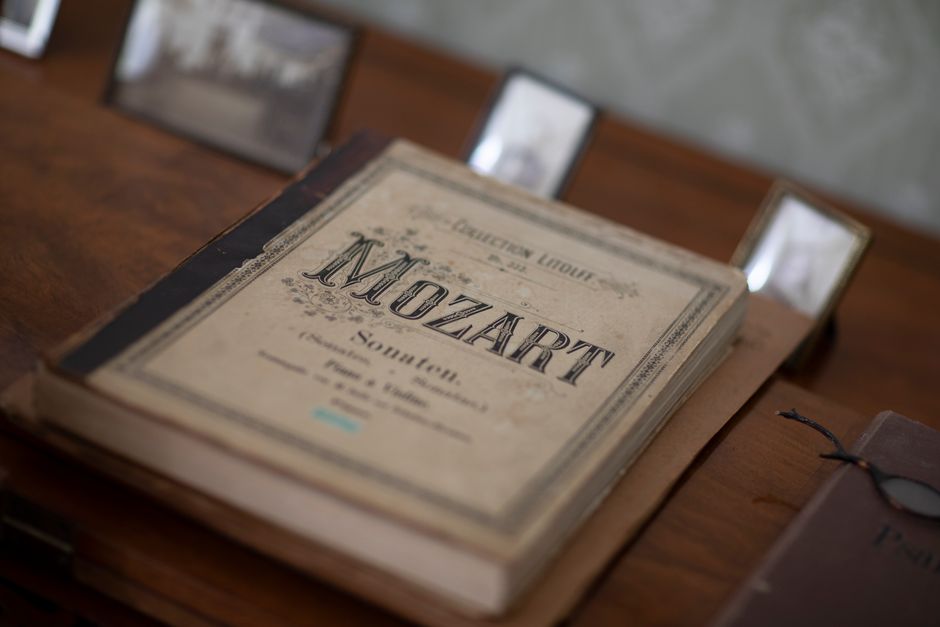
Did You Know Mozart and Salieri Were Actually Friends, Not Rivals?

Did You Know Mozart and Salieri Were Actually Friends, Not Rivals?

⏱️ 8 min read

The 1984 film Amadeus captivated millions with its portrayal of Antonio Salieri as a bitter, jealous composer who plotted Mozart's downfall. Peter Shaffer's screenplay earned an Academy Award, but it also cemented one of classical music's most enduring myths. Historical documents reveal a strikingly different relationship between these two composers—one marked by mutual respect, professional collaboration, and genuine friendship.

Quick Facts

  • Antonio Salieri conducted the premiere of Mozart's opera The Magic Flute in 1791 and praised it enthusiastically.
  • Mozart entrusted Salieri to teach his own son, Franz Xaver Wolfgang Mozart, composition lessons.
  • Salieri held a prestigious position as Imperial Kapellmeister in Vienna for 36 years, from 1788 to 1824.
  • Contemporary accounts describe Mozart and Salieri attending each other's concerts and operas regularly throughout the 1780s.
  • The rivalry myth originated decades after both composers died, gaining traction through Alexander Pushkin's 1830 play Mozart and Salieri.

The Historical Evidence of Their Friendship

Primary sources from the late 18th century paint a picture of cordial professional relations between Wolfgang Amadeus Mozart and Antonio Salieri. In October 1791, just weeks before Mozart's death, he wrote to his wife Constanze describing an evening at the opera. Mozart had invited Salieri and the soprano Caterina Cavalieri to attend a performance of The Magic Flute, and he noted with obvious pleasure that Salieri "heard and saw with all his attention, and from the overture to the last choir there was not a piece that didn't elicit a 'Bravo!' or 'Bello!' from him." This letter, preserved in the Mozarteum Foundation in Salzburg, demonstrates not only their friendship but Salieri's genuine admiration for Mozart's work.

Further evidence appears in Mozart's own correspondence throughout the 1780s. When Mozart premiered his opera Der Schauspieldirektor (The Impresario) in 1786 at Schönbrunn Palace, it was performed on a double bill with Salieri's Prima la musica e poi le parole (First the Music, Then the Words). Rather than viewing this as a competition, Mozart described the event matter-of-factly in letters to his father Leopold, with no hint of professional animosity. Both composers received the same fee of 50 ducats for their work—a substantial sum equivalent to approximately three months' salary for a court musician.

Salieri's Actual Position in Viennese Musical Life

Understanding the real relationship between Mozart and Salieri requires recognizing Salieri's legitimate standing in European music. Born in Legnago, Italy, in 1750, Salieri arrived in Vienna at age 16 and studied under Florian Gassmann, the imperial court composer. When Gassmann died in 1774, Salieri succeeded him, eventually becoming Imperial Kapellmeister in 1788—a position that made him the most powerful musician in the Habsburg Empire. His operas premiered in Vienna, Paris, Rome, and other major European cities, with works like Les Danaïdes (1784) and Tarare (1787) achieving significant success.

Salieri's influence extended beyond composition. He taught an extraordinary roster of students who became the next generation's musical giants: Ludwig van Beethoven studied counterpoint with him, Franz Schubert took composition lessons from him, and Franz Liszt received instruction from him as a child prodigy. This teaching legacy alone would have secured Salieri's reputation, regardless of any supposed rivalry with Mozart. His pedagogical methods emphasized rigorous technical training combined with sensitivity to dramatic text setting—principles evident in his students' later works.

Where the Rivalry Myth Originated

The fiction of Mozart and Salieri as bitter enemies emerged gradually after both composers had died. Salieri outlived Mozart by 34 years, passing away in 1825 at age 74. During his final years, as he suffered from dementia, rumors circulated in Vienna that he had confessed to poisoning Mozart. These claims were investigated and thoroughly dismissed by authorities at the time, but the sensational nature of the accusation proved irresistible to storytellers.

Russian poet Alexander Pushkin transformed the rumors into art with his 1830 verse drama Mozart and Salieri, which depicted Salieri deliberately poisoning his rival out of envy. Pushkin explicitly acknowledged his work was fiction, yet audiences received it as plausibly based on truth. Nikolai Rimsky-Korsakov adapted Pushkin's play into an opera in 1898, further embedding the poisoning narrative in popular culture. By the 20th century, the myth had calcified into accepted "common knowledge," despite contradicting the historical record.

Peter Shaffer's play Amadeus, first performed in 1979 and adapted for film in 1984, represents the apotheosis of this fictional tradition. Shaffer never claimed historical accuracy—he deliberately crafted a morality play about mediocrity confronting genius. The film's Salieri, brilliantly portrayed by F. Murray Abraham, is a fictional character bearing little resemblance to the historical Antonio Salieri. Nevertheless, the movie's cultural impact has been so profound that generations now unconsciously assume Mozart and Salieri were enemies.

Documented Instances of Professional Collaboration

Beyond mutual attendance at performances, Mozart and Salieri participated in Vienna's collaborative musical culture. In 1785, both composers contributed to a cantata performed for the visiting Prince Kaunitz. Such collaborative projects were common in Vienna's court musical life, where composers routinely worked together on occasional pieces for state functions, weddings, and celebrations. The fragmentary historical record suggests several other joint projects that have not survived or remain unattributed.

Most significantly, Mozart's decision to have Salieri instruct his younger son demonstrates profound trust. Franz Xaver Wolfgang Mozart, born in 1791 just months before his father's death, studied with Salieri as a boy and went on to a respectable career as a composer and pianist. Constanze Mozart, Wolfgang's widow, maintained cordial relations with Salieri for decades after her husband's death, arranging for these lessons and never suggesting any animosity between the two composers. If she had harbored any suspicion that Salieri contributed to Mozart's death or career difficulties, she would not have entrusted her son to his instruction.

The Reality of Competition in Vienna's Musical World

While Mozart and Salieri were indeed friends, this does not mean they operated in a friction-free environment. Vienna's musical world in the 1780s was intensely competitive, with limited patronage positions and constant jockeying for imperial favor. Mozart struggled financially throughout his Vienna years, often borrowing money from fellow Freemasons and taking on additional students to supplement his income. His letters frequently complain about perceived slights and the success of composers he considered inferior.

However, Mozart's frustrations targeted the system itself rather than Salieri personally. When Mozart sought the position of second Kapellmeister in 1787, Salieri's established seniority made him the natural first Kapellmeister. Mozart did eventually receive an appointment as Imperial Chamber Composer in 1787, though at a salary of only 800 florins annually—considerably less than his predecessors had earned. Mozart attributed these financial difficulties to court economics and the preferences of Emperor Joseph II rather than to any interference by Salieri.

Other composers genuinely did face opposition from Salieri. The Italian composer Giovanni Paisiello, for instance, experienced difficulties obtaining performances in Vienna during periods when Salieri's influence was strongest. But even these professional disagreements remained within the bounds of normal competition for limited resources. The historical record contains no evidence of sabotage, deliberate undermining, or personal vendettas—merely the ordinary professional rivalries of ambitious artists competing for patronage.

Frequently Asked Questions

Did Salieri actually poison Mozart?

No, this is a complete myth with no factual basis. Mozart died of an acute illness in December 1791, most likely rheumatic fever or another infectious disease. Contemporary medical records and investigations have thoroughly debunked the poisoning theory, which only emerged years after Mozart's death during Salieri's final illness.

Why did the rivalry myth become so popular?

The story of a jealous mediocrity destroying a brilliant genius appeals to timeless dramatic themes about envy and injustice. Pushkin's 1830 play gave literary form to vague rumors, and the myth was reinforced by Rimsky-Korsakov's opera and especially the 1984 film Amadeus, which won eight Academy Awards and reached a global audience.

Was Salieri actually a good composer?

Yes, Salieri was highly respected in his time and composed over 40 operas plus numerous sacred works and orchestral pieces. His music has been successfully revived in recent decades, revealing a skilled craftsman with particular talent for dramatic vocal writing, though his reputation suffered from 19th-century preference for Germanic music over Italian styles.

What did Salieri think of Mozart's music?

Contemporary accounts indicate Salieri genuinely admired Mozart's work. In addition to his enthusiastic response to The Magic Flute documented in Mozart's own letter, Salieri conducted performances of Mozart's operas and incorporated some of Mozart's compositional innovations into his own teaching methods.

Key Takeaways

  • Historical documents, including Mozart's personal letters, demonstrate that Mozart and Salieri maintained a friendly professional relationship marked by mutual respect and collaboration.
  • The rivalry narrative originated decades after both composers died, evolving from unsubstantiated rumors into literary fiction that eventually became mistaken for historical fact.
  • Salieri was a legitimately accomplished composer and the most influential music teacher of his generation, instructing Beethoven, Schubert, and Liszt among many others.
  • Mozart's financial difficulties in Vienna resulted from court economics and limited patronage opportunities rather than sabotage by Salieri or any other individual composer.