










1 / 10 Questions
0 Points

What landmark was originally built as a bell tower?

Eiffel Tower

Leaning Tower of Pisa

Space Needle

Big Ben

Points won
0
Correct score
0%

More Quizzes

More Articles

Why TV Screens Switched from 4:3 to 16:9 Aspect Ratio

Why TV Screens Switched from 4:3 to 16:9 Aspect Ratio

Why TV Screens Switched from 4:3 to 16:9 Aspect Ratio

By Trivia Daily, Staff Writer — Published August 8, 2026

Table of Contents

Walk into any electronics store today and you'll find every television sporting the same sleek, rectangular shape. But rewind a few decades and TVs looked noticeably different—almost square. The shift from the boxy 4:3 format to today's widescreen 16:9 standard represents one of the most dramatic transformations in consumer technology history. This change wasn't just about aesthetics; it fundamentally altered how we experience visual media, from blockbuster films to evening news broadcasts. Discover the fascinating reasons why screens switched aspect ratios and how this evolution reshaped our viewing habits.

The story behind this transition reveals surprising truths about human vision, cinema history, and the relentless march of technological progress. What began as a film industry innovation eventually revolutionized home entertainment, though the journey took decades and required overcoming significant technical and economic hurdles.

Key Takeaways

  • The 4:3 aspect ratio originated from early film standards established in the 1890s and dominated television until the early 2000s
  • Hollywood adopted widescreen formats in the 1950s to compete with television, creating a visual experience theaters could offer but home screens could not
  • The 16:9 ratio was mathematically chosen as a compromise that could reasonably display both traditional 4:3 content and wider cinematic formats
  • High-definition television standards mandated widescreen formats, effectively forcing the industry-wide transition in the 2000s
  • Human peripheral vision naturally favors wider viewing angles, making 16:9 more immersive for most content
  • The switch eliminated the infamous "black bars" that appeared when watching movies on old television sets

Why Screens Switched Aspect Ratios: The Cinema Wars of the 1950s

Television's explosive popularity in the late 1940s and early 1950s terrified Hollywood studios. Audiences stayed home instead of buying movie tickets. The film industry needed a competitive edge—something television couldn't replicate. Their solution? Go wide.

Studios introduced various widescreen formats including CinemaScope, VistaVision, and Panavision, with aspect ratios ranging from 1.85:1 to 2.39:1. These formats created a panoramic, immersive experience that made the theater feel special again. The strategy worked brilliantly. Moviegoers packed theaters to experience sprawling epics and westerns that filled their peripheral vision in ways the square home television never could. This cinematic revolution established widescreen as the premium viewing format, a perception that persists today.

For decades, this created a technological divide: movies were wide, television was square. The gap would take half a century to close, but the seeds of change were planted in those competitive 1950s.

The Mathematical Compromise Behind 16:9

Engineers faced a genuine puzzle when designing the next generation of television. How could one aspect ratio satisfy everyone? Film content came in multiple widescreen formats, while decades of television programming existed in 4:3. Creating a new standard meant choosing winners and losers—unless they could find a mathematical sweet spot.

The 16:9 ratio emerged as the geometric mean between the traditional 4:3 television format and the common 2.39:1 cinema format. This compromise meant that both types of content could be displayed with minimal distortion or cropping. While neither format would fill the screen perfectly, the letterboxing or pillarboxing required would be less severe than with more extreme ratios. The European DVB Project and later the Advanced Television Systems Committee embraced 16:9 as the standard for digital broadcasting.

Interestingly, 16:9 also aligns closely with the golden ratio's proportions, though this connection is more coincidental than intentional. The practical engineering concerns drove the decision far more than aesthetic philosophy.

How Human Vision Influenced Screen Shape

Our eyes provide an interesting clue about ideal screen proportions. Human binocular vision creates a field of view that's significantly wider than it is tall—roughly 200 degrees horizontally compared to 135 degrees vertically. We're built to scan horizons, not stare up and down.

This biological reality makes widescreen formats feel more natural and immersive. When watching a 16:9 screen, the image fills more of your peripheral vision, creating better engagement with the content. Directors and cinematographers quickly learned to exploit this wider canvas, composing shots that would feel cramped in the old 4:3 format. Action sequences, landscapes, and group scenes all benefit from the additional horizontal space.

Research into viewer preferences consistently showed that people found widescreen presentations more engaging and cinematic, even when watching content not originally shot in that format. The psychological impact of matching our natural vision patterns proved powerful.

The HDTV Revolution Forced the Change

The final push came from an unlikely source: the complete overhaul of broadcast television standards. When governments and industry groups developed high-definition television specifications in the 1990s and early 2000s, they mandated 16:9 as the exclusive aspect ratio for HD broadcasts. This wasn't a suggestion—it was a requirement.

Suddenly, manufacturers had no choice. Any television marketed as "HD-ready" or "Full HD" had to display in widescreen. Broadcasters upgraded their equipment, cameras, and production workflows to shoot in 16:9. The transition happened remarkably quickly once the standards were set. By 2010, finding a new 4:3 television for sale had become nearly impossible in most markets.

The timing coincided with the broader digital transition, as analog broadcasts were phased out worldwide. Consumers replacing their old analog sets with digital models automatically adopted widescreen, often without fully understanding they were participating in a historic format shift. The combination of technological advancement and regulatory standardization accomplished what market forces alone might have taken decades to achieve.

Comparing Aspect Ratios: Then and Now

Aspect Ratio Numeric Value Primary Use Era
4:3 1.33:1 Standard television, early film 1940s–2000s
16:9 1.78:1 HDTV, modern television, YouTube 2000s–present
1.85:1 1.85:1 Standard theatrical widescreen 1950s–present
2.39:1 2.39:1 Anamorphic cinema (CinemaScope) 1950s–present
21:9 2.33:1 Ultrawide monitors, specialty displays 2010s–present

Frequently Asked Questions

Why do old TV shows look stretched on modern screens?

Old programs shot in 4:3 don't naturally fill a 16:9 screen, so many TVs offer a "stretch" mode that distorts the image horizontally. Proper viewing displays black bars on the sides (pillarboxing) to maintain the original proportions without distortion.

Can you still buy a 4:3 television today?

New 4:3 consumer televisions are essentially extinct in mainstream markets. Some specialized industrial monitors and vintage gaming enthusiasts maintain old CRT sets, but manufacturers stopped producing 4:3 TVs for general sale around 2008-2010.

Why do movies still have black bars on widescreen TVs?

Many theatrical films use aspect ratios even wider than 16:9, such as 2.39:1 for anamorphic cinematography. These ultra-wide formats require letterboxing (black bars top and bottom) even on modern widescreen displays to show the complete image without cropping.

What aspect ratio does Netflix use?

Netflix primarily delivers content in 16:9 to match modern television standards, though some original films are produced in wider cinematic ratios like 2.00:1 or 2.39:1. The platform automatically adjusts playback to your screen, adding letterboxing when necessary.

The evolution from square to widescreen televisions reflects more than just changing technology—it represents a fundamental shift in how we consume visual stories. Next time you settle in for movie night, take a moment to appreciate that your screen's proportions resulted from decades of competition, compromise, and careful engineering. The black bars have mostly disappeared, but the fascinating history behind your display's shape remains.
Why Electric Guitars Needed Amplification Before 1931

Why Electric Guitars Needed Amplification Before 1931

Why Electric Guitars Needed Amplification Before 1931

By Trivia Daily, Staff Writer — Published August 12, 2026

Table of Contents

Here's a curious fact that surprises many music lovers: electric guitars needed amplification before they were even invented. That sounds impossible, right? The truth is, what we now call the electric guitar didn't exist in 1931—but the acoustic guitars of that era desperately needed a solution to a volume problem that was holding back an entire generation of musicians. Discover the fascinating story of why guitarists were searching for amplification long before anyone had built a true electric guitar, and explore the amazing technological journey that changed music forever.

Before 1931, guitars faced a fundamental acoustic limitation. In jazz bands and orchestras of the 1920s, guitars simply couldn't compete with the volume of horns, drums, and pianos. No matter how hard a guitarist strummed, the instrument's natural sound got lost in the mix. This wasn't just an inconvenience—it was a career-limiting problem for professional musicians who wanted their instrument to be heard.

Key Takeaways

  • Acoustic guitars before 1931 couldn't produce enough volume to compete with brass instruments and drums in large ensembles
  • Early attempts at guitar amplification used mechanical resonators and horn attachments, similar to phonograph technology
  • The electromagnetic pickup, developed in the early 1930s, finally solved the volume problem by converting string vibrations into electrical signals
  • What we call "electric guitars" today didn't exist before the pickup was invented—musicians were trying to amplify traditional acoustic instruments
  • The quest for guitar amplification drove innovation across multiple fields, from physics to electrical engineering
  • Early amplified guitars were often hollow-bodied instruments fitted with experimental pickup devices

The Volume Problem That Electric Guitars Needed to Solve

Acoustic guitars produce sound through a beautifully simple mechanism: vibrating strings transfer energy to the instrument's hollow body, which acts as a resonating chamber. The soundhole projects these vibrations into the air as audible sound waves. But this natural amplification has strict physical limits.

A guitar's body can only move so much air. The size of the soundbox, the tension of the strings, and the materials used all constrain how loud the instrument can get. In a small room or intimate setting, an acoustic guitar sounds wonderful. Put that same guitar on a stage with a full jazz band, and it becomes nearly inaudible.

Professional guitarists in the 1920s faced this challenge daily. While violinists could dig into their strings with aggressive bowing and pianists could pound the keys, guitarists had no way to increase their volume beyond a certain threshold. Strumming harder only created a harsher tone, not meaningful projection. The guitar risked becoming a parlor instrument—pleasant for solo performances but impractical for ensemble work.

Early Mechanical Amplification Attempts

Long before electrical solutions emerged, inventors tried mechanical approaches. Some attached metal resonator cones to guitar bodies, similar to the technology used in phonographs. These "resonator guitars" did produce more volume, and they found a niche in blues and folk music. The National String Instrument Corporation pioneered these designs in the late 1920s.

Other experiments included attaching horn-shaped amplifiers to guitars, again borrowing from phonograph design. Some luthiers built guitars with larger bodies or unusual shapes to maximize acoustic projection. Each approach helped marginally, but none solved the fundamental problem: acoustic amplification alone couldn't make guitars loud enough for modern performance demands.

These mechanical solutions also changed the guitar's tone in ways many musicians found undesirable. The resonator guitars had a distinctive metallic quality that worked for certain genres but didn't suit everyone's needs. Musicians wanted volume without sacrificing the warm, traditional guitar sound they loved.

The Electromagnetic Breakthrough

The real solution required thinking about sound in an entirely new way. Instead of making the guitar's body vibrate more air, what if you could convert string vibrations into electrical signals? Those signals could then be amplified electronically and projected through a loudspeaker at any volume desired.

This concept relied on electromagnetic induction, a principle of physics discovered in the nineteenth century. A vibrating steel string moving through a magnetic field generates a tiny electrical current. That current, though weak, contains all the information about the string's vibration—its frequency, amplitude, and timbre. Amplify that signal electrically, and you can make it as loud as needed without changing the original tone.

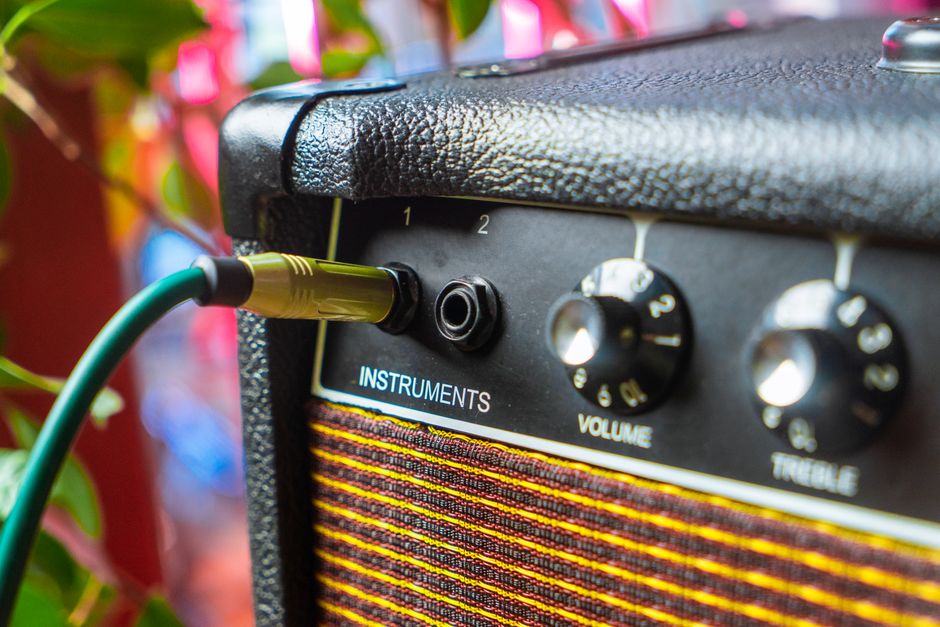
The electromagnetic pickup made this possible. Typically consisting of magnets wrapped with fine wire coils, the pickup sits beneath the guitar strings. As the strings vibrate, they disturb the magnetic field, inducing electrical currents in the coils. These currents travel through a cable to an amplifier, which boosts the signal and sends it to a speaker.

Why 1931 Marks a Turning Point

The early 1930s saw the first commercially viable electromagnetic pickups for guitars. Several inventors and companies were working on similar solutions simultaneously, driven by the clear market demand from frustrated guitarists. The Electro String Instrument Corporation, founded by George Beauchamp and Adolph Rickenbacker, developed one of the first successful pickup designs around this time.

These early pickups were often installed on modified acoustic guitars or on new instruments designed specifically for electromagnetic amplification. The famous "Frying Pan" guitar—a lap steel instrument with a circular body—became one of the first commercially produced electric guitars in 1932. Its pickup design proved that the concept worked reliably.

The technology spread quickly once musicians heard the results. Suddenly, guitarists could match the volume of any other instrument. They could perform solos that cut through the loudest bands. The guitar transformed from a rhythm instrument struggling to be heard into a lead voice capable of dominating a performance.

Comparing Acoustic and Early Electric Amplification

Feature Acoustic Amplification Electromagnetic Amplification
Volume Control Limited by body size and string tension Adjustable from whisper to stadium-level
Tone Modification Fixed by instrument construction Adjustable via amplifier settings
Ensemble Balance Easily overpowered by horns and drums Can compete with any instrument
Technology Required None—purely mechanical Pickup, amplifier, speaker, electricity

The Ripple Effects on Music

Amplification didn't just make guitars louder—it fundamentally changed what the instrument could do. Electric amplification enabled new playing techniques. Guitarists could play softer passages that the pickup would still capture and amplify. They could sustain notes longer. They could explore tonal variations that would have been inaudible on acoustic instruments.

The technology also paved the way for effects and processing. Once the guitar signal existed as electricity, it could be manipulated electronically. This eventually led to distortion, reverb, delay, and the countless effects that define modern guitar music. None of this would have been possible without that first step: converting string vibrations into electrical signals.

Different music genres embraced electric amplification at different rates. Jazz guitarists adopted it quickly, grateful for the ability to solo effectively. Country and western swing musicians followed soon after. Blues guitarists discovered that overdriving early amplifiers created appealing distortion. Rock and roll, still decades away, would be unthinkable without amplified guitars.

Frequently Asked Questions

Did electric guitars exist before 1931?

No, true electric guitars with electromagnetic pickups didn't exist before the early 1930s. What existed were acoustic guitars that musicians desperately wanted to amplify, driving the invention of pickup technology around 1931-1932.

How did guitarists perform in loud bands before amplification?

Guitarists primarily played rhythm parts and were often relegated to barely audible roles in large ensembles. Some used resonator guitars or other mechanical amplification methods, but these had limited effectiveness and altered the instrument's tone significantly.

What was the first commercially successful electric guitar?

The Rickenbacker "Frying Pan" lap steel guitar, introduced in 1932, was among the first commercially produced electric guitars. It featured an electromagnetic pickup and proved the viability of electric amplification for guitars.

Can you play an electric guitar without an amplifier?

Yes, but it produces very little volume because solid-body electric guitars lack the resonating chamber of acoustic guitars. The strings vibrate, but without amplification, the sound is faint and thin—demonstrating why amplification was so essential to the instrument's design.

The story of why electric guitars needed amplification before they existed reveals how necessity drives innovation. Musicians facing a practical problem—being heard—sparked a technological revolution that transformed not just the guitar, but the entire landscape of popular music. Every time you hear an electric guitar today, you're hearing the solution to a volume problem that frustrated jazz guitarists nearly a century ago.