


1 / 10 Questions
0 Points

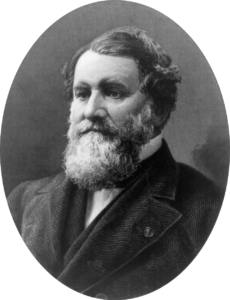
Alexander Graham Bell received a patent for which invention in 1876?

The radio

The phonograph

The telephone

The telegraph

Points won
0
Correct score
0%

More Quizzes

More Articles

Top 10 Movie Endings That Were Changed at the Last Minute

Top 10 Movie Endings That Were Changed at the Last Minute

⏱️ 7 min read

Hollywood's creative process is rarely straightforward, and nowhere is this more evident than in the final moments of a film. Directors, studios, and test audiences often clash over how a story should conclude, leading to dramatic last-minute changes that can completely alter a movie's legacy. Sometimes these changes save a film from disaster, while other times they compromise the director's original vision. Here are ten remarkable instances where movie endings were significantly altered before reaching theaters.

Why Movie Endings Get Changed

Before exploring specific examples, it's important to understand why studios make these eleventh-hour decisions. Test screenings play a crucial role, as audience reactions can reveal whether an ending resonates emotionally or falls flat. Studio executives also consider marketability, international appeal, and the potential for sequels. Directors may fight for their artistic vision, but commercial considerations often win out, especially when millions of dollars are at stake.

1. I Am Legend's Controversial Alternative

The 2007 post-apocalyptic thriller starring Will Smith originally featured an ending that stayed faithful to Richard Matheson's novel. In this version, Robert Neville realizes that the infected creatures are not mindless monsters but sentient beings protecting their own, making him the true legend—a monster in their eyes. However, test audiences responded negatively to this morally complex conclusion. The studio replaced it with a more conventional heroic sacrifice, where Neville destroys himself and the creatures to save humanity. The original ending was later released on DVD, where it gained appreciation for its thematic depth and ironic twist on the title's meaning.

2. Pretty Woman's Transformation from Dark Drama

This beloved romantic comedy underwent one of Hollywood's most dramatic tonal shifts. The original script, titled "3,000," was a gritty exploration of prostitution and class disparity in Los Angeles. The ending had Vivian and Kit on a bus to Disneyland after Edward throws money at Vivian from his car and drives away—a bleak commentary on transactional relationships. Disney, however, wanted a fairy tale romance. The entire film was rewritten and reshot with a happy ending where Edward overcomes his fear of heights to "rescue" Vivian, complete with the iconic fire escape scene. This change transformed a cautionary tale into one of the most successful romantic comedies ever made.

3. Fatal Attraction's Bathtub Reversal

The original ending of this 1987 thriller was far more psychologically nuanced than what audiences saw. Director Adrian Lyne initially filmed Alex committing suicide while framing Dan for her murder, forcing him to face consequences for his infidelity. The police arrest him while "Madame Butterfly" plays, mirroring Alex's earlier viewing of the opera. Test audiences, however, demanded that Alex be punished rather than Dan. Paramount spent $1.3 million reshooting the now-famous bathtub scene where Beth shoots Alex. While the theatrical ending proved more commercially successful, critics have argued the original was more sophisticated and thematically consistent.

4. The Butterfly Effect's Multiple Realities

This 2004 psychological thriller actually has four different endings, with the theatrical release being the most optimistic. The director's cut features a far darker conclusion where Evan watches videos of his birth and strangles himself with his umbilical cord in the womb, erasing his existence entirely and saving everyone from the chaos his life created. Two other alternate versions were filmed, including one where Evan approaches Kayleigh but she walks past him without recognition. The studio chose the lighter ending where they pass each other on a sidewalk with subtle acknowledgment, believing audiences wouldn't accept the nihilistic implications of the director's preferred version.

5. Blade Runner's Forced Happy Ending

Ridley Scott's 1982 masterpiece suffered significant studio interference, particularly regarding its conclusion. Scott's original vision ended ambiguously with Deckard and Rachael entering an elevator, their fate uncertain. The studio demanded a happier, more definitive ending and forced Scott to add footage of the couple driving through scenic landscapes with a voice-over explaining that Rachael had no expiration date. This footage was actually unused aerial shots from "The Shining." Scott has spent decades releasing different cuts, finally restoring his original ambiguous ending in "The Final Cut" in 2007, which is now considered the definitive version.

6. Little Shop of Horrors' Budget-Breaking Original

Frank Oz's 1986 musical initially remained faithful to the stage production, ending with Audrey II conquering Earth in a spectacular sequence featuring massive animatronic plants destroying cities. This 23-minute finale cost $5 million and took months to film. However, test audiences hated watching beloved characters Seymour and Audrey die, finding it too depressing for a musical comedy. The studio ordered reshoots, giving the couple a happy suburban ending where they defeat the plant. The original ending, one of the most expensive sequences ever cut from a film, was nearly lost before being restored and released on home video decades later.

7. Army of Darkness' International Split

Sam Raimi's 1992 horror-comedy had two completely different endings shot simultaneously. The director's preferred ending had Ash drinking too much sleeping potion and awakening in a post-apocalyptic future, realizing he'd slept for centuries—a darkly comedic twist. The studio found this too bleak and demanded the theatrical ending where Ash returns to his job at S-Mart and defeats a Deadite in the housewares department. Interestingly, the original ending was used for international releases, while American audiences received the happier version, creating confusion among fans for years.

8. The Abyss's Cut Character Revelation

James Cameron's 1989 underwater thriller originally contained a much longer ending sequence explaining why the aliens nearly destroyed humanity with massive tidal waves before pulling back at the last moment. This version showed the aliens displaying humanity's acts of violence and warfare, creating a powerful anti-war message. However, the studio cut nearly 30 minutes from the film's ending, reducing the aliens' motivation to a simple response to Bud's sacrifice. Cameron restored this footage in the Special Edition, which many consider essential to understanding the film's themes, though the theatrical version moves at a faster pace.

9. Clerks' Near-Tragic Conclusion

Kevin Smith's groundbreaking independent film almost ended with Dante being shot and killed during a random robbery, with Randal discovering his body. Smith filmed this ending to make a statement about the arbitrary nature of violence and how tragedy can strike anywhere. However, after screening the film at the Independent Feature Film Market, producers and advisors convinced Smith that this ending betrayed the tone of the previous 90 minutes and felt manipulative rather than meaningful. Smith recut the film without the murder, allowing it to end on Randal's line, "You're closed!" This change likely contributed to the film's success and its ability to spawn a franchise.

10. Paranormal Activity's Spielberg Suggestion

This low-budget horror phenomenon had three different endings shot. The original festival version ended with Katie slitting her own throat after killing Micah. A second version showed police shooting Katie. However, after Steven Spielberg viewed the film, he suggested a third ending where Katie lunges at the camera in a jump scare. Director Oren Peli shot this version for the theatrical release, which proved more effective at generating screams in packed theaters. The sudden attack created a visceral reaction that helped the film become a word-of-mouth sensation, demonstrating how a simple last-minute change can amplify a film's impact.

The Lasting Impact of Changed Endings

These ten examples demonstrate the complex balancing act between artistic vision and commercial viability in filmmaking. While some changes clearly improved the final product and connected better with audiences, others compromised thematic integrity for marketability. The advent of home video and streaming has allowed viewers to explore these alternate versions, sparking ongoing debates about authorship, artistic intent, and whether the audience or the artist should have the final say. What remains clear is that the ending of a film can make or break its legacy, making those last-minute decisions some of the most consequential in cinema history.
Why Basketball Hoops Are Exactly 10 Feet High

Why Basketball Hoops Are Exactly 10 Feet High

Why Basketball Hoops Are Exactly 10 Feet High

By Trivia Daily, Staff Writer — Published July 24, 2026

Table of Contents

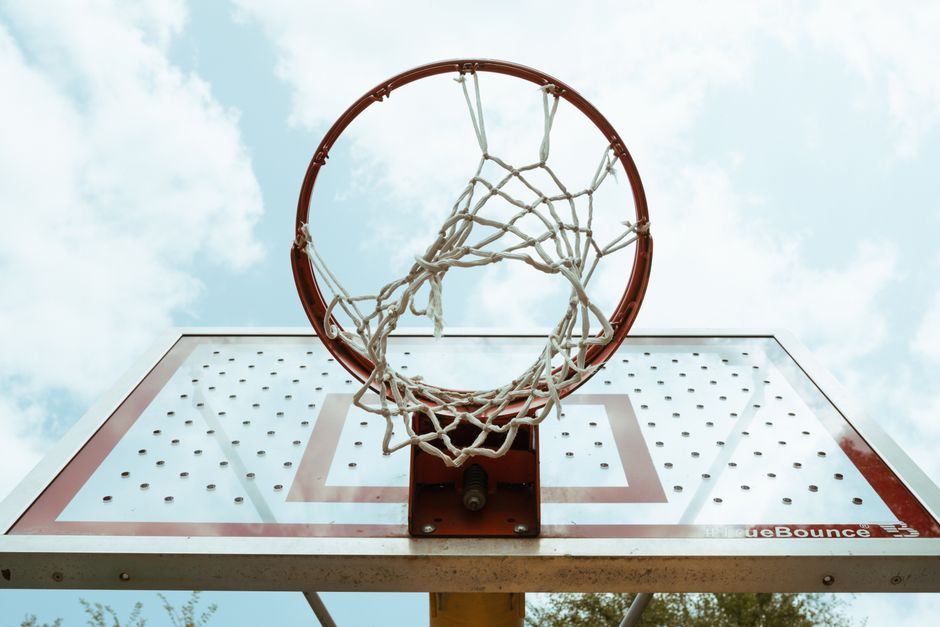
Every basketball court in the world, from a packed NBA arena to a suburban driveway, shares one constant: the rim sits exactly 10 feet above the ground. This isn't a coincidence or a carefully calculated ergonomic decision. The height was set in 1891 by pure accident—and it has remained unchanged for more than 130 years. Discover the surprising story behind why basketball hoops exactly match the height they do, and explore the fascinating facts that make this seemingly arbitrary measurement one of sport's most enduring standards.

The 10-foot hoop has survived dramatic changes in player size, athletic ability, and game strategy. It's a measurement that connects modern superstars to the sport's humble beginnings in a Massachusetts gymnasium.

Key Takeaways

  • The 10-foot basketball hoop height was determined by the railing of a running track in 1891, not by deliberate design.
  • James Naismith invented basketball and hung the first peach baskets at whatever height the gym's architecture allowed.
  • The height has remained unchanged despite players growing an average of 4 inches taller since the sport's invention.
  • Youth basketball uses lower hoop heights, ranging from 6 to 9 feet depending on age group.
  • The NBA has never seriously considered changing the regulation height, despite ongoing debates.
  • A 10-foot rim requires players to jump roughly 30 inches to dunk, depending on their height and arm length.

Why Basketball Hoops Exactly Match Their Original Height

1. A Gymnasium Railing Determined Basketball History

When James Naismith invented basketball in December 1891 at the International YMCA Training School in Springfield, Massachusetts, he needed to hang peach baskets for his new indoor game. The gymnasium featured a running track that circled the floor at balcony level. The railing of this track stood exactly 10 feet above the ground. Naismith simply nailed the peach baskets to the railing, and that arbitrary architectural feature became the permanent standard for the sport. No calculations, no ergonomic studies—just convenience.

2. Peach Baskets Had Bottoms That Needed Poking

The original basketball "hoops" weren't hoops at all. They were actual peach baskets with their bottoms intact. Every time a player scored, someone had to climb a ladder or use a long pole to retrieve the ball. This tedious process slowed the game considerably. It wasn't until a year or two later that someone had the sense to remove the basket bottoms, allowing the ball to fall through. Even then, the baskets remained until metal hoops with nets eventually replaced them in the early 1900s.

3. Players Have Grown Significantly Taller

The average height of basketball players has increased dramatically since 1891. Early players averaged around 5 feet 10 inches tall. Today's NBA players average about 6 feet 6 inches. Some positions, particularly centers, routinely feature athletes standing 7 feet tall or more. Despite this substantial change in player physiology, the 10-foot rim has never been adjusted. The game has evolved around the fixed height rather than the other way around.

4. The NBA Has Debated But Never Changed It

Over the decades, basketball authorities have occasionally discussed raising the rim to 11 or 12 feet to make dunking more challenging and restore emphasis on shooting skill. These debates intensify whenever dominant big men seem to make the game too easy. However, every proposal has been rejected. The consensus holds that changing such a fundamental element would alienate fans, invalidate historical records, and require replacing equipment worldwide—a logistical and financial nightmare.

5. Youth Basketball Uses Graduated Heights

While competitive basketball maintains the 10-foot standard, youth leagues recognize that younger players need lower targets. Organizations like USA Basketball recommend 6-foot hoops for children under 7 years old, 8-foot hoops for ages 7-8, 9-foot hoops for ages 9-11, and the full 10-foot height starting around age 12. These graduated heights help young players develop proper shooting form without straining to reach an impossibly high target.

6. The Height Creates a Specific Athletic Challenge

A 10-foot rim sits at a height that requires genuine athleticism but remains achievable for skilled players of various sizes. For an average-height person to dunk, they need a vertical leap of approximately 30 to 36 inches, depending on their standing reach. This threshold creates an interesting balance: tall enough to be impressive and challenging, yet low enough that exceptional athletes of average height can still compete. Players like Spud Webb, standing just 5 feet 7 inches, have won NBA slam dunk contests at the regulation height.

7. International Standards Match American Measurements

When basketball spread globally, the 10-foot height went with it. FIBA, the International Basketball Federation that governs Olympic and international competition, adopted the same 10-foot (3.05 meters) rim height. This universal standard means a player can compete anywhere in the world without adjusting to different hoop heights. The measurement translates precisely to 3.048 meters, though FIBA officially lists it as 3.05 meters.

8. Women's Basketball Uses the Same Height

Unlike some sports that adjust equipment or field dimensions for women's competition, basketball keeps the rim at 10 feet for both men's and women's games. The WNBA, NCAA women's basketball, and international women's competitions all use identical hoop heights. While women's basketball uses a slightly smaller ball (28.5 inches in circumference versus 29.5 inches for men), the target height remains constant.

9. The Measurement Influences Court Design

The 10-foot hoop height dictates other court dimensions and architectural requirements. Gymnasiums must have ceilings at least 16 feet high to accommodate the hoop and allow for high-arcing shots. The backboard measures 6 feet wide by 3.5 feet tall, positioned with its lower edge 9 feet above the floor—all proportions designed around that original 10-foot measurement. Even outdoor courts in parks and driveways maintain these standards.

10. No Scientific Reason Supports the Exact Height

Sports scientists and biomechanics experts have never identified any physiological or physical principle that makes 10 feet the optimal height for basketball. If Naismith's gymnasium railing had been 9 feet or 11 feet high, basketball would have evolved around that measurement instead. The 10-foot hoop represents one of sport's most enduring accidents—a random architectural feature that became sacred through tradition, not science. Yet this arbitrary beginning hasn't prevented basketball from becoming one of the world's most popular sports.

How the Height Affects Modern Gameplay

The 10-foot rim shapes every aspect of basketball strategy and skill development. Three-point shooting has become increasingly important partly because the rim height makes close-range shots contestable by tall defenders. Players spend thousands of hours perfecting their shooting arc to account for the specific distance and height. The fixed measurement also creates clear benchmarks for athletic ability—vertical leap measurements and dunking capability serve as universal standards for evaluating players.

Coaches design plays around the height, calculating angles for alley-oops, bank shots, and defensive positioning. The measurement influences player positions too. Centers and power forwards typically stand closer to the basket because their height gives them an advantage near the 10-foot rim, while guards develop long-range shooting skills to score from farther away.

Comparing Basketball Hoop Heights

Age Group/League Hoop Height Purpose
Ages 5-6 6 feet Introduce basic shooting mechanics
Ages 7-8 8 feet Develop proper form with achievable target
Ages 9-11 9 feet Transition toward regulation height
Ages 12+ / All Professional 10 feet Universal competitive standard

Frequently Asked Questions

Has the basketball hoop height ever been different?

No. Since James Naismith hung the first peach baskets in 1891, the height has remained 10 feet for competitive play. The measurement was never officially different, though early games sometimes used makeshift goals at varying heights in informal settings.

Why don't they raise the hoop for taller modern players?

Changing the height would invalidate more than a century of records, require replacing millions of hoops worldwide, and fundamentally alter the game's character. The sport has adapted to taller players through rule changes and strategy rather than adjusting the rim height.

What is the lowest basketball hoop used in organized play?

Youth leagues for children ages 5-6 use 6-foot hoops, exactly 4 feet lower than regulation height. These shorter hoops help young children develop proper shooting technique without straining to reach an impossibly high target.

Do wheelchair basketball hoops have a different height?

No. Wheelchair basketball uses the same 10-foot hoop height as standard basketball. Players compete on regulation courts with standard equipment, demonstrating remarkable shooting accuracy and ball-handling skills from their chairs.

The next time you watch a basketball game or shoot hoops in your driveway, remember that every player in history has aimed at the same height—not because it's perfect, but because a gymnasium railing happened to be there when the sport was born. Sometimes the most enduring standards come from the simplest accidents.