







1 / 10 Questions
0 Points

In which city is the famous British Library located?

Edinburgh

Birmingham

London

Manchester

Points won
0
Correct score
0%

More Quizzes

More Articles

Why Chocolate Was Once Used as Currency

Why Chocolate Was Once Used as Currency

⏱️ 5 min read

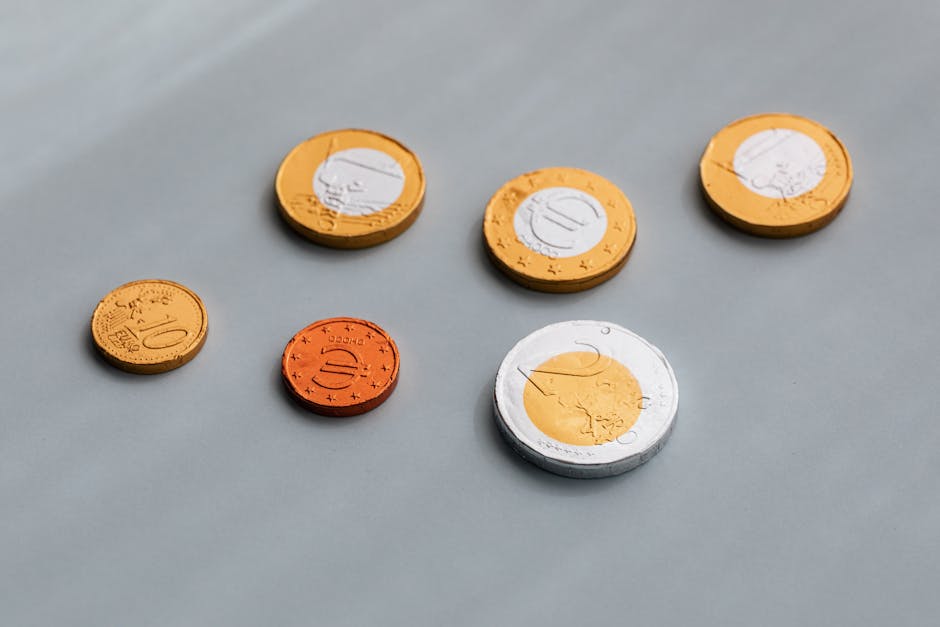
Long before chocolate became the sweet treat enjoyed worldwide today, cacao beans held a position of immense value in Mesoamerican civilizations. These precious seeds served not only as the foundation for a revered beverage but also functioned as a legitimate form of currency that shaped economic systems for centuries. The story of chocolate as money reveals fascinating insights into ancient commerce, cultural values, and the intrinsic worth societies placed on this remarkable crop.

The Sacred Origins of Cacao in Mesoamerica

Cacao's journey as currency began with the Maya and Aztec civilizations, where the beans were considered gifts from the gods. The Mayans, dating back to at least 250 CE, cultivated cacao trees in the tropical regions of present-day Mexico, Guatemala, and Honduras. These civilizations didn't consume chocolate as the solid confection known today; instead, they prepared it as a bitter, frothy beverage often mixed with spices, cornmeal, or chili peppers.

The reverence for cacao extended beyond its consumption. The beans were difficult to cultivate, requiring specific climate conditions and careful tending. This agricultural challenge, combined with the belief in cacao's divine origins, established the beans as items of exceptional value. The Aztec emperor Montezuma reportedly consumed up to 50 cups of chocolate daily, demonstrating both the beverage's importance and the considerable wealth required to afford such luxury.

How Cacao Beans Functioned as Money

The monetary system based on cacao beans operated with surprising sophistication. Aztec merchants and traders used standardized counts of beans for transactions, with specific values assigned to different quantities. Historical records indicate that 100 cacao beans could purchase a slave, while 10 beans might buy a rabbit. A single bean could be exchanged for a tamale, making cacao divisible enough for everyday purchases yet valuable enough for major transactions.

The beans possessed several characteristics that made them ideal currency:

  • They were portable and relatively durable when properly stored
  • Their value was widely recognized across different Mesoamerican societies
  • They could be counted easily, allowing for precise transactions
  • They had intrinsic value beyond their monetary function as they could be consumed
  • They were difficult to counterfeit due to their distinctive appearance and origin

The Economic Structure Supporting Cacao Currency

The widespread acceptance of cacao as money created complex economic networks throughout Mesoamerica. Tribute systems required conquered territories to pay taxes to Aztec rulers in cacao beans, among other goods. The Aztec capital of Tenochtitlan received an estimated 980 loads of cacao annually from subject provinces, with each load containing approximately 24,000 beans.

Markets throughout the empire buzzed with activity as traders exchanged cacao for goods ranging from cloth and food to precious metals and stones. Professional merchants called pochteca traveled extensive trade routes, carrying cacao beans as their primary medium of exchange. These merchant classes accumulated considerable wealth and influence, demonstrating the sophisticated commercial system that cacao currency supported.

Counterfeit Cacao and Quality Control

As with any valuable currency, the cacao system faced challenges with counterfeiting. Enterprising fraudsters would hollow out cacao beans and fill the shells with dirt or avocado skin, attempting to pass them off as genuine in crowded marketplaces. This practice became common enough that traders developed expertise in identifying authentic beans, examining them carefully before accepting them as payment.

Quality variations among cacao beans also affected their value. Beans from certain regions commanded premium prices due to superior flavor or size. The finest beans came from the Soconusco region along the Pacific coast of present-day Chiapas, Mexico, and these could be worth significantly more than common varieties. This regional differentiation created a nuanced economic system where not all cacao currency held equal value.

The Spanish Arrival and Transformation

When Spanish conquistadors arrived in the early 16th century, they quickly recognized the monetary value of cacao beans. Hernán Cortés himself noted in his writings to King Charles V that cacao beans were used as currency and that a person could buy anything in the market with them. The Spanish initially adopted the existing system, using cacao beans for transactions while establishing their colonial presence.

However, Spanish colonization gradually transformed chocolate from currency to commodity. The colonizers introduced sugar to the bitter beverage, creating a sweeter version that would eventually spread throughout Europe. As Spanish silver coins became the dominant currency and cacao plantations expanded under colonial management, the beans transitioned from money to a cash crop exported to Europe.

Legacy of Cacao Currency

The use of cacao as currency persisted in some remote areas of Latin America well into the 19th century, long after the Spanish conquest. This longevity testifies to the deep-rooted economic systems built around cacao and the bean's enduring value in traditional communities. Even today, the historical significance of cacao as money influences how chocolate is perceived culturally in regions where the ancient civilizations once thrived.

Understanding chocolate's monetary past provides valuable perspective on how currencies develop and what gives them value. The cacao bean system demonstrates that money need not be metal or paper to function effectively in complex societies. The intrinsic value of cacao, combined with cultural significance and practical characteristics, created a currency system that sustained empires and facilitated trade across vast territories for hundreds of years, leaving an indelible mark on human economic history.

The Role of Failure in Scientific Progress

The Role of Failure in Scientific Progress

⏱️ 5 min read

Throughout history, scientific breakthroughs have often emerged from the ashes of failed experiments, disproven hypotheses, and abandoned theories. While success stories dominate headlines and textbooks, the reality of scientific advancement is built upon a foundation of countless setbacks, mistakes, and unsuccessful attempts. Understanding the critical role that failure plays in scientific progress reveals not only the true nature of research but also provides valuable insights into how knowledge evolves and expands.

The Inherent Nature of Scientific Inquiry

Scientific research operates on principles of experimentation, observation, and hypothesis testing. By design, the scientific method requires researchers to propose ideas that can be proven wrong. This falsifiability criterion, articulated by philosopher Karl Popper, means that failure is not merely possible but essential to the process. When experiments yield unexpected results or contradict predictions, they provide crucial information that guides future investigations and refines theoretical understanding.

The iterative nature of science means that researchers build upon previous work, whether successful or not. Each failed experiment eliminates possibilities, narrows the field of inquiry, and points toward more promising directions. This process of elimination is as valuable as positive confirmation, yet it rarely receives the same recognition or celebration in public discourse.

Historical Examples of Productive Failures

The annals of science contain numerous examples where failure led directly to groundbreaking discoveries. Thomas Edison's famous quest to develop a practical incandescent light bulb involved testing thousands of materials before finding a suitable filament. His perspective on these attempts—viewing them not as failures but as successful discoveries of what didn't work—exemplifies the productive mindset necessary for scientific progress.

Penicillin's discovery by Alexander Fleming in 1928 resulted from what initially appeared to be contaminated bacterial cultures. Rather than dismissing the ruined experiment, Fleming investigated the mold that had killed the bacteria, leading to the development of the first widely used antibiotic. This serendipitous discovery, born from experimental failure, has saved countless millions of lives.

The search for vulcanized rubber by Charles Goodyear involved years of failed experiments and financial ruin. His accidental discovery of the vulcanization process came only after numerous unsuccessful attempts to stabilize natural rubber. Similarly, the invention of Post-it Notes by Spencer Silver at 3M emerged from his failure to create a super-strong adhesive, instead producing a weak, reusable one that found an unexpected application.

Failed Theories and Paradigm Shifts

Major scientific revolutions often require the abandonment of previously accepted theories. The phlogiston theory of combustion, widely accepted in the 18th century, was eventually disproven through careful experimentation, paving the way for modern chemistry and the understanding of oxidation. While the theory itself failed, the rigorous work conducted to support and eventually refute it advanced experimental techniques and scientific methodology.

Einstein's attempts to develop a unified field theory occupied the latter decades of his life and ultimately proved unsuccessful. However, this "failure" inspired generations of physicists to continue pursuing the goal, leading to advances in quantum mechanics, string theory, and ongoing efforts to reconcile general relativity with quantum physics.

The Publication Bias Problem

Despite failure's importance, scientific publishing has historically suffered from a significant bias toward positive results. Journals preferentially publish studies that confirm hypotheses or demonstrate significant effects, while research showing null results or negative findings often goes unpublished. This publication bias creates several problems:

  • Researchers waste resources repeating experiments that others have already found unsuccessful
  • The scientific literature presents a distorted picture of reality, overestimating the effectiveness of interventions or the validity of theories
  • Meta-analyses and systematic reviews become less reliable when they cannot access unpublished negative studies
  • Young scientists receive inadequate training in dealing with failure and may develop unrealistic expectations

Recent movements toward open science and the establishment of journals dedicated to publishing negative results aim to address these issues. Initiatives requiring pre-registration of studies and encouraging publication of all results regardless of outcomes represent important steps toward a more complete scientific record.

Psychological and Cultural Dimensions

The relationship between scientists and failure extends beyond methodology into psychology and institutional culture. Research environments that punish failure or exclusively reward positive results can inadvertently discourage risk-taking and innovative thinking. Scientists may avoid ambitious projects with higher failure risks, instead pursuing safer, incremental research more likely to yield publishable results.

Creating cultures that normalize failure as part of the discovery process enables more creative and exploratory research. Organizations like DARPA (Defense Advanced Research Projects Agency) explicitly design programs that expect high failure rates while pursuing transformative breakthroughs. This approach recognizes that revolutionary advances often require accepting numerous failures along the way.

Learning from Failure: Practical Applications

Modern scientific practice increasingly emphasizes extracting maximum value from unsuccessful experiments. Systematic failure analysis helps researchers understand what went wrong, whether due to flawed hypotheses, inadequate methods, or incomplete understanding of underlying mechanisms. This reflective practice transforms failures into learning opportunities that inform future work.

Collaborative research and open communication about failures prevent unnecessary duplication of unsuccessful approaches. When scientists share negative results through publications, conferences, or informal networks, the entire community benefits from accumulated knowledge about what doesn't work. This collective learning accelerates progress by allowing researchers to avoid known dead ends and focus efforts on more promising directions.

Conclusion: Reframing Scientific Failure

Failure is not the opposite of scientific progress but rather an essential component of it. Every abandoned hypothesis, every unexpected result, and every unsuccessful experiment contributes to the larger edifice of scientific knowledge. By eliminating incorrect ideas, revealing hidden assumptions, and occasionally leading to serendipitous discoveries, failures drive science forward as surely as successes do. Recognizing and embracing this reality—through publication practices, research culture, and public communication—will strengthen the scientific enterprise and accelerate the pace of discovery. The path to understanding nature's mysteries is necessarily paved with unsuccessful attempts, and each failure brings the scientific community one step closer to breakthrough insights that transform our world.