








1 / 10 Questions
0 Points
Points won
0
Correct score
0%

More Quizzes

More Articles

Did You Know The First Movie Was Made in 1888?

Did You Know The First Movie Was Made in 1888?

⏱️ 5 min read

The history of cinema stretches back further than most people realize. While many associate the birth of movies with the early 20th century, the foundations of filmmaking were actually laid in the late 1880s. The first motion picture ever created dates back to 1888, marking a revolutionary moment in human history that would forever change entertainment, art, and communication.

The Groundbreaking Achievement of Roundhay Garden Scene

The distinction of being the world's first film belongs to "Roundhay Garden Scene," a brief sequence lasting merely 2.11 seconds. This pioneering work was created by French inventor Louis Le Prince on October 14, 1888, in the garden of the Oakwood Grange residence in Roundhay, Leeds, England. The film captured four people walking in a garden, including Le Prince's son Adolphe, his father-in-law Joseph Whitley, and family friends Harriet and Sarah Whitley.

What makes this achievement particularly remarkable is that it predated the famous Lumière brothers' first public film screening by seven years. Le Prince used a single-lens camera of his own design, which he had patented earlier that year, to capture this historic footage on sensitized paper film. The camera was capable of taking sequential photographs at approximately 12 frames per second, creating the illusion of motion when played back.

The Mysterious Disappearance of Louis Le Prince

Despite his groundbreaking achievement, Louis Le Prince never received the recognition he deserved during his lifetime. In September 1890, Le Prince boarded a train in Dijon, France, heading to Paris, where he planned to showcase his inventions publicly and travel to the United States to patent his work there. Mysteriously, he never arrived at his destination. Neither Le Prince nor his luggage were ever found, and no body was ever recovered. His disappearance remains one of history's most intriguing unsolved mysteries.

The timing of his disappearance was particularly tragic, as it occurred just before he was scheduled to present his work in New York. This prevented him from establishing his priority in the invention of motion pictures, allowing others to claim credit for innovations that he had pioneered. To this day, conspiracy theories abound regarding his fate, with some suggesting foul play by competitors in the emerging film industry.

The Technology Behind the First Motion Picture

Le Prince's single-lens camera represented a significant leap forward from earlier attempts at capturing motion. Prior to his invention, photographers had experimented with multiple cameras arranged in sequence to capture movement, but Le Prince's design was the first to use a single lens capable of taking rapid successive photographs. His camera used bands of sensitized paper film, which would later be replaced by more durable celluloid film stock.

The technical specifications of Le Prince's camera were impressive for the era. The device could capture images at speeds varying from 12 to 20 frames per second, depending on the mechanism used. This frame rate was sufficient to create the illusion of smooth motion when the images were projected in sequence. Le Prince also developed a projector to display these images, completing the essential components needed for cinema as we know it today.

Other Early Experiments in Motion Pictures

While Le Prince created the first actual film, his work was built upon decades of experimentation with moving images. Several other inventors and photographers contributed to the development of motion picture technology:

  • Eadweard Muybridge's photographic studies of animal locomotion in the 1870s demonstrated that sequential photography could analyze movement
  • Étienne-Jules Marey developed the chronophotographic gun in 1882, which could capture multiple images on a single photographic plate
  • Thomas Edison and William Kennedy Dickson developed the Kinetoscope in the early 1890s, a peephole viewing device for motion pictures
  • The Lumière brothers created the Cinématographe in 1895, which served as both camera and projector

The Evolution of Film After 1888

Following Le Prince's pioneering work, motion picture technology rapidly evolved. By the 1890s, multiple inventors were working on improving both camera and projection systems. Thomas Edison's Kinetoscope, introduced commercially in 1894, allowed individual viewers to watch short films through a peephole viewer. However, it was the Lumière brothers' public screening on December 28, 1895, in Paris that is often credited as the birth of commercial cinema, as it was the first time a paying audience watched projected motion pictures on a screen.

The early films of this era were simple, documentary-style recordings of everyday life, lasting only a few seconds or minutes. Georges Méliès, a French filmmaker, soon began creating narrative films and special effects, demonstrating that cinema could be used for storytelling and fantasy, not just documentation. By the early 1900s, films were becoming longer and more sophisticated, incorporating editing techniques, title cards, and eventually synchronized sound.

Legacy and Recognition

Although Louis Le Prince died without receiving proper recognition for his invention, modern historians and film scholars have worked to restore his place in cinema history. The surviving footage of "Roundhay Garden Scene" is preserved by the National Science and Media Museum in Bradford, England, and has been digitized to ensure its preservation for future generations.

In 2018, the 130th anniversary of the film's creation was celebrated with various events and exhibitions. The location where the film was shot, now marked with a commemorative plaque, has become a pilgrimage site for film historians and enthusiasts. Le Prince's contributions are now widely acknowledged as the foundation upon which the entire motion picture industry was built, representing a crucial moment when humanity first successfully captured and reproduced movement through technology.
The Real Life Pirates Who Inspired Jack Sparrow

The Real Life Pirates Who Inspired Jack Sparrow

⏱️ 5 min read

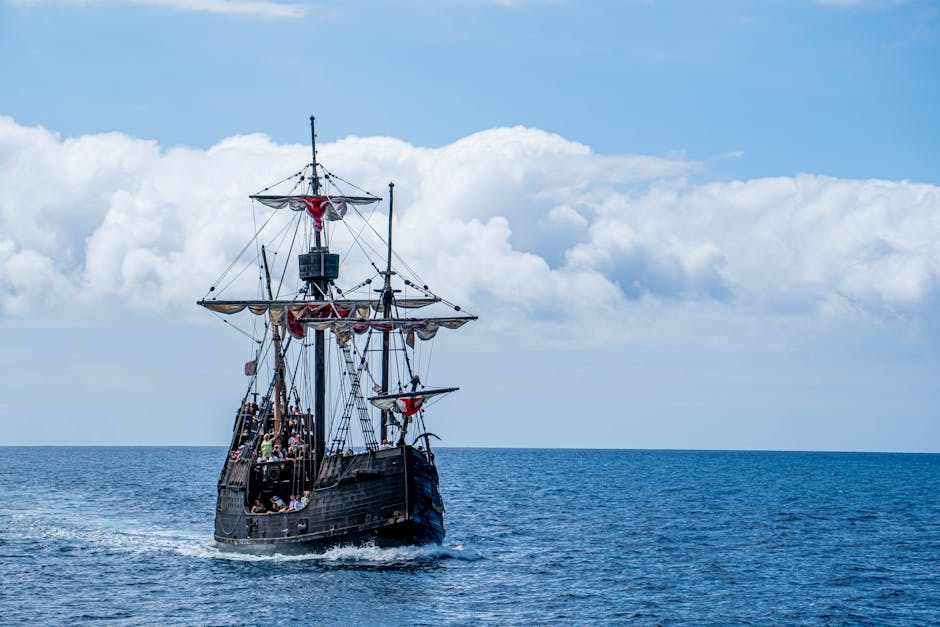
Captain Jack Sparrow, the charismatic and eccentric pirate from the "Pirates of the Caribbean" franchise, has become one of cinema's most beloved characters. While Johnny Depp's portrayal is largely fictional, the character draws inspiration from several real-life pirates who terrorized the seas during the Golden Age of Piracy. These historical figures were just as cunning, flamboyant, and unpredictable as their fictional counterpart, and their stories are often more remarkable than any Hollywood screenplay.

The Golden Age of Piracy: Setting the Stage

The period between 1650 and 1730 is commonly referred to as the Golden Age of Piracy, when thousands of pirates operated in the Caribbean, along the American coast, and across the Atlantic. This era produced some of history's most notorious seafaring criminals, whose exploits would inspire legends for centuries to come. Economic hardship, colonial expansion, and naval conflicts created the perfect conditions for piracy to flourish, attracting sailors, privateers, and adventurers seeking fortune on the high seas.

Captain Jack Ward: The Original Jack

One of the most direct inspirations for Jack Sparrow is Captain John Ward, known as "Jack" Ward or "Jack Birdy." This English pirate operated in the early 17th century and became one of the most successful pirates of his time. Ward began his career as a privateer for Queen Elizabeth I before turning to piracy after her death in 1603.

What makes Ward particularly relevant to the Jack Sparrow character is his remarkable ability to escape capture and his strategic cunning. He converted to Islam and operated from Tunis, where he lived in luxury and became a wealthy man. Ward's flamboyant lifestyle, quick wit, and talent for evasion mirror many of Sparrow's characteristics. He was known for his distinctive appearance and allegedly wore elaborate clothing that would have been considered outrageous for his time.

Bartholomew Roberts: The Gentleman Pirate

Bartholomew Roberts, also known as "Black Bart," was perhaps the most successful pirate of the Golden Age, capturing over 400 ships during his career. Roberts brought an unusual sense of style and principle to piracy that resonates with Jack Sparrow's characterization. He was known for his fine clothes, preferring to wear rich crimson damask waistcoats and breeches, along with a red feather in his hat.

Roberts implemented a democratic code among his crew, establishing rules that governed behavior, division of plunder, and conflict resolution. This sense of honor among thieves, combined with his theatrical appearance and strategic brilliance, reflects aspects of Sparrow's character. Despite his gentlemanly demeanor, Roberts was a formidable opponent who struck fear into merchant vessels and naval ships alike.

Calico Jack Rackham: Style and Swagger

John "Calico Jack" Rackham earned his nickname from the colorful calico clothing he favored, demonstrating the kind of sartorial flair associated with Jack Sparrow. While Rackham wasn't the most successful pirate in terms of plunder, his personality and style made him legendary. He designed the famous Jolly Roger flag featuring a skull with crossed swords, an image now synonymous with piracy.

Rackham's significance extends beyond his fashion sense. He was known for his associations with two of history's most famous female pirates, Anne Bonny and Mary Read, who served on his crew disguised as men. His relatively brief but colorful career, combined with his emphasis on appearance and reputation, contributed to the swashbuckling pirate archetype that Jack Sparrow embodies.

Edward Teach: The Fearsome Blackbeard

No discussion of pirate inspiration would be complete without Edward Teach, better known as Blackbeard. While Blackbeard's intimidating appearance contrasts with Sparrow's more comedic presentation, both characters share a talent for psychological warfare and theatrical display. Blackbeard was famous for weaving slow-burning fuses into his enormous black beard and lighting them during battle, creating a terrifying, smoke-wreathed visage.

Blackbeard's strategic mind and his ability to cultivate a fearsome reputation often allowed him to capture ships without firing a shot. This combination of showmanship and tactical thinking mirrors Sparrow's approach to piracy, where wit and reputation often prove more valuable than actual combat prowess. Blackbeard blockaded Charleston harbor in 1718, demonstrating the kind of audacious plan that Sparrow might conceive.

Captain Henry Morgan: The Privateer Turned Legend

Sir Henry Morgan represents another facet of the Jack Sparrow character: the blurred line between pirate and privateer. Morgan operated with commissions from the English government to attack Spanish interests in the Caribbean, though he frequently exceeded his authority and engaged in outright piracy. His political maneuvering and ability to avoid punishment for his crimes reflect Sparrow's talent for talking his way out of trouble.

Morgan's most impressive feat was the 1671 attack on Panama City, where he led 1,400 men across the isthmus and sacked one of Spain's wealthiest colonial cities. Despite accusations of piracy and torture, Morgan returned to England and was eventually knighted, becoming Lieutenant Governor of Jamaica. This transformation from outlaw to respectable society member echoes the complex relationship Jack Sparrow has with authority throughout the film series.

The Composite Character: Blending Fact and Fiction

Jack Sparrow ultimately represents a composite of these historical figures, cherry-picking the most entertaining and dramatic elements of their lives. The screenwriters and Johnny Depp combined the swagger of Calico Jack, the cunning of Jack Ward, the style of Bartholomew Roberts, the theatrical nature of Blackbeard, and the political savvy of Henry Morgan to create a character who embodies the romantic ideal of piracy.

The real pirates were often brutal, pragmatic criminals whose lives were harsh and frequently short. However, they possessed qualities that continue to fascinate us: independence, audacity, and a rejection of conventional society. Jack Sparrow captures these appealing aspects while filtering out the darker realities of historical piracy, creating a character that entertains while paying homage to the genuine rogues who sailed the Caribbean centuries ago.