














1 / 20 Questions
0 Points

What is the most ordered item at Domino's globally?

Cheese Pizza

Pepperoni Pizza

Hawaiian Pizza

Meat Lovers Pizza

Points won
0
Correct score
0%

More Quizzes

More Articles

Did You Know The First Olympics Had No Gold Medals?

Did You Know The First Olympics Had No Gold Medals?

⏱️ 5 min read

The modern Olympic Games, with their iconic gold, silver, and bronze medals, have become synonymous with athletic excellence and international competition. However, many sports enthusiasts would be surprised to learn that the tradition of awarding gold medals to first-place winners is not as ancient as the Games themselves. The inaugural modern Olympics in 1896 featured a completely different prize system that would seem quite unusual by today's standards.

The Prize System of the 1896 Athens Olympics

When the first modern Olympic Games were held in Athens, Greece, in 1896, the organizers sought to honor the ancient Greek traditions while creating something new for the modern era. Instead of the gold medals we recognize today, first-place winners received silver medals and olive branches. Second-place finishers were awarded bronze medals and laurel branches, while third-place athletes received nothing at all. This system reflected both the economic constraints of the time and a desire to connect with ancient Olympic traditions, where victors were crowned with olive wreaths rather than receiving precious metal awards.

The decision to award silver rather than gold to champions was partly pragmatic. The organizing committee of the 1896 Games operated on a limited budget, and silver was more affordable than gold while still representing significant value and prestige. The addition of olive branches served as a symbolic link to the ancient Games held in Olympia, where olive wreaths cut from the sacred tree were the highest honor an athlete could receive.

The Evolution of Olympic Medal Standards

The modern three-medal system that we recognize today—gold for first place, silver for second, and bronze for third—did not become standardized until the 1904 Summer Olympics in St. Louis, Missouri. This change represented a significant shift in how Olympic achievement was recognized and commemorated. The introduction of gold medals for first-place finishers established a hierarchy that has remained consistent for well over a century.

The 1900 Paris Olympics, held as part of the World's Fair, created further confusion in Olympic medal history. Most events at these Games did not award medals at all; instead, winners received various prizes including cups, trophies, and other objects. Some athletes didn't even realize they had participated in Olympic events, as the Games were poorly organized and overshadowed by the larger exposition. This chaotic period in Olympic history makes the 1896 Athens Games' silver medal system seem quite organized by comparison.

Ancient Olympic Traditions and Their Modern Influence

The ancient Olympic Games, held from 776 BCE until 393 CE, had their own distinctive prize system that influenced the early modern Olympics. Winners of ancient Olympic events, known as olympionikes, received olive wreaths, great honor, and often substantial rewards from their home cities. These could include monetary prizes, tax exemptions, free meals for life, and prominent seats at public events. The wreaths themselves, cut from the sacred olive tree near the Temple of Zeus in Olympia, held immense symbolic value.

The organizers of the 1896 Games wanted to capture this spirit while adapting to modern sensibilities. By including olive branches with the silver medals, they created a bridge between ancient tradition and contemporary athletic competition. This combination of old and new helped establish the modern Olympics as both a revival of ancient traditions and a forward-looking international sporting event.

What Olympic Gold Medals Are Really Made Of

Interestingly, even today's "gold" medals are not pure gold. According to International Olympic Committee regulations, gold medals must contain at least 92.5% silver and must be plated with at least 6 grams of pure gold. This requirement has been in place since 1912, when the Stockholm Olympics established new standards for medal composition. The last time solid gold medals were awarded at the Olympics was during the 1912 Games.

The current composition requirements mean that Olympic gold medals are primarily silver medals with gold plating. This practical approach allows for the continuation of the prestigious gold medal tradition while managing costs. A solid gold medal of the size used in modern Olympics would be prohibitively expensive and extremely heavy, weighing several pounds rather than the current average of about one pound.

The Significance of Medal Colors and Rankings

The hierarchical system of gold, silver, and bronze medals has become so ingrained in sporting culture that it extends far beyond the Olympics. This ranking system is now used in countless competitions worldwide, from local school sports days to world championships in various disciplines. The colors have become universal symbols of achievement, with gold representing the pinnacle of success, silver indicating strong performance, and bronze recognizing commendable accomplishment.

The psychology behind this three-tiered system has also been studied extensively. Research has shown that silver medalists often express less satisfaction than bronze medalists, despite technically achieving a higher placement. This phenomenon occurs because silver medalists tend to focus on how close they came to gold, while bronze medalists are often simply happy to have won a medal at all, having nearly finished without recognition.

Legacy and Modern Olympic Traditions

Today's Olympic medal ceremonies incorporate elements from various periods of Olympic history. Athletes still receive olive wreaths at the Summer Olympics held in Greece, maintaining the connection to ancient traditions. The medals themselves have evolved to become works of art, with each host city designing unique medals that incorporate local cultural elements while adhering to IOC specifications.

The journey from the silver medals and olive branches of 1896 to today's gold-plated silver medals represents more than a century of Olympic evolution. This transformation reflects changing values, economic considerations, and the growth of the Olympic movement from a modest international gathering to the world's premier sporting event. Understanding this history enriches our appreciation of Olympic traditions and reminds us that even the most established customs had to start somewhere, often quite different from their current form.
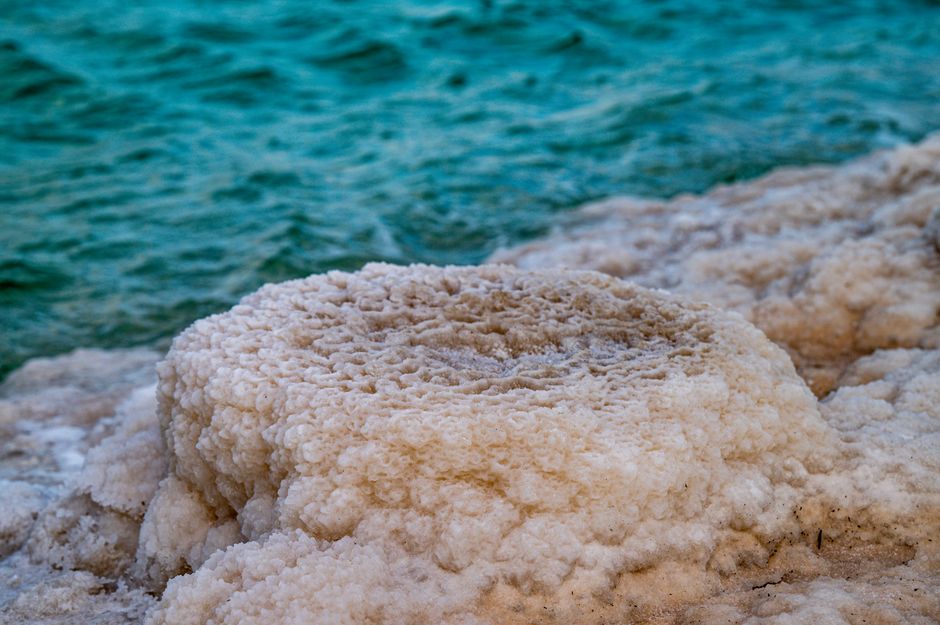
Why the Dead Sea Is 9 Times Saltier Than the Ocean

Why the Dead Sea Is 9 Times Saltier Than the Ocean

Why the Dead Sea Is 9 Times Saltier Than the Ocean

By Trivia Daily, Geography Desk — Published August 11, 2026

Table of Contents

Floating effortlessly on water sounds impossible, yet thousands of visitors do exactly that every year in the Dead Sea. This remarkable body of water, nestled between Jordan and Israel, contains salt concentrations so extreme that swimmers bob like corks on its surface. The Dead Sea is nearly 9 times saltier than the ocean, transforming it into one of Earth's most unusual natural wonders. Understanding why this landlocked lake became such a salty anomaly reveals fascinating geography, climate patterns, and the powerful forces that shape our world's most extreme places.

The secret lies in a perfect storm of geography and evaporation. While oceans maintain relatively stable salinity levels around 3.5%, the Dead Sea's salt content hovers near 34%. This isn't just a minor difference—it represents a fundamentally different type of water body, one that has been concentrating minerals for thousands of years in one of the lowest places on Earth.

Key Takeaways

  • The Dead Sea contains approximately 34% salt by weight, compared to the ocean's 3.5%, making it roughly 9 times saltier than typical seawater.
  • Located at 430 meters below sea level, it's the lowest point on Earth's surface, situated in the Jordan Rift Valley between Israel and Jordan.
  • With no outlet to the ocean, water only leaves through evaporation, leaving behind dissolved minerals that accumulate over millennia.
  • The extreme salinity creates hypersaline conditions that prevent most life forms from surviving, earning it the name "Dead Sea."
  • High evaporation rates in the hot desert climate concentrate salts faster than fresh water can dilute them.
  • The Dead Sea is shrinking rapidly, losing about a meter of depth annually, which further increases its already extreme salinity.

Why the Dead Sea Is Dead Times Saltier: The Geography of an Enclosed Basin

The Dead Sea's extraordinary saltiness begins with its unique position on world maps. This terminal lake—meaning it has no outlet—sits at the lowest elevation on Earth's continents, more than 430 meters below sea level. The Jordan River and several smaller streams flow into it, carrying dissolved minerals from the surrounding landscape. But unlike oceans or seas connected to the global water system, the Dead Sea has nowhere to drain. Water arrives, but it can never leave except through one process: evaporation.

This geographic trap creates the perfect conditions for salt accumulation. Every drop of water that evaporates leaves behind its mineral cargo. Over thousands of years, this one-way system has concentrated salts to levels that would be impossible in open ocean environments. The Dead Sea essentially functions as nature's evaporation pond, collecting and concentrating minerals from an entire watershed with no way to flush them out.

The Evaporation Engine That Powers Salt Concentration

Climate plays the starring role in the Dead Sea's saltiness. The region experiences scorching desert temperatures, with summer readings frequently exceeding 40°C (104°F). The combination of intense heat, low humidity, and constant sunshine creates evaporation rates that dwarf those of typical oceans. Roughly 1,600 millimeters of water evaporate from the Dead Sea's surface each year, while rainfall in the area amounts to less than 100 millimeters annually. This massive imbalance means water disappears far faster than it's replenished.

The math is unforgiving. When seawater evaporates, it leaves behind approximately 35 grams of salt per liter. But the Dead Sea receives relatively little fresh water input compared to its surface area. Each year, the evaporation process removes pure water while depositing more concentrated brine. This continuous cycle has been running for millennia, creating a salt concentration that modern science can measure but nature took ages to produce.

Comparing Salt Levels: Dead Sea Versus Other Water Bodies

Water Body Salinity (%) Location
Dead Sea 34% Israel/Jordan
Don Juan Pond 44% Antarctica
Lake Assal 34.8% Djibouti
Great Salt Lake 5-27% Utah, USA
Ocean (average) 3.5% Worldwide
Mediterranean Sea 3.8% Europe/Africa/Asia

The Nine Factors That Make the Dead Sea Dead Times Saltier

1. Terminal Lake Status Traps All Incoming Minerals

The Dead Sea's status as an endorheic basin—a closed drainage system—means it's the final destination for every dissolved mineral in its watershed. Rivers carry calcium, magnesium, potassium, and sodium chloride from rocks and soil upstream. In normal water systems, these minerals eventually reach the ocean and disperse across vast volumes. Here, they accumulate indefinitely. The Jordan River alone delivers thousands of tons of dissolved salts annually, and none of it ever leaves except as solid deposits or in the bodies of mineral-harvesting industries.

2. Extreme Depth Below Sea Level Concentrates Water Flow

Being Earth's lowest continental point creates a natural gravitational funnel. All water in the region flows downward toward this depression. The steep elevation drop—from sea level to more than 400 meters below—means the Dead Sea collects runoff from a relatively large area despite its modest size. This geographic feature ensures a steady supply of mineral-laden water, even in an arid region where rainfall is scarce.

3. Desert Climate Drives Intense Evaporation Rates

The Judean Desert surrounding the Dead Sea creates one of the harshest evaporation environments on the planet. Hot, dry air constantly pulls moisture from the water's surface. Unlike coastal areas where humid ocean air moderates evaporation, the Dead Sea sits in an arid zone where atmospheric moisture is minimal. The result? Water molecules escape into the atmosphere at extraordinary rates while salt crystals remain behind, constantly increasing concentration.

4. Limited Fresh Water Inflow Cannot Dilute Existing Salinity

Modern water diversion has dramatically reduced the Jordan River's flow into the Dead Sea. What was once a substantial river now delivers only a fraction of its historical volume, as upstream countries extract water for agriculture and drinking. With less fresh water arriving to dilute the existing brine, the salinity increases even faster than it would naturally. This human impact accelerates a process that was already producing extreme salt levels.

5. Ancient Geological History Set the Stage

The Dead Sea occupies part of the Jordan Rift Valley, a tectonic boundary where the African and Arabian plates are slowly pulling apart. This geological activity created the deep basin millions of years ago. Throughout its history, the area has cycled between being connected to ancient seas and isolated as a landlocked lake. Each isolation period allowed salts to concentrate, and the current phase has been ongoing long enough to reach today's extreme levels.

6. High Temperatures Accelerate Salt Crystallization

When water temperatures rise, salt solubility changes and evaporation accelerates. The Dead Sea's surface can reach temperatures above 30°C in summer, creating conditions where certain salts begin crystallizing out of solution. These salt crystals sink to the bottom or form striking formations along the shore. The warmer the water, the faster this process occurs, contributing to both the visible salt deposits and the overall concentration increase.

7. Dense Brine Prevents Mixing and Oxygen Circulation

The extreme density of Dead Sea water—about 1.24 grams per cubic centimeter compared to seawater's 1.03—creates stratification. Denser water sinks and stays at depth, while less dense water remains near the surface. This layering prevents the mixing that normally occurs in oceans, where currents and temperature differences create circulation. Without mixing, the deepest waters become even more concentrated, and the lake cannot dilute itself through internal circulation.

8. Mineral-Rich Geology Supplies Continuous Salt Sources

The rocks and soil surrounding the Dead Sea are particularly rich in soluble minerals. Limestone, dolomite, and ancient evaporite deposits from previous geological eras provide an abundant source of salts. When rare rains do occur, they quickly dissolve these minerals and carry them into the lake. Unlike regions with harder, less soluble rocks, the Dead Sea's watershed is essentially a salt mine waiting for water to unlock its mineral content.

9. Shrinking Water Volume Concentrates Existing Salts

The Dead Sea is disappearing. Its water level drops approximately one meter each year, shrinking its volume dramatically. As the lake contracts, the same amount of salt becomes concentrated in less water. This creates a feedback loop: less water means higher salinity, which means denser brine, which affects evaporation rates differently than fresh water. The shrinking process itself amplifies the factors that made the Dead Sea salty in the first place.

What Lives in the Dead Sea? Challenging the Name

Despite its name, the Dead Sea isn't completely lifeless. Certain extremophile microorganisms thrive in its hypersaline conditions, including specialized bacteria and archaea that have adapted to high salt concentrations. These hardy organisms represent some of the most salt-tolerant life forms on Earth. However, no fish, aquatic plants, or typical marine life can survive here. The "dead" designation reflects the absence of normal aquatic ecosystems, not the complete absence of life.

The extreme salinity creates an environment that's actually toxic to most organisms. When salt concentrations exceed about 10%, cellular processes in typical organisms begin to fail. At 34%, the osmotic pressure is so extreme that water is literally pulled from cells, causing them to shrivel and die. Only organisms with specialized cellular mechanisms can maintain their internal chemistry in such hostile conditions.

The Future of the World's Saltiest Major Water Body

Scientists project that without intervention, the Dead Sea will continue shrinking and may eventually split into smaller pools of even more concentrated brine. Various proposals exist to replenish it, including pipelines from the Red Sea or Mediterranean Sea. These ambitious engineering projects face significant challenges, including cost, environmental impact, and the question of whether introducing different water chemistry would fundamentally alter the Dead Sea's unique character. The landmark may look very different on future maps of the region.

The increasing salinity as water levels drop presents a paradox. While the Dead Sea has always been extremely salty, it's becoming even more so. Some areas now show salt concentrations approaching saturation levels, where the water simply cannot dissolve any more minerals. These conditions create spectacular salt formations but also signal a water body in crisis, caught between natural processes and human water demands.

Frequently Asked Questions

Can you actually float in the Dead Sea without trying?

Yes, the extreme density of the water—caused by its high salt content—provides enough buoyancy to keep the human body floating effortlessly on the surface. You would need to actively try to sink, and even then, it's nearly impossible to submerge completely.

Is the Dead Sea the saltiest body of water on Earth?

No, while it's among the saltiest, Antarctica's Don Juan Pond and Djibouti's Lake Assal have even higher salt concentrations. However, the Dead Sea is the saltiest major lake that people can visit and swim in, making it the most famous hypersaline water body.

Why don't they just add more fresh water to the Dead Sea?

The volume of water needed would be enormous—millions of liters daily—and the region already faces severe water scarcity. Proposed pipeline projects from the Red Sea or Mediterranean would cost billions and raise environmental concerns about mixing different water chemistries and affecting the unique ecosystem.

What happens if you accidentally swallow Dead Sea water?

Swallowing Dead Sea water can cause immediate burning sensations, nausea, and potentially dangerous dehydration due to the extreme salt content. The water is intensely bitter and can irritate mucous membranes. Swimmers are strongly advised to keep their heads above water and rinse immediately if any gets in their mouth or eyes.

The Dead Sea stands as a testament to how geography, climate, and time can create places that defy our expectations. Its remarkable saltiness isn't just a curious fact—it's the result of thousands of years of natural processes working in perfect concert, creating one of Earth's most extreme environments in a landscape that continues to evolve with each passing year.