





1 / 10 Questions
0 Points

Which amendment abolished slavery in the United States?

14th Amendment

13th Amendment

19th Amendment

15th Amendment

Points won
0
Correct score
0%

More Quizzes

More Articles

Did You Know There’s a Desert in Antarctica?

Did You Know There’s a Desert in Antarctica?

⏱️ 5 min read

When most people think of Antarctica, they envision endless ice sheets, howling blizzards, and sub-zero temperatures. The last thing that comes to mind is a desert. Yet, nestled within this frozen continent lies one of Earth's most extraordinary and counterintuitive landscapes: the McMurdo Dry Valleys, the largest ice-free region in Antarctica and one of the world's most extreme deserts.

Understanding What Makes a Desert

Before exploring Antarctica's surprising desert landscape, it's essential to understand what actually defines a desert. Contrary to popular belief, deserts are not characterized by heat or sand, but rather by precipitation—or the lack thereof. Technically, a desert is any region that receives less than 250 millimeters (10 inches) of precipitation annually. This definition encompasses hot sandy deserts like the Sahara, cold deserts like the Gobi, and even the polar deserts of Antarctica.

Antarctica holds the distinction of being the driest continent on Earth. While the coastal regions receive some snowfall, the interior of the continent is remarkably arid. The McMurdo Dry Valleys, in particular, receive almost no precipitation at all, with some areas having seen no rain or snow for nearly two million years.

The McMurdo Dry Valleys: Antarctica's Desert Landscape

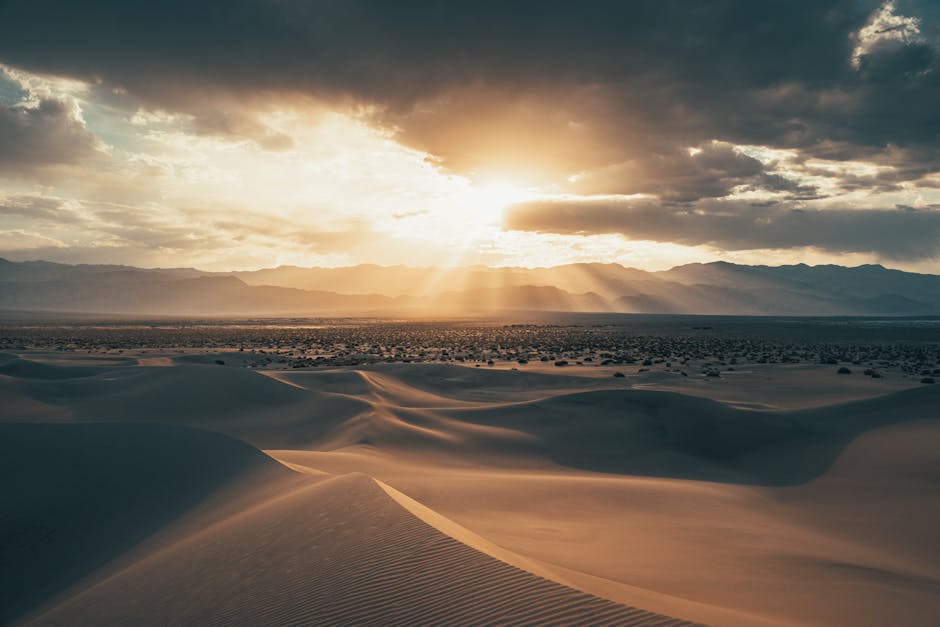
The McMurdo Dry Valleys comprise approximately 4,800 square kilometers of ice-free terrain in the Transantarctic Mountains of Eastern Antarctica. These valleys—including Victoria Valley, Wright Valley, and Taylor Valley—present a stark, alien landscape that more closely resembles Mars than typical Antarctic scenery.

The valleys are characterized by exposed bedrock, gravel-strewn ground, and peculiar geological formations sculpted by wind erosion rather than ice. The soil here is so dry and sterile that it's considered one of the closest terrestrial analogs to the Martian surface, making it a valuable research site for scientists studying potential life on other planets.

Why Do These Valleys Remain Ice-Free?

The existence of ice-free valleys in Antarctica seems paradoxical, but several factors combine to create and maintain these unique conditions. The primary reason is the presence of katabatic winds—powerful gravity-driven winds that flow down from the polar plateau at speeds exceeding 320 kilometers per hour. These winds are among the fastest and driest on Earth.

As these katabatic winds descend from the high interior plateau, they warm slightly through compression and effectively sublimate any snow or ice in their path. The moisture is stripped away before it can accumulate, leaving bare rock and soil exposed. Additionally, the Transantarctic Mountains block glacial ice from flowing into the valleys from the polar ice sheet, further contributing to their ice-free status.

The combination of extremely low humidity, minimal precipitation, and these fierce desiccating winds creates what scientists call a "hyper-arid polar desert," making the McMurdo Dry Valleys drier than even the Atacama Desert in Chile, which is often cited as the driest place on Earth.

Extreme Environmental Conditions

The McMurdo Dry Valleys experience some of the most extreme environmental conditions on the planet. Average annual temperatures hover around -20°C (-4°F), though summer temperatures can occasionally rise above freezing. The relative humidity is often below 50%, and in some areas, it can drop to as low as 10%, comparable to the world's hottest deserts.

The valleys receive less than 100 millimeters of water equivalent precipitation per year, with some areas receiving virtually none. This extreme aridity, combined with the constant scouring by katabatic winds, creates an environment that is incredibly hostile to life. The soil contains almost no organic material, and traditional plant life cannot survive.

Surprising Signs of Life

Despite the harsh conditions, life finds a way to persist in the McMurdo Dry Valleys, albeit in microscopic forms. Scientists have discovered several remarkable examples of extremophile organisms:

  • Endolithic bacteria and fungi that live inside porous rocks, protected from the harsh external environment
  • Algae and cyanobacteria surviving in cryptoendolithic communities within sandstone
  • Simple organisms in hypersaline ponds that remain liquid even in freezing temperatures due to their high salt content
  • Bacterial mats in permanently ice-covered lakes where nutrients filter through the ice

These organisms have developed extraordinary adaptations to survive in this extreme environment, including the ability to remain dormant for extended periods and metabolize at extremely low temperatures.

Scientific Significance and Research

The McMurdo Dry Valleys serve as an invaluable natural laboratory for multiple scientific disciplines. Geologists study the valleys to understand climate change patterns, as the ice-free conditions preserve geological records spanning millions of years. The lack of vegetation and precipitation means that geological processes can be observed in their purest form.

Astrobiologists are particularly interested in the region because its extreme conditions closely mimic those found on Mars and other planets. Research conducted here helps scientists understand the limits of life and informs the search for extraterrestrial organisms. NASA has used the Dry Valleys as a testing ground for equipment destined for Mars missions.

Climate scientists also monitor the valleys closely, as they serve as sensitive indicators of global climate change. Any increase in temperature or precipitation could dramatically alter these ancient landscapes, providing early warnings of broader environmental shifts.

A Protected Wilderness

Recognizing their unique scientific value, the McMurdo Dry Valleys have been designated as an Antarctic Specially Managed Area under the Antarctic Treaty System. Access is strictly controlled, and researchers must follow rigorous protocols to minimize contamination and environmental impact. This protection ensures that these remarkable desert landscapes will remain available for future scientific study and continue to reveal their secrets about Earth's past and the potential for life beyond our planet.

The existence of a desert in Antarctica challenges our preconceptions about both deserts and the frozen continent, reminding us that Earth's geography is far more diverse and surprising than we might imagine.

Did You Know? 10 Famous Songs with Hidden Meanings

Did You Know? 10 Famous Songs with Hidden Meanings

⏱️ 6 min read

Music has the power to entertain, inspire, and move us, but some of the most iconic songs in history carry messages far deeper than their catchy melodies suggest. Many artists have embedded social commentary, personal struggles, or controversial themes beneath seemingly innocent lyrics. These hidden meanings often go unnoticed by casual listeners, yet they reveal the true artistry and intention behind the music. Here are ten famous songs whose real messages might surprise you.

Unveiling the Stories Behind the Music

1. "Born in the U.S.A." by Bruce Springsteen

Often mistaken for a patriotic anthem, Bruce Springsteen's 1984 hit is actually a scathing critique of the treatment of Vietnam War veterans. The song tells the story of a working-class man who returns from war to find no jobs, no support, and a country that has forgotten his sacrifice. Despite the upbeat tempo and repetitive chorus, the verses paint a dark picture of disillusionment and abandonment. Springsteen wrote the song to highlight how America failed its veterans, yet it has been repeatedly misinterpreted and used at political rallies celebrating American pride, much to the artist's frustration.

2. "Every Breath You Take" by The Police

Frequently played at weddings and considered one of the most romantic songs ever recorded, this 1983 hit is actually about obsessive stalking and possessive behavior. Sting, the song's writer, has clarified numerous times that the lyrics describe an unhealthy fixation rather than love. Lines like "every move you make, I'll be watching you" reveal a sinister surveillance theme. The song was written during Sting's divorce, reflecting feelings of jealousy and control rather than romantic devotion. It remains one of the most misunderstood love songs in popular music history.

3. "Pumped Up Kicks" by Foster the People

This indie pop hit from 2010 features an incredibly catchy whistle melody and upbeat rhythm that masks its disturbing subject matter. The song is written from the perspective of a troubled youth planning a school shooting. Mark Foster wrote it to raise awareness about gun violence and the mental health issues affecting young people who feel isolated and neglected. The juxtaposition of the cheerful sound with the dark lyrics creates an intentionally unsettling contrast that many listeners miss entirely, singing along without realizing they're describing a violent tragedy.

4. "Semisonic's Closing Time" as a Birth Announcement

While most people interpret this 1998 alternative rock song as being about a bar closing for the night, songwriter Dan Wilson revealed it was actually inspired by impending fatherhood. The lyrics about closing time and going home take on new meaning when understood as a metaphor for birth—a baby leaving the womb and entering the world. Lines like "this room won't be open till your brothers or your sisters come" reference future siblings, while "time for you to go out to the places you will be from" speaks to beginning life's journey. The dual meaning works perfectly for both interpretations.

5. "Hotel California" and Its Dark Symbolism

The Eagles' 1976 masterpiece has spawned countless theories about its meaning, from references to Satanism to addiction. Don Henley has explained that the song is actually an allegory about the excess and hedonism of Southern California in the 1970s, particularly the music industry's dark side. The hotel represents a gilded cage—a place of luxury that becomes a prison. The famous line "you can check out any time you like, but you can never leave" symbolizes how materialism and fame trap those who pursue them, creating an addiction to a lifestyle that ultimately destroys.

6. "Blackbird" by The Beatles and Civil Rights

Paul McCartney's beautiful acoustic ballad from 1968 is widely believed to be about the civil rights movement, though interpretations vary. McCartney has confirmed the song was inspired by the racial tensions in the United States, particularly the struggles of Black women during this turbulent period. The "blackbird" represents Black individuals waiting for their moment of freedom, with "broken wings" symbolizing oppression. Written during the height of the civil rights movement, the song encourages perseverance and hope with the repeated phrase "take these broken wings and learn to fly."

7. "99 Luftballons" and Cold War Paranoia

This 1983 German new wave song by Nena became a worldwide hit, but its anti-war message was often lost, especially on English-speaking audiences. The song tells the story of 99 red balloons accidentally triggering a nuclear war between superpowers during the Cold War. When the balloons are mistaken for enemy aircraft, military forces overreact, leading to mutual destruction over a harmless misunderstanding. The song critiques military paranoia, the arms race, and how quickly peaceful situations can escalate into violence when nations are consumed by fear and mistrust.

8. "Lucy in the Sky with Diamonds" Beyond the LSD Theory

While many assumed this 1967 Beatles song was about LSD due to the initials in the title, John Lennon consistently maintained it was inspired by a drawing his son Julian brought home from school. The drawing depicted Julian's classmate Lucy surrounded by stars, which Julian called "Lucy in the sky with diamonds." The psychedelic imagery in the song—including tangerine trees, marmalade skies, and newspaper taxis—reflected the experimental, surrealist artistic movement of the era rather than drug advocacy. The song showcases how childhood imagination can inspire art that transcends simple interpretation.

9. "Macarena" and Its Scandalous Lyrics

This 1993 Spanish dance hit became a global phenomenon with people of all ages performing its signature moves, yet few English speakers understood the lyrics. The song actually tells the story of a woman named Macarena who cheats on her boyfriend with his two friends while he's away being drafted into the army. The upbeat, infectious rhythm and danceable beat completely disguise the song's theme of infidelity. The disconnect between the family-friendly dance craze and the actual lyrical content makes it one of the most ironically misunderstood party songs in history.

10. "Puff, the Magic Dragon" and Lost Innocence

Despite persistent rumors about drug references, this 1963 folk song by Peter, Paul and Mary is actually a poignant tale about growing up and losing childhood innocence. The song tells of a dragon named Puff and his friend Jackie Paper, who eventually grows up and abandons their imaginative adventures together. Puff retreating into his cave represents how childhood wonder disappears as we age and become consumed by adult responsibilities. The writers have repeatedly denied any drug connections, emphasizing it's simply a bittersweet story about the inevitable passage from childhood to adulthood.

The Power of Hidden Messages

These ten songs demonstrate that popular music often contains layers of meaning that casual listening might miss. Whether addressing social issues, personal struggles, or universal human experiences, artists have long used metaphor and symbolism to convey messages that resonate on multiple levels. Understanding these hidden meanings enriches our appreciation of the music and reminds us that great songwriting combines entertainment with substance. The next time you hear a familiar tune, it might be worth listening a little more closely—you might discover an entirely new dimension to a song you thought you knew.