









1 / 10 Questions
0 Points

Which City Serves As The Capital Of The United States?

Los Angeles

New York

Washington D.C.

Chicago

Points won
0
Correct score
0%

More Quizzes

More Articles

How Coral Reefs Are Built by Tiny Polyps

How Coral Reefs Are Built by Tiny Polyps

⏱️ 5 min read

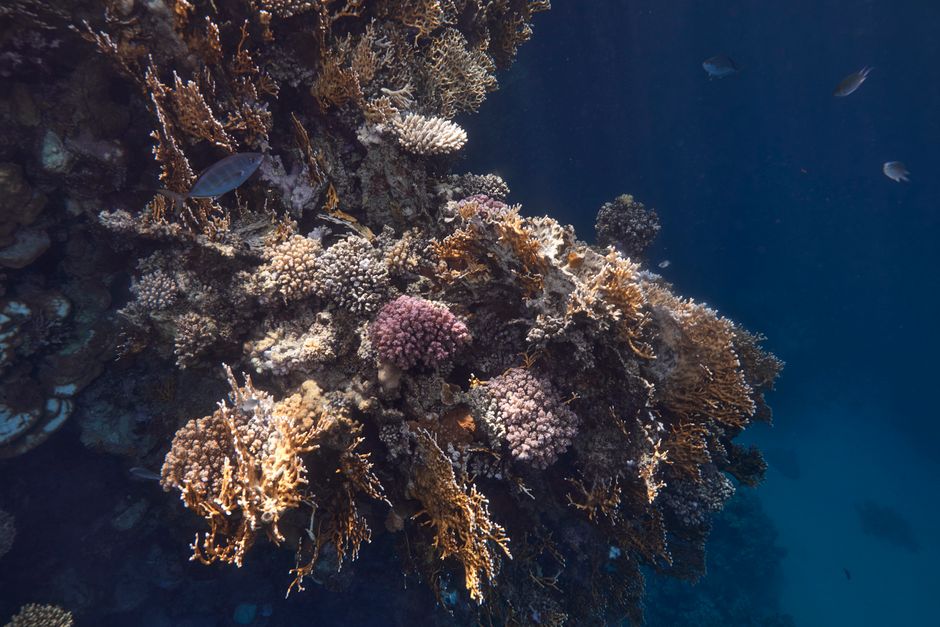
Beneath the waves of tropical and subtropical oceans lies one of nature's most remarkable construction projects. Coral reefs, often called the "rainforests of the sea," are massive limestone structures that can stretch for hundreds of miles and support an astounding diversity of marine life. Yet these immense geological formations are built entirely by creatures so small that thousands could fit in the palm of your hand. These architects of the underwater world are coral polyps, soft-bodied invertebrates that work collectively over centuries to create some of Earth's largest living structures.

The Anatomy of a Coral Polyp

A coral polyp is a simple yet highly specialized organism, typically measuring just a few millimeters in diameter. Structurally, polyps belong to the phylum Cnidaria, making them close relatives of jellyfish and sea anemones. Each polyp consists of a cylindrical body topped with a ring of tentacles surrounding a central mouth opening. The mouth leads directly to a gastrovascular cavity where digestion occurs, as these creatures lack a separate digestive tract.

The base of each polyp secretes calcium carbonate, extracting dissolved minerals from seawater to form a hard, cup-shaped skeleton called a corallite. This external skeleton provides protection for the soft polyp body and serves as the fundamental building block of reef construction. The tentacles, armed with specialized stinging cells called nematocysts, capture microscopic prey and defend the polyp from predators.

The Symbiotic Foundation of Reef Building

The remarkable productivity of reef-building corals depends on an intimate partnership between polyps and microscopic algae called zooxanthellae. These single-celled photosynthetic organisms live within the polyp's tissues, giving many corals their vibrant colors. The relationship is mutually beneficial: the algae receive shelter and access to the polyp's metabolic waste products, which serve as nutrients for photosynthesis. In return, the zooxanthellae provide the polyp with up to 90 percent of its energy needs through photosynthesis.

This symbiotic relationship enables corals to thrive in nutrient-poor tropical waters and accelerates the rate of calcium carbonate deposition. Corals with zooxanthellae can build their skeletons up to ten times faster than those without these algal partners. The energy surplus from photosynthesis allows polyps to extract calcium and carbonate ions from seawater more efficiently and construct their limestone foundations at a pace that can eventually create entire reef systems.

Colonial Living: Strength in Numbers

While a single coral polyp might seem insignificant, reef-building corals are colonial organisms where thousands or even millions of genetically identical polyps live together as a single entity. These colonies form through asexual reproduction, as polyps divide and bud off new individuals that remain physically connected. The result is a massive superorganism sharing a common skeletal structure and connected by living tissue.

Colonial living provides numerous advantages for reef construction:

  • Enhanced structural stability as interconnected polyps support each other
  • Efficient resource sharing across the colony
  • Coordinated responses to environmental threats
  • Increased surface area for capturing food and sunlight
  • Accelerated growth rates through collective calcium carbonate deposition

The Chemistry of Reef Construction

The process by which polyps create solid reef structures involves complex biochemistry. Polyps extract calcium ions and carbonate ions from seawater, combining them to form calcium carbonate (CaCO3) in the mineral form called aragonite. This material is deposited at the base of the polyp, building upon previous layers in a continuous construction process.

The calicoblastic cells in the polyp's lower tissue layer actively pump calcium ions while controlling pH levels to facilitate aragonite precipitation. This biomineralization occurs primarily at night when polyps are not feeding. Over time, layer upon layer of calcium carbonate accumulates, creating the intricate three-dimensional structures characteristic of different coral species. Brain corals form massive, rounded structures with meandering valleys, while branching corals create delicate, tree-like formations.

Growth Rates and Reef Development

Reef construction is an extraordinarily slow process measured in geological time. Individual coral colonies typically grow between 0.3 to 10 centimeters per year, depending on species, environmental conditions, and water quality. Massive boulder corals may grow only a few millimeters annually but can live for centuries, while faster-growing branching corals might extend several centimeters each year but are generally shorter-lived.

Despite these modest individual growth rates, the collective activity of billions of polyps working across vast areas and extended time periods produces structures of continental scale. The Great Barrier Reef, the world's largest coral reef system, stretches over 2,300 kilometers and has been constructed over approximately 20,000 years through the tireless work of countless coral polyps.

Environmental Requirements for Successful Reef Building

Coral polyps are highly sensitive to environmental conditions, and successful reef building requires a precise combination of factors. Water temperature must remain between 23 and 29 degrees Celsius, as temperatures outside this range stress the symbiotic relationship with zooxanthellae. Clear, shallow water is essential to allow sufficient sunlight penetration for photosynthesis, typically limiting reef growth to depths of less than 70 meters.

Salinity must remain stable at normal seawater levels, and water movement through currents and waves is necessary to deliver nutrients, remove waste products, and provide oxygen. The water must also be relatively low in nutrients, as excessive nitrogen and phosphorus can promote algae growth that competes with corals and blocks sunlight. These stringent requirements explain why coral reefs develop only in specific geographic locations and why they are particularly vulnerable to environmental changes.

The Living Legacy of Microscopic Builders

The achievements of coral polyps represent one of nature's most impressive examples of how small organisms working collectively can reshape entire ecosystems and geological landscapes. These tiny architects demonstrate that size is no limitation to significance, as their patient, continuous labor creates habitats supporting approximately 25 percent of all marine species. Understanding how these remarkable creatures build coral reefs deepens appreciation for the complexity and fragility of marine ecosystems and underscores the importance of protecting these invaluable natural treasures for future generations.

The Potential of Fusion Energy Explained

The Potential of Fusion Energy Explained

⏱️ 5 min read

For decades, scientists have pursued what many consider the holy grail of clean energy: nuclear fusion. Unlike current nuclear power plants that split atoms apart through fission, fusion works by combining light atomic nuclei to release tremendous amounts of energy—the same process that powers the sun and stars. Recent breakthroughs have reignited optimism that this revolutionary technology could finally transition from experimental reactors to commercial power plants, potentially transforming the global energy landscape and addressing climate change concerns.

Understanding the Science Behind Fusion Energy

Nuclear fusion occurs when two light atomic nuclei, typically isotopes of hydrogen called deuterium and tritium, collide with sufficient force to overcome their natural electromagnetic repulsion and merge into a heavier nucleus. This process releases an enormous amount of energy according to Einstein's famous equation E=mc². In practical terms, fusion reactions produce roughly four million times more energy per kilogram of fuel than burning coal and four times more than nuclear fission.

The challenge lies in creating conditions extreme enough for fusion to occur. Fusion requires temperatures exceeding 100 million degrees Celsius—several times hotter than the sun's core. At these temperatures, matter exists in a fourth state called plasma, where electrons are stripped from atoms. Scientists must also confine this incredibly hot plasma long enough for fusion reactions to occur while maintaining sufficient pressure and density.

Current Approaches to Achieving Controlled Fusion

Researchers have developed several methods for attempting to harness fusion energy, each with distinct advantages and technical challenges.

Magnetic Confinement Fusion

The most developed approach uses powerful magnetic fields to contain the superheated plasma. Tokamak reactors, doughnut-shaped devices first developed in the Soviet Union, represent the leading design in this category. The magnetic fields prevent the plasma from touching the reactor walls, which would instantly cool it and halt fusion reactions. The International Thermonuclear Experimental Reactor (ITER), currently under construction in France, represents the largest tokamak project and aims to demonstrate sustained fusion reactions that produce more energy than they consume.

Stellarators offer an alternative magnetic confinement design with twisted, complex geometries that provide inherent stability advantages over tokamaks. Though more challenging to construct, stellarators may ultimately prove easier to operate continuously without interruptions.

Inertial Confinement Fusion

This approach uses powerful lasers or ion beams to compress tiny fuel pellets to extreme densities and temperatures in nanoseconds. In December 2022, researchers at the National Ignition Facility in California achieved a historic milestone by generating a fusion reaction that produced more energy than the lasers delivered to the fuel pellet—a breakthrough known as ignition. While significant hurdles remain before this could become a practical power source, the achievement demonstrated that controlled fusion energy gain is scientifically feasible.

Advantages of Fusion Energy

Fusion energy offers compelling benefits that could address many limitations of current power generation methods:

  • Abundant fuel supply: Deuterium can be extracted from seawater, where it exists naturally in vast quantities. Tritium, though rarer, can be bred from lithium, another relatively abundant element. These fuel sources could power civilization for millions of years.
  • No carbon emissions: Fusion reactions produce no greenhouse gases during operation, making them a powerful tool for combating climate change without the intermittency challenges of solar and wind power.
  • Enhanced safety profile: Unlike fission reactors, fusion reactions cannot undergo meltdowns. If containment fails, the plasma immediately cools and reactions cease. There is no possibility of runaway chain reactions.
  • Minimal radioactive waste: While fusion reactors produce some radioactive materials through neutron activation of structural components, this waste is far less hazardous than fission byproducts and becomes safe within decades rather than millennia.
  • High energy density: The extraordinary energy output relative to fuel mass means fusion plants would require minimal fuel transport and storage compared to fossil fuel facilities.

Remaining Technical Challenges

Despite recent progress, significant obstacles must be overcome before fusion becomes commercially viable. Sustaining fusion reactions continuously while extracting more energy than required to maintain them—known as net energy gain at the power plant level—remains elusive. The 2022 ignition achievement, while groundbreaking, did not account for the much larger energy needed to power the lasers themselves.

Materials science presents another major hurdle. Reactor components must withstand intense neutron bombardment, extreme temperatures, and thermal cycling over years of operation. Developing materials that maintain structural integrity under these conditions while minimizing radioactive activation requires continued research and innovation.

Tritium breeding represents an additional challenge, as natural tritium is extremely scarce. Commercial fusion plants will need to generate their own tritium supply by bombarding lithium blankets surrounding the reactor with neutrons from fusion reactions—a process that must be perfected and scaled.

Timeline and Commercial Prospects

Experts disagree on when fusion power might become commercially available. Conservative estimates suggest the 2050s or later, while optimistic projections from private fusion companies propose demonstration plants within the next decade. ITER aims to achieve its first plasma by 2025 and full fusion operation by the mid-2030s, potentially paving the way for demonstration power plants by mid-century.

Numerous private ventures have attracted substantial investment, pursuing alternative designs and accelerated development timelines. Companies like Commonwealth Fusion Systems, TAE Technologies, and Helion Energy are racing to demonstrate compact, economically competitive reactors that could reach the market sooner than massive government-funded projects.

The Path Forward

Fusion energy represents a potentially transformative technology that could provide abundant, clean, safe power for future generations. While significant challenges remain, recent breakthroughs have demonstrated that the physics works and the engineering problems, though formidable, appear solvable with sufficient resources and innovation. Continued investment in both public research facilities and private sector development will be crucial for realizing fusion's extraordinary promise and securing a sustainable energy future.