









1 / 10 Questions
0 Points

What sport uses the most expensive playing surface?

Golf

Tennis

Cricket

Polo

Points won
0
Correct score
0%

More Quizzes

More Articles

How 3D Printing Is Revolutionizing Construction

How 3D Printing Is Revolutionizing Construction

⏱️ 5 min read

The construction industry, long characterized by traditional building methods and labor-intensive processes, is undergoing a dramatic transformation through additive manufacturing technology. Three-dimensional printing has emerged from the realm of small-scale prototyping to become a viable solution for creating full-scale buildings, offering unprecedented opportunities to address housing shortages, reduce construction waste, and reimagine architectural possibilities. This technological leap forward is reshaping how structures are designed, built, and delivered across the globe.

The Fundamentals of Construction 3D Printing

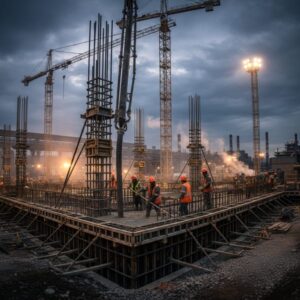
Construction-scale 3D printing operates on the same basic principles as desktop 3D printers but at a vastly larger scale. The process involves depositing material layer by layer according to digital architectural plans, building up structures from the ground level. The most common approach uses large robotic arms or gantry systems that extrude concrete-based materials through specialized nozzles, creating walls and structural elements with remarkable precision.

These systems typically use specially formulated concrete mixtures that maintain their shape immediately after extrusion while bonding effectively with previously laid layers. The materials must achieve the perfect balance between flowability for smooth extrusion and rapid strength development to support subsequent layers. Advanced formulations now incorporate additives that enhance durability, insulation properties, and curing characteristics specifically optimized for the printing process.

Speed and Efficiency Advantages

One of the most compelling benefits of 3D-printed construction is the dramatic reduction in building time. Traditional construction projects that might take months can be completed in days or even hours using additive manufacturing. A small residential structure that would typically require several weeks of on-site labor can be printed in as little as 24 to 48 hours, not including time for foundation work, roof installation, and interior finishing.

This acceleration stems from multiple factors. The automated nature of the printing process eliminates many time-consuming steps involved in traditional construction, such as formwork installation and removal. The continuous operation capability means construction can proceed around the clock without the limitations of human work schedules. Additionally, the precision of computer-controlled systems reduces errors that would otherwise require time-consuming corrections and rework.

Economic Implications and Cost Reduction

The financial advantages of 3D printing extend beyond labor savings. Material waste in conventional construction can reach 30% or more of total materials purchased, representing significant unnecessary costs. Three-dimensional printing uses only the exact amount of material needed, guided by precise digital models, reducing waste to near-zero levels in many cases.

Labor costs, which typically represent 40-50% of total construction expenses, decrease substantially when automated systems handle the primary structural work. While skilled operators are still required to manage the printing equipment, the overall workforce needed on-site is considerably smaller. These savings become particularly significant in regions facing labor shortages or where skilled construction workers command premium wages.

Addressing Global Housing Challenges

The technology holds particular promise for addressing affordable housing crises affecting communities worldwide. Organizations and companies are deploying 3D printing to create low-cost homes in developing regions where traditional construction infrastructure may be limited. The reduced material and labor costs make it economically feasible to produce housing at price points previously unattainable.

Several pilot projects have demonstrated this potential convincingly. Communities of 3D-printed homes have been constructed in Mexico, providing housing for families living below the poverty line. Similar initiatives in rural India and parts of Africa are proving that the technology can be adapted to local conditions and material availability, offering scalable solutions to housing insecurity.

Design Freedom and Architectural Innovation

Beyond practical advantages, 3D printing liberates architects from many constraints imposed by traditional construction methods. Complex curved walls, intricate geometric patterns, and organic shapes that would be prohibitively expensive or impossible to build conventionally become readily achievable. This design freedom enables more efficient structural forms that can optimize material usage while creating aesthetically striking buildings.

The technology also facilitates rapid prototyping of architectural concepts. Design iterations that once required extensive time and resources to model physically can now be tested quickly and economically. This accelerated design process encourages experimentation and innovation, potentially leading to breakthrough approaches in structural engineering and sustainable architecture.

Environmental Sustainability Benefits

The construction industry accounts for approximately 40% of global carbon emissions, making sustainability improvements critically important. Three-dimensional printing contributes to environmental goals through multiple mechanisms:

  • Dramatic reduction in material waste through precise material deposition
  • Lower transportation emissions due to on-site material usage and reduced equipment needs
  • Potential incorporation of recycled materials and sustainable alternatives to traditional concrete
  • Optimized structural designs that use less material while maintaining strength requirements
  • Reduced energy consumption during the construction process compared to conventional methods

Research into bio-based printing materials and carbon-negative concrete formulations promises to further enhance the environmental profile of 3D-printed construction in coming years.

Current Limitations and Technical Challenges

Despite its promise, construction 3D printing faces several obstacles to widespread adoption. Building codes and regulatory frameworks in most jurisdictions have not yet been updated to accommodate this technology, creating uncertainty for developers and builders. The lack of standardization across different printing systems and materials complicates efforts to establish universal quality standards and safety certifications.

Technical limitations also persist. Most current systems are best suited for printing walls and basic structural elements, with roofs, windows, electrical systems, and plumbing still requiring traditional installation methods. The technology performs optimally in controlled conditions, and weather factors like extreme temperatures or high winds can interfere with the printing process and material curing.

The Future Trajectory of Construction 3D Printing

The technology continues advancing rapidly, with research focusing on expanding capabilities and addressing current limitations. Multi-material printing systems under development will enable integration of insulation, reinforcement, and utilities during the printing process itself. Artificial intelligence and machine learning algorithms are being incorporated to optimize printing parameters in real-time, adjusting for environmental conditions and ensuring consistent quality.

As the technology matures and regulatory frameworks adapt, 3D printing is positioned to become a standard option within the construction industry's toolkit rather than a novelty. The combination of economic advantages, environmental benefits, and design possibilities suggests that additive manufacturing will play an increasingly central role in shaping the built environment of the future, fundamentally altering how humanity approaches the challenge of creating shelter and infrastructure.

Top 10 Directors Who Hate Their Own Movies

Top 10 Directors Who Hate Their Own Movies

⏱️ 6 min read

Even the most celebrated filmmakers sometimes look back at their work with regret, disappointment, or outright disdain. Whether due to studio interference, creative compromises, or simply evolving artistic standards, many directors have publicly distanced themselves from films that bear their names. These candid admissions offer fascinating insights into the filmmaking process and the complex relationship between artists and their creations.

Notable Directors Who Disowned Their Work

1. David Fincher's Frustration with "Alien 3"

David Fincher's directorial debut became one of Hollywood's most infamous examples of studio interference destroying a director's vision. The acclaimed filmmaker behind "Fight Club" and "The Social Network" has been remarkably vocal about his disdain for "Alien 3" (1992). Fincher endured constant meddling from 20th Century Fox executives, underwent numerous script rewrites, and faced production nightmares that left him feeling completely powerless. He's since stated he doesn't even consider it his film, refusing to participate in the DVD commentary and calling the experience so traumatic that he nearly quit filmmaking altogether. The director has described it as a learning experience in what not to do and has expressed that the studio essentially hijacked his creative control.

2. Tony Kaye's Battle Over "American History X"

Tony Kaye's relationship with "American History X" (1998) represents one of cinema's most contentious director-studio conflicts. Despite the film's critical acclaim and Edward Norton's Oscar nomination, Kaye attempted to have his name removed from the project, requesting the pseudonym "Humpty Dumpty" instead. The British director clashed intensely with New Line Cinema and star Edward Norton over the final cut, claiming his artistic vision was compromised. Kaye took out full-page ads in trade publications, hired lawyers, and even sought mediation from religious leaders in an attempt to re-edit the film. His extreme reaction to losing creative control became almost as famous as the film itself.

3. Josh Trank's Public Dismissal of "Fantastic Four"

In an unprecedented move, Josh Trank publicly criticized his own film on Twitter just hours before "Fantastic Four" (2015) premiered in theaters. The director, who had previously received praise for "Chronicle," tweeted that audiences would never see his actual vision, suggesting studio interference had ruined the final product. The production was reportedly plagued with conflicts between Trank and 20th Century Fox, with rumors of erratic behavior on set and extensive reshoots conducted without the director's involvement. Trank's tweet was quickly deleted, but the damage was done, contributing to the film's disastrous reception and box office performance.

4. George Lucas's Ambivalence Toward the Original "Star Wars"

Perhaps surprisingly, George Lucas has expressed significant dissatisfaction with the original "Star Wars" (1977) throughout his career. Despite creating one of the most beloved films in cinema history, Lucas has repeatedly stated he was unhappy with the final product, feeling it only represented about 25% of his original vision. This dissatisfaction drove him to create multiple special editions, adding CGI effects and scenes he couldn't achieve with 1970s technology. Lucas's constant tinkering with the original trilogy has been controversial among fans, but it demonstrates his genuine belief that his original films were compromised by technical limitations and time constraints.

5. Michael Mann's Regret Over "The Keep"

Michael Mann, the visionary director behind "Heat" and "Collateral," has expressed deep disappointment with his supernatural World War II film "The Keep" (1983). The atmospheric horror film was heavily re-edited by Paramount Pictures, cutting it from 210 minutes to just 96 minutes. Mann has stated that the theatrical release bore little resemblance to his intended vision, with crucial plot points and character development removed. The director's dissatisfaction runs so deep that he has refused to authorize a proper home video release, leaving "The Keep" as a cult curiosity that exists in a compromised form, much to the frustration of Mann completists.

6. Mathieu Kassovitz's Disavowal of "Babylon A.D."

French director Mathieu Kassovitz publicly trashed "Babylon A.D." (2008) before it even reached theaters, calling it "pure violence and stupidity" and stating he had "no power" during production. The filmmaker, known for the acclaimed "La Haine," blamed 20th Century Fox for cutting the film from his intended vision and removing important narrative elements. Kassovitz told reporters he directed parts of the movie "with his feet" out of sheer frustration and warned audiences not to watch it. His scathing comments represented one of the most damning pre-release condemnations by a director in recent memory.

7. Andrew Dominik's Criticism of "Killing Them Softly"

While Andrew Dominik's "Killing Them Softly" (2012) received generally positive reviews, the director himself has been surprisingly critical of the final product. Dominik has stated in interviews that he felt the film didn't work as well as it should have and that he made mistakes in the storytelling. Unlike directors who blame studios, Dominik took personal responsibility for the film's shortcomings, suggesting his artistic choices didn't effectively convey his intentions. This rare instance of directorial self-criticism demonstrates the high standards filmmakers hold for their own work.

8. Bob Clark's Dismissal of "Baby Geniuses"

Bob Clark, the director of classics like "A Christmas Story" and "Black Christmas," distanced himself from "Baby Geniuses" (1999) following its critical drubbing. The family comedy about superintelligent talking babies became a notorious box office disaster and earned multiple Razzie nominations. Clark admitted in later interviews that the project was a commercial miscalculation and expressed embarrassment over the final product. The film's poor reception was particularly painful for a director with such strong earlier work, and Clark acknowledged it represented a low point in his creative career.

9. Karyn Kusama's Frustration with "Æon Flux"

Director Karyn Kusama has spoken openly about her disappointment with "Æon Flux" (2005), citing studio interference and a troubled production. Following her acclaimed debut "Girlfight," Kusama struggled with Paramount's demands on the sci-fi adaptation, and the film underwent significant reshoots that altered her original vision. The director has described feeling powerless as her darker, more complex interpretation was transformed into a more conventional action film. Kusama's experience became a cautionary tale about maintaining creative control, though she later rebounded with stronger work on "The Invitation" and "Destroyer."

10. William Friedkin's Mixed Feelings About "Cruising"

William Friedkin, despite directing masterpieces like "The French Connection" and "The Exorcist," has expressed ambivalence about "Cruising" (1980). The controversial thriller about a serial killer in New York's gay leather scene faced massive protests during production and accusations of homophobia. While Friedkin has defended aspects of the film, he's also admitted uncertainty about whether it succeeded artistically and has acknowledged that the intense controversy may have compromised his objectivity. The director has stated in various interviews that he's unsure if the film works and has questioned some of his creative decisions.

The Complex Relationship Between Directors and Their Films

These ten examples illustrate that filmmaking remains a collaborative art form where directors don't always have final say. Studio interference, budget constraints, creative differences, and commercial pressures can all compromise a filmmaker's vision. However, these candid admissions also reveal the integrity of directors who refuse to defend work they don't believe represents their best efforts. Whether justified or not, their willingness to publicly criticize their own films demonstrates the passion and high standards that drive cinematic artistry. For film enthusiasts, these stories provide valuable context for understanding that what appears on screen doesn't always reflect the director's true intentions.