











1 / 10 Questions
0 Points

Which bird species builds communal nests so massive they can weigh over a ton and be visible from space?

Osprey

Bald eagle

Sociable weaver

Great blue heron

Points won
0
Correct score
0%

More Quizzes

More Articles

Leaders Who Rose by Accident

Leaders Who Rose by Accident

⏱️ 5 min read

Throughout history, some of the most influential leaders never intended to rule. Whether through unexpected tragedy, political upheaval, or simply being in the right place at the wrong time, these individuals found themselves thrust into positions of power they never sought. Their stories reveal how circumstance, rather than ambition, can shape the course of nations and change the trajectory of human events.

The Unexpected Emperor: Claudius of Rome

Perhaps no leader better exemplifies accidental ascension than Claudius, who became Roman Emperor in 41 CE under the most unlikely circumstances. Born with physical disabilities that caused him to stammer and limp, Claudius was considered unfit for public life by his own family. The Roman elite largely dismissed him as a scholarly fool, which ironically saved his life when other family members were murdered during political purges.

When the Praetorian Guard assassinated Emperor Caligula, they found Claudius hiding behind a curtain in the palace, terrified he would be killed next. Instead, the guards proclaimed him emperor, recognizing they needed a member of the Julio-Claudian dynasty to maintain stability. Despite his reluctant start, Claudius proved to be a capable administrator who expanded the empire, improved infrastructure, and reformed the legal system during his thirteen-year reign.

Harry Truman: From Vice President to Cold War Leader

Harry S. Truman assumed the American presidency on April 12, 1945, after serving only 82 days as vice president. Franklin D. Roosevelt's sudden death thrust Truman into leadership at one of history's most critical moments, with World War II still raging and momentous decisions looming. Truman himself felt unprepared, famously telling reporters he felt like "the moon, the stars, and all the planets had fallen" on him.

Remarkably, Roosevelt had barely communicated with Truman about major wartime issues, including the Manhattan Project. Truman learned about the atomic bomb only after becoming president. Despite this lack of preparation, he made some of the twentieth century's most consequential decisions, including authorizing the use of atomic weapons against Japan, implementing the Marshall Plan, establishing NATO, and recognizing the state of Israel.

The Reluctant Czar: Alexander I of Russia

Alexander I became Emperor of Russia in 1801 under a dark cloud of suspicion. His father, Czar Paul I, was assassinated in a palace coup, and while Alexander claimed no direct involvement, he had known about the conspiracy. The young ruler never sought his father's throne and was reportedly tormented by guilt over the circumstances of his succession.

This accidental emperor went on to play a pivotal role in European history, leading Russia through the Napoleonic Wars and ultimately contributing to Napoleon's defeat. Alexander's complex personality and reluctant acceptance of power shaped his contradictory reign, which began with liberal reforms but gradually turned more conservative and mystical as he struggled with the burden of leadership he never truly wanted.

Queen Elizabeth II: A Princess Never Meant to Rule

Elizabeth II was born third in line to the British throne and seemed destined for a life of relative obscurity among the royal family. Her destiny changed dramatically in 1936 when her uncle, King Edward VIII, abdicated to marry American divorcée Wallis Simpson. This unprecedented decision elevated Elizabeth's father to the throne as King George VI and made ten-year-old Elizabeth the heir presumptive.

Neither Elizabeth nor her father expected or desired these roles. George VI, who struggled with a severe stammer, had lived in his older brother's shadow and never prepared for kingship. Elizabeth, meanwhile, had envisioned a different life before circumstance placed her on the path to becoming Britain's longest-reigning monarch, a position she would hold for over seventy years.

Gerald Ford: The Only Unelected President

Gerald Ford holds a unique distinction in American history as the only person to serve as president without being elected to either the presidency or vice presidency. Ford became vice president in 1973 through appointment after Spiro Agnew resigned in scandal. Less than a year later, Richard Nixon's resignation over Watergate elevated Ford to the presidency.

This accidental president faced the monumental task of healing a nation torn by political scandal and mistrust. Ford's decision to pardon Nixon proved controversial and likely cost him the 1976 election, but his steady, honest approach helped restore dignity to an office badly damaged by his predecessor's actions. He never sought the presidency and reportedly had planned to retire from Congress before circumstances intervened.

The Legacy of Accidental Leadership

These accidental leaders demonstrate that preparation and ambition, while valuable, are not prerequisites for effective leadership. Many rose to challenges they never anticipated, guided by duty, circumstance, and character rather than long-held aspirations for power. Their stories reveal how historical forces often matter more than individual plans, and how leadership qualities may remain dormant until circumstances demand their emergence.

The effectiveness of these leaders varied considerably, but their experiences share common themes: initial reluctance, rapid adaptation to overwhelming responsibility, and decision-making under unprecedented pressure. Their legacies remind us that history's path is rarely predictable and that those who shape it are not always those who sought to do so. In many cases, the very qualities that made these individuals reluctant leaders—humility, caution, and awareness of power's weight—ultimately contributed to their effectiveness in office.
Top 10 Most Influential Kings and Queens in History

Top 10 Most Influential Kings and Queens in History

⏱️ 7 min read

Throughout history, monarchs have shaped the course of civilizations, influenced cultural development, and left legacies that continue to impact our world today. From ancient empires to medieval kingdoms and early modern states, certain rulers stand out for their extraordinary vision, military prowess, administrative reforms, and cultural contributions. These sovereigns didn't merely occupy thrones—they transformed societies, expanded territories, and established precedents that would guide nations for centuries to come.

Royal Leaders Who Changed the World

1. Alexander the Great of Macedon (356-323 BCE)

King Alexander III of Macedon earned his epithet "the Great" through unprecedented military conquests that created one of the largest empires in ancient history. By the age of thirty, he had conquered territories stretching from Greece to northwestern India, spreading Hellenistic culture across three continents. His military tactics revolutionized warfare, and his policy of cultural fusion between Greek and Eastern civilizations created the Hellenistic period, which profoundly influenced art, science, philosophy, and governance. Alexander founded numerous cities, most notably Alexandria in Egypt, which became a center of learning and culture for centuries. His legacy includes not only territorial expansion but also the dissemination of Greek language and ideas that would shape Western civilization.

2. Queen Elizabeth I of England (1533-1603)

Elizabeth I transformed England from a relatively minor European power into a major cultural and economic force during her 45-year reign. Her era, known as the Elizabethan Age, witnessed the flourishing of English literature with William Shakespeare and Christopher Marlowe, the defeat of the Spanish Armada in 1588, and the establishment of England as a formidable naval power. Elizabeth's religious settlement brought relative stability after years of religious turmoil, and her support for exploration and trade laid the groundwork for the British Empire. As a female monarch in a male-dominated world, she navigated complex political situations with intelligence and diplomatic skill, choosing to remain unmarried and dedicating herself entirely to her role as sovereign.

3. Charlemagne, King of the Franks and Holy Roman Emperor (747-814)

Charlemagne united much of Western and Central Europe during the early Middle Ages, establishing the Carolingian Empire and earning the title of Holy Roman Emperor. His reign marked a revival of art, religion, and culture known as the Carolingian Renaissance, which preserved classical learning that might otherwise have been lost. Charlemagne standardized weights, measures, and monetary systems, promoted education and literacy, and established a more efficient administrative system. His empire served as a precursor to both modern France and Germany, and his coronation by Pope Leo III in 800 CE established important precedents regarding the relationship between church and state in European history.

4. Catherine the Great of Russia (1729-1796)

Born a German princess, Catherine II seized power through a coup and became one of Russia's most accomplished rulers. She modernized Russia along Western European lines, championed the arts and Enlightenment ideals, and significantly expanded Russian territory through successful military campaigns. Catherine established new cities, reformed the provincial administration, and promoted education and public health. She corresponded with leading Enlightenment philosophers like Voltaire and Diderot, positioning Russia as an important European cultural center. Under her rule, Russia's influence in European affairs grew substantially, and she added Crimea, Ukraine, and parts of Poland to the Russian Empire, securing access to the Black Sea.

5. King Hammurabi of Babylon (c. 1810-1750 BCE)

Hammurabi transformed Babylon from a small city-state into a major Mesopotamian power, but his lasting influence comes from his famous law code. The Code of Hammurabi, inscribed on a stone stele, contained 282 laws covering commerce, property rights, family relations, and criminal justice. This represented one of humanity's earliest attempts to create a comprehensive legal framework and establish the principle that laws should be publicly displayed and consistently applied. The concept of proportional justice—"an eye for an eye"—originated here, and many principles from his code influenced later legal systems throughout the ancient world and beyond.

6. Queen Victoria of the United Kingdom (1819-1901)

Victoria's 63-year reign gave its name to an entire era of British history characterized by industrial expansion, scientific progress, and imperial dominance. Under her rule, the British Empire reached its zenith, encompassing nearly a quarter of the world's land surface and population. The Victorian era saw remarkable technological advancement, including the expansion of railways, telegraph networks, and industrialization. Victoria's moral standards and family values came to define the age, and her marriage to Prince Albert exemplified domestic stability. She restored dignity to the British monarchy after decades of scandal, and her descendants would come to occupy thrones across Europe, earning her the title "Grandmother of Europe."

7. Cyrus the Great of Persia (c. 600-530 BCE)

Cyrus II founded the Achaemenid Empire, which became the largest empire the world had yet seen, stretching from the Mediterranean to Central Asia. What distinguished Cyrus from other conquerors was his enlightened approach to governance—he respected the customs, religions, and traditions of conquered peoples rather than imposing Persian culture. His Cylinder, often called the first declaration of human rights, proclaimed religious tolerance and freedom. Cyrus freed the Jews from Babylonian captivity, allowing them to return to Jerusalem and rebuild their temple, an act commemorated in biblical texts. His administrative innovations, including the division of the empire into satrapies and the establishment of efficient communication systems, influenced governance structures for centuries.

8. King Louis XIV of France (1638-1715)

The "Sun King" reigned for 72 years, the longest of any European monarch, and epitomized absolute monarchy. Louis XIV centralized power in the French crown, famously declaring "L'État, c'est moi" (I am the state). He transformed France into the dominant European power of his era and made French the international language of diplomacy and culture. The Palace of Versailles, his architectural masterpiece, became the model for royal residences across Europe and symbolized the grandeur of absolute monarchy. Louis's patronage of the arts fostered classical French culture, while his military campaigns and diplomatic maneuvering established France's preeminence. However, his expensive wars and lavish spending also planted seeds for the financial crises that would eventually lead to revolution.

9. Queen Hatshepsut of Egypt (c. 1507-1458 BCE)

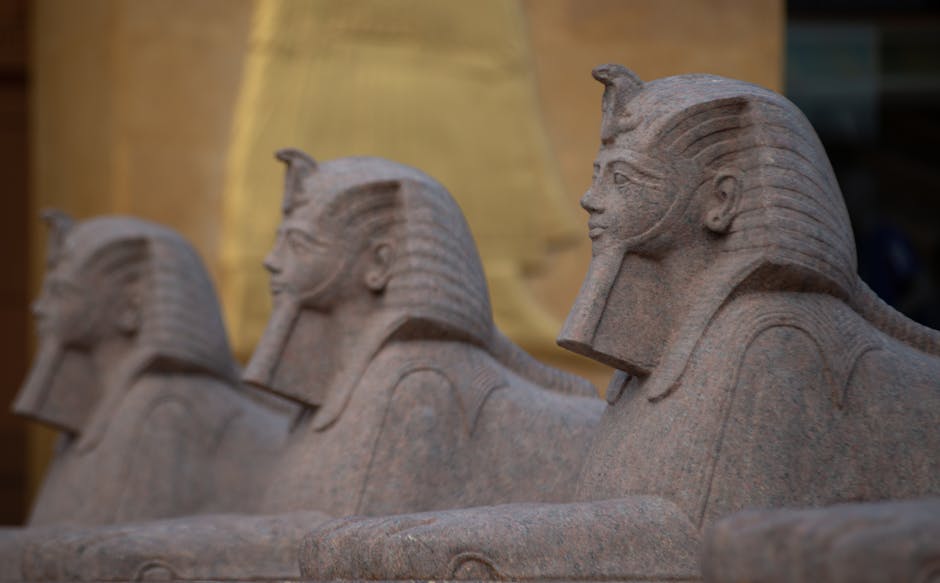
One of ancient Egypt's most successful pharaohs, Hatshepsut ruled as regent for her stepson before declaring herself pharaoh—a position typically reserved for men. She often depicted herself in male regalia, including the traditional false beard, to legitimize her unprecedented rule. Hatshepsut's reign brought peace and prosperity to Egypt, focusing on trade expeditions rather than military conquests. Her trading expedition to the Land of Punt brought back valuable goods and is commemorated in detailed reliefs at her magnificent mortuary temple at Deir el-Bahari. She initiated extensive building projects that demonstrate architectural sophistication and artistic achievement, leaving a legacy of monuments that rival those of any pharaoh.

10. Frederick II (Frederick the Great) of Prussia (1712-1786)

Frederick transformed Prussia from a minor German state into a major European power through military genius, administrative reform, and Enlightenment philosophy. An accomplished military strategist, he successfully defended Prussia against much larger coalitions during the Seven Years' War. As an enlightened absolutist, Frederick modernized the Prussian bureaucracy, reformed the judicial system, abolished torture, and promoted religious tolerance and freedom of the press. He was an accomplished musician and philosopher who corresponded with Voltaire and composed symphonies. Frederick's domestic and military reforms created the foundation for Prussian dominance in German affairs and eventually the unification of Germany under Prussian leadership in the 19th century.

The Enduring Impact of Royal Leadership

These ten monarchs demonstrate that effective leadership transcends time periods and geographical boundaries. Whether through military conquest, legal innovation, cultural patronage, or administrative reform, these rulers fundamentally altered the trajectories of their civilizations. Their legacies persist in modern legal systems, political structures, cultural traditions, and territorial boundaries. While monarchy has largely given way to other forms of government, the achievements of these extraordinary individuals remind us how singular vision and determined leadership can shape the course of human history. Their stories continue to provide valuable lessons about power, governance, cultural influence, and the complex relationship between individual agency and historical forces.