
⏱️ 5 min read
The Earth’s surface is constantly transforming, and few geological processes demonstrate this dynamic change more dramatically than volcanic land formation. When molten rock erupts from beneath the Earth’s crust, it doesn’t just create spectacular displays of nature’s power—it literally builds new territory. From the Hawaiian Islands to Iceland’s expanding coastline, volcanoes have been responsible for creating substantial landmasses throughout Earth’s history, reshaping geography and providing unique ecosystems for life to flourish.
The Fundamental Process of Volcanic Land Formation
Volcanic land creation begins deep within the Earth, where temperatures and pressures are extreme enough to melt rock into magma. This molten material is less dense than the surrounding solid rock, causing it to rise toward the surface through cracks and weaknesses in the Earth’s crust. When magma reaches the surface, it becomes lava, and its interaction with the atmosphere and water begins the land-building process.
As lava flows across the surface or erupts explosively into the air, it cools and solidifies into volcanic rock. Layer upon layer of this material accumulates over time, gradually building elevation and mass. This process can occur over thousands or even millions of years, with each eruption adding new material to the growing landform. The rate of land creation varies significantly depending on the type of volcano, eruption style, and location.
Submarine Volcanic Activity and Island Formation
The ocean floor serves as the birthplace for some of the most impressive examples of volcanic land creation. Submarine volcanoes, erupting beneath thousands of feet of water, build massive underwater mountains through repeated eruptions. As these volcanic mountains grow taller, they eventually breach the ocean surface, creating new islands.
The Hawaiian Islands exemplify this process perfectly. Positioned over a hotspot in the Earth’s mantle, the Hawaiian chain has formed over millions of years as the Pacific Plate slowly moves northwest. The hotspot remains relatively stationary, continuously pumping magma upward, while the moving plate creates a string of islands. The Big Island of Hawaii continues to grow today, with Kilauea and Mauna Loa actively adding new land to its coastline.
When underwater volcanic eruptions occur in shallow water, the process becomes more violent due to rapid steam generation. The interaction between hot lava and cold seawater creates explosive reactions, fragmenting the lava into small particles that eventually consolidate into solid rock as the volcanic edifice grows.
Different Types of Lava and Their Land-Building Characteristics
The composition and temperature of lava significantly influence how new land forms. Basaltic lava, which is relatively low in silica content and very hot, flows easily across great distances. These fluid lava flows can cover extensive areas, creating broad, gently-sloping shield volcanoes. The lava spreads out in thin sheets, building land through numerous successive flows rather than dramatic vertical growth.
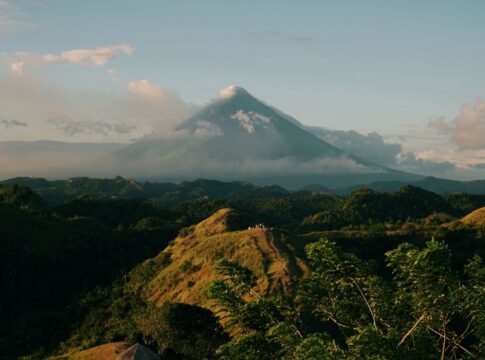
In contrast, andesitic and rhyolitic lavas contain more silica and are much more viscous. These thicker lavas don’t flow far from their source, instead piling up to create steep-sided stratovolcanoes. While they may not cover as much horizontal area as basaltic flows, they build impressive vertical structures that can dominate regional landscapes.
Pahoehoe and A’a Lava Flows
Basaltic lava commonly forms two distinct surface textures as it cools. Pahoehoe lava creates smooth, rope-like patterns and can form extensive lava tubes beneath a solidified crust. These tubes allow lava to travel significant distances from the eruption source while remaining hot and fluid, enabling land creation far from the volcanic vent.
A’a lava produces rough, jagged surfaces composed of broken lava blocks. While both types add new land, pahoehoe flows typically advance more steadily and predictably, while a’a flows move as chaotic, slow-moving fronts of rubble and molten rock.
Coastal Extension and Delta Formation
When lava flows reach the ocean, they create new coastal land through a dramatic process. The superheated rock vaporizes seawater on contact, creating massive steam plumes while the lava itself cools and solidifies almost instantaneously. This rapid cooling often produces black sand beaches composed of shattered volcanic glass.
Over time, repeated lava flows into the ocean build lava deltas—platforms of new land extending beyond the original coastline. These deltas can be unstable initially, as they’re built partially on loose debris and may collapse into the sea. However, as they receive more lava and consolidate, they become permanent additions to the landmass.
Pyroclastic Material and Volcanic Construction
Not all volcanic land formation involves flowing lava. Explosive eruptions eject fragments of rock, ash, and pumice into the air, and these pyroclastic materials also contribute to land building. As volcanic ash settles, it creates layers that can eventually compact into solid rock called tuff.
Pyroclastic flows—fast-moving currents of hot gas and volcanic matter—can travel at hundreds of miles per hour, depositing thick layers of material across the landscape. While devastating to existing ecosystems, these deposits add substantial volume to volcanic landforms and can fill valleys, creating entirely new topography.
Long-Term Land Development and Ecological Succession
The creation of new volcanic land represents only the beginning of a longer transformation process. Fresh volcanic rock initially appears barren and lifeless, but it weathers relatively quickly compared to other rock types. Volcanic soil is typically rich in minerals, making it highly fertile once broken down by weathering processes.
Pioneer species, such as lichens and mosses, first colonize new volcanic surfaces, beginning the process of soil development. Over decades and centuries, these are succeeded by more complex plant communities, eventually creating thriving ecosystems. This ecological succession demonstrates that volcanic land creation provides not just new territory, but new opportunities for life.
The ongoing process of volcanic land formation continues to reshape our planet, adding square miles of new territory annually. Understanding these processes helps scientists predict volcanic behavior, assess hazards, and appreciate the powerful geological forces that have shaped Earth’s surface throughout its 4.5-billion-year history.