
⏱️ 5 min read
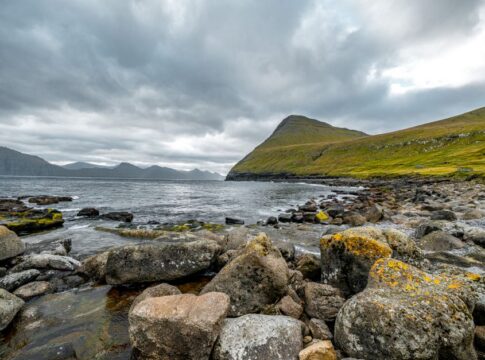
In the vast expanse of the South Atlantic Ocean, roughly 1,750 miles from the nearest continental landmass of South Africa and 2,088 miles from South America, lies Tristan da Cunha—the most remote inhabited archipelago on Earth. This volcanic island group represents one of humanity’s most isolated communities, where approximately 245 permanent residents live in conditions that challenge our understanding of accessibility and self-sufficiency in the modern world.
Geographic Isolation and Location
Tristan da Cunha sits at coordinates 37°6′S 12°17′W, positioned in the southern Atlantic Ocean between Africa and South America. The main island, also called Tristan da Cunha, covers approximately 38 square miles and features a volcanic peak rising 6,765 feet above sea level. The archipelago includes several other islands: Inaccessible Island, Nightingale Islands, and Gough Island, though only the main island supports permanent human habitation.
The nearest inhabited neighbor is Saint Helena, located 1,343 miles to the north, making even regional contact extraordinarily difficult. This geographic isolation has shaped every aspect of life on the island, from its economy and culture to its unique ecological systems and the resilience required of its inhabitants.
Historical Discovery and Settlement
Portuguese explorer Tristão da Cunha first sighted the island in 1506, though he never actually landed due to rough seas. The islands remained largely uninhabited until 1810, when the British annexed the archipelago. The first permanent settler, Jonathan Lambert from Massachusetts, arrived in 1810, declaring himself sovereign of the islands. However, it was the British garrison stationed there in 1816—intended to prevent any attempt to rescue Napoleon from Saint Helena—that established the foundation for permanent settlement.
After the garrison withdrew in 1817, three men chose to remain, and they were soon joined by shipwrecked sailors and women from Saint Helena and South Africa. This small group formed the nucleus of the current population, and remarkably, most present-day residents can trace their ancestry back to these original settlers. The island’s population has rarely exceeded 300 people throughout its inhabited history.
Life in Extreme Isolation
The community on Tristan da Cunha centers around Edinburgh of the Seven Seas, the only settlement on the island. Life here operates under unique circumstances shaped by the island’s remoteness. The community maintains a largely self-sufficient economy based primarily on fishing, particularly the harvesting of Tristan rock lobster (crawfish), which provides the island’s main export and source of income.
Residents share a communal lifestyle where cooperation is essential for survival. All families have rights to farm plots in the island’s potato patches, and labor is often shared for major tasks. The island operates without hotels, restaurants, or commercial entertainment facilities. There are no airports, and the only connection to the outside world comes via supply ships that make roughly nine trips per year, with journeys taking five to six days from Cape Town, South Africa.
Infrastructure and Modern Amenities
Despite its isolation, Tristan da Cunha has gradually incorporated modern amenities. The island received electricity in 1971, satellite television in 2001, and internet access in 2006. A small hospital staffed by resident doctors provides medical care, though serious emergencies require evacuation by ship. The island has a school, post office, swimming pool, and even a small museum.
Communication with the outside world occurs through satellite internet, though bandwidth is limited and expensive. The island has its own radio station and produces a local newsletter. Residents can make telephone calls via satellite connection, though costs remain significantly higher than in other parts of the world.
Economic Sustainability
The Tristan economy functions differently from most modern societies. The fishing industry, operated through a partnership with a South African company, employs most working-age islanders at the fish processing factory. Revenue from fishing licenses and exports funds government operations and provides employment.
Agriculture plays a supplementary role, with residents growing potatoes and raising sheep and cattle. The island is financially self-sufficient and does not require subsidies from the British government, though it remains a British Overseas Territory. Stamp sales to philatelists worldwide provide additional income, as the island’s stamps are highly collectible due to their rarity.
Environmental Challenges and the 1961 Volcanic Eruption
Living on an active volcanic island presents inherent risks. In October 1961, a volcanic eruption forced the complete evacuation of the island’s population to England. The eruption destroyed the island’s fish factory and threatened the settlement. After two years in England, most residents voted to return to Tristan da Cunha in 1963, demonstrating their deep attachment to their isolated home despite its challenges.
The island faces ongoing environmental concerns, including limited freshwater resources, the threat of invasive species, and the impacts of climate change on its marine ecosystem. Conservation efforts focus on protecting endemic species found nowhere else on Earth.
Cultural Identity and Future Prospects
The people of Tristan da Cunha have developed a distinct cultural identity shaped by their isolation and mixed ancestry. English is the primary language, spoken with a unique accent. The population shares eight surnames among virtually all residents, reflecting the small founding population.
Looking forward, the island community faces questions about sustainability, particularly regarding youth retention and economic diversification. While tourism represents a potential growth area, the island’s inaccessibility limits its development. Nevertheless, this remoteness also preserves the community’s unique way of life, making Tristan da Cunha an enduring testament to human adaptability and the desire to maintain home against all odds.