
⏱️ 5 min read
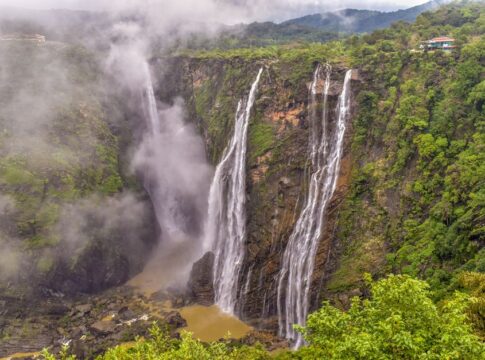
Deep within the lush Venezuelan rainforest, cascading down the face of a massive table-top mountain, flows a natural wonder that stands unrivaled in height and majesty. Angel Falls, known locally as “Kerepakupai Merú,” plunges an astounding 979 meters (3,212 feet) from the summit of Auyán-tepuí, making it the tallest uninterrupted waterfall on Earth. This geographical marvel represents not only a testament to the power of erosion and geological forces but also serves as a symbol of Venezuela’s extraordinary natural heritage.
Discovery and Historical Significance
Despite being known to indigenous Pemón people for millennia, Angel Falls remained unknown to the outside world until the 20th century. The waterfall’s international recognition came in 1933 when American aviator James Crawford Angel flew over the remote Auyán-tepuí plateau while searching for a legendary gold ore bed. His initial flyover sparked global interest, and he returned in 1937, attempting to land atop the mountain. His plane became mired in the marshy terrain, forcing him and his crew to trek down the mountain—an arduous eleven-day journey that nonetheless confirmed the waterfall’s extraordinary dimensions.
The waterfall was subsequently named in his honor, though the Venezuelan government has made efforts to promote the indigenous name, Kerepakupai Merú, which translates to “waterfall of the deepest place.” This dual nomenclature reflects both the colonial history of exploration and the growing recognition of indigenous cultural contributions to geographical knowledge.
Geological Formation and Characteristics
Angel Falls owes its existence to the unique geological formations called tepuis, which are massive flat-topped mountains characteristic of the Guiana Highlands. These ancient table mountains are composed of sandstone dating back approximately two billion years to the Precambrian era, making them among the oldest geological formations on the planet. The Auyán-tepuí, from which Angel Falls descends, covers an area of approximately 666.9 square kilometers (257.5 square miles) and rises more than 2,500 meters above the surrounding jungle.
The waterfall’s remarkable height is divided into two main sections: the initial uninterrupted plunge of 807 meters (2,648 feet), followed by cascades and rapids covering an additional 172 meters (564 feet). During the descent, much of the water atomizes into mist before reaching the ground, particularly during the dry season when water flow decreases significantly. This phenomenon creates a perpetual cloud of spray at the base, sustaining unique microhabitats and contributing to the mystical atmosphere surrounding the falls.
Hydrological Patterns and Seasonal Variations
The flow of Angel Falls varies dramatically between wet and dry seasons, fundamentally altering its appearance and behavior. The waterfall is fed by the Churún River, which flows across the top of Auyán-tepuí before plummeting over the precipice. During the rainy season, which extends from May through November, the waterfall reaches its most impressive volume, with thunderous quantities of water cascading down the cliff face in a powerful, continuous column.
Conversely, during the dry season from December through April, the water flow diminishes substantially. In extreme drought conditions, the falls can reduce to little more than a trickle, and the wind often catches the falling water, dispersing it before it reaches the bottom. This seasonal variation means that visitor experiences can differ dramatically depending on timing, though each season offers its own unique perspective on this natural wonder.
Ecological Importance and Biodiversity
The region surrounding Angel Falls represents one of the most biodiverse and pristine ecosystems on Earth. The tepuis, including Auyán-tepuí, function as ecological islands, hosting numerous endemic species found nowhere else on the planet. The isolated nature of these plateau environments has allowed evolution to proceed independently for millions of years, resulting in extraordinary levels of species uniqueness.
The area encompasses various distinct ecological zones:
- Lowland tropical rainforest at the base, characterized by dense canopy coverage and exceptional biodiversity
- Cloud forest zones along the mountain slopes, perpetually shrouded in mist from the waterfall
- Unique summit ecosystems atop the tepui, featuring carnivorous plants and specialized vegetation adapted to nutrient-poor conditions
- Riparian habitats along the Churún River and associated waterways
Access and Tourism Considerations
Visiting Angel Falls presents considerable logistical challenges due to its remote location within Canaima National Park. The falls are situated in one of Venezuela’s most isolated regions, accessible only by air or river. Most visitors fly from Ciudad Bolívar or other regional hubs to Canaima camp, then undertake a river journey lasting several hours through pristine jungle waterways. The journey itself becomes part of the experience, offering encounters with indigenous communities and spectacular scenery.
The Venezuelan government, through park authorities, regulates access to protect both the environment and ensure visitor safety. Tours typically operate through licensed operators working in cooperation with local Pemón communities, who serve as guides and provide essential river navigation expertise. This arrangement helps distribute tourism benefits to indigenous populations while maintaining cultural connections to the land.
Conservation Status and Environmental Challenges
Canaima National Park, which encompasses Angel Falls, was designated a UNESCO World Heritage Site in 1994, recognizing its outstanding universal value. The park covers approximately 30,000 square kilometers, making it one of the largest national parks in the world. Despite its protected status and remote location, the area faces several conservation challenges, including illegal mining operations, climate change impacts affecting water flow patterns, and the need to balance tourism development with environmental protection.
The falls remain largely pristine due to their inaccessibility, but ongoing vigilance and conservation efforts are essential to preserve this natural treasure for future generations. International cooperation and sustainable tourism practices play crucial roles in maintaining the ecological integrity of this remarkable geographical feature.