
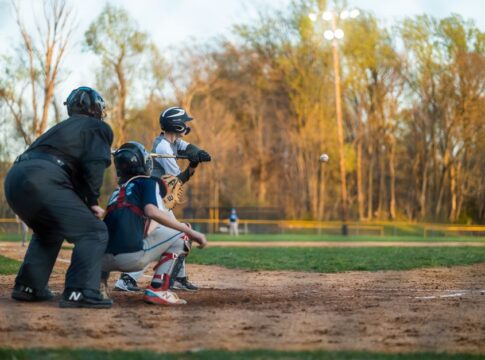
Why Baseball Umpires Still Call Balls and Strikes by Hand
By Trivia Daily, Staff Writer — Published October 20, 2026
Table of Contents
- Key Takeaways
- Why Baseball Umpires Still Rely on Human Judgment
- The Technology That Could Replace Them
- The Human Element Fans Didn’t Know They Wanted
- How Accurate Are Human Umpires Really?
- The Historical Roots of the Hand Signal
- Frequently Asked Questions
In an era when technology can track a baseball’s spin rate down to the revolution and calculate its trajectory within millimeters, one might wonder why baseball umpires still crouch behind home plate, calling balls and strikes with nothing but their eyes and decades-old hand signals. The answer reveals a fascinating blend of tradition, human judgment, and surprising resistance to automation that makes baseball unique among modern professional sports.
Major League Baseball has access to sophisticated tracking systems that can determine with near-perfect accuracy whether a pitch crossed the strike zone. Yet the home plate umpire remains the final authority on every pitch. This isn’t simply stubbornness or nostalgia—it’s a deliberate choice rooted in the game’s identity and some interesting truths about what fans actually want from their national pastime.
Key Takeaways
- Baseball has used electronic tracking systems since 2015, but these serve only as review tools, not primary decision-makers for balls and strikes.
- The strike zone is technically defined in the rulebook but varies slightly by each batter’s height and stance, requiring real-time human interpretation.
- Studies show umpires call balls and strikes correctly about 88-92% of the time, with most errors occurring on borderline pitches within an inch of the zone.
- Minor League Baseball began testing an Automated Ball-Strike system in 2019, but Major League Baseball has not committed to full implementation.
- Human umpires make roughly 34,000 ball-and-strike calls during a typical MLB season, with only a small percentage being clear mistakes.
- The tradition of hand signals dates back to the 1880s when deaf player William “Dummy” Hoy needed visual confirmation of calls.
Why Baseball Umpires Still Rely on Human Judgment
The technology exists. The Hawk-Eye system and similar tracking platforms can pinpoint a baseball’s location as it crosses home plate with remarkable precision. These systems already generate the strike zone boxes viewers see on television broadcasts. So why haven’t they replaced the umpire’s authority?
Baseball’s strike zone presents a unique challenge. Unlike the fixed boundaries in tennis or soccer, the zone changes for every batter. The rulebook defines it as the area over home plate between the batter’s knees and the midpoint of their torso. A six-foot-five slugger has a dramatically different strike zone than a five-foot-six contact hitter. The zone also shifts based on the batter’s stance—and that stance can change mid-at-bat.
Human umpires adjust instantly to these variables. They establish each batter’s zone in real time, accounting for how the player sets up in the box. This flexibility has always been part of baseball’s appeal. Batters and pitchers alike understand that the zone might shift slightly from umpire to umpire, adding a strategic element to the game.
The Technology That Could Replace Them
Modern tracking systems use multiple high-speed cameras positioned around the stadium. These cameras capture the baseball’s path from the pitcher’s hand to the catcher’s mitt, recording hundreds of data points per second. The system calculates the ball’s position as it crosses the front edge of home plate and compares that position to a predetermined strike zone.
The accuracy is impressive. During testing in minor league games, automated systems have shown consistency that exceeds even the best human umpires. They don’t get tired in the ninth inning. They don’t lose focus during a long at-bat. They call the high strike and the low strike with equal precision.
Yet baseball has hesitated. The sport tested automated balls and strikes in independent leagues and lower minor league levels before expanding trials to higher classifications. The system proved reliable, but reactions were mixed. Some pitchers loved the consistency. Some batters complained that the zone felt too rigid, eliminating the subtle give-and-take they’d learned to exploit.
The Human Element Fans Didn’t Know They Wanted
Here’s a surprising discovery from fan surveys and viewing data: many baseball enthusiasts don’t actually want perfect umpiring. They want good umpiring with occasional controversy. The blown call, the ejected manager, the heated argument—these moments create drama and conversation. They give fans something to debate long after the game ends.
This doesn’t mean fans enjoy bad officiating. Clear mistakes on obvious pitches frustrate everyone. But borderline calls? Those generate the kind of passionate discussion that keeps baseball in the cultural conversation. Remove the human umpire, and you remove a character from the game’s narrative.
Veteran umpires also bring something computers can’t replicate: game management. The best home plate umpires establish a consistent zone early and communicate it clearly to both teams. They defuse tense situations. They know when to grant a timeout and when to keep the game moving. These skills matter more than most fans realize.
How Accurate Are Human Umpires Really?
| Pitch Location | Accuracy Rate | Typical Errors Per Game |
|---|---|---|
| Center of strike zone | 99%+ | Less than 1 |
| Clearly outside zone | 97-98% | 1-2 |
| Borderline (within 1 inch) | 75-85% | 8-12 |
| All pitches combined | 88-92% | 10-15 |
The numbers reveal an interesting pattern. Umpires rarely miss obvious pitches. Nearly all their errors occur on borderline calls where even replay review shows the ball barely catching or missing the zone’s edge. These are the pitches where reasonable people can disagree—exactly the scenarios where human judgment seems most appropriate.
The Historical Roots of the Hand Signal
Those dramatic hand signals umpires use weren’t always standard practice. In baseball’s early days, umpires simply announced their calls verbally. The iconic punch-out motion for a called third strike emerged from a practical need: communication with deaf players and fans in noisy stadiums.
William Hoy, a deaf outfielder who played in the late 1800s, needed a visual way to know the count. Umpires began using hand signals to accommodate him, and the practice spread. What started as an accessibility feature became one of baseball’s most recognizable traditions. The exaggerated gestures added theater to the game, turning umpires into performers in their own right.
Today’s umpires have refined these signals into an art form. Each umpire develops a personal style—some with understated professionalism, others with dramatic flair. Fans recognize veteran umpires by their distinctive strike calls, another example of the human personality embedded in the game.
Frequently Asked Questions
Will Major League Baseball ever use robot umpires for balls and strikes?
MLB continues testing automated ball-strike systems in minor leagues but hasn’t committed to full implementation in the majors. The league may adopt a challenge system where teams can contest a limited number of calls per game, blending technology with human judgment rather than replacing umpires entirely.
How long does it take to become a Major League Baseball umpire?
Most MLB umpires spend 7-10 years working in minor league baseball after attending professional umpire school. Only a small percentage of umpire school graduates ever reach the major leagues, making it one of the most competitive officiating positions in professional sports.
Do umpires get graded on their ball and strike calls?
Yes, MLB uses tracking technology to evaluate every umpire’s performance on balls and strikes. These evaluations affect postseason assignments, with the highest-rated umpires earning spots on playoff and World Series crews.
What happens if an umpire admits to making a wrong call?
Umpires cannot reverse a ball or strike call once made, even if they immediately realize it was incorrect. The call stands as part of the game’s official record, though the league may review it for umpire evaluation purposes.
The persistence of human umpires behind home plate says something profound about baseball itself. In a sport obsessed with statistics and increasingly driven by data analytics, the game still reserves space for human imperfection and individual interpretation. Every pitch carries the possibility of controversy, every close call the potential for argument. That uncertainty, it turns out, might be exactly what makes the game feel alive.