


1 / 10 Questions
0 Points

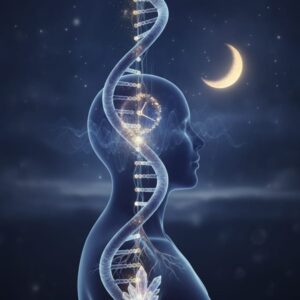
Which genetic variant lets some people thrive on just 4-6 hours of sleep per night without feeling tired?

PER3 gene variant

CLOCK gene variant

DEC2 gene variant

BMAL1 gene variant

Points won
0
Correct score
0%

More Quizzes

More Articles

Top 10 Films That Were Banned in Multiple Countries

Top 10 Films That Were Banned in Multiple Countries

⏱️ 6 min read

Throughout cinema history, filmmakers have pushed boundaries and challenged societal norms, often resulting in their works being censored or outright banned across multiple nations. These controversial films sparked debates about artistic freedom, moral standards, and cultural sensitivities. While some were banned for political reasons, others faced censorship due to explicit content, religious themes, or social commentary that authorities deemed too provocative for public viewing.

Films That Shocked the World

1. A Clockwork Orange - Stanley Kubrick's Dystopian Masterpiece

Stanley Kubrick's 1971 adaptation of Anthony Burgess's novel became one of the most controversial films in cinema history. The film's graphic depictions of violence and sexual assault led to bans in countries including Ireland, South Korea, and Singapore. Even Kubrick himself requested its withdrawal from British cinemas after receiving death threats. The film explores themes of free will, behavioral conditioning, and state control through the story of Alex DeLarge and his gang of droogs. Despite its artistic merit and cultural significance, many nations kept the ban in place for decades, with some restrictions continuing into the 21st century.

2. The Last Temptation of Christ - Religious Controversy Ignited

Martin Scorsese's 1988 biblical drama sparked outrage among religious communities worldwide. The film's portrayal of Jesus Christ experiencing human temptations, including a dream sequence of married life with Mary Magdalene, was deemed blasphemous by many. Countries including Mexico, Chile, Argentina, Turkey, and the Philippines imposed bans on the film. Religious groups organized protests and even attacked theaters showing the film. While the movie was intended as a serious exploration of Christ's humanity, its controversial interpretations led to widespread censorship that lasted years in some nations.

3. Cannibal Holocaust - The Found Footage Horror That Went Too Far

Ruggero Deodato's 1980 horror film remains one of the most banned films globally. The Italian director was actually arrested and charged with murder because authorities believed the film's realistic violence was genuine. The film features graphic scenes of violence, sexual assault, and actual animal killings. Countries including Australia, Iceland, Ireland, Germany, Norway, and Singapore banned the film, with many maintaining restrictions for decades. Despite being recognized as influential in developing the found-footage genre, its extreme content continues to generate controversy and censorship discussions.

4. Salò, or the 120 Days of Sodom - Pier Paolo Pasolini's Final Statement

Released in 1975, Pier Paolo Pasolini's final film remains banned or heavily restricted in numerous countries. The film depicts extreme sexual violence and degradation set during the fascist Salò Republic of World War II Italy. Countries including Australia, New Zealand, Finland, and various others banned the film for its graphic content. While film scholars recognize it as a powerful allegory about fascism and power abuse, its disturbing imagery has kept it from public viewing in many regions. The film's artistic intentions are often overshadowed by its shocking content.

5. The Texas Chain Saw Massacre - The Slasher That Changed Horror

Tobe Hooper's 1974 horror classic was banned in multiple countries including Australia, Brazil, Chile, Finland, France, Iceland, Ireland, Norway, Singapore, Sweden, and West Germany. Despite containing relatively little on-screen blood, the film's intense atmosphere and implications of violence proved too much for many censors. The movie's raw, documentary-style filmmaking and disturbing premise of a family of cannibals terrorizing travelers created widespread moral panic. Some countries didn't lift their bans until the 1990s, decades after its initial release.

6. The Exorcist - Demonic Possession Terrifies Censors

William Friedkin's 1973 supernatural horror film faced bans and restrictions across numerous countries. The film's depiction of a young girl possessed by a demon, including shocking scenes of religious desecration and bodily trauma, proved too controversial for many nations. Countries including the United Kingdom imposed various restrictions, while others banned it outright for periods. The film sparked debates about religious representation, the impact of horror on audiences, and the boundaries of acceptable cinema. Its cultural impact was so significant that reports of audience members fainting or experiencing psychological distress influenced censorship decisions.

7. Natural Born Killers - Oliver Stone's Media Satire

Oliver Stone's 1994 satirical crime film about mass murderers and media exploitation faced bans in Ireland and was heavily censored in numerous other countries. The film's stylized violence, unconventional editing, and controversial themes about media glorification of criminals made censors uncomfortable worldwide. Several real-life crimes were allegedly inspired by the film, leading to increased calls for bans. Countries including the United Kingdom delayed its video release for years. The film's critique of media violence paradoxically became a target of censorship itself, creating ongoing debates about artistic responsibility.

8. Life of Brian - Monty Python's Religious Satire

This 1979 comedy from Monty Python faced bans in Ireland, Norway, and various other locations for its satirical portrayal of religious themes. The film tells the story of Brian Cohen, born on the same day as Jesus Christ, who is mistaken for the Messiah. Religious groups condemned it as blasphemous, leading to widespread censorship. Some towns and cities maintained bans for decades, with certain areas not screening the film until the 21st century. Despite being a comedy, its religious satire proved more controversial than many explicit dramatic films.

9. Battle Royale - Japan's Controversial Youth Violence Epic

Kinji Fukasaku's 2000 film about teenagers forced to fight to the death was banned or restricted in Germany, South Korea, and other nations. The film's premise of state-sanctioned violence against children proved too controversial for many countries. Despite its popularity in Japan and cult status internationally, censors worried about its potential influence on young audiences. The film sparked debates about violence in media and governmental control. Its influence on later works like The Hunger Games demonstrates its cultural significance, yet many countries maintained restrictions on its distribution.

10. Pink Flamingos - John Waters' Transgressive Underground Classic

John Waters' 1972 exploitation film was banned in Australia, Norway, and other countries for its extreme content designed to shock audiences. The film deliberately pushed every boundary of taste with scenes of cannibalism, sexual perversion, and acts too explicit to describe in detail. Waters created the film specifically to be "the most disgusting film ever made," and censors worldwide agreed it crossed acceptable lines. Despite its underground cult status and eventual recognition as a landmark of transgressive cinema, many countries maintained bans or heavy restrictions for years.

The Legacy of Cinematic Censorship

These ten films represent different eras, genres, and reasons for censorship, from political content to religious controversy to extreme violence and sexual content. While many bans have been lifted over time as social attitudes evolved, these films remain testament to the ongoing tension between artistic expression and societal boundaries. They continue to spark discussions about freedom of speech, the role of government in regulating content, and the power of cinema to challenge, disturb, and provoke audiences worldwide.

The Science of Why Certain Chords Make You Feel Sad or Happy

The Science of Why Certain Chords Make You Feel Sad or Happy

⏱️ 9 min read

When Radiohead's "Street Spirit (Fade Out)" plays, listeners around the world report feeling an overwhelming sense of melancholy—even if they've never heard the song before and don't understand the lyrics. The culprit isn't just the minor key; it's a specific progression of chords that triggers predictable emotional responses in human brains across cultures. Scientists have discovered that our emotional reactions to music aren't purely subjective—they're rooted in physics, biology, and cultural conditioning working together in measurable ways.

Quick Facts

  • Major chords contain frequency ratios of 4:5:6, while minor chords have 10:12:15 ratios, creating different levels of acoustic consonance.
  • Studies show that 4-month-old infants can already distinguish between happy-sounding major and sad-sounding minor melodies.
  • The saddest chord progression in pop music, the vi-IV-I-V (or "axis of awesome" progression), appears in thousands of hit songs from the 1950s onward.
  • Brain imaging reveals that dissonant chords activate the amygdala—the brain's fear and emotion center—within 100 milliseconds of hearing them.
  • The identical chord can evoke happiness in Western listeners but neutrality in some Amazonian tribes with no exposure to Western music.

The Physics Behind Musical Emotion

Every musical note produces not just a single frequency, but a series of overtones—additional frequencies that vibrate at mathematical multiples of the fundamental pitch. When you play a C note at 261.63 Hz, your ear simultaneously detects overtones at 523.26 Hz, 784.89 Hz, and higher multiples. Major chords work their emotional magic because their three notes align almost perfectly with these natural overtone patterns. A C major chord (C-E-G) uses frequency ratios that closely match the overtone series, creating what acousticians call consonance—a smooth, stable sound that human auditory systems perceive as pleasant and resolved.

Minor chords, by contrast, introduce deliberate misalignment. The minor third interval (like C to E-flat) creates frequency ratios that produce more acoustic "beating"—subtle rhythmic pulsations caused by sound waves slightly out of phase with each other. These beats occur at rates between 20 and 300 times per second, creating what psychoacousticians call roughness. Research published in the journal Nature Neuroscience in 2013 demonstrated that this roughness triggers increased activity in the parahippocampal gyrus, a brain region associated with processing unpleasant or uncertain stimuli. The physical tension in minor chords translates directly into emotional tension.

What Your Brain Does When Processing Chord Emotions

Neuroscientist Stefan Koelsch at the University of Bergen has used functional MRI scanning to track exactly what happens in listeners' brains when they hear different chord progressions. Pleasant, expected chord changes activate the nucleus accumbens—the same reward center that responds to food, sex, and addictive drugs. This region releases dopamine, creating feelings of satisfaction and happiness. Koelsch's 2006 study found that this dopamine release occurs strongest when a chord progression follows familiar patterns but includes subtle surprises, explaining why the same four chords can create hit after hit without boring listeners.

Unexpected or dissonant chords trigger a different neural pathway entirely. Within one-tenth of a second, the amygdala shows heightened activity, followed quickly by activation in the hippocampus as your brain searches its musical memory for context. This is why a diminished seventh chord—built from minor thirds stacked on top of each other—sounds so unsettling in isolation but can provide thrilling drama when placed strategically in a film score. Composer Bernard Herrmann used diminished chords throughout the Psycho soundtrack precisely because they create this predictable unease in virtually all listeners.

Cultural Learning and Musical Expectations

Despite the biological basis for some emotional responses, culture plays an enormous role in how we interpret chords. Josh McDermott, a neuroscientist at MIT, conducted groundbreaking research in 2016 with the Tsimane' people of Bolivia, an indigenous group with minimal exposure to Western music. While American participants consistently rated minor chords as sadder than major chords, Tsimane' listeners showed no such preference. They could hear the acoustic differences but hadn't learned to attach emotional meanings to them.

This cultural conditioning begins remarkably early. A 2010 study in Psychological Science tested infants between 4 and 6 months old using looking-time experiments—measuring how long babies paid attention to happy versus sad faces paired with major versus minor music. Even these very young infants looked longer at happy faces when hearing major-key music, suggesting that exposure to lullabies and children's songs creates emotional associations within the first months of life. By age 5, Western children show adult-level consistency in labeling major melodies as "happy" and minor as "sad," according to research from the University of California, Berkeley.

The Most Emotionally Powerful Chord Progressions

Certain chord sequences have proven so reliably emotional that they appear across centuries and genres. The Andalusian cadence (Am-G-F-E in A minor) has conveyed tragic longing since Renaissance Spain and still underpins hits like "Sultans of Swing" and "Stairway to Heaven." The progression works because it descends stepwise, defying the expectation for music to resolve upward to its tonic, creating perpetual unfulfillment.

The opposite emotional effect comes from the I-V-vi-IV progression (C-G-Am-F in C major), which music theorist Andrew Huang calls "the most popular progression in modern music history." This sequence appears in Journey's "Don't Stop Believin'," Lady Gaga's "Poker Face," and literally hundreds of other hits analyzed in the 2009 viral video "4 Chords" by The Axis of Awesome comedy band. The progression succeeds because it constantly circles back to stability—the vi chord provides just enough minor-key sadness to create interest before the IV chord pulls everything back toward the satisfying I resolution.

For maximum sadness, nothing beats the minor iv chord in an otherwise major key—what music theorists call a "borrowed chord." When the Beatles used this in "Yesterday" (F major song with B-flat minor chord), they tapped into a progression's emotional power that classical composers had exploited for 300 years. The major-to-minor shift on the same scale degree creates cognitive dissonance, as your brain expects a major chord but receives a minor one, triggering that amygdala response while maintaining enough familiarity to avoid complete confusion.

Dissonance, Resolution, and Emotional Release

The most powerful emotional moments in music come not from single chords but from movement between tension and release. A diminished chord or a dominant seventh contains built-in instability—intervals that acoustically "want" to resolve to more consonant combinations. Composer Leonard Meyer argued in his influential 1956 book Emotion and Meaning in Music that musical emotion emerges from this violation and satisfaction of expectations.

Modern psychoacoustic research supports Meyer's theory with hard data. A 2020 study in Current Biology measured skin conductance response (a physiological marker of emotional arousal) while participants listened to chord progressions. The researchers found that arousal peaked not during dissonant chords themselves, but in the milliseconds before expected resolutions—what they termed "anticipatory tension." When that resolution arrived on a consonant major chord, participants showed immediate decreases in stress hormones and increases in dopamine markers. The emotional satisfaction came from the journey, not the destination.

This principle explains why jazz musicians can make audiences feel joy while playing predominantly seventh and ninth chords—technically dissonant combinations. Because jazz establishes these complex chords as the new normal, moving from a C13 to an Fmaj9 provides the same resolution satisfaction that classical music achieves with simpler progressions. The emotional impact depends on context and expectation rather than absolute consonance values.

Individual Differences in Chord Perception

While chord emotions show remarkable consistency across most listeners, individual variation exists. Approximately 4% of people have amusia (also called tone deafness), a neurological condition that impairs musical pitch perception. Research from the University of Montreal shows that people with amusia can still distinguish major from minor chords about 60% of the time—slightly above chance—but report no emotional differences between them. Their brains process the acoustic information but fail to extract emotional meaning.

On the opposite end, people with musical training show heightened emotional responses to subtle harmonic changes. A 2014 study in Brain and Cognition compared conservatory musicians to non-musicians while both groups listened to chord progressions. Musicians showed significantly stronger activation in emotion-processing brain regions when hearing deceptive cadences—progressions that set up an expected resolution then deliver an unexpected chord instead. Years of training had fine-tuned their expectation systems, making violations more emotionally salient. This suggests that while basic chord emotions are largely universal, the depth of emotional response grows with musical expertise.

Frequently Asked Questions

Why do minor chords sound sad to most people?

Minor chords contain frequency ratios that create acoustic "roughness" or beating patterns, which activate brain regions associated with processing unpleasant or uncertain stimuli. Additionally, Western musical culture has used minor chords in sad contexts for centuries, creating learned emotional associations that begin forming in infancy.

Are there any cultures where minor chords don't sound sad?

Yes—research with the Tsimane' people of Bolivia, who have minimal Western music exposure, found they perceive no emotional difference between major and minor chords. This demonstrates that while acoustic properties contribute to chord emotions, cultural learning plays a crucial role in their interpretation.

What is the saddest chord in music?

Music theorists often cite the minor iv chord in a major key (a "borrowed chord") as particularly melancholic, used famously in "Yesterday" by The Beatles. The diminished seventh chord also ranks high for sadness due to its extreme acoustic instability and dissonance.

Can the same chord sound both happy and sad?

Absolutely—context determines emotional interpretation more than the chord itself. A dominant seventh chord sounds tense and anticipatory in classical music but can sound bluesy and joyful in rock. The surrounding chords, tempo, lyrics, and cultural context all influence how listeners emotionally interpret any given chord.

Key Takeaways

  • Chord emotions stem from both acoustic properties (frequency ratios creating consonance or dissonance) and cultural conditioning that begins in infancy.
  • Major chords align with natural overtone patterns, activating reward centers in the brain, while minor chords create acoustic roughness that triggers uncertainty-processing regions.
  • The most emotionally powerful moments in music come from violating then satisfying harmonic expectations—the movement between tension and resolution matters more than individual chords.
  • While basic chord emotions show cross-cultural consistency in Western listeners, musical training intensifies emotional responses and cultures without Western music exposure may interpret chords neutrally.