
⏱️ 8 min read
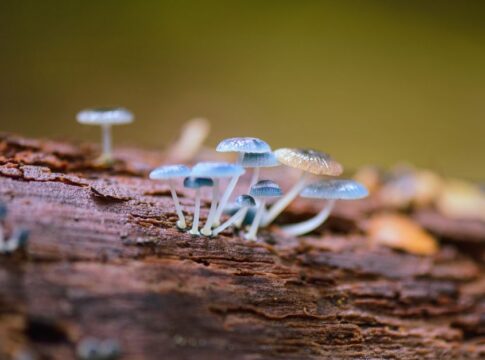
Deep in certain forests around the globe, trees and forest floors transform into living light shows after sunset, glowing with an ethereal green or blue luminescence that seems straight out of a fantasy film. This natural phenomenon, caused by bioluminescent organisms, creates some of the planet’s most mesmerizing nocturnal landscapes. While bioluminescent bays and beaches often steal the spotlight, these rare glowing forests offer an equally spectacular display that few people ever witness.
Quick Facts
- Bioluminescent forests glow due to fungi, particularly species like Panellus stipticus and Armillaria mellea, which produce light through a chemical reaction called luciferin-luciferase.
- Over 70 species of bioluminescent fungi exist worldwide, with the brightest specimens found in tropical and subtropical regions.
- The glow from these fungi typically peaks during wet seasons when humidity exceeds 80 percent and temperatures range between 68-77°F (20-25°C).
- Some bioluminescent forests can emit enough light to read by, though most produce a subtle glow visible only in complete darkness.
- The phenomenon occurs on every continent except Antarctica, with documented sightings dating back to Aristotle’s writings in 382 BCE.
Shikoku Island’s Enchanted Bamboo Groves in Japan
The forests of Shikoku Island harbor one of Japan’s most reliable displays of bioluminescent mushrooms, specifically Mycena lux-coeli, which translates to “heavenly light mushroom.” These tiny fungi colonize dead bamboo and hardwood debris throughout the subtropical forests, creating pinpoints of green light that locals call “forest pixies.” The optimal viewing period runs from late May through early July, when monsoon rains saturate the forest floor and temperatures hover around 75°F (24°C).
Research conducted by Kobe University in 2017 revealed that these mushrooms glow brightest between 10 PM and 2 AM, with light intensity decreasing by approximately 60 percent before dawn. The bioluminescence serves to attract nocturnal insects, which then spread the mushroom spores across the forest. Specific viewing locations include the forests near Kotohira in Kagawa Prefecture, where guided night tours operate during peak season. Visitors must allow 20-30 minutes for their eyes to fully adjust to the darkness before the subtle glow becomes apparent.
Tasmania’s Ancient Temperate Rainforests
Tasmania’s World Heritage wilderness areas contain some of the Southern Hemisphere’s most concentrated populations of the ghost fungus (Omphalotus nidiformis), which produces one of the brightest natural glows among all bioluminescent species. These bell-shaped mushrooms cluster on dead myrtle beech and eucalyptus trees, emitting a luminous green-yellow light intense enough to be captured by standard camera equipment without long exposures.
The Tarkine rainforest in northwestern Tasmania offers particularly spectacular displays from March to May, coinciding with the autumn moisture levels. A single ghost fungus colony can contain hundreds of individual mushrooms, collectively producing enough light to illuminate fallen logs and surrounding vegetation in a radius of up to three feet. The fungi thrive in areas where annual rainfall exceeds 80 inches (2,000 millimeters), and temperatures remain between 50-60°F (10-15°C). Mount Field National Park and the Tahune AirWalk region also report consistent sightings, though exact locations vary year to year depending on where trees have recently fallen.
Brazil’s Atlantic Forest Bioluminescent Hotspots
The remnant Atlantic Forest along Brazil’s southeastern coast supports at least 12 different species of bioluminescent fungi, with the highest diversity documented in São Paulo’s Serra da Cantareira State Park. The jack-o’-lantern mushroom (Omphalotus olearius) and various Mycena species create scattered light displays throughout the forest understory, particularly from January through April during the region’s wet summer season.
Brazilian mycologist Cassius Stevani from the University of São Paulo has spent over two decades cataloging these organisms, discovering that some species produce light continuously for up to seven days after reaching maturity. The forests near Morretes in Paraná state contain particularly dense concentrations of Neonothopanus gardneri, a coconut-loving species that can glow bright enough to illuminate human faces from a distance of two feet. Local indigenous Tupi communities have recognized these “flor de coco” (coconut flowers) for centuries, using them as natural path markers during nighttime forest travel.
The Daintree Rainforest’s Luminous Floor in Queensland
Australia’s Daintree Rainforest, the world’s oldest continuously surviving tropical rainforest at 180 million years old, hosts multiple bioluminescent species that transform the forest floor into a constellation of green lights during the wet season from December to March. The ghost fungus appears here alongside lesser-known species like Filoboletus manipularis, which colonizes lawyer cane palms and staghorn ferns.
The Mossman Gorge section of Daintree National Park provides the most accessible viewing opportunities, though visitors must venture at least half a mile from established trails to escape light pollution. Research by James Cook University in 2019 documented over 400 individual glowing mushroom clusters within a single hectare of old-growth rainforest during peak season. The phenomenon intensifies following heavy rainfall, with brightness increasing by up to 300 percent within 48 hours of precipitation events exceeding two inches. Night walks organized by indigenous Kuku Yalanji guides incorporate traditional knowledge about these “spirit lights” with modern mycological understanding.
Great Smoky Mountains’ Hidden Glow in North America
While North America has fewer bioluminescent forest species than tropical regions, the Great Smoky Mountains National Park harbors reliable populations of Panellus stipticus, commonly called bitter oyster mushrooms. These small, shelf-like fungi grow on decaying oak and beech logs throughout the park’s 800 square miles of protected forest, producing a faint greenish glow visible during moonless nights from late September through November.
The Appalachian strain of Panellus stipticus glows approximately 10 times dimmer than Asian and Pacific varieties, requiring complete darkness and fully dark-adapted eyes to observe. Researchers at the University of Tennessee documented that individual mushrooms produce just 0.0006 micromoles of photons per square meter per second—barely detectable by human eyes but measurable with sensitive photometers. Despite the subtlety, organized “bioluminescent hikes” in the Elkmont and Cades Cove areas attract dedicated nature photographers who use exposures of 30-60 seconds to capture the ethereal glow. The phenomenon peaks when nighttime temperatures drop to 45-55°F (7-13°C) and relative humidity exceeds 90 percent.
Peninsular Malaysia’s Tropical Bioluminescent Diversity
The lowland dipterocarp forests of Peninsular Malaysia, particularly within Taman Negara National Park, support what mycologists consider the highest density of bioluminescent fungi species anywhere on Earth. At least 15 distinct glowing species have been documented within the park’s 4,343 square kilometers, including the spectacularly bright Filoboletus manipularis and several endemic Mycena varieties found nowhere else.
The Canopy Walkway area of Taman Negara offers unique opportunities to observe bioluminescence at multiple forest levels, from ground-dwelling species to those growing on epiphytic ferns 130 feet (40 meters) above the forest floor. Peak viewing occurs from November through February, when the northeast monsoon brings consistent rainfall averaging 8-12 inches per month. A 2020 survey by the Malaysian Nature Society recorded bioluminescent activity on 87 percent of moonless nights during this period, with some fungi producing light intense enough to be visible from 30 feet away. The park’s remote location, over 150 miles from major cities, ensures minimal light pollution and optimal viewing conditions for this natural phenomenon.
Frequently Asked Questions
Why do forest fungi produce light?
Bioluminescent fungi emit light primarily to attract nocturnal insects that help disperse their spores. Research published in Current Biology demonstrated that glowing mushrooms attract 10 times more spore-dispersing insects than non-luminescent species, providing a significant reproductive advantage in dark forest environments.
Can you photograph bioluminescent forests with a smartphone?
Modern smartphones with night mode capabilities can capture brighter species like ghost fungus with 15-30 second exposures, though a tripod is essential. Dimmer species like those in North America require dedicated cameras with manual settings and exposures exceeding one minute for visible results.
Are bioluminescent mushrooms safe to touch?
Most bioluminescent fungi are safe to touch but should never be consumed, as many species like ghost fungus and jack-o’-lantern mushrooms are toxic and can cause severe gastrointestinal distress. Always observe without disturbing the organisms, as touching can damage delicate structures and reduce light production.
What time of night is best for viewing bioluminescent forests?
The optimal viewing window is typically between 10 PM and 2 AM when fungal bioluminescence peaks and your eyes have fully adapted to darkness after 30-40 minutes. Moonless nights or new moon phases provide the best conditions, as even a quarter moon can overpower the subtle glow.
Key Takeaways
- Over 70 species of bioluminescent fungi create glowing forest displays worldwide, with tropical and subtropical regions hosting the brightest and most diverse examples.
- Viewing conditions require complete darkness, high humidity (above 80 percent), moonless nights, and 20-30 minutes for full eye adaptation to see the subtle green or blue-green glow.
- Peak seasons vary by location but generally coincide with wet periods: May-July in Japan, March-May in Tasmania, December-March in tropical Australia, and November-February in Southeast Asia.
- The phenomenon serves an ecological function by attracting insects that disperse spores, demonstrating how bioluminescence evolved as a reproductive strategy in low-light forest environments.