
Why Honey Never Spoils: The Ancient Food That Lasts Forever
By Trivia Daily, Staff Writer — Published July 29, 2026
Table of Contents
- Key Takeaways
- Why Honey Never Spoils: The Science Behind Eternal Sweetness
- The Hygroscopic Properties That Make Honey a Natural Preservative
- Ancient Honey: Archaeological Evidence of Immortal Food
- Can Honey Ever Go Bad? Understanding the Exceptions
- Different Types of Honey and Their Shelf Lives
- Frequently Asked Questions
Archaeologists excavating ancient Egyptian tombs have made a remarkable discovery time and again: jars of honey, thousands of years old, still perfectly edible. This isn’t the result of careful preservation techniques or special storage conditions. The truth is far more interesting. Honey never spoils because of its unique chemical composition, a natural wonder that has fascinated scientists and delighted humans for millennia. This ancient sweetener stands alone among foods as virtually immortal, and the reasons why reveal some of nature’s most elegant chemistry.
The secret to honey’s eternal shelf life lies in a perfect storm of natural defenses. Low moisture content, high acidity, and the production of hydrogen peroxide create an environment where bacteria and microorganisms simply cannot survive. When you discover these facts about honey, you begin to understand why ancient civilizations valued it not just as food, but as medicine and even currency.
Key Takeaways
- Honey never spoils due to its extremely low moisture content (typically around 17-18%), which prevents bacterial growth and fermentation.
- The acidic pH of honey (between 3 and 4.5) creates a hostile environment for most microorganisms that cause food spoilage.
- Honey bees add an enzyme called glucose oxidase, which produces hydrogen peroxide, a natural antimicrobial compound.
- Archaeologists have found edible honey in Egyptian tombs dating back over 3,000 years, proving its remarkable longevity.
- Crystallized honey is still safe to eat and can be returned to liquid form by gentle heating without losing its antimicrobial properties.
- Honey’s hygroscopic nature means it draws moisture from wounds and bacteria, making it effective for medical applications throughout history.
Why Honey Never Spoils: The Science Behind Eternal Sweetness
The first defense in honey’s arsenal against spoilage is deceptively simple: it contains almost no water. Most foods spoil because bacteria, yeasts, and molds need moisture to grow and reproduce. Honey typically contains only 17 to 18 percent water, far below the threshold microorganisms require. This isn’t accidental. Honey bees are meticulous engineers. They fan their wings over the nectar they collect, evaporating excess moisture until the concentration reaches this critical low point. Once the moisture content drops sufficiently, they seal the honeycomb cells with wax caps.
But low moisture alone doesn’t tell the whole story. Honey is also remarkably acidic, with a pH ranging between 3 and 4.5. This acidity comes from gluconic acid, a byproduct of the enzymatic breakdown of glucose. Most bacteria prefer neutral pH environments, and the acidic conditions in honey make it inhospitable to their growth. The combination of low moisture and high acidity creates a double barrier that few microorganisms can breach.
The third layer of protection is perhaps the most surprising. When bees produce honey, they add an enzyme called glucose oxidase from their own bodies. When this enzyme comes into contact with the small amount of water in honey, it produces hydrogen peroxide—the same compound humans use as a disinfectant. This natural antimicrobial agent provides yet another defense against spoilage. The hydrogen peroxide concentration remains low enough not to affect the honey’s taste, but high enough to inhibit bacterial growth.
The Hygroscopic Properties That Make Honey a Natural Preservative
Honey possesses a remarkable characteristic called hygroscopicity, meaning it naturally attracts and absorbs moisture from its environment. This property is so powerful that honey can actually draw water out of bacterial cells through osmosis. When a bacterium encounters honey, the sugar molecules pull water from the cell, essentially dehydrating it until it cannot survive. This process is called osmotic pressure, and it’s one of the oldest preservation methods known to humanity.
Ancient civilizations recognized this property without understanding the chemistry behind it. Egyptians used honey to preserve bodies during mummification. Greeks and Romans applied it to wounds to prevent infection. Medieval armies carried honey to treat battlefield injuries. Modern medical science has confirmed what these ancient peoples knew empirically: honey’s hygroscopic nature makes it effective at preventing bacterial colonization in wounds.
This same property explains why honey can crystallize over time. In cool temperatures, glucose molecules separate from the water and form crystals. Many people mistakenly believe crystallized honey has gone bad, but this is a myth. Crystallization is a natural process that doesn’t affect honey’s safety or nutritional value. You can return crystallized honey to its liquid state by placing the container in warm water.
Ancient Honey: Archaeological Evidence of Immortal Food
The most compelling evidence that honey never spoils comes from archaeology. Excavations in Egypt have repeatedly uncovered sealed jars of honey in tombs dating back three millennia or more. In many cases, the honey remained perfectly preserved and theoretically edible. While archaeologists don’t typically taste-test their discoveries, chemical analysis confirms these ancient samples retain honey’s characteristic composition.
The oldest known honey samples were discovered in the tomb of Tutankhamun, who died around 1323 BCE. Other ancient honey finds have been reported from archaeological sites in Georgia, dating back even further. These discoveries demonstrate that when properly sealed, honey can remain stable for thousands of years. The key factor is keeping the container sealed to prevent moisture absorption from the air, which could raise the water content enough to allow fermentation.
Historical records show that ancient cultures understood honey’s preservative powers. The Sumerians, Babylonians, and Egyptians all used honey to preserve fruits and even meats. The legendary Macedonian conqueror Alexander the Great was reportedly preserved in honey for transport after his death in 323 BCE, though this account remains historically debated. What isn’t debated is that honey served as a valuable commodity precisely because it never spoiled, making it reliable for long-term storage and trade.
Can Honey Ever Go Bad? Understanding the Exceptions
While pure, properly stored honey never spoils, certain conditions can compromise its quality or safety. If honey is exposed to excessive moisture—either through improper storage or dilution—it can ferment. Fermented honey develops an off-smell, often described as alcoholic or sour, and may produce foam or bubbles. This happens when the water content rises above 19 percent, allowing yeasts naturally present in honey to become active and begin fermenting the sugars.
Contamination is another concern, though rare with pure honey. If foreign substances or water are introduced into a honey container, spoilage can occur. This is why it’s important to use clean, dry utensils when scooping honey and to keep the container tightly sealed. Some commercial honey products are diluted with corn syrup or other additives, which can affect shelf life and spoilage potential.
There’s also an important safety note regarding infant botulism. Honey can contain dormant spores of Clostridium botulinum bacteria. While these spores cannot grow in honey’s hostile environment and pose no risk to children over one year old and adults, infants under 12 months lack the intestinal defenses to prevent these spores from producing toxins. Health organizations including the National Institutes of Health recommend never giving honey to babies under one year of age.
Different Types of Honey and Their Shelf Lives
| Honey Type | Characteristics | Spoilage Potential |
|---|---|---|
| Raw Honey | Unprocessed, contains pollen and propolis | Never spoils when sealed; may crystallize faster |
| Processed Honey | Filtered and heated to prevent crystallization | Never spoils; slower to crystallize |
| Manuka Honey | From New Zealand tea trees; high antimicrobial activity | Never spoils; exceptional antibacterial properties |
| Creamed Honey | Controlled crystallization creates smooth texture | Never spoils; intentionally crystallized |
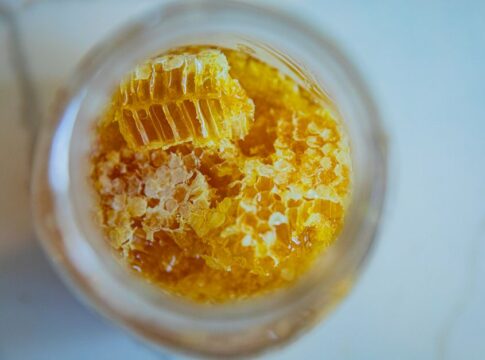
| Comb Honey | Honey still in the beeswax comb | Never spoils; naturally sealed by bees |
Frequently Asked Questions
Does honey expire or have a shelf life?
Pure honey never expires. The “best by” dates on commercial honey jars are required by food regulations but don’t indicate spoilage. Properly stored honey remains safe and edible indefinitely, though it may crystallize or darken over time without losing its safety or nutritional value.
Why does my honey crystallize, and is it still good?
Crystallization is a natural process where glucose separates from water and forms crystals. It’s actually a sign of pure, high-quality honey and doesn’t mean it has spoiled. Crystallized honey is perfectly safe to eat and can be liquefied by gently warming the container in hot water.
Can bacteria grow in honey?
Bacteria cannot grow in pure honey due to its low moisture content, high acidity, and antimicrobial compounds. The osmotic pressure in honey draws water from bacterial cells, preventing their survival and reproduction. This makes honey one of nature’s most effective natural preservatives.
How should I store honey to keep it fresh forever?
Store honey in a tightly sealed container at room temperature, away from direct sunlight. Avoid introducing moisture by using dry utensils and keeping the lid closed. Refrigeration isn’t necessary and actually speeds up crystallization, though it doesn’t harm the honey’s quality or safety.
The next time you drizzle honey into your tea or spread it on toast, consider that you’re consuming one of nature’s most remarkable substances. This golden liquid connects us to ancient Egypt, to medieval battlefields, and to the intricate work of thousands of bees. Honey’s immortality isn’t just a curiosity—it’s a testament to the elegant chemistry that can emerge from the natural world, proving that sometimes the simplest ingredients create the most extraordinary results.