










1 / 10 Questions
0 Points

What fruit has seeds embedded in tiny pits on its surface?

Kiwi

Watermelon

Strawberry

Blueberry

Points won
0
Correct score
0%

More Quizzes

More Articles

Top 10 Most Surprising Phobias People Actually Have

Top 10 Most Surprising Phobias People Actually Have

⏱️ 7 min read

Fear is a natural human emotion, but sometimes it manifests in ways that seem unusual or even bewildering to those who don't experience them. While most people are familiar with common phobias like arachnophobia (fear of spiders) or claustrophobia (fear of enclosed spaces), there exists a fascinating world of lesser-known fears that affect real people in their daily lives. These surprising phobias can range from fear of specific objects to anxiety about particular situations, and understanding them helps us appreciate the complexity of human psychology and the diverse ways our minds process perceived threats.

Uncommon Fears That Impact Real Lives

1. Nomophobia: The Modern Era's Digital Anxiety

In our increasingly connected world, nomophobia—the fear of being without one's mobile phone—has become remarkably prevalent. This portmanteau of "no mobile phone phobia" affects millions of people globally, causing genuine distress when individuals are separated from their devices. Sufferers experience anxiety symptoms including rapid heartbeat, shortness of breath, and panic attacks when their phone battery dies, they lose signal, or they forget their device at home. Research indicates that this phobia is most common among young adults and has been recognized as a legitimate psychological condition by mental health professionals. The fear often stems from the anxiety of being disconnected from social networks, missing important information, or being unable to contact others in emergencies.

2. Pogonophobia: An Unexpected Aversion to Facial Hair

Pogonophobia, the fear of beards, might sound amusing, but for those who experience it, encountering someone with facial hair can trigger genuine fear responses. This phobia can range from mild discomfort around bearded individuals to severe anxiety that causes sufferers to avoid social situations where they might encounter facial hair. Some researchers suggest this fear may stem from negative childhood experiences, cultural conditioning, or associations between beards and perceived threats. In severe cases, individuals with pogonophobia may struggle with daily activities in areas where beards are common, impacting their professional and personal relationships.

3. Omphalophobia: The Belly Button Dilemma

Omphalophobia, the fear of belly buttons, affects individuals who experience intense discomfort or anxiety when seeing, touching, or thinking about navels—either their own or others'. People with this phobia often cannot bear to touch their belly button during bathing or changing clothes, and some even experience nausea or panic attacks when the topic arises. The fear may be related to concerns about what might happen if the belly button is touched or a belief that it could "unravel" or lead to harm. This phobia can significantly impact intimate relationships and medical examinations, as sufferers actively avoid any situation involving belly button exposure.

4. Xanthophobia: When Yellow Causes Distress

Xanthophobia is the fear of the color yellow or even the word itself. This unusual phobia can severely limit daily functioning, as yellow is ubiquitous in modern life—from traffic lights and school buses to flowers and food. Those with xanthophobia may experience anxiety attacks when encountering yellow objects, avoid rooms painted in yellow tones, and refuse to eat foods with yellow coloring. The origin of this fear varies among individuals and may be connected to traumatic experiences, cultural associations, or learned behaviors. Some sufferers specifically fear certain shades of yellow while tolerating others, making the phobia particularly complex to treat.

5. Globophobia: The Unexpected Terror of Balloons

Globophobia, the fear of balloons, transforms celebrations into nightmares for those affected. This phobia encompasses fear of the balloons themselves, the sound they make when rubbed, and particularly the anxiety about them popping. Many globophobes avoid birthday parties, festivals, and any events where balloons might be present. The fear often develops in childhood, sometimes after a traumatic experience with a balloon popping unexpectedly. The unpredictable nature of when a balloon might burst creates constant tension for sufferers, as they remain hypervigilant in environments where balloons are present. Some individuals with this phobia can tolerate deflated balloons but experience severe distress around inflated ones.

6. Genuphobia: The Fear of Knees

Genuphobia involves an irrational fear of knees, whether one's own or others'. This peculiar phobia can manifest as fear of seeing knees, touching them, or having them touched. Sufferers may avoid wearing shorts or skirts, feel uncomfortable during medical examinations, and experience anxiety in situations where knees are exposed, such as at beaches or swimming pools. The phobia sometimes develops after a knee injury or surgery, creating a psychological association between knees and pain or vulnerability. Some genuophobes specifically fear the appearance of knees, finding them aesthetically disturbing, while others fear the mechanical vulnerability of the joint itself.

7. Somniphobia: The Paradox of Fearing Sleep

Somniphobia, the fear of sleeping, creates a difficult paradox as sufferers fear the very activity their body requires for health and functioning. People with this phobia may fear losing control during sleep, experiencing nightmares, or not waking up again. This fear can lead to severe sleep deprivation, causing additional health problems and impacting cognitive function, emotional regulation, and physical wellbeing. The phobia may develop after traumatic nightmares, sleep paralysis episodes, or following the loss of a loved one who died in their sleep. Treatment often requires addressing both the psychological fear and the physical health consequences of chronic sleep avoidance.

8. Deipnophobia: Social Anxiety at the Dinner Table

Deipnophobia is the fear of dinner conversations and dining with others. This phobia extends beyond simple social anxiety, specifically focusing on the act of eating in front of people while maintaining conversation. Sufferers worry excessively about table manners, spilling food, choking, or saying something inappropriate during meals. This fear can severely impact social and professional life, as many important interactions occur over meals. People with deipnophobia may avoid business lunches, dinner dates, and family gatherings, leading to isolation and missed opportunities. The phobia often intersects with other anxieties about social performance and judgment by others.

9. Optophobia: The Challenge of Keeping Eyes Open

Optophobia, the fear of opening one's eyes, represents a particularly debilitating phobia that can make daily functioning extremely challenging. Sufferers experience anxiety about what they might see upon opening their eyes, sometimes fearing supernatural entities, disturbing images, or catastrophic events. This phobia can develop after traumatic visual experiences or exposure to disturbing content. In severe cases, individuals may keep their eyes closed for extended periods, requiring assistance with basic tasks. The phobia creates a significant safety risk, as navigating the world with closed eyes is inherently dangerous. Treatment typically involves gradual exposure therapy and addressing underlying trauma or anxiety disorders.

10. Ephebiphobia: Fear of Teenagers and Youth

Ephebiphobia is the fear of teenagers or adolescents, affecting some adults who experience genuine anxiety around young people. This phobia may manifest as crossing the street to avoid groups of teenagers, refusing to visit places where adolescents congregate, or experiencing panic attacks in their presence. The fear sometimes stems from negative personal experiences, media portrayal of youth as threatening, or generalized anxiety about unpredictable behavior. Ephebiphobia can impact family relationships, particularly when the sufferer has teenage children or relatives, and may affect professionals who work with young people. This phobia raises important social questions about intergenerational relationships and how society portrays different age groups.

Understanding and Compassion

These ten surprising phobias demonstrate the incredible diversity of human fear responses and remind us that what seems irrational to one person can be a genuine source of distress for another. Whether it's fearing mobile phone separation, belly buttons, or the color yellow, each phobia represents a real psychological experience deserving of understanding and appropriate treatment. Mental health professionals use various therapeutic approaches, including cognitive-behavioral therapy, exposure therapy, and medication when necessary, to help individuals manage these fears. Recognizing that phobias exist on a spectrum—from mild discomfort to debilitating terror—encourages empathy and reduces stigma around mental health conditions. By learning about these unusual fears, we gain insight into the complexity of human psychology and the importance of compassionate support for those navigating these challenging experiences.
How to Read the Weather Without a Forecast

How to Read the Weather Without a Forecast

⏱️ 9 min read

Before meteorology became a science, sailors, farmers, and explorers survived by interpreting clouds, wind patterns, and animal behavior with remarkable accuracy. A study by the National Weather Service found that experienced observers using only natural indicators could predict weather changes within a 12-hour window with approximately 70% accuracy. These ancient skills remain vital today when technology fails, batteries die, or you venture beyond cell service into the backcountry.

Quick Facts

  • Cirrus clouds appearing at high altitude typically indicate rain or snow within 24 to 48 hours as warm fronts approach.
  • Air pressure drops of 0.10 inches of mercury or more within three hours signal an incoming storm system.
  • Red skies at night occur when dry air scatters blue light, suggesting clear weather ahead, while red morning skies indicate moisture moving in from the west.
  • Rings or halos around the moon form when ice crystals in cirrostratus clouds refract light, predicting precipitation within 18 to 24 hours.
  • Wind shifts from south to west or northwest typically signal that a low-pressure system has passed and fair weather is arriving.

Cloud Formations as Natural Barometers

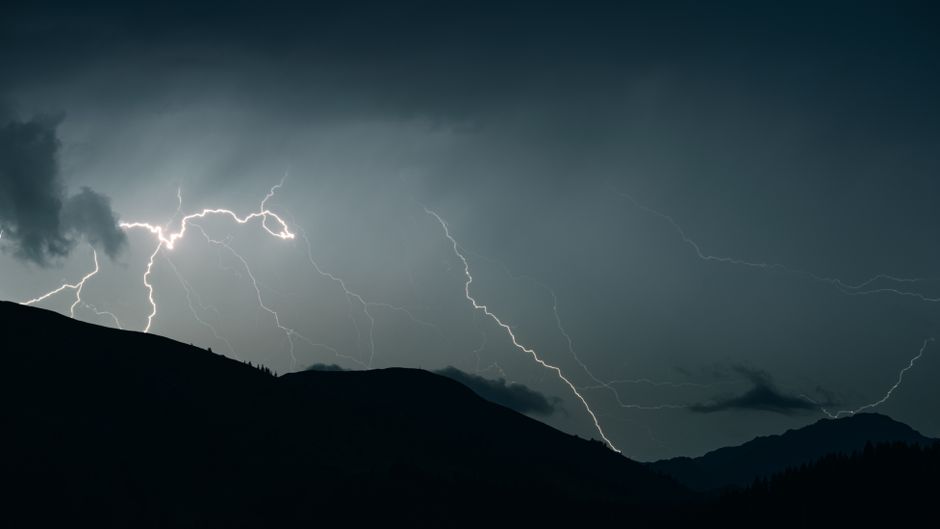
Clouds reveal atmospheric conditions unfolding thousands of feet above your head. Cumulus clouds—those puffy, cotton-like formations with flat bases—indicate fair weather when they remain small and scattered. These clouds typically form at altitudes between 3,000 and 6,500 feet and dissipate by evening. When cumulus clouds begin stacking vertically, however, reaching heights exceeding 20,000 feet, they transform into cumulonimbus thunderheads capable of producing lightning, hail, and dangerous downdrafts within 30 to 60 minutes.

Cirrus clouds, the wispy, feather-like formations at altitudes above 20,000 feet, consist entirely of ice crystals. Their appearance marks the leading edge of a warm front, where warm air rides up and over a retreating mass of cold air. As the front approaches over the next day or two, these high clouds thicken into cirrostratus, creating that characteristic halo effect around the sun or moon. The sequence continues as clouds lower and thicken into altostratus, then nimbostratus—the thick, gray blanket that finally delivers sustained precipitation.

Stratocumulus clouds present as low, lumpy gray layers, often covering the entire sky. While they look threatening, these clouds rarely produce more than light drizzle because they lack the vertical development needed for significant precipitation. The key distinction: clouds with vertical growth bring severe weather, while horizontally layered clouds typically indicate stable, albeit potentially dreary, conditions.

Wind Direction and Atmospheric Pressure Systems

In the Northern Hemisphere, wind circulates counterclockwise around low-pressure systems and clockwise around high-pressure systems due to the Coriolis effect. When you stand with your back to the wind, the low-pressure center—where storms develop—lies to your left and slightly ahead. This relationship, discovered by Dutch meteorologist Christophorus Buys Ballot in 1857, remains a fundamental principle for predicting weather movement.

Backing winds, which shift counterclockwise over time—from east to north to west, for example—indicate an approaching low-pressure system moving toward your location. Veering winds, rotating clockwise from east to south to west, suggest a high-pressure system is approaching or a low-pressure system is moving away. A sudden wind shift from southwest to northwest, often accompanied by a temperature drop of 10 to 20 degrees Fahrenheit within an hour, signals a cold front's passage.

Wind speed acceleration throughout the day, particularly when accompanied by increasing cloud cover, indicates strengthening low pressure and likely precipitation. Conversely, wind that dies down at sunset under clear skies suggests stable high pressure will persist. Sustained winds exceeding 15 miles per hour make precipitation more likely because they indicate stronger pressure gradients and more active atmospheric mixing.

Optical Phenomena and Moisture Content

The famous "red sky at night, sailor's delight; red sky at morning, sailor take warning" adage works because weather systems in temperate latitudes generally move from west to east. During sunset, red light—which has the longest wavelength in the visible spectrum—penetrates farther through the atmosphere than shorter blue wavelengths. When you see red skies at sunset, you're viewing sunlight passing through dry air to your west, suggesting clear conditions are moving toward you. Red skies at dawn indicate that clear, dry air has already passed to your east, while moisture-laden systems approach from the west.

Halos around the sun or moon form when light refracts through hexagonal ice crystals in cirrostratus clouds at a precise 22-degree angle. Because these clouds precede warm fronts by 18 to 36 hours, the appearance of a halo serves as a reliable precipitation predictor. A larger, 46-degree halo, though rarer, forms through a different crystal face and indicates the same atmospheric conditions. The saying "ring around the moon, rain real soon" reflects centuries of accurate weather observation compressed into memorable verse.

Dew formation overnight indicates clear skies, light winds, and high relative humidity near the ground—conditions associated with high pressure and continued fair weather. The absence of dew on clear, calm nights suggests low humidity and potentially approaching dry air behind a passing front. Heavy morning dew followed by rapid evaporation and cumulus cloud formation by mid-morning can signal afternoon thunderstorm development, especially during warm, humid summer months.

Barometric Pressure Without Instruments

While modern altimeters and barometers provide precise pressure readings, your body and surroundings offer crude but useful pressure indicators. Smoke rising vertically from a campfire indicates high pressure and stable air, whereas smoke that flattens and spreads horizontally suggests low pressure and turbulent atmospheric conditions. This occurs because descending air in high-pressure systems suppresses vertical air movement, while rising air in low-pressure systems creates instability.

Sound travels farther and more clearly when low pressure dominates because humidity increases sound wave transmission. If distant sounds—train whistles, highway traffic, or aircraft—seem unusually loud and clear, atmospheric pressure is likely falling, and weather deterioration may follow within 12 to 24 hours. High pressure, conversely, tends to trap sound closer to its source.

Joint pain and headaches that correlate with weather changes occur because rapid pressure drops of 0.10 inches of mercury or more cause tissues to expand slightly. A study published in the journal Pain Medicine in 2014 found that 67% of participants with chronic pain conditions could accurately sense pressure changes before storms, making humans themselves remarkably sensitive barometers.

Animal Behavior and Weather Prediction

Birds fly lower before storms because falling barometric pressure affects their ears and sinuses, making high-altitude flight uncomfortable. Additionally, insects—their primary food source—fly closer to the ground in low pressure and high humidity. Swallows and swifts swooping low over fields or water bodies often indicate precipitation within six to twelve hours. Conversely, birds soaring at high altitudes suggest stable high pressure and continued fair conditions.

Cattle and horses instinctively turn their backs to approaching weather systems and often seek shelter 12 to 24 hours before storm arrival. Ranchers in the Great Plains have relied on this behavior for generations, particularly before tornadoes. Deer and elk feeding patterns also shift before weather changes, with increased activity before storms as they build energy reserves for the period when they'll shelter in place.

Ants build higher mounds and reinforce entrances when they sense prolonged rain approaching, typically three to five days in advance. This behavior results from their sensitivity to humidity changes and barometric pressure variations. While not perfectly reliable, observing multiple animal behaviors simultaneously—birds flying low, livestock seeking shelter, and increased ant activity—provides stronger evidence of approaching weather systems than any single indicator.

Temperature and Humidity Observations

The relationship between temperature and dew point reveals precipitation potential. When air temperature and dew point converge to within three degrees Fahrenheit, relative humidity exceeds 85%, and fog, low clouds, or precipitation becomes likely. You can estimate dew point without instruments by observing when dew forms on grass in the evening—this temperature represents the dew point at ground level.

Temperature inversions, where warmer air sits atop cooler surface air, trap moisture, pollutants, and sound near the ground. These conditions create morning fog in valleys and make distant sounds remarkably clear. Inversions typically occur under high pressure with light winds and clear skies, indicating continued stable weather. The inversion breaks as surface heating throughout the morning allows air to mix vertically again.

Rapid temperature drops of 15 degrees Fahrenheit or more within one to two hours indicate a strong cold front passage. These dramatic changes often accompany wind shifts from southwest to northwest and a pressure rise of 0.10 to 0.20 inches of mercury. Understanding that cold fronts move at average speeds of 20 to 35 miles per hour helps you estimate when conditions will stabilize after the front passes your location.

Frequently Asked Questions

How accurate are natural weather prediction methods compared to professional forecasts?

Experienced observers using multiple natural indicators can predict weather changes within 12 to 24 hours with 65-75% accuracy, according to National Weather Service studies. Professional forecasts exceed 90% accuracy for the same timeframe but become less reliable beyond three days, making natural observation valuable for immediate decision-making in remote areas.

What single weather indicator provides the most reliable predictions?

Barometric pressure trends offer the most reliable single indicator, with falling pressure predicting deteriorating conditions and rising pressure indicating improvement. When using natural observation, combining wind direction changes with cloud sequence patterns provides the highest accuracy—approaching 80% for 12-hour forecasts when both indicators align.

Can you predict tornado conditions without instruments or forecasts?

Specific signs include a greenish or yellow sky tint caused by light scattering through hail-laden clouds, sudden wind shifts, large hail, and an ominous silence as winds briefly cease before the tornado. The distinctive roaring sound, often compared to a freight train, provides final confirmation but leaves minimal response time—typically 30 seconds to two minutes.

How do coastal and mountain environments affect natural weather prediction?

Coastal areas experience sea breezes that complicate wind direction interpretation, while mountains create localized weather through orographic lifting, where air forced upward cools and produces precipitation on windward slopes. In mountainous terrain, observe clouds forming at peak level—caps or lenticular formations indicate strong upper-level winds and potential storm development within 12 to 24 hours.

Key Takeaways

  • Cloud sequences reveal approaching weather systems: high cirrus clouds thickening and lowering over 24-48 hours indicate precipitation, while vertically developing cumulus clouds warn of possible thunderstorms within one hour.
  • Wind direction matters more than speed: backing winds (counterclockwise shift) signal approaching low pressure and storms, while veering winds (clockwise shift) indicate improving conditions.
  • Combine multiple indicators for accuracy: observing pressure trends, cloud patterns, wind direction, and animal behavior simultaneously yields 70-80% prediction accuracy for the next 12-24 hours.
  • Optical phenomena provide reliable warnings: halos around the sun or moon predict precipitation within 18-36 hours, while red morning skies indicate moisture approaching from the west with 75-80% reliability.