




















1 / 20 Questions
0 Points
Points won
0
Correct score
0%

More Quizzes

More Articles

The History of the Fork: From Taboo to Essential

The History of the Fork: From Taboo to Essential

⏱️ 5 min read

Today's dining table would feel incomplete without a fork, yet this humble utensil faced centuries of resistance before becoming an indispensable part of Western dining culture. The journey of the fork from controversial novelty to everyday necessity reveals fascinating insights into how eating habits, social norms, and cultural attitudes have evolved throughout history.

Ancient Origins and Early Adoption

The fork's history stretches back much further than most people realize. Archaeological evidence suggests that large, two-pronged forks were used in ancient Egypt and Greece, though primarily for cooking and serving rather than eating. The ancient Romans employed similar implements for carving and transferring food from communal dishes to individual plates, but the concept of personal eating forks remained foreign to their culture.

The earliest documented use of forks as personal eating utensils emerged in the Byzantine Empire during the 7th century. These early forks typically featured two straight tines and were crafted from precious metals, making them luxury items accessible only to the wealthy. The Byzantine court embraced these elegant implements as symbols of refinement and sophistication.

Introduction to Western Europe

The fork made its controversial entrance into Western Europe through an eleventh-century Byzantine princess named Theodora Anna Doukaina. When she married Domenico Selvo, the Doge of Venice, around 1004 CE, she brought her golden forks to Italy. Her insistence on using these implements to eat her meals shocked Venetian society, which viewed the practice as pretentious and blasphemous.

The religious establishment particularly condemned fork usage. Church leaders argued that God had provided humans with fingers for eating, and using artificial implements to bring food to one's mouth was an affront to divine design. When Theodora died of the plague shortly after her marriage, many clergy members proclaimed her death as divine punishment for her vanity and excess.

Centuries of Resistance

Following this inauspicious introduction, the fork remained largely taboo in Western Europe for several centuries. Most people continued eating with their hands, knives, and occasionally spoons. The prevailing attitude held that forks were effeminate, unnecessary, and even sacrilegious.

Several factors contributed to this prolonged resistance:

  • Religious objections from clergy who viewed forks as excessive luxury
  • Practical concerns about the difficulty of using early two-tined designs
  • Cultural associations between forks and feminine weakness
  • The established tradition of communal dining and hand-eating
  • Limited availability and high cost of metal utensils

The Italian Renaissance Breakthrough

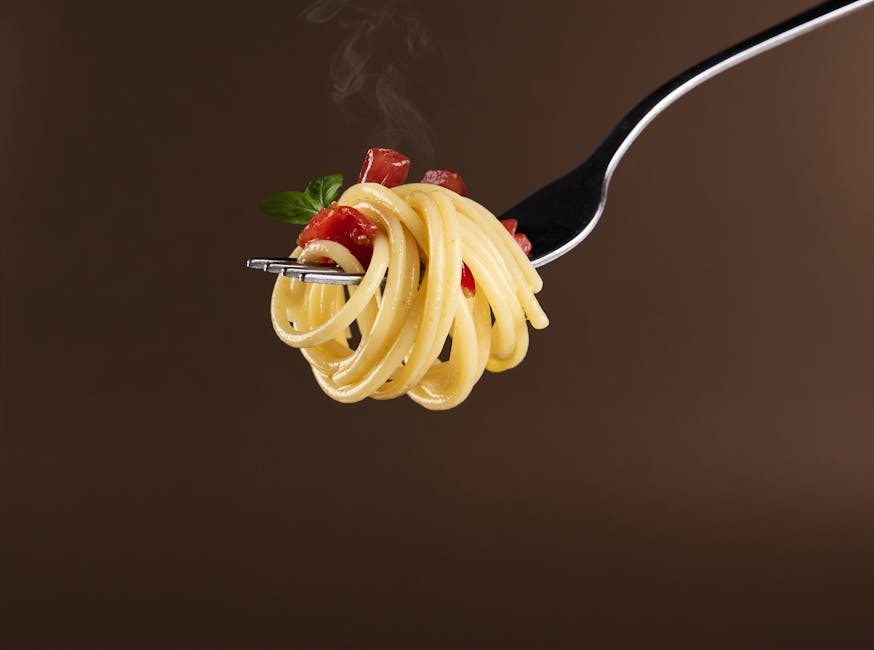
Italy ultimately led the fork's rehabilitation during the Renaissance period. By the sixteenth century, upper-class Italians had begun adopting forks for dining, particularly when eating pasta, which proved notoriously difficult to manage with fingers alone. The practice gradually spread among Italian nobility and merchant classes, though it remained largely confined to the Italian peninsula.

Catherine de Medici played a crucial role in advancing fork usage when she married King Henry II of France in 1533. She brought Italian dining customs, including forks, to the French court. However, even her influence couldn't immediately overcome French resistance to the implement.

Acceptance in France and England

France slowly warmed to the fork throughout the seventeenth century. King Louis XIV's court witnessed increasing fork usage, though the Sun King himself reportedly preferred eating with his hands throughout his life. The fork's association with Italian sophistication and refinement gradually overcame religious and cultural objections.

England proved even more resistant. Thomas Coryate, an English traveler, encountered forks during his Italian journeys in 1608 and brought the concept back to England. His advocacy for fork usage earned him mockery and the nickname "Furcifer," a play on "fork" and the Latin word for scoundrel. English diners continued viewing forks with suspicion well into the seventeenth century.

Evolution of Fork Design

As forks gained acceptance, their design evolved to improve functionality. Early forks typically featured two straight tines, which made spearing food relatively easy but prevented the fork from holding loose items. Italian craftsmen developed three-tined forks during the seventeenth century, followed by the four-tined design that became standard in the eighteenth century.

The curved tine design emerged during the 1700s, transforming the fork from merely a spearing implement into a versatile tool capable of both spearing and scooping. This innovation significantly enhanced the fork's utility and contributed to its widespread adoption.

Industrial Revolution and Mass Production

The fork's transformation from luxury item to common household object accelerated during the Industrial Revolution. Advances in metallurgy and manufacturing techniques enabled mass production of affordable utensils. By the nineteenth century, middle-class families throughout Europe and North America could purchase complete sets of matching forks for everyday use.

Different regions developed distinct fork styles and dining customs. Americans eventually adopted the "zigzag" method of cutting food with the fork in the left hand and knife in the right, then switching the fork to the right hand for eating. Europeans maintained the practice of keeping the fork in the left hand throughout the meal, a difference that persists today.

Modern Variations and Specialized Designs

Contemporary dining culture features numerous specialized fork designs tailored to specific foods and purposes. Salad forks, dessert forks, fish forks, oyster forks, and countless other variations reflect both functional considerations and elaborate dining etiquette traditions. This proliferation of specialized utensils would have astonished medieval Europeans who viewed the basic fork itself as unnecessary.

The fork's journey from taboo to essential reveals how dramatically food culture can transform over time, reminding us that today's dining conventions were yesterday's radical innovations.

10 Fun Facts About the American Revolution

10 Fun Facts About the American Revolution

⏱️ 6 min read

The American Revolution stands as one of the most pivotal moments in world history, transforming thirteen British colonies into an independent nation. While most people know the basic narrative of the war for independence, the conflict was filled with surprising details, unusual characters, and remarkable moments that often go untold in standard history books. These lesser-known facts reveal the human side of the Revolution and demonstrate just how extraordinary this period truly was.

Fascinating Details from America's Fight for Independence

1. The Youngest Soldier Was Only Six Years Old

John Quincy Adams may have become the sixth President of the United States, but few realize that his involvement in the Revolution began at an incredibly young age. However, the youngest documented combatant was actually a boy named John Lincoln, who served as a fifer at age six. Young boys often served as drummers and fifers in military units, providing crucial communication during battle when verbal orders couldn't be heard over the chaos. These young musicians weren't just mascots—they risked their lives alongside adult soldiers, and their rhythms directed troop movements during combat.

2. George Washington's Spy Network Used Invisible Ink

General George Washington oversaw one of history's most sophisticated espionage operations, known as the Culper Spy Ring. This network of intelligence agents operating in British-occupied New York used a secret chemical compound for invisible ink, referred to as "sympathetic stain." Developed by physician James Jay, the ink could only be revealed by applying a specific counteragent. Spies wrote seemingly innocent letters with regular ink while concealing crucial military intelligence between the lines using the invisible solution. This Revolutionary War espionage system was so effective that some of the spies' identities weren't discovered until the 20th century.

3. The Declaration of Independence Wasn't Signed on July 4th

While Americans celebrate Independence Day on July 4th—the date when the Continental Congress formally adopted the Declaration of Independence in 1776—most of the signatures weren't actually added until August 2nd. Some delegates didn't sign until even later, and one signature wasn't added until 1781. The document most Americans think of as the original Declaration is actually a formal parchment copy that was created after July 4th. The actual vote for independence occurred on July 2nd, which John Adams believed would be celebrated as America's independence day.

4. France Provided More Than Just Soldiers

French support was crucial to American victory, but their contribution went far beyond sending troops. France provided approximately 90 percent of the gunpowder used by Continental forces in the first two years of fighting. French financial support was equally vital—King Louis XVI's government loaned enormous sums to the revolutionary cause, ultimately contributing to France's own financial crisis and subsequent revolution. French engineers, particularly those who helped design fortifications, and French naval power, which proved decisive at Yorktown, were indispensable to American success.

5. Women Fought in Combat Disguised as Men

Deborah Sampson is the most famous example of a woman who disguised herself as a man to fight in the Continental Army, serving for over a year under the name Robert Shurtliff. She was wounded twice and managed to keep her identity secret even while receiving medical treatment. However, she wasn't alone—historians have documented several other women who fought in the Revolution while presenting as men. Beyond those in disguise, many women served openly in support roles, and some, like Margaret Corbin, took over artillery positions when their husbands fell in battle and received military pensions for their service.

6. The British Army Included Thousands of German Soldiers

Approximately thirty thousand troops fighting for the British cause were actually German soldiers, commonly called "Hessians" because many came from the German state of Hesse-Cassel. These weren't volunteers but professional soldiers whose services were contracted out by German princes to the British Crown. This practice of hiring foreign troops was common in 18th-century European warfare. Interestingly, many of these German soldiers decided to stay in America after the war ended, attracted by the availability of land and economic opportunities that were scarce in their homeland.

7. The Liberty Bell Never Rang on Independence Day

Despite popular legend, the Liberty Bell didn't ring on July 4, 1776, to announce the Declaration of Independence. This story was invented in the 1840s, decades after the actual events. The bell, originally cast in 1752 for the Pennsylvania State House, did ring for various public announcements during the Revolutionary period, but its iconic crack appeared sometime in the early 19th century. The bell didn't become known as the "Liberty Bell" until abolitionists adopted it as a symbol in their fight against slavery in the 1830s.

8. Smallpox Killed More Americans Than British Bullets

Disease proved to be a deadlier enemy than British forces during the Revolution. Smallpox epidemics ravaged Continental Army camps and colonial populations, killing more Americans than died in combat. George Washington made the controversial decision to inoculate the Continental Army in 1777, one of the first large-scale military inoculation programs in history. This decision required careful secrecy, as inoculation involved deliberately infecting soldiers with a mild form of the disease, temporarily weakening the army. Washington's bold public health initiative is now recognized as one of his most important strategic decisions of the war.

9. Native American Tribes Fought on Both Sides

The American Revolution was also a civil war that divided Native American nations. The Oneida and Tuscarora nations allied with the Americans, while the Mohawk, Seneca, Cayuga, and Onondaga generally supported the British. These choices were strategic, based on which side seemed most likely to protect Native lands and sovereignty. The Oneida, in particular, provided crucial support to Washington's army at Valley Forge. Tragically, regardless of which side they chose, most Native American nations lost territory and power as a result of the Revolution, as the new American government proved just as expansionist as the British had been.

10. The Last Battle Occurred After the Treaty Was Signed

The final military engagement of the American Revolution took place in India, not North America, and occurred in June 1783—months after the Treaty of Paris was signed in September 1782. British and French forces clashed at Cuddalore on the Indian coast, both unaware that peace had already been concluded across the Atlantic. This distant battle illustrates how the American Revolution was part of a larger global conflict, with Britain and France fighting in the Caribbean, Gibraltar, India, and across the world's oceans. News traveled slowly in the 18th century, and it took months for word of the peace treaty to reach combatants in distant theaters of war.

Conclusion

These remarkable facts demonstrate that the American Revolution was far more complex, surprising, and globally interconnected than simplified textbook narratives suggest. From child soldiers and invisible ink to the crucial role of diseases and the worldwide scope of the conflict, the war for American independence involved countless fascinating details that bring this historical period to life. Understanding these lesser-known aspects helps us appreciate the sacrifices, innovations, and sheer determination required to establish the United States as an independent nation, while also recognizing the diverse people and interests involved in this world-changing conflict.